
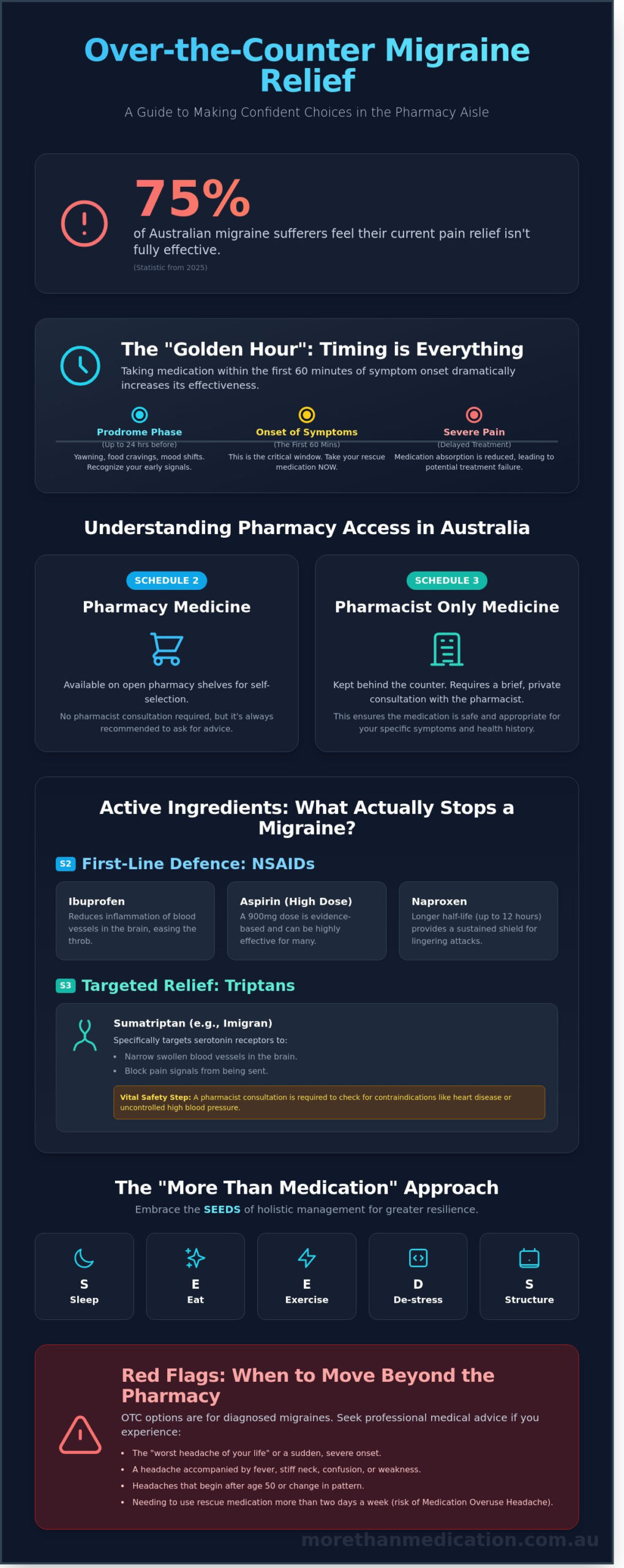
Imagine standing in the pharmacy aisle while a sharp throb behind your temple signals another lost afternoon. You’re surrounded by rows of bright boxes, yet statistics from 2025 suggest that 75% of Australian migraine sufferers feel their current pain relief isn’t fully effective. Selecting the right over the counter migraine medication shouldn’t feel like a gamble when your wellbeing and your day are on the line.
It’s frustrating to settle for general painkillers that barely touch the sides of a migraine, especially when you’re worried about side effects or the cycle of medication overuse headaches. You want a rescue plan that actually works, allowing you to return to your family and your life with clarity. We’re here to help you understand the difference between S2 and S3 pharmacy labels so you can talk to your pharmacist with absolute confidence and find the specific relief you need.
This guide explains how to use active ingredients safely and introduces holistic strategies to help you find a sense of balance and resilience. We will explore the most effective options available in 2026 and provide a clear path toward fewer attacks and more symptom-free days.
Key Takeaways
- Learn how to identify the right active ingredients, such as NSAIDs, to find the most effective over the counter migraine medication tailored to your specific symptoms.
- Understand the difference between migraine types to ensure your chosen rescue therapy provides the fast, targeted relief you deserve.
- Protect your long-term wellbeing by learning to recognise and avoid the “rebound” cycle of medication overuse headaches.
- Embrace the “SEEDS” of holistic management-like sleep and stress care-to discover why medicine is only one part of your healing journey.
- Identify the essential red flags that tell you when it’s time to seek professional support and explore preventive options beyond the pharmacy shelf.
Understanding Over the Counter Migraine Relief in Australia
Living with migraines is a deeply personal experience that goes beyond a simple headache. While a tension headache often feels like a tight band around your head, a migraine is a complex neurological event. Choosing the right over the counter migraine medication matters because these treatments target specific pathways that standard pain relief might miss. In Australia, your access to these medicines is governed by the Therapeutic Goods Administration (TGA) through a scheduling system. Schedule 2 medicines are available on pharmacy shelves, while Schedule 3 (Pharmacist Only) options require a brief consultation. This conversation ensures you receive clinical guidance tailored to your history; it’s a partnership between you and your pharmacist.
These treatments serve as acute or rescue therapies. Their primary job is to stop an active attack in its tracks rather than preventing one from starting. We believe health is about the whole person, so while medication provides the necessary relief, it’s just one part of your journey toward balance. Integrating migraine treatment options with lifestyle awareness creates a more resilient approach to your wellbeing.
The Goal of Acute Treatment
The main objective of using over the counter migraine medication is to halt pain progression within 30 to 60 minutes of the first dose. Effective treatment does more than dull the ache; it reduces debilitating secondary symptoms like nausea and extreme light sensitivity. Success means you can return to your daily life and function normally, rather than spending hours in a dark, quiet room. We want to help you reclaim your day as quickly as possible.
When to Reach for OTC Options
Timing is everything when managing a migraine. You might notice a prodrome phase, which acts as a warning sign up to 24 hours before the pain hits. This could include frequent yawning, food cravings, or mood shifts. Experts often refer to the “golden hour,” which is the first 60 minutes of symptom onset. Taking your medication during this window significantly increases efficacy. If you wait until the pain is severe, the digestive system often slows down, which leads to treatment failure because the medicine cannot be absorbed efficiently. Recognizing your body’s early signals allows you to take gentle, decisive action before the cycle takes hold.
Active Ingredients: What Actually Stops a Migraine?
Finding the right over the counter migraine medication often feels like a trial of patience when you’re already in pain. You aren’t just looking for a quick fix; you’re looking to reclaim your day and find some peace. While a standard headache might fade with rest, a migraine requires a more targeted approach to settle the neurological storm. Understanding how these active ingredients interact with your body helps you make an informed choice alongside your pharmacist.
NSAIDs: Ibuprofen, Aspirin, and Naproxen
Non-steroidal anti-inflammatory drugs (NSAIDs) act as your first line of defence by targeting the chemical messengers that cause pain and swelling. Ibuprofen, found in brands like Advil or Nurofen, works by reducing the inflammation of blood vessels in the brain that contributes to that characteristic throbbing. For many Australians, a high dose of 900mg of Aspirin provides evidence-based relief that is often as effective as more complex treatments. If your attacks tend to linger, Naproxen (found in Naprogesic) offers a longer half-life. This means it stays in your system for up to 12 hours, providing a steady shield during extended attacks. According to Healthdirect Australia, these over-the-counter medicines are most effective when taken at the very first sign of an aura or pain.
The Triptan Revolution (Schedule 3)
Sumatriptan, often sold under the brand name Imigran, represents a breakthrough for those facing moderate to severe attacks. These are Schedule 3 (S3) medications, which means they sit behind the pharmacy counter rather than on the open shelf. You’ll need a brief, private conversation with your pharmacist to ensure they’re appropriate for your symptoms. They work specifically on serotonin receptors to narrow swollen blood vessels and block pain signals in the brain. They aren’t suitable for everyone, particularly those with a history of heart disease or uncontrolled high blood pressure, so that professional consultation is a vital safety step in your journey.
Adjuvant Ingredients: Caffeine and Antiemetics
Migraines frequently cause “gut stasis,” a condition where your digestive system slows down and medicine doesn’t absorb properly. This is why you’ll often see caffeine added to over the counter migraine medication. It isn’t just for a boost; caffeine acts as a catalyst to help your body absorb pain relief faster. Treating nausea is just as important as treating the pain itself. When you stop the urge to vomit, you ensure the medication stays in your system long enough to work. While medicine is a powerful tool, it’s only one piece of the puzzle. Learning to balance clinical relief with lifestyle adjustments can help you build long-term resilience against future attacks.
Choosing the Right Medication for Your Symptoms
You know your body better than anyone else. When a migraine begins, your symptoms act as a map, guiding you toward the most effective relief. Selecting the right over the counter migraine medication requires looking beyond the packaging to understand how specific ingredients interact with your nervous system. It’s about finding a balance that honors your physical health while easing the emotional burden of chronic pain.
Symptom-Based Selection
Matching your treatment to your specific experience makes a world of difference. Your choice should depend on the intensity and the “extras” your migraine brings along:
- Mild throb with no nausea: Simple analgesics like paracetamol or aspirin are often sufficient if taken at the very first sign of a dull ache.
- Intense pain with light sensitivity: You might require a high-dose NSAID, such as 400mg of ibuprofen. Since February 2021, Australians can also access sumatriptan as a Schedule 3 (Pharmacist Only) medicine for confirmed migraine patterns, providing a more targeted approach for moderate to severe symptoms.
- Migraine with vomiting: When your digestive system slows down, pills aren’t always effective. Soluble tablets or liquid formulations absorb faster, helping you find relief even when you feel unwell.
The Trap of Medication Overuse
It’s natural to reach for relief whenever pain strikes. However, using acute over the counter migraine medication too frequently can lead to a frustrating cycle known as Medication Overuse Headache (MOH). If you find yourself taking triptans more than 10 days a month, or simple analgesics for more than 15 days, your brain may become sensitized. This often results in a “rebound” where the headache returns as soon as the last dose wears off.
Breaking this cycle is a brave step toward long-term recovery. You might notice your headaches becoming more frequent or less responsive to your usual dose. If this happens, it’s time to work with a healthcare professional to “reset” your treatment plan. They can guide you through a supervised reduction and help you explore preventative strategies that offer more than just a temporary fix.
Your pharmacist is a vital partner in this journey. Ask them to help you create a formal Migraine Action Plan. This document should outline exactly which medication to take and when to seek further medical advice. Remember to discuss your gastric health too; long-term use of NSAIDs can irritate the stomach lining. By treating the whole person rather than just the pain, you ensure your path to wellness is both safe and sustainable.
This holistic approach to health is supported by companies dedicated to providing quality medical and wellness products. For those interested in this space, you can learn more about PT Serenity Indonesia, a company that distributes a wide range of international-standard health products.
The “More Than” Approach: Maximising Your Relief
Finding the right over the counter migraine medication provides essential relief, but it’s often just one piece of a much larger puzzle. We understand that living with migraines feels like a constant balancing act. You aren’t just managing physical pain; you’re managing the heavy emotional weight of “the next attack.” This anticipatory anxiety is a common part of the journey, and acknowledging it is the first step toward reclaiming control.
The “SEEDS” of migraine management offer a holistic way to build resilience. This framework focuses on Sleep, Exercise, Eating, Diary, and Stress. Research indicates that maintaining a consistent routine in these five areas can reduce attack frequency by up to 50% for some individuals. Beyond these pillars, your physical environment acts as a constant influence. Small adjustments, such as using high-quality polarized sunglasses or scent-free workspaces, help manage the external triggers that often overwhelm a sensitive nervous system.
For many, the “Eating” and “Exercise” components also involve managing weight, which can have a wide-ranging impact on overall health and inflammation. As part of this broader wellness journey, some people also explore weightloss medicines with guidance from healthcare professionals.
Lifestyle as Prevention
Hydration and blood sugar stability are the unsung heroes of daily relief. Skipping a single meal can trigger a migraine in approximately 50% of sufferers. You can find evidence-based supplements like Magnesium (400 to 600mg daily) and Riboflavin (Vitamin B2, 400mg daily) at most Australian pharmacies. These nutrients support cellular energy and have clinical backing for reducing the number of migraine days you experience each month. When an attack does begin, pairing your over the counter migraine medication with a dark, cool room creates a sanctuary for your recovery, allowing the medicine to work without additional sensory interference.
Tracking for Success
A migraine diary is your most powerful tool for a clear diagnosis and a better partnership with your GP. By recording your sleep quality, food intake, and emotional stressors, you transform vague symptoms into actionable data. This tracking often reveals the “More Than” factors that precede your pain. You might notice a specific neck stiffness or a sudden craving for sweets that occurs three hours before the aura begins. Recognising these early warning signs allows you to intervene sooner, often resulting in a shorter and less intense episode.
Want to explore a more holistic path to feeling your best? Learn how to balance your lifestyle and treatment
When to Move Beyond the Pharmacy Aisle
While over the counter migraine medication provides a vital safety net for occasional attacks, it isn’t always the final destination. You might find that your usual tablets aren’t clearing the fog like they used to, or perhaps you’re reaching for them more frequently. This shift doesn’t mean you’re doing anything wrong. It simply indicates that your condition is evolving and your treatment plan needs to grow with it.
Recognising the Red Flags
Some symptoms require immediate action rather than a trip to the chemist. A “Thunderclap” headache is the most urgent signal. This is a pain that reaches maximum intensity within 60 seconds, often described as the worst headache of your life. In Australia, clinical data suggests about 10% of these sudden onset headaches are linked to serious vascular issues, so call 000 immediately if this happens.
You should also book a GP appointment if your migraine pattern changes significantly. If your frequency increases from two days a month to 10 or more, you’re entering a new phase of management. Watch for neurological symptoms that linger. If aura, numbness, or vision changes persist after the physical pain has faded, your brain is asking for a specialist review. Your safety is the priority, and these signs are your body’s way of communicating its limits.
Partnering with Your Healthcare Team
The transition from “rescue” treatments to “prevention” strategies marks a turning point in your journey. If you use over the counter migraine medication on more than 10 days each month, you risk developing medication overuse headache. This paradoxical cycle actually increases your pain frequency. Your doctor can help you break this loop by introducing preventive prescriptions designed to reduce the number of attacks before they even begin.
- Ask about preventatives: Inquire if you’re a candidate for daily medications or newer CGRP inhibitors.
- Explore holistic therapies: Research shows that 40% of patients benefit from integrated approaches like specialized physiotherapy for neck tension or biofeedback for stress regulation.
- Track your triggers: Bring a diary of your last 30 days to your appointment to give your GP a clear data set.
At More Than Medication, we understand that your health is a whole-person experience. Medicine is a powerful tool, but it’s just one piece of the puzzle. Your resilience, your environment, and your mental wellbeing all play equal roles in your long-term wellness. You’re the leading expert on your own body. We’re here to provide the steady, compassionate support you need as you navigate the ups and downs of this journey toward balance and relief.
Empowering Your Path to Relief
Finding the right over the counter migraine medication is a vital first step in reclaiming your day from the weight of pain. By understanding how different active ingredients target your specific symptoms, you’ve already taken a significant step toward better health outcomes. Remember that effective management often requires a holistic view. Australian health experts suggest that combining pharmaceutical relief with lifestyle adjustments can significantly reduce the emotional burden of chronic conditions. This guide is supported by Pfizer Australia’s commitment to patient education, ensuring you have access to reliable, evidence-based insights at every turn.
If you find yourself reaching for relief more than two days a week, it’s important to speak with a healthcare professional to prevent medication overuse. You’re not just managing a diagnosis; you’re caring for your whole self. We’re here to walk alongside you as you build a more resilient, balanced life. Explore more expert advice on managing chronic conditions at More Than Medication. You deserve to feel supported and empowered throughout your journey.
Frequently Asked Questions
What is the strongest migraine medication I can get without a prescription?
The strongest over the counter migraine medication currently available in Australia is Sumatriptan 50mg. Since February 2021, you can purchase this specifically formulated triptan as a Pharmacist Only medicine without a script from your doctor. It works differently than standard painkillers by narrowing the blood vessels around the brain to stop the migraine process at its source.
Can I take Ibuprofen and Paracetamol together for a migraine?
You can safely combine Ibuprofen and Paracetamol to manage your symptoms more effectively. Clinical studies show that a combination of 400mg of Ibuprofen and 1000mg of Paracetamol provides significantly better pain relief for 30% more patients than using either drug on its own. This dual action approach helps you tackle the intense throbbing from two different physiological pathways, helping you find your balance again sooner.
Is there a specific “migraine pill” available at Australian chemists?
Yes, Australian pharmacies stock dedicated migraine treatments like Sumatriptan 50mg and Naproxen Sodium. While you’ll find Naproxen 275mg tablets on the open shelves for general pain, the 50mg Sumatriptan is kept behind the counter for more targeted relief. These options are specifically designed to address the unique neurological symptoms of a migraine rather than just treating a standard headache.
How often can I safely take over the counter migraine medication?
You should limit your use of over the counter migraine medication to no more than two or three days per week. Using these treatments more than 10 times a month can lead to medication overuse headaches, a condition that affects approximately 1.5% of the Australian population. If you find yourself reaching for relief more frequently, it’s a signal that your body might need a more holistic management plan.
What is a “Pharmacist Only” (Schedule 3) medication for migraines?
A Pharmacist Only medication is a Schedule 3 drug that sits behind the counter and requires a brief consultation with a pharmacist before purchase. This ensures you receive the correct clinical advice for potent treatments like Sumatriptan without needing a formal GP appointment. It’s a supportive system designed to give you quicker access to stronger relief while keeping your safety at the heart of the process.
Why does my migraine medication sometimes fail to work?
Your medication might fail because migraines often cause gastric stasis, which can slow your digestive system by up to 50%. This means the pill stays in your stomach instead of moving into the small intestine where it can be absorbed into your bloodstream. To improve your results, try taking your medication at the very first sign of an aura or pain before your digestion slows down.
Are there any natural OTC alternatives for migraine relief?
Natural supplements like Magnesium, Riboflavin (Vitamin B2), and Coenzyme Q10 are evidence based options for migraine support. The Australian Family Physician journal notes that taking 400mg of Riboflavin daily can reduce attack frequency for roughly 50% of people who try it. These natural choices focus on the “more” in your health journey, building long term resilience in your nervous system alongside acute treatments.
What should I do if OTC medications are no longer helping my migraines?
If your current treatments aren’t providing relief, you should consult your GP to discuss a personalized Migraine Management Plan. When you experience 4 or more migraine days every month, it’s often a sign that you need prescription preventive therapy rather than just acute relief. Your doctor can help you navigate the next steps of your journey, ensuring your physical health and emotional wellbeing are both supported.