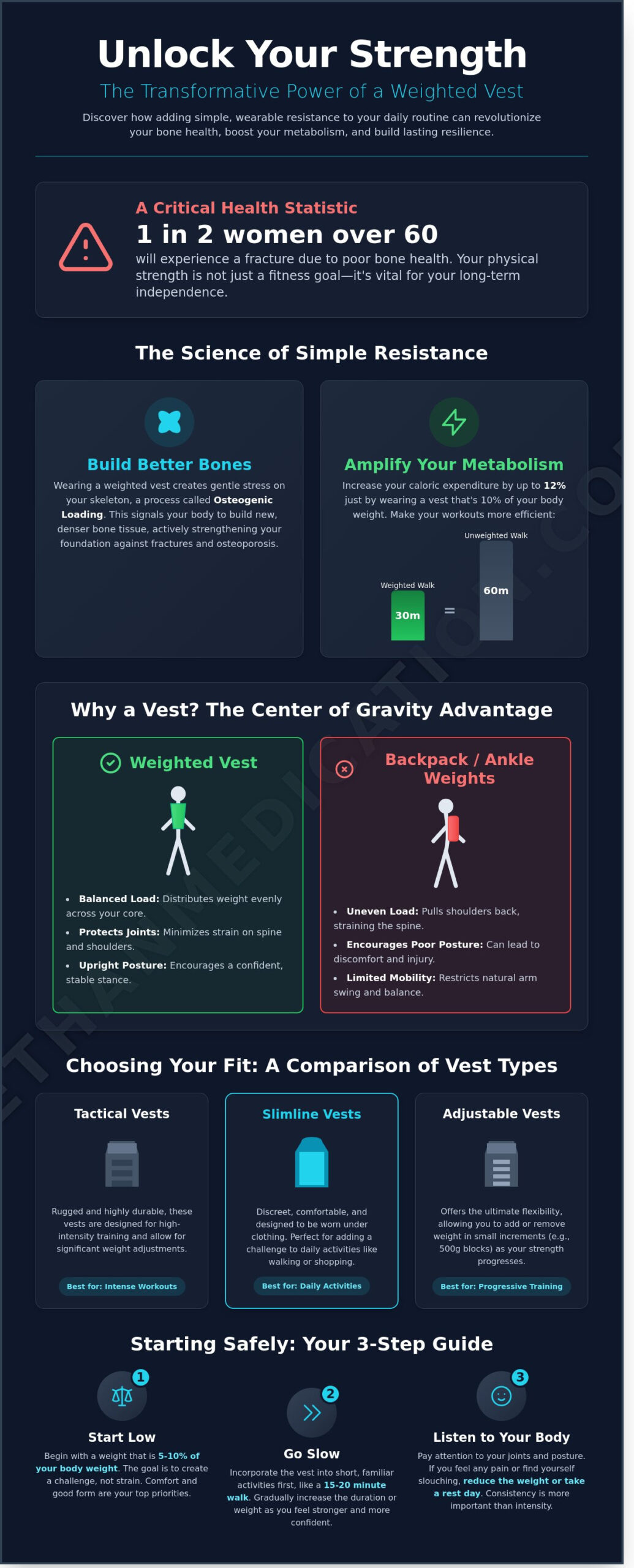
What if the most effective way to strengthen your skeleton didn’t require a gym membership or a single heavy barbell? You likely already believe that staying active is the key to healthy ageing, but it’s common to feel stuck when your usual routine stops delivering results. It’s disheartening when the walks you enjoy no longer seem to challenge your heart or protect your bones. According to Healthy Bones Australia, 1 in 2 women over the age of 60 will experience a fracture due to poor bone health. This makes your physical strength more than just a fitness goal; it’s a vital part of your long term independence.
We’re here to help you bridge that gap with a simple, supportive solution. Discover how adding a little extra weight through a weighted vest can transform your daily movement into a powerful tool for physical health and mental grounding. This guide explores the science of load bearing exercise and provides actionable steps to help you feel more stable, strong, and focused. We’ll show you how this small adjustment offers a path to resilience that fits perfectly into the life you’re already living, proving that your health journey is always about much more than just a prescription.
Key Takeaways
- Understand the science of osteogenic loading and how it supports bone health while naturally increasing the metabolic cost of your daily movement.
- Identify whether a fixed or adjustable weighted vest best suits your unique body and lifestyle, ensuring comfort through every step of your journey.
- Master the “start low, go slow” principle to protect your joints and maintain the upright posture essential for long-term physical resilience.
- Discover how to integrate wearable resistance into your reformer Pilates practice to enhance functional strength and find deeper physical balance.
- Explore how this simple tool serves as more than just equipment, offering a grounding experience that connects your physical effort to mental wellbeing.
What is a Weighted Vest and Why is it Trending in Australia?
You might have noticed a subtle shift in your local Australian park lately. People aren’t just walking; they’re moving with a new sense of intention while wearing streamlined, weighted gear. A weighted vest is a specialized garment designed to add evenly distributed resistance to your natural movement. It’s a simple, wearable tool that turns a standard stroll into a bone-strengthening workout. While these were once the domain of elite military training, they’ve found a new home in the Australian wellness community. This shift reflects a deeper understanding that our health is a whole-person journey. It’s about finding small, manageable ways to build resilience and strength in your daily life.
Choosing to wear extra weight is about more than just burning calories. It’s a physical commitment to your long-term wellbeing. In Australia, we’re seeing a move toward “functional fitness” that prepares us for the actual demands of life. Whether you’re navigating a chronic health condition or simply looking to stay sturdy as you age, the Weighted clothing movement offers a path toward greater physical autonomy. It’s a gentle yet effective way to tell your body that it’s capable of more.
The Evolution of Weighted Movement
The transition from rugged bush rucking to suburban fitness is well underway across the country. In 2023, fitness industry reports indicated a 12% rise in outdoor functional training participation among Australians over 40. We’re looking for ways to maximize our limited time, and you don’t always need a gym membership to see progress. By adding a weighted vest to your morning walk, you’re practicing “passive” intensity. This mimics the real-life demands of carrying heavy bags or lifting a grandchild. It’s a practical way to empower your body without needing complex equipment or high-impact routines.
Vests vs. Ankle Weights or Backpacks
You might wonder why you can’t just throw some books in an old backpack. The difference lies in your center of gravity. Traditional backpacks pull your shoulders back and can strain the lower spine; this often leads to poor posture or discomfort over long distances. A vest is different because it secures the load close to your core. It balances the weight between your chest and back, protecting your joints and keeping your hands free. This symmetry allows you to maintain an upright, confident posture while you move. Today, the Australian market offers several styles to suit your needs:
- Tactical Vests: Rugged designs often used for high-intensity training.
- Slimline Vests: Discreet options that can be worn under a jumper for a walk to the shops.
- Adjustable Vests: Models that allow you to add weight in small increments, such as 500g blocks, as you grow stronger.
The Science of Resistance: Bone Density and Metabolic Health
Your body is a master of adaptation. When you introduce a new challenge, your systems respond by growing stronger and more resilient. Wearing a weighted vest isn’t just about making a walk feel harder; it’s about communicating with your cells and your nervous system. This extra resistance acts as a catalyst for internal changes that support your long-term vitality, making every movement a deliberate step toward better health.
Building Better Bones for the Future
You might think of your bones as permanent structures, but they’re living tissues that respond to the demands you place on them. This is known as osteogenic loading. For the 4.7 million Australians over age 50 who live with poor bone health, resistance is a powerful tool for prevention. When you add weight, you create a gentle stress that triggers your body to build new bone density. This process is essential for maintaining independence and avoiding the fractures that often accompany osteoporosis. It’s a proactive way to invest in your future mobility.
Metabolism and Cardiovascular Efficiency
Every step you take requires energy, and adding a load increases that metabolic cost significantly. Research indicates that carrying just 10% of your body weight in a vest can increase your caloric expenditure by 12% without requiring you to run or speed up. This makes your time more efficient; a 30-minute weighted walk can often provide the same cardiovascular benefits as a 60-minute unweighted one. You’ll also experience an “afterburn” effect, where your metabolism remains elevated as your body recovers. To safely use a weighted vest, it’s best to start with a lower weight and focus on your posture. This ensures you’re challenging your heart without overtaxing your joints.
Mental Resilience and Proprioceptive Input
The benefits of a weighted vest extend far beyond the physical. There’s a profound connection between physical weight and emotional stability. The vest provides what therapists call deep pressure therapy, which sends calming signals to your nervous system. This helps with proprioception, the sense of where your body is in space, which can often feel fragmented when we’re stressed or anxious. This “grounding” effect helps quiet a racing mind and brings your focus back to the present moment. If you’re looking for more ways to support your wellbeing, you can explore our resources on holistic health strategies that bridge the gap between physical and mental care. It’s about finding balance in every sense of the word.
Choosing Your Fit: A Commercial Comparison of Vest Types
Selecting a weighted vest is a personal step toward reclaiming your physical resilience. It’s about finding a tool that feels like a supportive extension of your body, rather than an added burden. Because your health journey is unique, the equipment you choose should align with your specific daily rhythms and physical goals.
Fixed vs. Adjustable Weights
Fixed-weight vests usually arrive with a set weight between 3kg and 10kg. These are excellent if you value simplicity and want a “grab and go” option for your daily walk. You don’t have to worry about shifting plates or sandbags; you just clip it on and move. However, if you’re looking to embrace the concept of progressive overload, an adjustable weighted vest is a wiser investment. These models allow you to add weight in small increments as you grow stronger. A common starting point is to select a weight that represents 5% to 10% of your total body mass. This gentle entry point is a safe way to explore how weighted vests boost bone health by providing the necessary resistance to stimulate bone density without overstressing your joints.
Design and Comfort Features
Australian summers require a thoughtful approach to material. You’ll want to look for breathable, moisture-wicking mesh rather than heavy, non-porous fabrics that trap heat. Comfort also depends heavily on the straps. Wide, padded shoulder straps are essential because they distribute the weight across your frame, which prevents the vest from digging into your neck muscles. If you enjoy the peace of a walk at dawn or dusk, check that the vest includes reflective detailing. For women, the fit can be a common concern. Many brands now offer chest-friendly designs with “X-shaped” strap systems or adjustable side buckles. These ensure the weight sits securely on the torso without causing discomfort or restricting your breathing.
Tactical Vests vs. Slimline Lifestyle Vests
Tactical vests are the rugged cousins of the fitness world. Often plate-loaded and made from durable tactical nylon, they’re designed for high-intensity training or preparing for events like HYROX. They stay incredibly still during vigorous movement, but they can look quite conspicuous. If your goal is to integrate extra resistance into your normal routine, a slimline lifestyle vest is often the better choice. These are typically filled with sand or steel shot and have a much thinner profile. You can easily wear a lifestyle vest under a jacket or jumper while doing grocery shopping or light gardening. They turn your ordinary chores into a quiet, effective way to build strength and balance.
Starting Safely: How to Integrate a Vest Without Injury
Beginning a new physical routine feels empowering, but your body needs time to adapt to new stressors. Your journey toward better bone density and strength is a marathon, not a sprint. We recommend the “Start Low, Go Slow” principle to protect your joints. For most beginners, starting with a weighted vest that equals roughly 5% of your total body weight is the safest entry point. If you weigh 80kg, your vest should weigh no more than 4kg during those first few weeks. This allows your tendons and ligaments, which receive less blood flow than muscles, to strengthen at a manageable pace.
You don’t need to head straight to the gym. Integrating the weight into daily life is a gentle way to build resilience. Wear it while hanging out the washing or during a quick trip to the chemist. Listen closely to your body’s signals. Sharp pain, tingling in your arms, or a dull ache in your lower back are clear red flags. If these occur, remove the vest immediately and rest. Health is about the whole person, so never push through discomfort that feels structural rather than muscular.
The 4-Week Introduction Programme
This structured approach helps you build confidence without overtaxing your frame. Consistency matters more than intensity during this phase.
- Week 1: Wear the vest at home for 15 minutes twice a day. Focus on simple movements like standing up from a chair or walking between rooms.
- Week 2: Transition to a 1km walk on flat, even terrain. Avoid bush tracks with loose gravel or steep kerbs for now.
- Week 3: Maintain the same weight but increase your walking duration to 25 minutes. Your heart rate might climb slightly higher, which is a sign of your cardiovascular system adapting.
- Week 4: Introduce slight inclines or basic functional movements, such as gentle lunges, while wearing the weighted vest.
Posture and Spinal Alignment
Adding weight can tempt you into a “forward lean,” where your shoulders round and your chin pokes out. Research shows that tilting your head forward at a 60-degree angle can increase the pressure on your cervical spine to approximately 27kg. Keep your eyes on the horizon rather than looking at your feet. Engage your core by gently pulling your belly button toward your spine; this creates a natural corset that supports your lower back. When used with intention, the vest acts as a tactile cue that actually improves your posture by encouraging you to stand tall against the resistance.
Consulting the Professionals
Statistics from the Australian Institute of Health and Welfare show that 1 in 6 Australians experience back problems. If you’re part of this group or live with knee osteoarthritis, a consultation with an AHPRA-registered physiotherapist is essential. They can tailor the weight increments to your specific bone density scores or joint health. A professional can help you bridge the gap between medical advice and your daily lifestyle goals, ensuring your path to strength is both safe and sustainable. To help manage your long-term wellness goals, you can find supportive health resources that look beyond just the physical symptoms.
A Holistic Approach: Vests, Pilates, and Functional Strength
Your fitness journey isn’t a collection of isolated exercises. It’s a living system. Adding a weighted vest to your routine acts as a bridge, connecting different modalities into a cohesive path toward resilience. When you integrate this tool, you aren’t just making a workout harder. You’re teaching your body how to move with grace under pressure, whether you’re on a morning walk through the local park or performing a complex series of movements in the studio.
Complementary Training Styles
Bodyweight lunges and squats take on a new dimension when you add an external load. This extra weight forces your core to stabilize, deepening the mind-body connection during slow, controlled movements. You might’ve seen the latest health trends sweeping Australia, such as rucking or sustained Zone 2 cardio. Rucking, which involves walking with a weighted pack or vest, keeps your heart rate in that sweet spot of 60% to 70% of its maximum. This builds aerobic capacity without the high joint impact of running. When you step onto the carriage for reformer pilates, a lightweight vest adds a subtle challenge to your alignment. It makes every breath and every pulse more intentional, ensuring your stabilizer muscles are fully engaged.
- Lunges and Squats: Increases the demand on your glutes and quads while improving balance.
- Slow Movement: Enhances proprioception, which is your body’s ability to sense its position in space.
- Zone 2 Cardio: Builds a strong aerobic base, essential for long-term heart health and recovery.
The ‘More Than’ Mindset
It’s easy to focus on the weighted vest as the star of the show. However, equipment is just a tool for your larger health goals. True strength comes from the synergy between high-intensity efforts, like kettlebell training, and the quiet moments of recovery. Your body needs space to heal and adapt to the new stresses you’re placing on it. Integrating regular remedial massage can help manage the muscle tension that comes with added load. This ensures your journey remains sustainable and your joints stay mobile.
Listen to the signals your body sends you every day. Some mornings you’ll feel ready to push your limits. Other days, your body might ask you to scale back the weight or focus on flexibility. This balance is where real progress happens. You’re building more than just muscle; you’re cultivating a life of balance, empowerment, and long-term health. Medicine and equipment are parts of the puzzle, but your intuition and consistency are what bring the whole picture together. Stay patient with yourself as you navigate this path toward a more resilient version of you.
Empowering Your Path to Lasting Resilience
Building a stronger, more resilient body is a personal journey that unfolds one step at a time. By integrating a weighted vest into your daily movement, you’re doing more than just increasing your heart rate; you’re actively applying the principles of Wolff’s Law to fortify your skeletal structure. Clinical data suggests that consistent weight-bearing activity can improve bone mineral density by 1% to 3% annually, offering a proactive way to manage long-term health. Whether you’re walking through your neighborhood or adding gentle resistance to a Pilates flow, these manageable adjustments foster both physical strength and mental confidence. It’s about finding a sustainable balance that honors your body’s current needs while pushing toward a healthier future. You don’t have to navigate these choices in isolation. We are here to provide the expert-led health insights and evidence-based wellness advice that make complex transitions feel achievable. Through empathetic support for your health journey, we help you discover that wellness is always about more than just a diagnosis. Explore the latest health and fitness trends on More Than Medication and take the next step toward a more vibrant, empowered version of yourself.
Frequently Asked Questions
Is a weighted vest good for weight loss?
Yes, wearing a weighted vest increases your metabolic rate and helps you burn roughly 12% more calories during a standard walk. A 2020 clinical study from the University of Gothenburg found that participants wearing 11% of their body weight lost 1.6 kilograms of fat over three weeks. It’s a gentle way to add intensity to your daily movement without needing to increase your speed or distance.
Can I wear a weighted vest every day while walking?
You can wear one daily, but beginning with three sessions per week allows your body to adapt to the new pressure on your joints. Research from the Australian Institute of Sport suggests that 48 hours of recovery between heavy load-bearing activities helps prevent overuse injuries. Listen to your body’s rhythm. If you feel persistent soreness, it’s okay to take a rest day as you build your resilience.
Will a weighted vest hurt my back?
A weighted vest won’t naturally hurt your back if you maintain proper posture and have no pre-existing spinal conditions. The Australian Physiotherapy Association notes that distributing weight evenly across the torso can actually improve core stability. However, if you have a history of herniated discs, please consult your GP first. We want this journey to be about strengthening your foundation, not causing you unnecessary discomfort or strain.
How heavy should my weighted vest be for a beginner?
You should aim for a weight that is 5% to 10% of your current body mass to begin safely. For an Australian adult weighing 75kg, this means starting with a 3.75kg to 7.5kg vest. Many adjustable vests sold in Australia allow you to add 1kg increments. This modular approach lets you progress at your own pace, ensuring your muscles and bones grow stronger without feeling overwhelmed by the load.
Can women wear weighted vests comfortably?
Women can absolutely wear these vests comfortably by choosing designs specifically contoured for the female frame. Traditional boxy vests can sometimes feel restrictive or cause chafing. Look for Y-shape or X-shape designs that provide 5 to 10 centimetres of extra clearance around the chest. These adjustable models ensure the weight stays close to your centre of gravity, making your exercise feel like a natural extension of your body.
Is walking with a weighted vest better than running?
Walking with extra weight is often better for your joints because it provides a 15% increase in heart rate without the high-impact force of running. A study in the Journal of Science and Medicine in Sport highlights that walking with a load maintains bone-building benefits while reducing knee impact by 50% compared to jogging. It’s a balanced choice if you’re looking for longevity and sustainable strength in your fitness routine.
Can I wear a weighted vest if I have osteoporosis?
Yes, it’s a powerful tool because weight-bearing exercise is a cornerstone of managing bone density. The Royal Australian College of General Practitioners (RACGP) recommends progressive resistance to stimulate new bone growth. While medicine plays a role, this physical challenge is the “more” that helps your body stay sturdy. Start with a light load and work closely with your healthcare provider to ensure your skeleton is supported throughout this process.