
What if the persistent tightness in your neck isn’t an inevitable side effect of your 38-hour work week, but a manageable condition waiting for the right intervention? Many Australians find themselves stuck in a cycle of pushing through discomfort, yet data from the Australian Institute of Health and Welfare shows that 1 in 6 people reported chronic back problems in recent years. You might feel like this stiffness is just part of your daily reality now. It’s exhausting to live with a body that feels restricted, especially when you aren’t sure if a remedial massage is a clinical necessity or just a luxury session.
We understand that your health is about more than just suppressing symptoms; it’s about reclaiming your quality of life. This guide shows you how this targeted therapy bridges the gap between clinical treatment and holistic wellness to help you move without pain. You’ll discover the evidence-based science behind soft tissue repair and learn exactly how it supports your body’s long-term resilience. We’re going to break down the specific techniques used by practitioners to restore your range of motion and create a clear path toward a more mobile, comfortable future.
Key Takeaways
- Understand how a clinical assessment bridges the gap between simple relaxation and targeted healing to help you rediscover pain-free movement.
- Learn the science of soft tissue repair and how stimulating your body’s natural healing processes can effectively break down stubborn muscle knots.
- Clarify the common confusion between pressure and purpose by seeing how a remedial massage functions as a comprehensive treatment plan rather than just a technique.
- Prepare for your session with confidence by knowing exactly what to bring and how to identify qualified Australian practitioners with ATMS or AMT accreditation.
- Discover how physical touch acts as a pillar of mental health, helping you lower cortisol levels and improve sleep quality for a truly holistic recovery.
What is Remedial Massage? Beyond the Relaxation Room
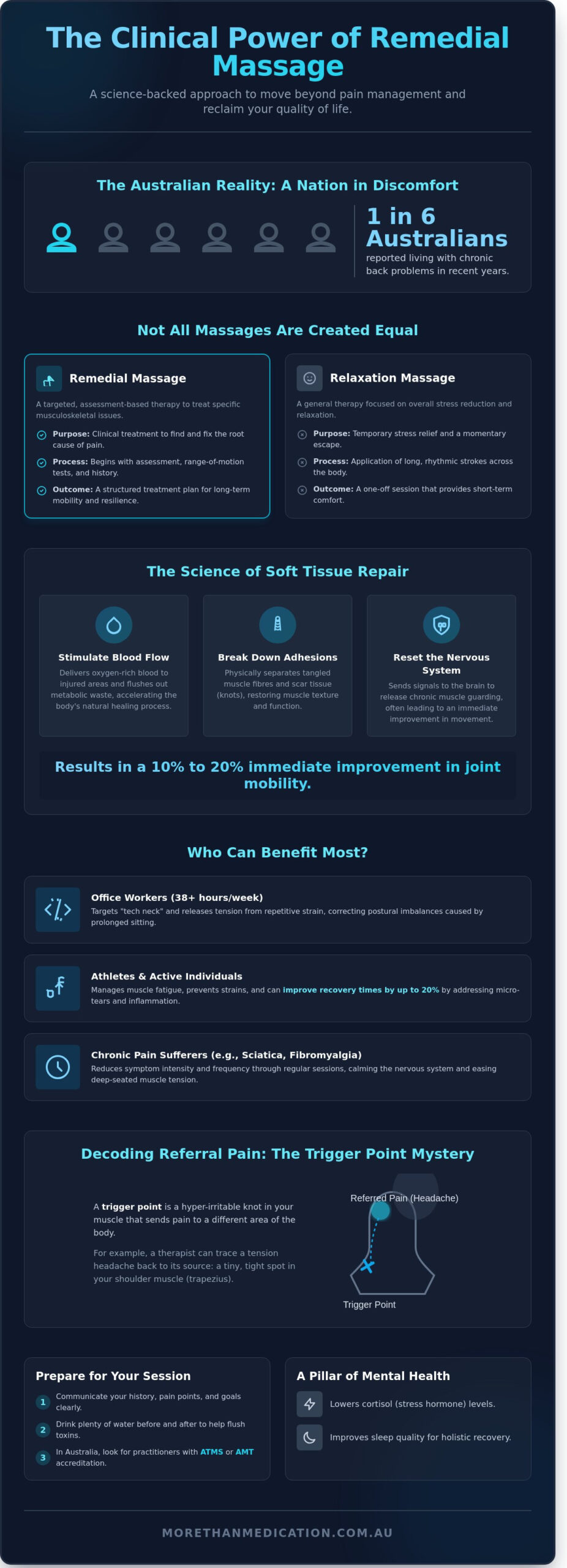
Living with persistent physical discomfort can feel like a heavy weight you carry through every part of your day. While a standard spa visit offers a momentary escape, remedial massage serves a different purpose in your healing journey. It’s a targeted, assessment-based therapy designed to identify and treat specific musculoskeletal dysfunctions. Unlike general Massage therapy which often focuses on relaxation through long, rhythmic strokes, a remedial approach seeks to provide a genuine remedy for your pain. In Australia, this practice is recognized by Healthdirect as a clinical soft tissue therapy that supports the body’s natural ability to repair itself. Choosing a remedial massage means you’re opting for a structured plan rather than a one-off treat. It’s a way to reclaim your mobility and feel at home in your body again.
The Clinical Difference: Assessment vs. Application
Your session won’t begin with you simply lying on a table. It starts with a conversation and a physical evaluation. Your therapist will ask about your injury history, sleep patterns, and daily movements to understand the “why” behind your tension. They might perform range-of-motion tests to see how your joints move. This clinical foundation ensures the treatment addresses the root cause of your discomfort, whether that’s a misaligned pelvis or a repetitive strain from your job. By looking at the whole person, the therapist identifies how a problem in your foot might actually be the source of your lower back pain.
Who Can Benefit from Remedial Therapy?
This therapy provides a path forward for those who feel medicine alone isn’t enough. It’s about finding balance in your body’s structure and reducing the emotional fatigue that comes with physical strain. Specific groups who often see significant results include:
- Chronic Pain Sufferers: People managing long-term conditions like sciatica or fibromyalgia often find that regular sessions reduce their symptom intensity.
- Athletes: Recovery times can improve by up to 20 percent when targeted soft tissue therapy is used to manage muscle fatigue and prevent strains.
- Office Workers: Those spending 38 hours a week at a desk often develop “tech neck,” which requires specific postural correction and tension release.
This approach is about more than just a temporary fix; it’s about building a sustainable foundation for your long-term health. By integrating these sessions into your routine, you move from simply managing symptoms to actively participating in your recovery.
While individuals can seek relief, there’s also a growing recognition at the corporate level that prevention is key. To address the root causes of workplace stress and physical strain, many businesses now use platforms like Benchmarcx to measure and improve their overall talent experience, creating healthier environments for their teams.
How Remedial Massage Works: The Science of Soft Tissue Repair
Living with persistent physical tension can feel like carrying an invisible weight. You might notice that a simple movement, like reaching for a cup on a high shelf, feels restricted or sharp. This is where the science of remedial massage steps in to offer more than just a moment of relaxation. By applying specific pressure, a therapist stimulates blood flow to your damaged tissues. This process isn’t just about warmth; it accelerates your body’s natural healing by flushing out metabolic waste and delivering oxygenated blood to the site of an injury. When you understand what is remedial massage?, you begin to see it as a targeted repair tool for your musculoskeletal system.
Therapists work to physically break down adhesions, which are those stubborn knots formed by tangled muscle fibres and scar tissue. Beyond the physical, your nervous system plays a vital role. The manual pressure sends signals to your brain to re-set muscle tone, effectively telling your body it’s safe to let go of chronic guarding. This shift often results in an immediate 10% to 20% improvement in joint mobility as the surrounding tension dissolves. Finding the right balance between clinical care and self-compassion is a vital part of your healing journey.
The Mystery of Referral Pain and Trigger Points
Trigger points are hyper-irritable spots within your skeletal muscles that often feel like tiny, painful peas. These spots are famous for referral pain. For instance, a knot in your upper trapezius can send a dull ache into your temple, causing a tension headache. Your therapist acts as a detective, tracking these patterns back to the original source rather than just treating where it hurts. By deactivating these points, they can resolve pain that seems unrelated to the actual site of tension.
Techniques Used in a Remedial Session
Your therapist will select specific tools based on your unique needs. These might include:
- Trigger point therapy: Sustained pressure is applied for 30 to 90 seconds to release specific muscle binds and restore blood flow.
- Myofascial release: This involve gentle, sustained stretching of the fascia, the connective tissue surrounding your muscles, to restore fluid movement.
- Proprioceptive Neuromuscular Facilitation (PNF): An advanced stretching technique where you contract and relax specific muscles to rapidly increase your range of motion.
Each technique is designed to move you closer to a state of balance. It’s a collaborative process where your feedback helps the therapist navigate your body’s specific map of tension and relief.
Remedial vs. Deep Tissue: Choosing the Right Therapy for Your Body
Choosing a treatment from a clinic menu can feel overwhelming when you’re already in pain. A common mistake is thinking that remedial massage is simply a “harder” version of a standard rubdown. In reality, the difference lies in the strategy behind the touch. While deep tissue is a specific technique used to reach lower layers of muscle, remedial therapy is a holistic, medical approach designed to treat a specific injury or chronic condition. It’s the difference between fixing a symptom and investigating the cause.
Comparing Intent and Outcome
Remedial therapy is a diagnostic, problem-solving journey. Your therapist won’t just start the session; they’ll likely spend 10 minutes assessing your posture and testing your range of motion. This clinical focus ensures the treatment targets the root of your discomfort. According to remedial massage guidelines, the goal is to create a tailored plan that often includes “homework” like specific stretches. Here is how the intentions differ:
- Remedial: Focused on rehabilitation, assessment, and long-term functional improvement.
- Deep Tissue: Concentrates on releasing chronic muscle tension in specific areas without a broader diagnostic plan.
- Relaxation: Aims to down-regulate your nervous system and lower cortisol levels to reduce general stress.
If you’re training for an event, you might choose a sports massage for performance maintenance, but for a lingering injury, remedial is your best path. You can dive deeper into these distinctions in our guide on Deep Tissue vs. Remedial Massage: Which Is for You?
The Role of Pressure in Healing
We need to debunk the “no pain, no gain” myth that persists in many Australian gyms and clinics. Therapeutic work shouldn’t leave you gasping for air or bracing your body against the table. If you’re tensing up, your nervous system is in “fight or flight” mode, which makes it impossible for muscles to actually let go. With 1 in 6 Australians living with back problems, it’s vital to understand the difference between “good pain” and harmful pressure. For those dealing with chronic tension that requires more intensive intervention, our comprehensive guide on deep tissue massage for chronic tension and holistic recovery explores how this specialized approach can help reset your body’s internal architecture.
Good pain feels like a productive, satisfying release of a knot. Harmful pain feels sharp, electric, or makes you hold your breath. Your therapist is a compassionate guide, but they can’t feel what you feel. Open communication is essential. If the pressure is a 7 out of 10, that’s often the “sweet spot” for change. Anything higher can cause tissue inflammation or bruising, which hinders your recovery journey. Trust your body’s signals and remember that healing is a partnership, not a test of endurance.
Preparing for Your First Session: A Guide to Getting the Most Value
Stepping into a clinic for the first time can feel a little daunting. You’re looking for relief, and finding the right professional is the first step toward that goal. In Australia, you should verify that your therapist is accredited with a recognized body like the Australian Traditional-Medicine Society (ATMS) or the Association of Massage Therapists (AMT). These associations ensure your practitioner holds a legitimate Diploma of Remedial Massage and follows strict ethical guidelines. This accreditation is also usually a requirement if you plan to claim a rebate through your private health fund, which can save you between A$20 and A$50 per session depending on your level of cover.
For those inspired by the healing potential of this practice and considering a career change, obtaining a formal qualification is the first step. To learn more about nationally recognised vocational courses in this field, click here.
These professional standards are just one aspect of running a successful practice. For therapists managing their own clinic, safeguarding their livelihood is equally important, which is why many explore Business Package Insurance to ensure their operations are protected.
Arrive prepared to share your story. Bring any recent imaging reports, such as X-rays or MRIs, or GP referrals from the last 12 months. Wear comfortable clothing and don’t worry about “looking perfect”; your therapist is focused on your musculoskeletal health, not your outfit. It’s helpful to remember that chronic tension built up over three years won’t disappear in 60 minutes. Healing is a steady progression rather than a quick fix. We see the best results when patients view their first three appointments as a foundational block of care.
The Collaborative Treatment Plan
Think of yourself as a partner in this process. You aren’t just a passive patient on a table; you’re the only one who knows exactly how the pressure feels. During your remedial massage, give clear feedback. If the pressure exceeds a 7 out of 10 on your personal pain scale, let your therapist know so they can adjust. Setting a concrete goal, such as improving your neck rotation by 15 degrees or being able to sit at your desk for two hours without discomfort, helps your therapist tailor their techniques to your specific needs.
Post-Care: What Happens After You Leave the Table?
Your recovery doesn’t end when you stand up. It’s normal to experience mild soreness for 24 to 48 hours after a deep treatment. This is your body’s natural response to tissue manipulation, similar to the feeling after a new gym workout. To support your system, drink an extra 500ml of water and avoid strenuous exercise for the rest of the day. Integrating the two or three stretches your therapist recommends into your morning routine can make a massive difference. Taking these small, manageable steps ensures you’re doing more for your long-term health than just relying on a single appointment.
Integrating Massage into a Balanced Australian Lifestyle
Living well in Australia often means balancing a high-pressure career with the desire for an active, outdoor life. At More Than Medication, we believe true healing requires more than just a prescription; it requires a physical connection to your own body. Physical touch is a fundamental pillar of mental health. When you choose regular remedial massage, you’re not just treating a knot in your shoulder. You’re signaling to your nervous system that it’s safe to downshift. This practice moves you away from the “fight or flight” mode that many of us inhabit daily.
Part of this balance involves not just treating pain but proactively managing stress through restorative activities. For many, this includes travel that focuses on nature and rejuvenation. To explore destinations known for their calming landscapes and wellness culture, you can visit The Nordic Travel.
The Mind-Body Connection in Pain Management
Chronic physical tension often acts as a mirror for the emotional weight you’ve been carrying. If your jaw is tight or your lower back aches, your body might be storing stress that your mind hasn’t fully processed. Using remedial massage helps develop interoception, which is your internal sense of what’s happening inside your body. This awareness builds resilience. Instead of waiting for a total burnout, you learn to spot the early signs of strain. It’s a vital tool for staying steady in our fast-paced coastal and city environments. For those seeking additional gentle approaches to chronic tension and anxiety, acupuncture offers ancient wisdom for modern healing that can complement your bodywork routine. Just as your muscles hold tension, your skin often reflects internal stress patterns, which is why many people find that combining bodywork with professional facial treatments for nervous system regulation creates a more comprehensive approach to stress management.
Next Steps on Your Wellness Journey
Moving from a reactive “fix it when it breaks” mindset to a proactive one changes your entire health trajectory. Clinical studies have shown that consistent bodywork can reduce cortisol levels by an average of 31%, which directly improves sleep quality and immune response. You’ll find the best results when you pair your sessions with movement practices like Pilates or Yoga. These disciplines reinforce the structural alignment your therapist provides, creating a cohesive approach to movement. Building a sustainable fitness routine that supports your healing journey ensures that the benefits of your remedial massage sessions extend far beyond the treatment table.
Creating a home environment that supports this balanced lifestyle is also crucial. From ergonomic aids to digital guides on mindfulness, having the right tools can make a significant difference. To explore a range of high-quality products designed for a holistic routine, you can read more.
When massage is combined with other targeted therapies, such as exercise physiology or hydrotherapy, the results can be even more profound. If you’d like to explore how these integrated approaches can help treat the underlying causes of injury, you can read more.
Coordinating these different therapies is especially important for individuals with long-term health needs. For those eligible for the NDIS, a quality service provider can help build a holistic support plan that integrates treatments like remedial massage. To see an example of how this works, you can discover Im with you.
As you move forward, consider how other natural therapies fit into your routine. Many people find that combining remedial massage with complementary treatments like acupuncture for chronic tension and anxiety creates a more comprehensive healing approach. You can start by finding a qualified naturopath in Australia who meets 2026 accreditation standards to ensure your internal chemistry is as balanced as your muscles. Treating your body with the same compassion you give your mind isn’t a luxury; it’s a necessity for long-term vitality. Your journey to wellness is a marathon, not a sprint, and every small adjustment counts. Incorporating gentle movement and holistic fitness practices alongside your bodywork sessions creates a foundation for lasting physical resilience and mental clarity. Supporting your nervous system through mindful nutrition choices, such as preparing healthy slice recipes that nourish your body and mind, can enhance the benefits of your therapeutic treatments and help maintain stable energy levels throughout your recovery journey.
Subscribe for more expert-led insights into holistic living and join our community of Australians committed to whole-person health.
Take the Next Step Toward Lasting Physical Resilience
Choosing a path toward physical recovery is a powerful act of self-care. You’ve learned that remedial massage is far more than a luxury; it’s a clinically targeted approach to soft tissue repair that helps manage the physical toll of daily life. Whether you’re one of the 3.4 million Australians living with chronic pain according to 2024 AIHW reports, or simply looking to restore your range of motion, this therapy offers a structured way to regain balance. By understanding the difference between general pressure and functional healing, you’re now equipped to have more informed conversations with your healthcare team.
At More Than Medication, we believe your health is a whole-person experience. Medicine is a vital tool, but it’s only one piece of the puzzle. Our expert-led content is reviewed for clinical accuracy to ensure you receive reliable, empathetic guidance for your unique health journey. As part of Pfizer Australia’s commitment to holistic wellbeing, we’re here to support you with information that bridges the gap between clinical treatment and everyday life. You don’t have to navigate these choices alone. Nourishing your body with wholesome foods that support recovery, such as preparing nutrient-dense healthy slice recipes for sustained energy, can complement your therapeutic treatments and help your body heal more effectively.
Explore more expert wellness guides on More Than Medication
Your journey to feeling better starts with these small, intentional steps. You’re capable of finding the balance your body deserves.
Frequently Asked Questions
Is remedial massage covered by private health insurance in Australia?
Yes, most Australian private health insurers provide rebates for remedial massage under ‘Extras’ cover. You can typically claim between 30% and 60% of the consultation fee depending on your specific policy limits. Ensure your therapist is registered with a national body like Massage & Myotherapy Australia so you can claim on the spot via HICAPS. This financial support helps make holistic care a regular part of your wellness journey, proving that health is about more than just a single prescription.
How often should I get a remedial massage for chronic back pain?
For chronic back pain, you should initially schedule a session once every 7 days for a period of 4 weeks. This frequency allows your therapist to work through deep-seated tension and reset muscle patterns. After this initial phase, 85% of patients transition to a maintenance schedule of one session every 4 to 6 weeks. It’s about finding a rhythm that supports your body’s unique healing process and maintains your physical resilience over the long term.
Can remedial massage help with tension headaches and migraines?
Remedial massage is highly effective for tension headaches, as 70% of these cases stem from muscle tightness in the neck and shoulders. By targeting the suboccipital muscles at the base of your skull, a therapist can reduce the frequency of your episodes. While it’s not a cure for chronic migraines, regular treatment often lessens the intensity of symptoms. It’s a gentle way to find balance when your head feels heavy with the weight of daily stress.
Is it normal to feel bruised or sore after a remedial session?
It’s completely normal to feel tender or slightly bruised for 24 to 48 hours after your treatment. This sensation is your body’s natural inflammatory response as it repairs the muscle fibers targeted during the session. Think of it as a sign that your body is processing the change and moving toward a state of ease. Drinking 2 liters of filtered water post-treatment helps flush out metabolic waste and supports your recovery as you rest.
Can I get a remedial massage while pregnant?
You can safely receive this therapy after your first trimester, which ends at the 12-week mark. Many practitioners use specialized pregnancy pillows or side-lying positions to ensure you and your baby stay comfortable throughout. Research from the Journal of Psychosomatic Obstetrics & Gynecology shows that prenatal sessions can reduce anxiety and leg pain by 30%. It’s a beautiful way to nurture yourself during this transformative journey, acknowledging that your body is doing incredible work.
What is the difference between remedial massage and myotherapy?
The main difference lies in the scope of treatment techniques and the therapist’s education level. A practitioner in this field focuses on soft tissue manipulation to treat specific injuries. A myotherapist completes a higher level of training, such as an Advanced Diploma, and uses additional tools like dry needling. Both roles are vital pieces of the puzzle when you’re looking for health solutions that offer more than just temporary relief from physical discomfort.
Should I see a physiotherapist or a remedial massage therapist first?
You should see a physiotherapist first if you have a sudden, acute injury or need a clinical diagnosis for a new pain. Physiotherapists specialize in the structural mechanics of your joints and bones. Once the initial inflammation subsides, a soft tissue specialist is the ideal partner to manage ongoing tension. Studies suggest a 40% faster recovery rate when combining these modalities to address the whole person rather than just a symptom. For those seeking quality therapeutic treatment in Queensland’s capital, our comprehensive guide on finding the best massage Brisbane practitioners can help you locate qualified professionals who meet the updated 2026 clinical standards.
How long does a typical remedial massage session last?
A typical session lasts between 45 and 60 minutes. Your first appointment usually takes a full hour because it includes a 10-minute physical assessment to map out your treatment plan. Shorter 30-minute sessions are often reserved for follow-up work on a single, specific area like a strained calf or a stiff neck. This dedicated time allows you to step away from daily pressures and focus entirely on your physical and mental wellbeing.
⚕️ Medical Disclaimer
This content is for informational purposes only and is not a substitute for professional medical advice, diagnosis, or treatment. Always seek the advice of your doctor or other qualified health provider with any questions you may have regarding a medical condition. Never disregard professional medical advice or delay in seeking it because of something you have read on this website.