
Imagine waking up on a Saturday morning with the familiar, pulsing dread that means another weekend is lost to a darkened room. For the 4.9 million Australians living with this condition, the emotional toll of these lost days often outweighs the physical pain. You might feel like you’ve tried every over the counter packet on the pharmacy shelf, yet the attacks keep coming. It’s exhausting to live with the constant anxiety of when the next one will strike or whether the side effects of new migraine therapy drugs will be worse than the pain itself.
We believe your health is about more than medication. This guide will show you exactly how to build a personalized management plan that integrates the latest 2026 clinical breakthroughs with lifestyle resilience. You’ll learn the vital difference between acute relief and long term prevention, giving you the confidence to lead a productive life again. We’ll walk through the current treatment options available in Australia and provide the specific questions you need to ask your GP or neurologist to take back control of your journey.
Key Takeaways
- Understand the vital difference between acute relief and long-term prevention to better manage the invisible burden of migraine in your daily life.
- Navigate the various categories of migraine therapy drugs currently used in Australia and learn how they target specific pain pathways in the brain.
- Gain strategies for managing side effects and the frustration of the “trial and error” phase, helping you stay empowered throughout your treatment journey.
- Learn how to access modern breakthroughs like CGRP inhibitors through the Pharmaceutical Benefits Scheme (PBS) and what the specific eligibility criteria mean for you.
- Discover how to anchor your clinical treatment with holistic lifestyle habits to create a personalized plan that recognizes you are more than your diagnosis.
Understanding Migraine Therapy: Why It’s More Than Just a Quick Fix
Living with migraine in Australia means navigating a world that often fails to see your pain. According to a 2018 Deloitte Access Economics report, migraine affects roughly 4.9 million Australians. It’s a staggering figure that represents millions of missed birthdays, lost work hours, and quiet days spent in dark rooms. You aren’t just looking for a pill; you’re looking for your life back. While migraine therapy drugs provide the essential foundation for recovery, they aren’t the entire solution. Think of medication as the sturdy slab of a house. It provides the necessary support, but the walls, roof, and windows, representing lifestyle, environment, and mental health, are what make the structure a home.
This journey towards wellness requires moving away from the “one-size-fits-all” mentality. Every brain is wired differently, and what works for a colleague might not work for you. In fact, clinical data suggests that nearly 50% of patients don’t find adequate relief with the first generic treatment they try. This is why a holistic perspective is vital. By viewing your health as a partnership between medical science and daily habits, you empower yourself to manage the condition rather than letting it manage you. We believe in the “More Than” philosophy; medicine is where we start, but your habits, sleep, and stress levels are where the real healing takes up residence.
The Difference Between Relief and Prevention
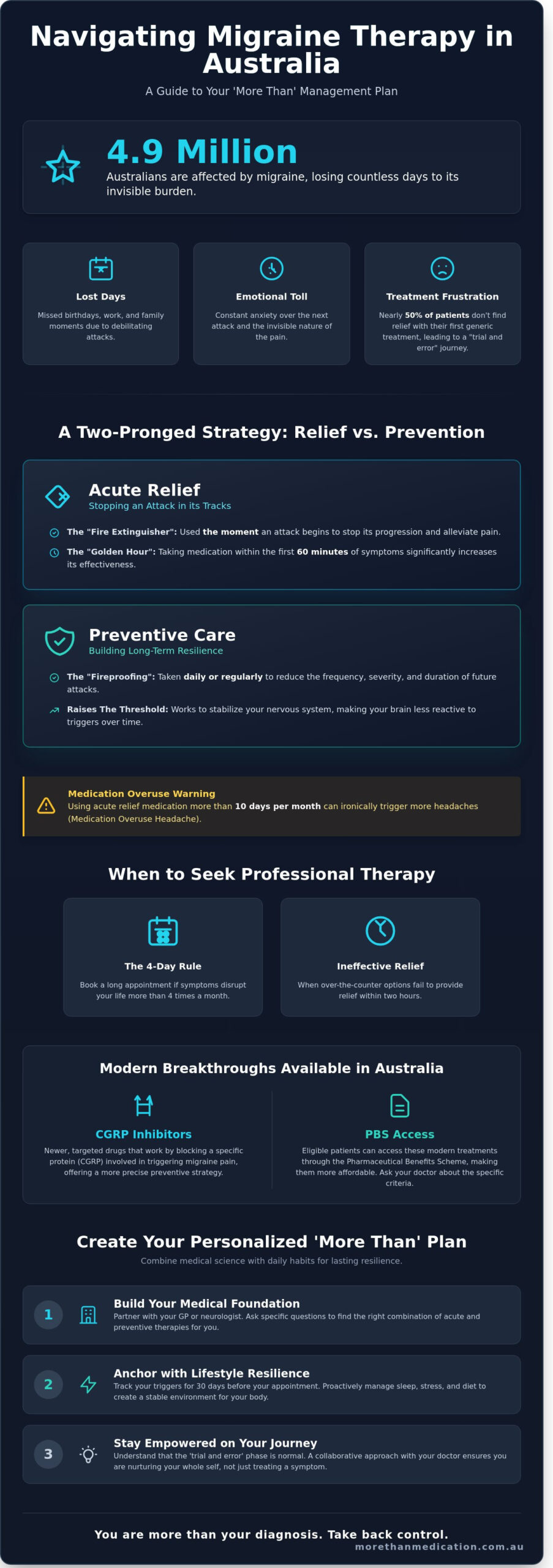
Effective care requires a two-pronged strategy. Acute therapy acts like a fire extinguisher; you reach for it the moment a throb begins to stop an attack. Preventive therapy is different. It functions like fireproofing, working daily to reduce how often attacks happen. Consulting a comprehensive guide to migraine management helps clarify how these two paths work together to stabilise your nervous system. Mistaking one for the other often leads to medication overuse headaches, where taking pills more than 10 days a month actually triggers more pain.
When to Seek Professional Therapy Options
Book a long appointment with your Australian GP if you meet the 4-day rule. This applies if symptoms disrupt your life more than 4 times a month. When basic over-the-counter options fail to work within two hours, your brain needs a specific plan. Modern migraine therapy drugs offer targeted relief that generic pharmacy options simply cannot match. These newer treatments focus on specific proteins in the brain to prevent the cascade of pain before it reaches its peak.
Your path to wellness is a marathon, not a sprint. By combining medical support with lifestyle awareness, you create a resilient environment for your body. Tracking your triggers for 30 days before your appointment gives your doctor the data they need to help you. This collaborative approach ensures you aren’t just treating a symptom, but nurturing your whole self. You deserve a life that isn’t lived in the shadows of the next attack, and finding the right balance is the first step toward that light.
Acute vs. Preventive: Choosing the Right Path for Your Journey
Living with migraines feels like being in a constant state of high alert. You’re often scanning the horizon for the next storm, wondering if a flicker of light or a certain scent will derail your day. In Australia, managing this condition involves a strategic choice between stopping an attack in its tracks and building a long-term defense. Understanding how migraine therapy drugs fit into your life is about more than just swallowing a tablet; it’s about reclaiming your time and finding a sense of balance. These medications interact with your brain’s pain pathways, specifically targeting the trigeminal nerve system. When an attack begins, your brain releases chemicals that cause inflammation and dilate blood vessels. Acute treatments step in to calm this chemical storm, while preventive options work to raise your threshold, making your brain less reactive to triggers over time.
Timing is your most powerful tool when dealing with an active attack. Clinicians often refer to the “golden hour,” which is the first sixty minutes after you notice the initial signs of a migraine. Research suggests that taking medication during this window significantly increases your chances of being pain-free within two hours. If you wait until the pain reaches a peak, the medication has a much harder hill to climb. While many Australians rely on local PBS-listed options, staying informed about FDA-approved migraine treatments helps you understand the global standards that inform local healthcare decisions.
Acute Therapies: Triptans and Beyond
Acute treatments are designed for the “here and now.” Triptans work by stimulating serotonin receptors, which helps narrow swollen blood vessels and blocks pain signals from reaching the brain. For many, nausea is just as debilitating as the head pain itself. This is why doctors often pair migraine therapy drugs with antiemetics. These anti-nausea medications don’t just settle your stomach; they can actually help your body absorb the pain relief more effectively. Triptans remain the gold standard for moderate to severe acute attacks as of 2026.
Preventive Therapies: Building Your Shield
If you find yourself reaching for acute relief more than two days a week, it might be time to consider a preventive approach. These are often “repurposed” medications, such as beta-blockers originally meant for blood pressure or anticonvulsants used for epilepsy, which have shown a 50 percent or greater reduction in migraine frequency for many patients. We use a “start low, go slow” philosophy here. This means beginning with a minimal dose to let your nervous system adjust, which helps minimize potential side effects like fatigue or tingling sensations.
Patience is essential when building this internal shield. Unlike acute pills that work in an hour, preventive medications can take 8 to 12 weeks to show their full benefit. To see the real impact, keep a migraine diary to track your progress. Whether you use a digital app or a simple paper notebook, recording your “good days” provides a clear picture of your personal health journey. This data becomes a bridge between you and your doctor, moving the conversation from guesswork to evidence-based adjustments. Success isn’t always about total elimination; it’s about reducing the burden so you can get back to the things you love.
Navigating the Challenges: Side Effects and the ‘Nothing Works’ Feeling
Living with migraine is exhausting. Adding the weight of medication side effects can feel like an impossible trade-off. You might feel a heavy fog settle over your thoughts or find your energy drained by mid-morning. These aren’t just minor inconveniences; they impact your ability to work, parent, and exist. It’s common to feel frustrated when the very thing meant to help you makes you feel unlike yourself. Finding the right balance with migraine therapy drugs often involves a difficult period of trial and error. According to a 2021 study published in Neurology, approximately 40% of patients find that their first preventive medication doesn’t meet their expectations for relief. Validating this struggle is the first step toward a more balanced approach to your wellbeing.
Sometimes, the standard path doesn’t yield results. Clinical guidelines define “refractory migraine” as failing to respond to three or more different classes of preventive treatments. If you fall into this category, hope isn’t lost. It simply means your journey requires a more nuanced, multi-layered strategy that looks at the whole person. You are the expert on your own body. You have the right to advocate for a change if migraine therapy drugs leave you feeling disconnected or physically depleted. Medicine is one piece of the puzzle, but your voice is the most powerful tool in the room.
Managing Common Side Effects
Side effects like dry mouth or tingling in the fingers (paresthesia) affect roughly 15% of patients on certain preventive medications. For dry mouth, try carrying a reusable water bottle and using sugar-free lozenges to stimulate saliva. If you experience drowsiness, talk to your GP about shifting your dose to the evening to help you sleep. Some effects are temporary adjustments as your system finds its equilibrium. However, if brain fog prevents you from functioning safely or performing your job, it’s a “dealbreaker.” Openly discussing these thresholds with your healthcare provider ensures your treatment plan supports your life, not just your diagnosis.
What to Do When the First Therapy Fails
Failing one medication doesn’t mean you’ll fail everything in that category. The way your body processes a specific molecule is unique. You might find success with another drug in the same class or by exploring FDA-approved migraine treatments that use different biological pathways. Resilience during this phase is key to finding a long-term solution.
- The 12-Week Rule: Most preventive therapies require 8 to 12 weeks of consistent use to show their full benefit.
- Combination Therapy: Your doctor might pair a daily preventive with a specific acute treatment for breakthrough pain to provide a safety net.
- Data Over Failure: Treat this period as data collection. Knowing what doesn’t work brings you one step closer to what will.
In Australia, most of these medications are accessible via the Pharmaceutical Benefits Scheme (PBS). As of 2024, these typically cost around A$31.60 for general patients or A$7.70 for concession card holders. This financial accessibility allows you the space to find the right fit without the added stress of massive out-of-pocket costs. Remember that your prescription is a single component of a larger picture. Your journey is about more than just a pill; it’s about reclaiming your quality of life through a partnership of medical support and personal advocacy.
Modern Solutions in Australia: From CGRP Inhibitors to Neuromodulation
Living with chronic migraine often feels like a full-time job you never applied for. For decades, the medical approach relied on “repurposed” medications originally designed for high blood pressure or epilepsy. While these helped some, they often came with a heavy baggage of side effects that made daily life difficult. The landscape changed significantly in June 2021 when the first CGRP monoclonal antibodies were listed on the Pharmaceutical Benefits Scheme (PBS), marking a shift toward treatments that actually understand the migraine brain.
The CGRP Revolution
CGRP, or Calcitonin Gene-Related Peptide, is a protein that transmits pain signals during an attack. Unlike older preventatives that cast a wide, sometimes clumsy net over your system, these new biological treatments are precise. CGRP therapies are specifically designed for the migraine mechanism. Instead of the burden of a daily pill, many of these migraine therapy drugs are administered via a simple monthly injection under the skin. Data from clinical trials indicated that approximately 50 percent of patients saw their monthly migraine days cut in half, providing a level of relief that feels like reclaiming lost time. This shift from daily management to a monthly ritual helps reduce the “patient identity” that often develops when you’re constantly medicating.
Accessing Advanced Care in the Australian System
The Australian healthcare system provides a clear, though structured, path to these modern treatments. To access migraine drugs in Australia like Erenumab or Galcanezumab through the PBS, you must meet specific criteria. Currently, this requires experiencing at least 15 headache days per month, where at least 8 of those are migraines. You also need to document that you’ve tried and failed three older classes of preventative medications due to lack of efficacy or intolerable side effects.
- Keep a detailed diary: Use an app or a paper journal to track headache frequency and intensity for at least three months.
- The GP’s role: Your local doctor provides the essential referral to a Neurologist, who is the only specialist authorized to prescribe PBS-subsidized CGRP inhibitors.
- Document everything: Note down every medication you’ve tried since your diagnosis, including why you stopped taking it.
Without the PBS subsidy, these treatments can cost upwards of A$700 per month, but for those who qualify, the cost drops to the standard PBS co-payment of A$31.60, or just A$7.70 for concession card holders. This financial relief is a vital part of the healing journey, removing the stress of high costs from an already challenging situation.
Beyond injections and pills, Australia has seen a rise in neuromodulation devices like Cefaly or GammaCore. These non-drug options use mild electrical pulses to stimulate nerves associated with migraine pain. They’re a fantastic alternative if you’re pregnant, breastfeeding, or simply prefer a lifestyle that minimizes chemical intervention. Organizations like Migraine & Headache Australia offer resources and directories to help you find specialists who are well-versed in these technological tools.
As technology plays an increasing role in health management, from tracking apps to advanced devices, staying informed is key. To explore reviews and comparisons of the latest in health tech, you can discover SuggestMeTech.
Your Neurologist isn’t just a prescriber; they’re a partner in navigating these options. They help you weigh the benefits of new-age biologics against the latest neuromodulation tech to find a balance that fits your specific life. If you’re feeling stuck in a cycle of ineffective treatments, it might be time to start a new conversation about what’s possible today.
Discover how to build a personalized toolkit for your health at morethanmedication.com.au
Creating Your Personalized ‘More Than’ Management Plan
Managing chronic pain is a journey that requires more than just a prescription. While migraine therapy drugs are essential for reducing the intensity and frequency of attacks, they’re most effective when integrated with lifestyle anchors that steady your nervous system. Think of your medication as the safety net and your daily habits as the platform you stand on. You aren’t just a patient managing a diagnosis; you’re a person building a life that feels balanced and sustainable.
Your “migraine brain” is biologically sensitive to change. This sensitivity means your nervous system reacts more intensely to fluctuations in light, sound, and internal chemistry. Consistency is your greatest ally. By maintaining a steady routine, you provide your brain with the predictability it craves. This reduces the overall load on your system, allowing your migraine therapy drugs to work more efficiently without having to fight against constant environmental triggers.
Sleep hygiene and hydration are the silent partners of your medical treatment. Dehydration is a documented trigger for roughly 33 percent of migraine sufferers in Australia. Aim for 2 to 2.5 litres of water daily to keep your vascular system stable. Similarly, waking up and going to bed at the same time every day, even on weekends, helps regulate the hormones that influence pain thresholds. When your body knows what to expect, it’s less likely to enter a state of high alert.
Beyond these foundational habits, some people find it beneficial to investigate less obvious environmental stressors that can affect sleep and overall wellbeing. For those exploring this path, Radiation-Free Living provides resources on mitigating factors like electrosmog in the home.
Lifestyle Anchors That Support Your Therapy
Nutrition is about more than just avoiding triggers like aged cheese or red wine. It’s about blood sugar stability. A 2021 study indicated that skipping meals increases the risk of an attack by up to 40 percent. Focus on a “migraine-friendly” diet rich in magnesium and riboflavin, ensuring you eat at regular intervals to prevent the glucose spikes and crashes that irritate sensitive nerves. When it comes to snacking between meals, choosing nutrient-dense options that support your nervous system can make a significant difference. Healthy slice recipes that prioritize brain-supporting nutrients can provide sustained energy without the blood sugar rollercoaster that often triggers attacks.
Movement should be a gentle invitation rather than a strenuous chore. While high-intensity interval training might trigger an attack for some, low-impact exercise like walking or yoga for 30 minutes, three times a week, can lower your physiological threshold for pain. This consistent activity boosts natural endorphins, which act as your body’s internal pain relief system. For those seeking a more comprehensive approach to movement that supports chronic conditions, exploring holistic fitness strategies that prioritize wellbeing over intensity can provide valuable insights into building sustainable exercise habits that complement your migraine management plan.
Stress management is often the hardest anchor to drop, yet it’s the most impactful. Mindfulness and deep breathing exercises change how your brain perceives pain signals. By practicing mindfulness for just 10 minutes daily, you can lower your cortisol levels. This doesn’t just make you feel calmer; it physically reduces the inflammatory response that often precedes a migraine episode. For those dealing with multiple chronic conditions, understanding how autoimmune conditions like Hashimoto’s disease affect your overall health can provide valuable insights into managing inflammation and fatigue that may contribute to migraine triggers.
Your Next Steps Toward Balance
Taking control of your health journey starts with your next clinical conversation. Use this checklist to ensure you’re getting the most out of your appointments:
- Review the frequency and timing of your rescue medication use.
- Discuss any mood changes or “brain fog” you’ve experienced between attacks.
- Share your sleep and hydration logs to identify hidden patterns.
- Ask about how your current treatment plan aligns with your long-term lifestyle goals.
We believe that mental wellbeing is just as vital as physical relief. Chronic conditions can feel isolating, but you don’t have to carry the weight alone. Our resources are designed to help you build resilience and find community among others who truly understand the experience of living with migraine. You are the expert on your own body, and we’re here to provide the tools that help you feel empowered every day. Explore our holistic guides to living well with chronic conditions to find more ways to support your unique path to wellness.
Reclaiming Your Life From the Fog
Living with migraines often feels like a full-time job you never applied for. By 2026, the landscape of migraine therapy drugs in Australia has shifted toward highly personalized care, moving beyond basic painkillers to advanced CGRP inhibitors and neuromodulation devices. You’ve seen that relief isn’t just about stopping a single attack; it’s about building a resilient lifestyle that balances clinical treatments with mental wellbeing. Whether you’re exploring PBS-subsidized preventives or new acute options, remember that your journey is unique. You don’t have to navigate these complex medical choices alone. Our expert-led health content provides the latest Australian-specific wellness news to help you find the “more” in your medication plan. We focus on the whole person, ensuring you have the tools to manage both the physical symptoms and the emotional toll of chronic pain. Take the next step toward a more balanced life today.
Join our community for more expert insights on holistic health
Your path to relief is waiting, and we’re here to walk it with you.
Frequently Asked Questions
Can I use over-the-counter painkillers alongside prescription migraine therapy?
You can often combine over-the-counter options with prescription treatments, but it’s vital to coordinate this with your GP. Overusing these combinations can lead to rebound headaches. The Therapeutic Goods Administration suggests limiting acute use to fewer than 10 days per month. Your journey to relief is unique; keep a diary to track how these combinations affect your clarity and comfort.
How long does it usually take for a preventive migraine drug to start working?
It usually takes 8 to 12 weeks of consistent use to feel the full impact of a preventive treatment. Most Australian neurologists recommend a 3-month trial before deciding if a drug is effective for you. Patience is a quiet form of resilience here. While you wait for the medicine to build up, focus on small daily wins like staying hydrated or practicing five minutes of mindfulness.
What are CGRP inhibitors, and are they available in Australia?
CGRP inhibitors are a newer class of migraine therapy drugs designed to block a specific protein that triggers inflammation and pain. In Australia, the Pharmaceutical Benefits Scheme (PBS) subsidises several of these, meaning you might pay just A$31.60 per script if you meet specific criteria. This breakthrough offers a sense of hope for those who haven’t found relief elsewhere. It’s a powerful tool in your broader toolkit for reclaiming your daily life.
What happens if I take my acute migraine medication too often?
Taking acute medication more than 10 to 15 days a month can trigger medication overuse headaches, creating a frustrating cycle of pain. This affects about 2% of the Australian population at some stage. When your rescue meds become the cause of your pain, it’s time to pause and reassess. We want you to feel empowered, not trapped by your treatment. Talk to your doctor about transitioning to preventive strategies instead.
Are there any natural therapies that can replace migraine drugs?
Some natural options show promise, though they often work best alongside medical advice rather than replacing it entirely. Clinical studies indicate that taking 400 mg of Riboflavin daily can reduce migraine frequency by 50% after three months of use. Magnesium and Coenzyme Q10 are also evidence-based choices. These supplements focus on cellular health, helping your body find its natural balance and resilience against triggers.
Why did my doctor prescribe an antidepressant for my migraines?
Doctors prescribe specific antidepressants like Amitriptyline because they alter brain chemicals like serotonin that regulate pain pathways. You’ll typically start on a very small dose, such as 10 mg, which is much lower than a dose used for mental health. It’s about calming a sensitive nervous system. This approach recognizes that your physical pain and neurological pathways are deeply connected and deserve a holistic response.
Can lifestyle changes alone manage chronic migraine without drugs?
Lifestyle adjustments can reduce your attack frequency by up to 50%, but they’re usually most effective when paired with other supports. Maintaining a strict sleep routine of 8 hours and drinking 2.5 litres of water daily creates a stable foundation for your brain. It’s about finding more than just a quick fix. By nurturing your body’s rhythms, you create a supportive environment where other therapies can work more effectively.
Is it safe to use migraine therapy drugs during pregnancy?
Safety varies significantly between medications, so you must discuss your family planning with your medical team before continuing any migraine therapy drugs. The TGA classifies many common treatments as Category B or C, which means they require a careful risk-benefit analysis by a professional. Paracetamol remains the preferred first-line option for many during pregnancy. Your health and your baby’s wellbeing are equally important, and your doctor will help you navigate this delicate chapter.
⚕️ Medical Disclaimer
This content is for informational purposes only and is not a substitute for professional medical advice, diagnosis, or treatment. Always seek the advice of your doctor or other qualified health provider with any questions you may have regarding a medical condition. Never disregard professional medical advice or delay in seeking it because of something you have read on this website.