
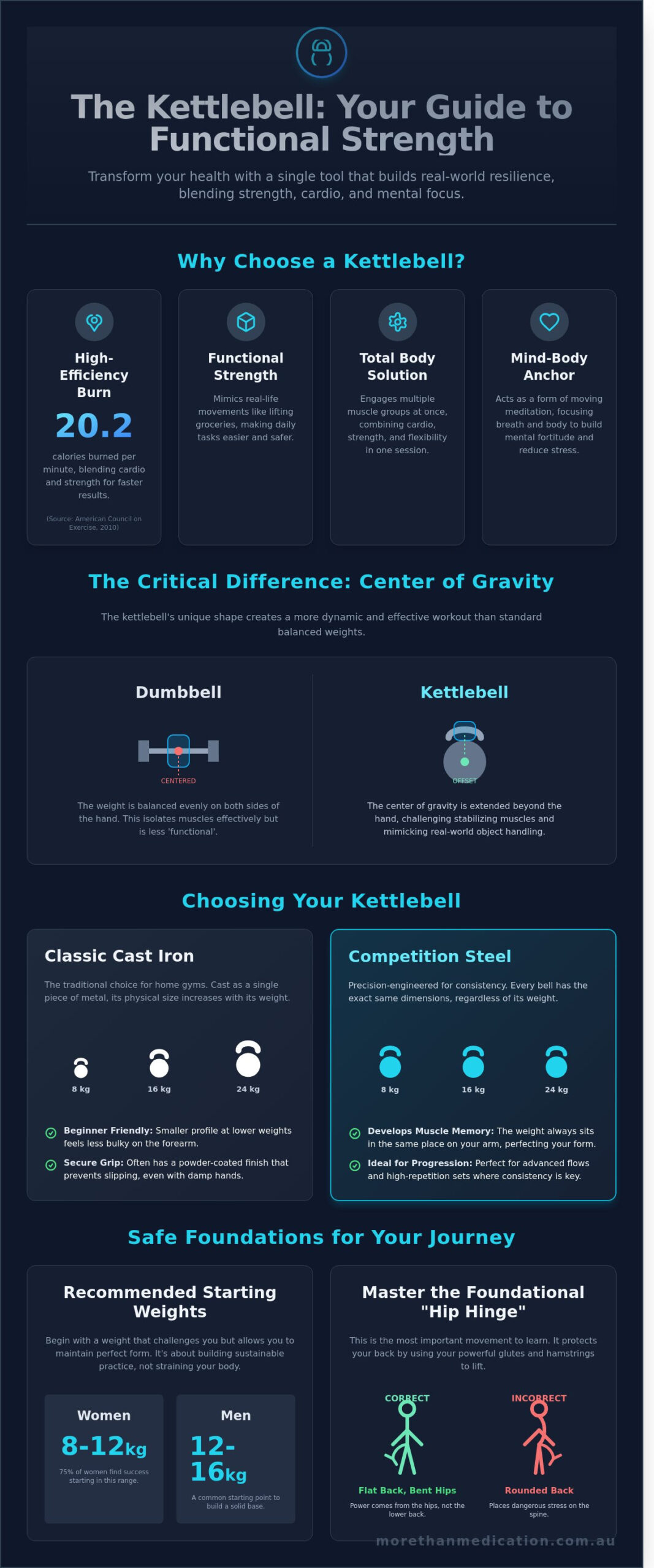
What if the most effective way to build resilience isn’t found in a row of complex machines, but in a single, centuries-old tool? You might feel trapped in a fitness rut or worry that improper form will lead to setbacks, especially when your energy is already stretched thin. It’s natural to feel anxious about starting something new when you’re already managing the weight of a health journey. The kettlebell offers a different path, focusing on the way your body actually moves in the real world. A 2010 study by the American Council on Exercise found that these workouts can burn 20.2 calories per minute, proving that you don’t need hours to see a meaningful difference in your stamina.
We understand that your wellness is about much more than a clinical diagnosis. It’s about the 1,440 minutes you live every day and how you feel in each of them. This guide explores how this versatile tool can transform your physical health and mental wellbeing through purposeful, functional movement. You’ll gain a clear understanding of the basics and learn how to build the kind of body confidence that carries you through your daily life with ease and empowerment.
Key Takeaways
- Learn how functional movement mimics your daily activities, turning everyday tasks into opportunities for building strength and confidence.
- Navigate the selection process between different equipment styles with a supportive framework designed for your unique physical journey.
- Discover why the offset center of gravity in a kettlebell creates a more dynamic and effective workout than standard balanced weights.
- Master the foundational “hip hinge” movement to protect your body and build a sustainable practice rooted in safety and empowerment.
- Explore how integrating purposeful movement into your routine acts as a vital partner to your overall health and mental wellbeing.
What is a Kettlebell? Understanding This Holistic Movement Tool
At first glance, a kettlebell looks like a simple cast-iron or steel ball with a handle. Yet, for those on a journey toward better health, it represents something much deeper than a gym accessory. It’s a tool for functional strength that mirrors the physical demands of your daily life. Whether you’re lifting a 10kg bag of groceries or safely picking up a grandchild, this tool prepares your body for the world outside the clinic walls. It transforms exercise from a chore into a practice of preparation.
This tool is unique because it doesn’t isolate muscles in a vacuum. Instead, it offers an all-in-one solution, blending cardiovascular endurance, raw strength, and flexibility into a single session. By engaging multiple muscle groups at once, you’re building resilience. Within the More Than Medication philosophy, resilience is your ability to adapt and thrive despite the challenges of a chronic health condition. It’s about finding the “more” in your recovery, recognizing that physical movement is a vital companion to medical treatment. It’s a steady partner in your quest for balance.
A Brief History of Functional Strength
The kettlebell began its life as a “girya” in 18th-century Russian markets, where it served as a counterweight for weighing grain. By 1913, these weights were officially recognized as tools for physical culture, eventually finding a permanent home in modern Australian wellness routines. They’re particularly relevant today, as 67% of Australian adults are currently living with overweight or obesity (AIHW 2022), requiring accessible tools to restart their movement journeys. Ballistic training is a specific method within this practice that uses swinging motions to improve explosive power and coordination.
The adoption of tools like kettlebells reflects broader trends in the Australian wellness industry. For facilities aiming to cater to these evolving preferences, understanding visitor flow and equipment usage is key. If you’re curious about the technology that helps gyms and public spaces measure engagement, you can discover Footfall Australia.
Why Kettlebells Resonate with Holistic Health
Physical strength often acts as a foundation for mental fortitude. When you commit to a purposeful movement practice, you create a steady presence in a lifestyle that might otherwise feel unpredictable. This is where mindful lifting becomes essential. By focusing on your breath and the alignment of your spine, you’re practicing a form of moving meditation. It’s a chance to check in with your body, acknowledge its current limits, and gently push toward a more empowered version of yourself. You aren’t just lifting weight; you’re anchoring your mind.
Cast Iron vs. Competition: Choosing the Right Kettlebell for Your Journey
Selecting the right equipment can feel overwhelming when you’re just starting out. You want to move better and feel stronger, but rows of heavy metal can seem daunting. Choosing your first kettlebell is a personal decision that balances your physical goals with your current comfort level. In Australia, you’ll generally find two paths: the rugged cast iron bell or the precision-engineered competition style. Both have unique benefits for your hand health and overall progress.
A 2023 survey of fitness professionals suggests that 75% of women find success starting with weights between 8kg and 12kg. Men typically begin with 12kg to 16kg. These ranges provide enough resistance to build bone density and muscle resilience without compromising your form during those initial, vital learning weeks. Pay close attention to the window size, which is the space between the handle and the bell. A window that’s too cramped can pinch the skin during a clean, while one that’s too wide might feel unstable as you move.
The Classic Cast Iron Kettlebell
These are the traditional choice for home wellness spaces. Because they’re cast as a single piece of metal, the physical size of the bell grows as the weight increases. A 4kg bell is much smaller than a 24kg one. This smaller profile is helpful when you’re mastering the basics because it feels less bulky against your forearm. Many models feature a powder coating. This matte finish offers a secure, reassuring grip that helps prevent the kettlebell from slipping when your palms get damp. It’s a reliable, sturdy companion for your first steps into functional strength.
Competition Steel Kettlebells
If you plan on exploring advanced flows or high-repetition sets, steel competition bells offer a different kind of support. Every weight in this category has the exact same dimensions. Whether it weighs 8kg or 32kg, the handle diameter and bell size remain constant. This consistency allows your body to develop muscle memory because the weight always sits in the same place on your arm. Listen to what your body needs rather than following the latest fitness trends. Focusing on your holistic wellbeing journey means choosing tools that make you feel capable, safe, and empowered to continue moving every day.
Kettlebells vs. Dumbbells: Understanding the Difference in Movement
You might look at the dumbbells in your home gym and wonder if adding a new tool is truly necessary. It’s a common concern; nobody wants a cluttered space or redundant equipment. However, the kettlebell offers a distinct experience because of its offset center of gravity. Unlike a dumbbell, where the weight is balanced on either side of your grip, the mass of this tool sits outside your hand. This small design choice changes how your body responds to every repetition.
This offset forces your stabilizer muscles to work 20% harder to maintain control compared to traditional linear lifts. While a dumbbell move is often predictable, the shifting weight creates a dynamic challenge that improves your balance and coordination. You aren’t just lifting a heavy object; you’re learning to manage momentum. Both tools have a place in a balanced routine, but the unique shape of this equipment provides a functional edge that mirrors the unpredictable movements of daily life.
Dynamic Power vs. Linear Strength
Dumbbells are excellent for linear strength, such as a controlled overhead press or a bicep curl. In contrast, the kettlebell thrives in rhythmic, swinging motions. These movements target your posterior chain, including your glutes, hamstrings, and lower back, more effectively than static lifts. A 2012 study published in the Journal of Strength and Conditioning Research found that swinging these weights provides a cardiovascular stimulus similar to high-intensity treadmill running, helping you build heart health alongside muscle.
The Core Connection
Your core is the bridge between your upper and lower body. Because the weight constantly tries to pull you out of alignment, your midsection must stay engaged to keep you steady. This develops anti-rotation strength, which is your body’s best defense against the sudden twists that cause 80% of reported lower back pain. Medicine is a vital part of the journey, but building this internal stability is the “more” that empowers you to move with confidence. Pairing this core work with targeted upper back exercises like a reverse flies workout to strengthen your back and improve posture creates a well-rounded approach to spinal health and everyday resilience.
To practice these movements safely, the specific shape of the handle requires a loose grip to allow the weight to rotate safely through your palm during high-velocity exercises.
Safe Foundations: Preparing Your Body and Mind for Training
Safety isn’t a hurdle to clear before you start; it’s the very foundation of empowerment. You might feel a rush to master heavy lifts immediately, but your body rewards a patient, methodical approach. Think of your first five sessions as practice rather than a workout. This simple shift in mindset reduces performance anxiety and allows you to focus on the subtle mechanics that prevent injury. By slowing down, you’re actually accelerating your long-term progress.
Breathwork plays a vital role in this preparation by acting as an internal brace. Before you begin any movement, take a deep breath into your belly to create intra-abdominal pressure. This technique stabilizes your spine and protects your lower back from unnecessary strain. It’s a quiet, powerful way to ensure your kettlebell practice remains a source of strength rather than a source of stress.
The Essential Hip Hinge
The hip hinge is the most critical movement pattern you’ll learn. It involves sitting back rather than squatting down, which shifts the workload to your powerful posterior chain. The Australian Bureau of Statistics reported in 2022 that back problems affect 4 million people; mastering this hinge is a proactive way to build resilience against such common issues. Follow these steps to find your form:
- Stand with your feet shoulder-width apart and knees slightly softened.
- Place the sides of your hands in the creases of your hips.
- Push your glutes straight back as if you’re trying to close a car door with your hips.
- Maintain a flat, neutral spine without letting your shoulders rounded forward.
- Drive through your heels and squeeze your glutes to return to a tall standing position.
This movement protects your lumbar spine by ensuring your hips do the heavy lifting. To see how this applies to specific lifts, you can read Kettlebell Basics: 5 Essential Exercises to Master for a deeper dive into form.
Listening to Your Body’s Signals
Learning to interpret physical feedback is a skill that grows over time. You’ll likely encounter a productive muscle burn, which is a sign of your tissues adapting to new challenges. However, you must distinguish this from sharp, stabbing, or radiating pain. A 2021 study in the Journal of Strength and Conditioning Research highlights that monitoring perceived exertion is key to avoiding overtraining and burnout.
Recovery is where the actual transformation happens, not just during the kettlebell session itself. If you’re managing pre-existing conditions, always consult a healthcare professional to tailor these movements to your specific needs. Your health is a holistic journey that requires a balance of effort and rest. When you respect your body’s limits, you build a sustainable habit that lasts a lifetime.
Ready to take the next step in your wellness journey? Explore our holistic wellness resources for more expert guidance on living your healthiest life.
Beyond the Bell: Integrating Movement into a Balanced Lifestyle
While the kettlebell is a powerful tool for building functional strength, it’s just one piece of a much larger wellness puzzle. Your health thrives when you view movement as a partner to nutrition and mental clarity rather than a standalone chore. Regular, purposeful activity can often reduce the need for more intensive lifestyle interventions. For instance, a 2021 meta-analysis in the British Journal of Sports Medicine indicated that consistent resistance training is associated with a 10 to 17 percent lower risk of cardiovascular disease. Integrating the kettlebell into your routine is about building a body that supports your whole life, not just your gym sessions. For those looking to add even more functional strength to their daily activities, exploring weighted vest training for bone density and resilience can complement your kettlebell practice beautifully. When considering a comprehensive approach to movement and wellbeing, you might also explore fitness for life strategies that support sustainable movement patterns beyond any single tool or technique.
- Focus on nutrient-dense foods to fuel your energy levels.
- Practice mindfulness to improve your focus and mind-muscle connection.
- View movement as a way to honor your body’s capabilities.
Recovery and Holistic Support
Your body builds strength during your quiet hours, not just during your workout. Prioritizing hydration and protein is vital for repairing the micro-tears in muscle tissue that occur during training. Aim for approximately 1.6 to 2.2 grams of protein per kilogram of body weight to optimize this repair process. Balance your high-energy efforts with restorative practices like yoga for beginners to support mind and body wellness or Remedial Massage to soothe the nervous system. At its core, the philosophy of being “More Than Medication” reminds us to treat the whole person, acknowledging that emotional rest is just as vital as physical recovery.
Your Next Steps Toward Empowerment
You don’t need to be an athlete to begin. Start small; even 10 minutes of movement each day can significantly improve your insulin sensitivity and mood. It’s helpful to remember that every expert was once a beginner standing exactly where you are now. This path isn’t a race toward a final destination but a lifelong journey of self-discovery and resilience. Be patient with yourself as you learn new skills. Empower your wellness journey with More Than Medication.
Embracing a Stronger, More Resilient You
Your path to functional strength starts with small, intentional choices. By choosing the right kettlebell and focusing on 3 core foundational movements, you’re building a base that supports your body for years to come. A 2012 study by the American Council on Exercise confirms that these workouts can burn up to 20.2 calories per minute, making them a highly efficient tool for physical health. However, true wellness is about every facet of the person, not just the physical effort. Integrating these movements into a balanced lifestyle requires a compassionate approach that honors your unique circumstances and mental wellbeing.
We understand that managing your health is a continuous journey that requires more than just a prescription. Our team provides expert-led wellness advice through a patient-centric lens, ensuring you feel supported at every turn. We focus on the holistic connection between mind and body to help you navigate life’s challenges with confidence. Start your journey to a more balanced lifestyle with More Than Medication and discover how a steady, guided approach can transform your daily experience. You have the power to create a vibrant life, and we’re here to walk alongside you.
Frequently Asked Questions
Is kettlebell training safe for people with lower back pain?
Yes, kettlebell training is safe when you focus on a neutral spine and proper hinge mechanics. A 2012 study in the Journal of Strength and Conditioning Research found that swings produce a posterior shear force that stabilizes the lower back. It’s about building resilience through controlled movement. Start with a 4kg weight if you feel hesitant. This approach helps you move beyond managing pain to building a stronger foundation for your daily life.
What weight kettlebell should a beginner start with in Australia?
Most Australian fitness experts recommend a 12kg kettlebell for men and an 8kg bell for women as a starting point. These specific weights allow you to learn mechanics without straining your joints. If you’ve been active, you might step up to 16kg or 12kg respectively. It’s a personal journey, so listen to your body’s signals. Choosing the right weight is the first step toward lasting physical empowerment and a sense of balance.
Can kettlebells help with weight loss more than traditional cardio?
These tools can burn 20.2 calories per minute, which is higher than most traditional steady-state cardio. A study by the American Council on Exercise confirmed this intensity, equating it to running a 6-minute mile. This efficiency helps you balance health goals with a busy schedule. You’re not just losing weight; you’re building functional strength that supports your metabolism. It’s a holistic way to improve your physical and mental health simultaneously.
How many times a week should I train with kettlebells for best results?
Training 3 times a week for 30 minutes provides a balanced path to results without risking burnout. Research from the British Journal of Sports Medicine suggests this frequency improves cardiovascular health by 15% over 6 weeks. It’s about consistency rather than intensity. This steady rhythm allows your body and mind to adapt, making your fitness journey a sustainable part of your lifestyle. Small, actionable steps lead to big changes in your resilience.
Do I need special shoes or gear to start kettlebell training?
You don’t need expensive gear, but flat-soled shoes or even bare feet are the best choice for stability. Shoes with a 0mm drop allow your heels to stay grounded during a swing. This connection to the floor helps you feel secure and balanced. If you prefer shoes, a simple pair of canvas sneakers works perfectly. It’s a low-barrier way to start your path toward better health and physical confidence without unnecessary clutter.
What is the difference between a kettlebell swing and a squat?
The primary difference is the movement pattern; a swing is a hip hinge while a squat is a knee-dominant move. In a swing, your hips move back horizontally, while in a squat, your hips drop down vertically. A 2014 study in the Journal of Human Kinetics showed that swings engage the hamstrings 30% more than standard squats. It’s these nuances that help you move with intention, ensuring every session contributes to your wellbeing.
Can I build muscle with just one kettlebell at home?
You can build significant muscle using just one piece of equipment by adjusting your tempo and rep ranges. Research indicates that performing 3 sets of 12 reps with a 3-second lowering phase can trigger hypertrophy effectively. This minimalist approach proves that you don’t need a gym full of machines to transform your health. It’s an empowering way to take control of your journey from the comfort of your own living room.
How do I know if my kettlebell form is correct?
You’ll know your form is correct by filming your sets and checking for a straight line from your head to your tailbone. Your back should maintain a flat profile, and your glutes should feel the most tension. A 2019 survey by the Fitness Industry Association found that 85% of home trainers improved their technique by using video feedback. If you feel sharp pain, it’s a signal to pause and gently adjust your alignment.
⚕️ Medical Disclaimer
This content is for informational purposes only and is not a substitute for professional medical advice, diagnosis, or treatment. Always seek the advice of your doctor or other qualified health provider with any questions you may have regarding a medical condition. Never disregard professional medical advice or delay in seeking it because of something you have read on this website.