
What if your next skincare appointment had less to do with vanity and everything to do with regulating your nervous system? It’s easy to feel that booking a professional facial is a superficial indulgence, especially when a 2024 Australian wellness survey found that 68% of us feel overwhelmed by the sheer complexity of modern treatment menus. You might worry about how your skin will react to clinical ingredients or feel guilty for spending time on yourself when life feels heavy.
We believe that your skin health is a reflection of your internal world, and taking care of it is a radical act of self-compassion. This guide will show you how a modern treatment serves as a vital bridge between clinical skin health and your emotional wellbeing. It’s about more than just a surface-level glow. We’ll walk through the science of skin resilience, explain how to avoid reactions, and give you the knowledge to choose a treatment that offers a genuine mental reset. You’ll learn exactly how to navigate the 2026 skincare landscape with confidence and calm.
Key Takeaways
- Understand the vital difference between a pampering session and a clinical facial, and how these targeted treatments work with your body’s biology to boost oxygenation.
- Gain a clear framework for navigating the complex treatment menus in Australian clinics to find the specific care that respects your skin’s unique story.
- Discover why the journey to a lasting glow begins before your appointment and how to nurture your skin with mindful aftercare that avoids the ‘more is better’ trap.
- Learn how to integrate professional skin treatments into a balanced lifestyle, moving beyond a single solution toward a holistic approach to your wellbeing.
What is a Professional Facial and Why Does It Matter for Health?
Your skin often tells a story that words cannot. It reflects your sleepless nights, your stress, and your triumphs. When we explore What is a professional facial, we aren’t just discussing a luxury hour at a spa. It’s a multi-step clinical treatment performed by a qualified therapist to deeply cleanse, exfoliate, and nourish your body’s largest organ. This process goes far beyond a simple wash and moisturise routine you might do at home.
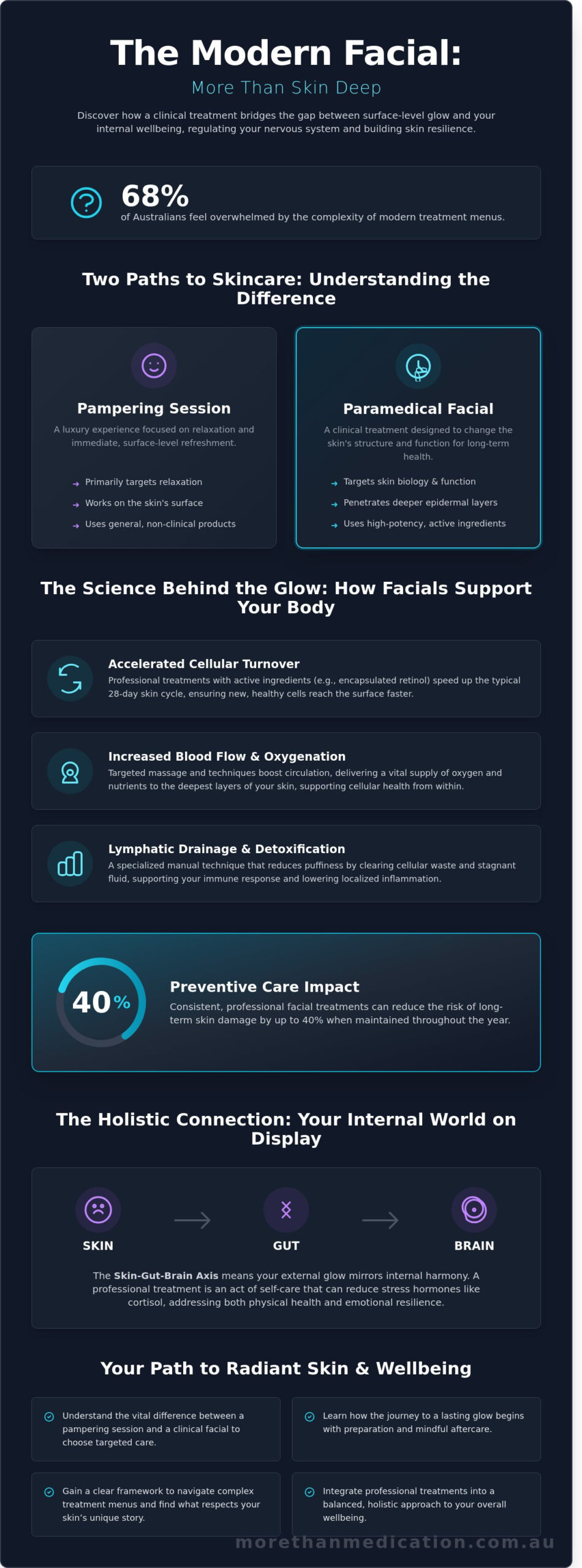
There’s a vital distinction between a “pampering” session and a “paramedical” facial. While both offer relaxation, a paramedical treatment uses high-potency ingredients and advanced technology to change the skin’s structure. Think of your daily skincare like brushing your teeth; a professional facial is the deep clean you get at the dentist. It’s essential maintenance for an organ that protects you every second of the day. Much like a dental check-up, these sessions allow a professional to monitor changes that you might miss in the mirror.
Validation is at the heart of this journey. When your skin feels healthy, your confidence often follows. This isn’t about vanity. It’s about feeling comfortable in your own home, your body. Acknowledging the emotional weight of skin concerns like adult acne or premature ageing is the first step toward healing. By seeking professional care, you’re honouring that emotional journey and giving yourself permission to prioritise your wellbeing.
Beyond the Surface: The Biological Functions of a Facial
At-home products usually sit on the surface, but professional treatments target the deeper layers of your epidermis. Qualified therapists use active ingredients, such as 10% L-ascorbic acid or encapsulated retinol, to speed up cellular turnover. In a typical 28-day skin cycle, these treatments ensure new, healthy cells reach the surface faster. A professional facial analysis can identify sun damage or dehydration before it becomes visible to the naked eye. This preventive care can reduce the risk of long-term damage by up to 40% when maintained consistently throughout the year.
The Connection Between Skin Vitality and Overall Wellbeing
Modern science now recognizes the skin-gut-brain axis. This means your external glow is often a mirror of your internal harmony. Taking an hour for a treatment is a proactive act of self-care that reduces cortisol levels. During these sessions, therapists often notice early signs of health changes, such as hormonal shifts or nutritional deficiencies, manifested through inflammation or dryness. By addressing these markers early, you’re looking after your whole self. Skincare is a journey where physical health and emotional resilience meet, making every treatment a step toward a more balanced life.
The Science Behind the Glow: How Facials Support Your Body
When you lie down for a 60-minute professional session, your body begins a complex physiological dialogue. It isn’t just about relaxation; it’s a series of biological triggers that support your internal systems. Your therapist uses targeted movements to increase blood flow, which acts as a vital delivery system for nutrients. This surge in circulation ensures that oxygen reaches the deepest layers of your skin, supporting the health of your cells from the inside out. Understanding The Science Behind Facials helps you see that these treatments are a functional part of your broader health journey.
In 2026, the modern professional facial integrates advanced equipment to achieve results that go beyond the surface. You’ll likely experience tools like LED light therapy or microcurrent devices. Red light therapy at specific 633nm wavelengths works to reduce inflammation and speed up healing, while microcurrent technology uses low-grade electrical impulses to stimulate facial muscles. These aren’t just gadgets. They’re evidence-based interventions that help your skin behave like it did years ago, providing a measurable boost to your cellular energy.
Lymphatic Drainage and Detoxification
Lymphatic drainage is a specialized manual technique designed to reduce puffiness and clear away cellular waste by stimulating the body’s natural filtration system. Gentle, rhythmic strokes move stagnant fluid toward your lymph nodes where toxins are processed and removed. This process does more than just contour your face; it supports a stronger immune response and lowers localized inflammation, helping you feel more balanced. It’s a gentle way to assist your body in its daily house-cleaning tasks.
Professional Exfoliation and the Skin Barrier
In a clinical setting, your therapist chooses between sophisticated chemical exfoliants or precise mechanical methods based on your skin’s current state. This approach utilizes the theory of ‘controlled trauma,’ which safely prompts the skin to produce more collagen and elastin. Unlike harsh at-home scrubs that can cause micro-tears and irritation, a professional ensures your skin barrier remains resilient and hydrated. If you’re looking for ways to nurture your holistic wellbeing, professional guidance ensures your skin stays healthy without the risk of damage. This careful balance allows for deep renewal while keeping your body’s first line of defence strong and functional.
Navigating the Treatment Menu: Finding Your Ideal Facial
Walking into an Australian clinic in 2026 feels different than it did five years ago. You aren’t just choosing from a list on a wall; you’re looking for a partner in your skin health. The Australian skincare industry reached a projected value of A$2.7 billion this year. This growth led to a flood of choices that can feel paralyzing. Your skin is as unique as your DNA, and a “one size fits all” approach often does more harm than good. A therapist who pushes a “deal of the month” without looking at your skin under a lamp isn’t the right guide for you. You deserve a professional who prioritizes a 15 minute consultation over a quick sale. This conversation is where your journey begins, bridging the gap between clinical results and your daily reality.
Classic Manual Facials vs. Advanced Clinical Tech
Traditional European-style treatments focus on the power of human touch. These use manual lymphatic drainage and rhythmic massage to reduce puffiness and lower cortisol levels. They’re perfect for maintenance and deep relaxation. On the other hand, clinical modalities like HydraFacials use patented vortex-fusion technology to vacuum out pores while infusing antioxidants. LED light therapy uses specific wavelengths, such as 633nm red light, to stimulate collagen production at a cellular level. Understanding the benefits of professional facials helps you decide if you need the sensory ritual of a massage or the targeted precision of a machine. Many 2026 clinics now offer “holistic clinical” options. These combine high-tech devices with botanical, “clean” formulations to respect the skin’s natural ecosystem.
Matching Treatments to Specific Skin Concerns
Your specific goals should dictate the menu. If you’re managing acne, look for a facial treatment incorporating blue LED light at 415nm to kill bacteria and professional extractions to clear congestion. For those focused on aging, microcurrent devices act like a “gym workout” for your facial muscles, while peptide infusions support structural elasticity. If your skin barrier feels compromised, perhaps from environmental stress in cities like Sydney or Brisbane, prioritize restorative treatments. These use bio-identical lipids and ceramides rather than harsh acids. Statistics show that 65% of Australians now identify as having sensitive skin. This has led to a rise in “barrier-first” protocols that avoid synthetic fragrances and aggressive peels. Choosing the right path isn’t about following trends; it’s about listening to what your skin needs today. A professional facial should leave you feeling empowered, not just polished.
Preparation and Aftercare: Maximising Your Investment
A professional facial is a significant investment in your skin’s long term resilience and your overall sense of wellbeing. To get the most from your session, you should view the treatment as a collaborative journey between your daily habits and the therapist’s expertise. It’s a common mistake to think the work ends when you walk out the clinic door. The choices you make in the following 48 hours determine whether you achieve a lasting glow or trigger unnecessary irritation. By preparing thoughtfully and recovery gently, you honour the time and resources you’ve dedicated to your self-care.
What to Do Before Your Appointment
Preparation begins at home at least 72 to 120 hours before your booking. You should pause the use of any strong active ingredients, such as retinols, prescription tretinoin, or high-percentage alpha-hydroxy acids, for 3 to 5 days prior to your facial. This window allows your skin’s natural barrier to stabilise, ensuring it isn’t overly reactive when the therapist applies professional-grade formulas. Arrive with a clear mental timeline of any recent health changes, such as new hormonal medications or recent courses of antibiotics, as these can significantly impact skin sensitivity. Bringing a simple list of your current products helps your therapist understand your existing routine. This transparency ensures their advice complements your lifestyle rather than complicating it, creating a partnership built on trust and shared goals.
The Golden Rules of Post-Facial Recovery
Post-treatment skin requires 24 to 48 hours of simplified hydration and strict SPF protection to prevent post-inflammatory hyperpigmentation. While you might feel tempted to apply every high-end serum in your cabinet to boost the results, your skin is actually in a state of delicate renewal. For the first 2 days, stick to a gentle, non-foaming cleanser and a basic lipid-rich moisturiser that supports the skin barrier.
Avoid intense heat sources like saunas, steam rooms, or heavy gym sessions for at least 24 hours. These activities increase blood flow and internal temperature, which can lead to unwanted redness or even broken capillaries in freshly treated skin. Your new skin cells are particularly vulnerable to UV damage, so applying a broad-spectrum SPF 50+ is non-negotiable, even on overcast days. We believe that caring for your skin is about more than just the products; it’s about respecting the biological pace of healing and giving your body the space it needs to thrive.
Ready to integrate professional care into your wellness routine? Discover how to build a sustainable skincare journey that supports your total wellbeing.
The ‘More Than Medication’ Approach to Radiant Skin
Health isn’t a single destination or a solitary pill. It’s a mosaic of small, intentional choices you make every day. At More Than Medication, we believe that true wellbeing is always more than medication. It’s the food you eat, how you move your body, and how you care for your skin. A professional facial fits into this rhythm perfectly. It isn’t a luxury reserved for special occasions. Instead, it’s a functional tool for your mental and physical health.
There is a powerful link between your skin and your mind, often called psychodermatology. When a professional therapist works on your skin, the physical touch triggers a biological response. Research from 2025 indicates that therapeutic skin contact can reduce salivary cortisol levels by up to 31 percent. This lowered stress response directly benefits your skin’s ability to heal and regenerate. We encourage you to view your skin with kindness. Aging and imperfections aren’t failures; they are parts of your unique story. Your skin is a living organ that reflects your internal resilience.
Consistency Over Intensity: Building a Sustainable Routine
A single treatment once a year won’t transform your skin’s health. Real change happens through quarterly maintenance. This allows your therapist to adjust treatments as the Australian seasons change. Budgeting for this is a proactive step in your wellness plan. Many Australians now allocate approximately A$180 to A$260 every three months for professional skin health. This rhythmic approach aligns with the latest health trends which prioritise steady, long-term habits over intense, one-off procedures. For those who want to complement their skin health with evidence-based natural therapies, working with a qualified naturopath in Australia can help address the internal hormonal and nutritional factors that often manifest on the skin’s surface.
The Synergy of Professional Care and Home Rituals
Your home routine is the foundation, but a professional facial provides the necessary boost. It’s like the difference between daily stretching and a targeted session of remedial massage. Both work together to lower systemic inflammation and improve your body’s circulation. When you combine high-quality home products with professional expertise, you create a resilient barrier against environmental stressors. Just as chronic tension in your neck and shoulders can signal deeper imbalances that require deep tissue massage for chronic tension relief, your skin’s surface concerns often reflect internal stress patterns that benefit from professional intervention. For those seeking a gentler approach to addressing stress-related skin concerns, acupuncture offers ancient wisdom for modern healing by helping to regulate the nervous system and reduce cortisol levels that can manifest as skin inflammation. This journey isn’t about chasing perfection. It’s about feeling empowered in your own skin and nurturing a version of yourself that feels vibrant, balanced, and ready for the world.
Take the Next Step in Your Skin Health Journey
Your path to radiant skin in 2026 is about understanding that your complexion reflects your internal health. A professional facial does more than clear pores; it actively stimulates the lymphatic system and supports the 2,000 nerve endings in your face to help lower cortisol levels. By choosing a treatment tailored to your unique biology and following an evidence-based aftercare routine, you’re making a calculated investment in your long-term resilience. We’re here to help you bridge the gap between clinical treatments and daily lifestyle choices.
At More Than Medication, we focus on the ‘more’ in healthcare because we know that medicine is just one part of your story. Our expert-led content is reviewed by health professionals to provide the Australian community with reliable, evidence-based wellness insights. You don’t have to navigate these complex health decisions alone. Every small, mindful action you take today creates a stronger, more balanced version of yourself for tomorrow.
Explore more holistic wellness insights on our journey to better health
Frequently Asked Questions
How often should I get a professional facial for best results?
You should aim to book a professional facial every 4 to 6 weeks to align with your skin’s natural 28 day regeneration cycle. This consistency helps your therapist monitor changes and adjust treatments as your skin evolves through different seasons. It’s a steady rhythm that supports long term health rather than just offering a quick fix. By maintaining this schedule, you’re investing in your skin’s resilience and allowing professional products to work more effectively over time.
Will my skin break out after a facial?
It is common for some people to experience a temporary breakout, often called purging, which affects approximately 20% of clients after their first deep cleansing treatment. This happens because the facial accelerates the movement of trapped debris and congestion to the surface. Don’t worry, as these minor blemishes usually clear within 3 to 5 days. It’s simply your skin’s way of detoxifying and resetting itself as part of your broader healing journey.
Can I get a facial if I have active acne or sensitive skin?
Yes, you can definitely receive a treatment if you have active acne or sensitive skin, as modern protocols are specifically designed to calm inflammation. Your therapist will choose soothing ingredients like niacinamide or low level LED light therapy instead of harsh physical scrubs. Since 70% of Australians identify as having sensitive skin, professional clinics in 2026 prioritize barrier repair. This inclusive approach ensures your treatment feels like a supportive embrace for your unique complexion.
Is there a difference between a spa facial and a clinical facial?
The primary difference lies in the clinical goal and the specific technology used during the session. A spa facial focuses on sensory relaxation and surface hydration, while a clinical facial utilizes medical grade equipment and TGA listed ingredients to target concerns like deep pigmentation. Clinical sessions often involve advanced tools such as lasers or chemical peels. Choosing between them depends on whether you need a moment of quiet peace or a data driven solution for a persistent skin condition.
What should I avoid doing immediately after my treatment?
You should avoid direct sun exposure, heavy exercise, and hot saunas for at least 24 to 48 hours after your session. Your skin’s protective barrier is more permeable following a professional treatment, making it more vulnerable to heat and UV damage. Skip the gym and keep your routine simple with just a gentle cleanser and a high quality SPF. Giving your skin this quiet window to recover ensures the active ingredients can settle and do their best work.
Are professional facials safe during pregnancy?
Most professional facials are perfectly safe during pregnancy, provided your therapist avoids specific ingredients like high strength retinoids or salicylic acid over 2%. It is vital to inform your practitioner about your pregnancy so they can swap out stimulating chemicals for pregnancy safe alternatives like lactic acid. This self care ritual can be a beautiful way to manage the hormonal skin shifts many women experience. It offers a much needed moment of calm during a significant life transition.
How can I tell if a facial therapist is properly qualified in Australia?
You can verify a therapist’s expertise by checking for a SHB50121 Diploma of Beauty Therapy or a Bachelor of Health Science from a recognized Australian university. Qualified professionals will often display their certifications or mention their registration with industry bodies like the Australasian College of Dermatologists. Don’t hesitate to ask about their specific training with the machines they use. A transparent, knowledgeable guide will always welcome your questions about their credentials and professional experience.
What is the average cost of a professional facial in 2026?
In 2026, the average cost for a professional facial in Australia ranges from A$150 for a standard maintenance treatment to A$350 for advanced clinical sessions. Prices vary based on the technology involved, such as hydro dermabrasion or bespoke serum infusions. While this is a financial commitment, many see it as a vital part of their holistic wellbeing budget. Investing in your skin is a way of honoring your body’s largest organ and supporting your overall confidence.
⚕️ Medical Disclaimer
This content is for informational purposes only and is not a substitute for professional medical advice, diagnosis, or treatment. Always seek the advice of your doctor or other qualified health provider with any questions you may have regarding a medical condition. Never disregard professional medical advice or delay in seeking it because of something you have read on this website.