
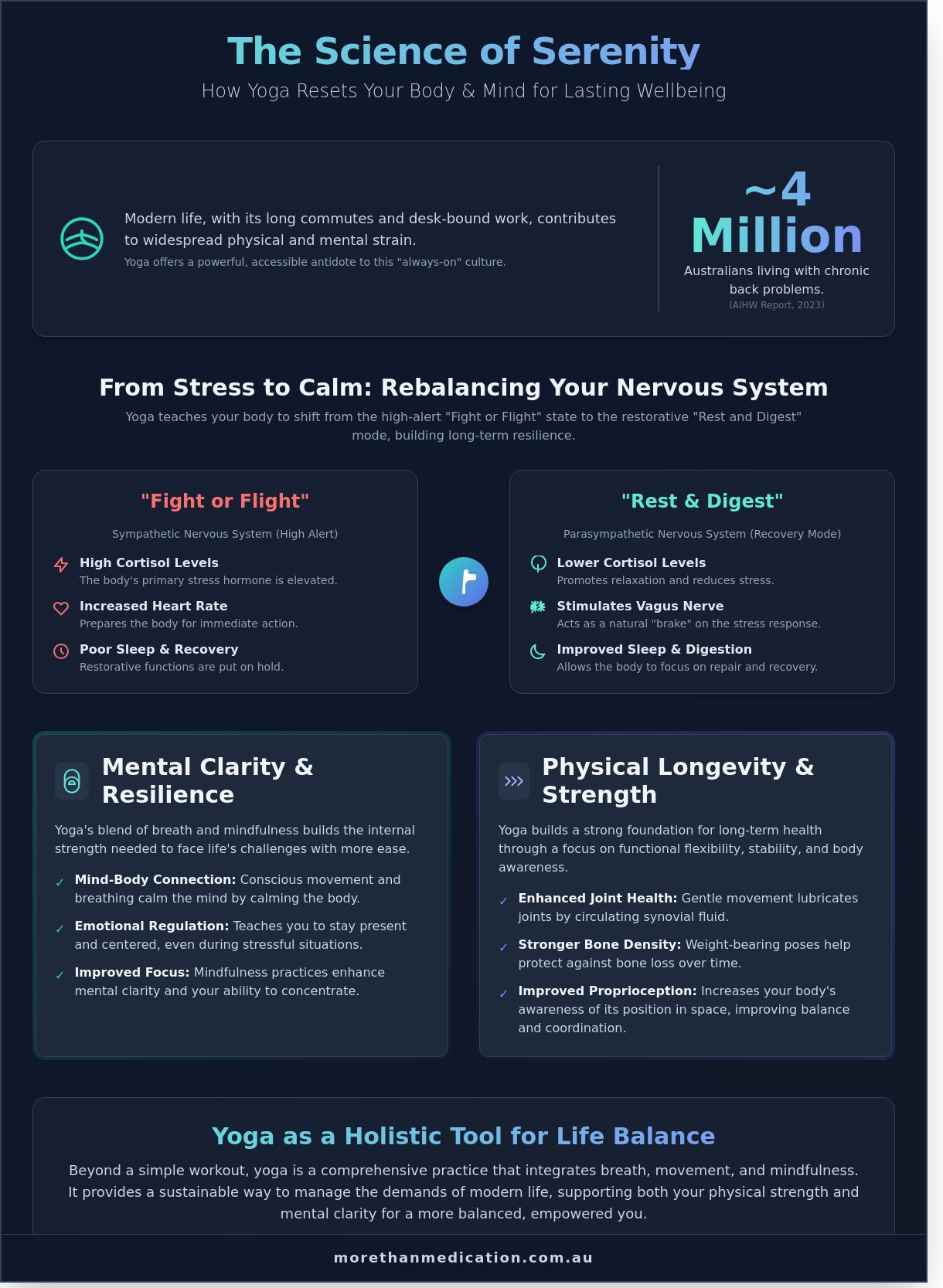
What if your most effective tool for managing chronic stress wasn’t found in a pharmacy, but on a simple rubber mat in your living room? You likely already feel that sitting at an office desk for eight hours a day leaves your back feeling like a rusted hinge. It’s a common struggle, as a 2023 report from the Australian Institute of Health and Welfare shows that nearly 4 million Australians live with chronic back problems. You’ve probably felt that physical tightness bleed into your mental space, creating a cycle of burnout that feels difficult to break. This guide will show you how to start a sustainable yoga practice that supports your mental and physical wellbeing through evidence-based guidance.
We believe that health is a whole-person journey, and sometimes the best support comes from the simple intersection of breath and movement. This is about finding more in your recovery than just a temporary fix. You’ll learn foundational poses to improve your mobility, breathing techniques to calm your nervous system—an approach to vitality also explored by Ray Maor—and a step-by-step plan to make movement a lasting part of your daily routine. Let’s move beyond the noise of complex fitness trends and focus on what helps you feel balanced and empowered.
Key Takeaways
- Learn how yoga serves as a holistic tool for both physical strength and mental clarity, supporting your entire wellbeing beyond simple movement.
- Discover the science-backed ways a regular practice helps your nervous system shift from a state of stress into a restorative “rest and digest” mode.
- Navigate different styles and terminology to find a practice that aligns with your personal energy levels and health goals.
- Follow a gentle, step-by-step pathway to begin your journey at home using the accessible resources you already have.
- Gain practical strategies for building a resilient, long-term habit that nurtures your health through the ups and downs of daily life.
Beyond the Mat: Understanding Yoga as a Holistic Path to Wellbeing
Stepping onto a yoga mat for the first time can feel like a significant leap. You might experience a mix of excitement and a quiet, nagging worry that you aren’t flexible enough or that you don’t belong in a space full of seasoned practitioners. We understand that starting any new health journey carries emotional weight. It’s common to feel a sense of anxiety when you’re a beginner, especially in a wellness culture that often feels crowded and intimidating. Please know that your feelings are valid, and you’re exactly where you need to be.
Yoga is a multi-dimensional practice that involves much more than just physical shapes. It’s a blend of breath, movement, and mindfulness designed to help you reconnect with yourself. While it’s often categorised as a workout, the history and philosophy of yoga show us it’s actually a comprehensive tool for life balance. It’s a way to quiet the noise of a busy world and find a steady centre. This practice reminds us that medicine is only one piece of the health puzzle; the way we move and breathe also plays a vital role in our recovery and long-term vitality.
The Intersection of Physical and Mental Health
Physical movement has a profound influence on your emotional resilience and mental clarity. When you focus on your breath while moving your body, you’re practicing the mind-body connection in its simplest form. This isn’t a complex medical theory. It’s the lived experience of how a calm body can lead to a calm mind. We believe that health is about the whole person, not just a single diagnosis or symptom. By engaging in yoga, you’re supporting your nervous system and building the internal strength needed to face life’s challenges with more ease.
Yoga in the Modern Australian Lifestyle
The modern Australian lifestyle often demands a lot from us. With average daily commutes in major cities reaching over 60 minutes and many of us spending 38 hours or more each week at a desk, our bodies can feel stiff and our minds overstimulated. This “always-on” culture makes it difficult to switch off. Yoga serves as a manageable antidote to these daily stressors. It’s a flexible practice that fits into a busy schedule, providing a necessary pause in your day. It also complements other strength-based activities like Reformer Pilates, helping you build a balanced foundation of fitness and peace of mind. It’s about taking small, gentle steps toward a more empowered version of yourself.
The Science of Serenity: How Yoga Benefits Your Body and Mind
When you step onto a mat, you aren’t just stretching tight muscles; you’re engaging in a biological dialogue with your entire system. Modern life often keeps us trapped in a cycle of high-alert stress, but scientific evidence shows that yoga supports stress management by lowering heart rates and reducing systemic inflammation. It’s a journey from the high-alert state of the modern world into a space of genuine recovery.
Nervous System Regulation and Resilience
Stress often keeps your body in a state of “fight or flight,” where cortisol levels remain high and restorative sleep becomes elusive. Through deep, rhythmic breathing, yoga stimulates the Vagus nerve, which acts as a natural brake for your nervous system. This mindful movement helps “reset” the brain’s stress response, teaching you how to stay calm when life feels overwhelming. The parasympathetic nervous system is the body’s natural recovery mode. By prioritising this state, practitioners often see a measurable drop in cortisol, which directly improves the quality of your sleep and your ability to bounce back from daily challenges.
Physical Longevity and Functional Strength
Beyond the mental shift, yoga builds a foundation for long-term physical health. It strengthens bone density through weight-bearing poses and keeps joints lubricated by encouraging a full range of motion. While Kettlebell Training is excellent for building explosive power and resilience, yoga offers a complementary focus on functional flexibility and fluid stability. This practice significantly enhances proprioception, which is your body’s ability to sense its position in space.
- Joint Health: Gentle compression and release in poses help circulate synovial fluid, protecting your cartilage.
- Bone Density: Holding your own body weight in poses like Plank or Warrior II stimulates bone-strengthening cells.
- Injury Prevention: Increased flexibility ensures your muscles and tendons can handle unexpected movements without straining.
Improved proprioception builds physical confidence and serves as a vital tool for fall prevention as we age. Every session is an investment in your future self, ensuring you move through the world with grace and balance. As you begin to feel these changes, you might find it helpful to explore other ways to support your holistic wellbeing journey. By bridging the gap between physical effort and mental stillness, yoga helps you navigate the ups and downs of health with a steady, resilient heart.
Finding Your Flow: Choosing the Right Yoga Style for You
Stepping onto a mat for the first time often feels like entering a world with its own language. You might see names like Ashtanga, Kundalini, or Vinyasa and feel a flicker of anxiety. That’s a completely normal response. Your journey toward health is personal, and the variety of yoga styles exists to ensure there’s a path for every body, regardless of your current fitness level or health history. Think of these different styles as tools in a toolkit; you don’t need to use them all at once to see results.
Finding the right fit is a process of exploration. There’s no “wrong” choice, only different ways to support your nervous system and physical frame. You’re encouraged to “try on” a few different classes with a spirit of curiosity rather than judgment. The most effective practice isn’t the most difficult one. It’s the one you feel comfortable returning to when life gets demanding.
Gentle and Restorative Styles
Hatha is often the best starting point for beginners. It moves at a deliberate pace, giving you the space to understand basic alignment without feeling rushed. It’s about building a stable foundation. If you’re seeking deep emotional or physical release, Yin and Restorative styles focus on long-held floor poses. These practices target the connective tissues and help quiet a busy mind.
These gentle approaches are particularly beneficial if you’re recovering from an illness or managing a chronic injury. Clinical observations suggest that slow-paced, mindful movement can improve quality of life for those with limited mobility. These styles prioritise “being” over “doing,” allowing your body the grace it needs to heal at its own speed.
Active and Dynamic Styles
Vinyasa is a more fluid style where you link your breath with a continuous sequence of movements. It’s excellent for building cardiovascular health and focus. If you prefer a meticulous approach, Iyengar emphasises precision. You’ll use props like blocks and straps to ensure your body is supported correctly in every pose. This focus on alignment builds incredible internal strength and body awareness.
While these styles use body weight to build resilience, they offer a different type of challenge than external resistance tools. For example, weighted vests are often used to increase bone density through added load during upright activity. In contrast, yoga builds strength through isometric holds and functional range of motion. Both have their place in a holistic health plan, depending on your specific goals for bone health and stability.
How to Start Your Yoga Journey: A Practical Step-by-Step Guide
Starting a yoga practice doesn’t require a studio membership or designer leggings. It begins with a simple decision to prioritize your well-being. Before you unroll a mat, speak with your healthcare provider if you’re managing a chronic condition, such as heart disease or back injuries. This ensures your movement supports your recovery rather than hindering it. Your journey is unique; there’s no need to rush or compare your progress to others.
The Australian Physical Activity and Sedentary Behaviour Guidelines recommend adults aim for 150 to 300 minutes of moderate intensity activity each week. Incorporating gentle movement into your routine helps meet these goals while fostering a deeper connection between your mind and body. Remember that the most difficult part isn’t the poses themselves. It’s the act of showing up for yourself when life feels busy or overwhelming.
Preparing Your Space and Mindset
Find a small corner of your home where you can move freely without distractions. This is your judgment-free zone. You don’t need expensive equipment to begin. A thick towel or a firm rug can replace a mat. A stack of heavy books or firm cushions can serve as blocks to bring the floor closer to you. Set a goal that feels achievable. Aiming for 10 minutes of gentle movement is far more effective for building a long-term habit than attempting an hour-long session once a month. Consistency creates the foundation for lasting resilience.
Your First 5 Basic Poses
Begin with these foundational shapes to build confidence and strength. They’re designed to be accessible for every body type.
- Child’s Pose: A resting shape that calms the nervous system and stretches the lower back.
- Mountain Pose: A standing posture that teaches balance, grounding, and alignment.
- Cat-Cow: A rhythmic movement that gently wakes up the spine and improves mobility.
- Downward-Facing Dog: A classic shape that strengthens the upper body and stretches the hamstrings.
- Savasana: A final moment of complete stillness to let your body integrate the practice.
It’s natural to feel intimidated by the flexibility you see in advertisements. This is the flexibility myth; you don’t need to be bendy to start. In fact, yoga is the tool used to improve your range of motion, not a prerequisite for it. If a movement causes sharp, pinching, or radiating pain, back off immediately. You’re looking for a “useful” stretch, which is a sensation of opening that feels productive. It should never feel like a struggle against your own anatomy.
The most significant step is showing up for yourself with patience and curiosity. Every time you step onto your mat, you’re acknowledging that your health is a holistic experience. It’s about finding a sustainable balance between physical effort and mental quiet. Take the next step in your holistic health journey by integrating these small, manageable movements into your daily life.
Cultivating Resilience: Making Yoga a Sustainable Habit
Yoga isn’t a quick fix for a sore back or a stressful week. It’s a slow, steady journey toward lasting wellness that requires patience rather than perfection. You might start your practice because you want to improve your flexibility, but you’ll likely stay because of the mental clarity it provides. This perspective shifts movement from a temporary goal to a permanent cornerstone of Fitness for Life. According to Roy Morgan research, over 2 million Australians now participate in yoga, showing that it’s a vital part of our national approach to health. When your motivation dips, remind yourself that showing up for just five minutes is a significant victory. Consistency is about returning to your mat with kindness, even after a long break.
Integrating Mindfulness into Daily Life
Your practice doesn’t end when you roll up your mat. You take those tools into the world. When a meeting runs late or traffic stalls on the Pacific Highway, use the same rhythmic breathing you practiced in class to steady your heart rate. It’s vital to celebrate small wins. Maybe you noticed a tense shoulder and consciously relaxed it, or perhaps you chose a deep breath over a sharp word during a difficult conversation. Try a wellness check-in every Sunday evening. Ask yourself how your body feels and where you found a moment of peace during the week. This habit helps you recognize progress that a scale or a clock can’t measure.
Building Your Support Community
You don’t have to navigate this journey alone. Australia has a thriving community of practitioners, from local studios in suburbs like Brunswick or Paddington to inclusive online groups. Connecting with others provides a shared language for your experiences and keeps you accountable. Seeking expert advice from qualified instructors or healthcare providers ensures your yoga practice respects your body’s unique limits. These professionals help you bridge the gap between medical advice and personal lifestyle goals, making the path feel less intimidating.
Health is a wide, beautiful landscape. It involves the medicine you take, the way you move, and the grace you give yourself on difficult days. There is always “more” to your story than a single diagnosis or a missed workout. We encourage you to explore our latest holistic health news to find more ways to support your total wellbeing and stay empowered on your path to wellness.
Embrace Your Holistic Journey to Wellbeing
Starting your practice is about more than just mastering a pose; it’s about acknowledging that your health is a lifelong journey. You’ve learned that yoga serves as a bridge between physical strength and mental clarity, providing a science-backed method to manage daily stress. Data from the Australian Bureau of Statistics shows that 15% of Australians now participate in mindful movement to support their wellbeing. By choosing a style that fits your unique needs and taking small, manageable steps, you’re building a foundation of resilience that supports you through life’s ups and downs.
True health requires a balance of many different elements. While medicine plays its part, your daily lifestyle choices create the space for lasting change. We understand that navigating health advice can feel overwhelming, but you don’t have to do it alone. Our platform provides a supportive community and evidence-based advice tailored specifically for the Australian lifestyle. Whether you’re looking for expert-led content on nutrition, fitness, or mental health, we’re here to guide you through every stage of your journey.
Explore more expert-led health and wellness news at More Than Medication
You have the power to transform your health, one mindful breath at a time. We’re proud to be your companion on this path to a more vibrant and balanced you.
Frequently Asked Questions
Do I need to be flexible to start yoga?
No, you don’t need to be flexible to begin your practice. In fact, a 2016 study published in the Journal of Physical Therapy Science found that just 8 weeks of consistent movement can increase flexibility by up to 35 percent. You start yoga to gain mobility, not because you already have it. It’s a personal journey where you learn to listen to your body’s current limits without any judgement.
How often should a beginner practice yoga to see results?
Practicing 2 to 3 times per week for at least 30 minutes is the ideal baseline for beginners to see tangible progress. Research from the Australian Institute of Health and Welfare suggests that consistent physical activity is key to long-term wellness. You’ll likely notice improved sleep quality and reduced muscle tension within the first 14 days of starting this routine. Small, manageable steps lead to the most sustainable changes.
What is the best time of day to do yoga for stress relief?
Late afternoon or early evening is the most effective time to practice yoga for releasing the day’s pressure. This window helps lower cortisol levels that often peak during work hours. A 20 minute session before dinner acts as a vital bridge between your busy responsibilities and your home life. It allows you to process stress and transition into a more restful state before sleep.
Is yoga considered a form of cardio or strength training?
Yoga primarily functions as a form of functional strength training and flexibility work rather than traditional cardio. While a vigorous flow can raise your heart rate to 60 percent of its maximum, most styles focus on isometric contractions. This builds lean muscle mass and supports bone density. It’s a holistic way to strengthen your body while remaining mindful of your joints and overall physical balance.
Can I do yoga if I have a pre-existing health condition?
Yes, you can certainly practice, but you must consult your GP or specialist before starting. About 1 in 6 Australians live with back problems, and modified yoga is frequently recommended as a supportive tool for recovery. Your practice is more than just exercise; it’s a way to partner with your body. A qualified instructor can provide specific adjustments to ensure every movement feels safe and empowering for you.
What is the difference between yoga and Pilates?
Yoga focuses on the connection between breath and static poses, while Pilates emphasizes core stability through controlled, repetitive movements. Yoga has a history spanning over 5,000 years and incorporates a heavy focus on mental mindfulness. Pilates was developed in the 1920s specifically for physical rehabilitation. Both offer incredible benefits, but yoga provides a more holistic approach by addressing the intersection of mental and physical health.
Do I need expensive equipment to start practicing at home?
You don’t need a large budget or fancy gear to begin your home practice. A simple non-slip mat is the only essential item, which you can find at Australian retailers like Kmart or Rebel Sport for approximately A$15 to A$35. You can easily substitute professional props with common household items. Use a sturdy thick book instead of a foam block, or a cotton dressing gown belt instead of a yoga strap. If you’re also looking to address desk-related shoulder and upper back tension, pairing your yoga practice with a targeted reverse flies workout can help strengthen the muscles that support better posture.
⚕️ Medical Disclaimer
This content is for informational purposes only and is not a substitute for professional medical advice, diagnosis, or treatment. Always seek the advice of your doctor or other qualified health provider with any questions you may have regarding a medical condition. Never disregard professional medical advice or delay in seeking it because of something you have read on this website.