
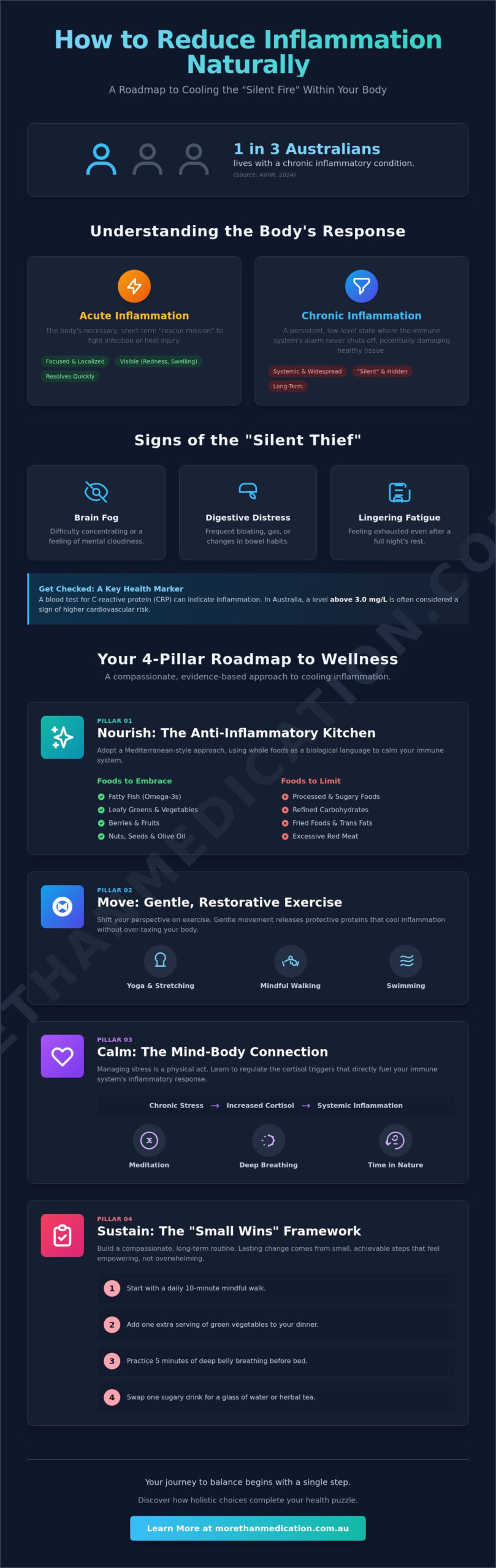
What if that persistent morning stiffness isn’t just an inevitable sign of aging, but your body’s way of asking for a different kind of conversation? You’ve likely spent months feeling that heavy fog of fatigue and those nagging muscle aches that don’t quite show up on a standard scan. It’s exhausting to wake up feeling unrefreshed, especially when you’re already doing your best to keep up with daily life. Learning how to reduce inflammation in the body naturally shouldn’t feel like another overwhelming chore on your list. Data from the Australian Institute of Health and Welfare in 2024 shows that 1 in 3 Australians live with chronic inflammatory conditions, so you’re certainly not alone in this struggle.
We believe that health is about the whole person, and often, the most effective healing happens outside the pharmacy. This guide offers a compassionate, evidence-based roadmap to cooling that internal fire through mindful nutrition, gentle movement, and lifestyle choices that actually stick. You’ll discover how to reclaim your energy and achieve a clearer mental state without the stress of fleeting wellness fads. We’ll walk through a manageable daily routine that supports your long-term wellbeing, proving that there’s always more to your health journey than just a diagnosis.
Key Takeaways
- Learn to distinguish between the body’s natural healing response and the “silent fire” of chronic inflammation that may be making you feel persistently unwell.
- Discover how to reduce inflammation in the body naturally through a Mediterranean-inspired approach that uses whole foods to communicate health and balance to your cells.
- Shift your perspective on exercise by exploring how gentle, restorative movement releases protective proteins to cool systemic inflammation without overtaxing your system.
- Understand why managing stress is more than just a mental exercise, as you learn to regulate the cortisol triggers that directly impact your immune health.
- Build a compassionate, long-term routine using a “Small Wins” framework designed to make your holistic health journey feel achievable, sustainable, and empowering.
Understanding the ‘Fire’ Within: What is Chronic Inflammation?
You might wake up feeling heavy, or perhaps your joints feel stiff long before they should. It’s a common experience to feel “off” without a clear reason; often, your body is trying to communicate something vital. This internal discomfort is frequently linked to a biological process designed to protect you, but one that has inadvertently gone rogue. When people ask how to reduce inflammation in the body naturally, they are usually looking for a way to quiet an internal alarm that won’t stop ringing.
Your immune system is your most loyal protector. When you cut your finger or catch a cold, it rushes to the scene to fight off invaders and repair damage. This is a necessary survival mechanism. However, modern life presents triggers that our ancestors rarely faced, such as highly processed foods, persistent stress, and environmental pollutants. These factors can trick your immune system into staying on high alert indefinitely. This persistent state can eventually lead to long-term health challenges, affecting your heart health and metabolic balance over time.
The Difference Between Acute and Chronic Responses
Think of acute inflammation as a focused, temporary rescue mission. You see it as the redness, heat, and swelling around a wound. It’s intense, necessary, and has a clear end date. Chronic inflammation is different because it lacks a “stop” signal. It’s a low-level, persistent state that quietly simmers in the background of your daily life. To truly grasp What is Chronic Inflammation?, we must see it as a shift from healing to harm. Systemic inflammation is a prolonged immune response that can damage healthy tissues throughout your entire body.
Signs Your Body Might Be Dealing with Systemic Inflammation
The symptoms of this “silent thief” are rarely dramatic. They tend to be subtle, making them easy to dismiss as just part of getting older or having a busy week. You might experience persistent brain fog, digestive issues that don’t seem to have a specific trigger, or a sense of fatigue that sleep cannot fix. Research indicates that by 2026, preventative health screenings will increasingly focus on these quiet signals to prevent chronic disease before it takes hold.
- Brain Fog: Difficulty concentrating or a feeling of mental cloudiness.
- Digestive Distress: Frequent bloating, gas, or changes in bowel habits.
- Lingering Fatigue: Feeling exhausted despite getting eight hours of rest.
If these signs resonate with you, it’s wise to consult your GP. They can check for specific markers in your blood, such as C-reactive protein (CRP). In an Australian clinical context, a CRP level above 3.0 mg/L is often considered a sign of higher cardiovascular risk. Understanding these numbers is a key part of the latest health trends focused on preventative wellness. By catching these signals early, you can begin the journey of learning how to reduce inflammation in the body naturally, moving beyond just managing symptoms toward true, holistic vitality. Medicine is a powerful tool, but your daily choices are the “more” that completes the puzzle of your wellbeing.
The Anti-Inflammatory Kitchen: Nourishing Your Body from the Inside Out
Every bite you take acts as a set of instructions for your cells. Rather than viewing food as simple fuel, think of it as a complex biological language. When you choose specific nutrients, you’re essentially telling your immune system to calm down or stand guard. This biological conversation is at the heart of learning how to reduce inflammation in the body naturally. By selecting ingredients that talk to your genes in a positive way, you can influence your health outcomes far beyond the dinner table.
The Mediterranean-style approach remains the gold standard for cooling systemic heat. It prioritizes whole, unprocessed ingredients that work in harmony with your biology. At More Than Medication, we believe your dietary choices are a vital companion to clinical care. While prescriptions manage symptoms, your kitchen provides the “more” that builds long-term resilience. It’s about creating a lifestyle where your meals support your recovery journey every single day.
You don’t need to overhaul your entire pantry overnight. We suggest a “crowding out” strategy. Focus on adding vibrant, healing foods to your plate until there’s simply less room for the items that don’t serve you. This positive addition feels less like a restriction and more like an act of self-care. It shifts the focus from what you’re losing to the energy and balance you’re gaining.
Top Anti-Inflammatory Foods to Add to Your Plate
Start with Omega-3 fatty acids, which are found in abundance in oily fish like salmon, mackerel, and sardines. These healthy fats are essential because they help block the pathways that trigger cellular swelling. Research from Harvard Health highlights how incorporating specific anti-inflammatory foods can significantly lower markers of C-reactive protein in the blood. Pair your fish with a generous serving of leafy greens or deep-coloured berries. These are packed with polyphenols, which act like tiny shields for your cells.
Don’t forget your gut. A healthy microbiome is your first line of defense against systemic irritation. Including fermented foods like unsweetened yoghurt, kimchi, or kefir introduces beneficial bacteria that help regulate your immune response. When your gut is at peace, your entire body feels the difference. It’s a simple way to practice how to reduce inflammation in the body naturally while enjoying diverse, tangy flavours.
Foods That May Fuel the Inflammatory Fire
Some ingredients act like kindling for your body’s internal fire. Highly processed seed oils and refined sugars are the primary culprits. These can lead to rapid spikes in insulin, which signals the body to store fat and increase inflammatory markers. Trans fats, often hidden in commercial baked goods, are particularly disruptive because they damage the delicate lining of your blood vessels. They don’t just add weight; they compromise your cellular integrity.
Swapping these out doesn’t mean sacrificing comfort. If you crave something crunchy, reach for raw walnuts or macadamias instead of processed crisps. If you’re used to cooking with vegetable oil, try extra virgin olive oil or avocado oil for a heart-healthy alternative. Making these small adjustments helps you feel more in control of your wellbeing. If you’re looking for more ways to support your physical health through mindful choices, you can explore our guide on holistic wellness strategies to find what works best for your unique journey.
Movement as Medicine: Reducing Inflammation Through Lifestyle
Movement often feels like a chore when you’re in pain. We’ve been told to “push through” the discomfort, but your body usually needs a different, kinder approach. Learning how to reduce inflammation in the body naturally involves listening to your physical limits rather than fighting against them. When you engage in moderate activity, your muscles release small proteins called myokines. These act as anti-inflammatory cytokines that help dampen systemic heat and protect your vascular system.
It’s easy to fall into the overtraining trap. Pushing too hard for too long can actually spike your cortisol and C-reactive protein levels, which are key markers of stress. This is why we advocate for a fitness for life philosophy. It’s about sustainable, gentle progress that supports your long-term wellbeing rather than a one-off sweat session that leaves you depleted for days.
Finding the “Goldilocks Zone” of Exercise
You don’t need to run marathons to see results. Aim for the “Goldilocks Zone” where movement is challenging but not depleting. Low-impact choices like swimming or a 30-minute walk through a local park are ideal for keeping joints mobile without excessive strain. Try “movement snacks” throughout your day. A 2022 study published in Sports Medicine found that walking for just two to five minutes every 30 minutes can significantly lower blood sugar spikes after eating. Since high blood sugar is a primary driver of systemic inflammation, these tiny bursts of activity are powerful tools. Strength training twice a week also helps. Building lean muscle improves how your body processes glucose, keeping your internal environment cool and stable.
The Role of Restorative Sleep
Sleep is your body’s internal housekeeping service. While you rest, your glymphatic system clears out inflammatory byproducts accumulated during the day. Missing even one night of quality rest can lead to a measurable increase in inflammatory markers like Interleukin-6 the following morning. This creates a cycle where pain prevents sleep, and lack of sleep increases pain. To support this natural cleanup, try these three actionable steps for better hygiene:
- Manage your light: Dim the overhead lights 60 minutes before bed to support natural melatonin production.
- Cool the room: Aim for a bedroom temperature of approximately 18 degrees Celsius to facilitate deep, restorative stages of sleep.
- Consistency is key: Stick to a consistent wake-up time, even on weekends, to regulate your circadian rhythm.
Pairing these habits with an Anti-Inflammatory Diet ensures your body has the raw materials it needs to repair itself during the night. True health is a journey of small, kind choices that respect your body’s rhythm and provide the space it needs to heal from the inside out.
The Mind-Body Connection: How Stress Fuels Systemic Inflammation
You’ve likely heard someone say that stress is “all in your head.” While the feeling of being overwhelmed starts with a thought, its impact quickly moves into your bloodstream. When you navigate the pressures of modern life, your body doesn’t distinguish between a looming work deadline and a physical threat. It responds by flooding your system with chemicals that change your biology from the inside out.
Understanding the link between your mental state and your physical health is a vital step in learning how to reduce inflammation in the body naturally. Your immune system listens to your thoughts. When those thoughts are constantly racing, your body stays in a state of high alert, keeping the fires of inflammation burning long after the initial stressor has passed. This is why managing your mental load is a biological necessity rather than a luxury.
Cortisol and the Immune System
Cortisol is often called the “stress hormone.” In short bursts, it’s helpful for survival. However, chronic stress creates a dangerous loop. Over time, your immune cells become “deaf” to the signals that usually tell them to stop the inflammatory response. Scientists call this phenomenon glucocorticoid resistance. It means that even when your body produces cortisol to calm things down, your cells simply don’t listen.
The physical toll of emotional burnout is measurable at a cellular level. Research from 2022 indicates that prolonged psychological distress can lead to a 20 percent increase in pro-inflammatory markers. It’s a reminder that your journey toward wellness must include your mind. You aren’t just managing a mood; you’re protecting your cells from premature aging and damage. When you’re constantly “on,” your body never gets the chance to repair itself.
Practical Tools for Daily Calm
Mindfulness is a practical tool for cooling the body’s internal heat. You can start with simple interventions that take less than two minutes. Box breathing is a powerful technique: inhale for four seconds, hold for four, exhale for four, and hold again. This rhythm signals your nervous system to shift from “fight or flight” to “rest and digest,” effectively lowering your heart rate and your inflammatory response.
- The Green Dose: Spend time in nature. Whether it’s a walk through an Australian botanic garden or a quiet moment in your backyard, 120 minutes of nature exposure per week is linked to significantly lower systemic stress.
- Mindful Anchors: Find a small habit, like focusing on the warmth of your morning coffee, to ground yourself in the present moment.
- Digital Detox: Setting boundaries with your devices can reduce the constant pings of cortisol that keep your body in a state of tension.
Taking these small steps shows that you value your peace as much as your physical health. When you soothe your mind, you give your body the space it needs to heal naturally. Explore more ways to support your wellbeing by visiting our guide on holistic health journeys.
Your Journey to Balance: Building a Sustainable Anti-Inflammatory Routine
Learning how to reduce inflammation in the body naturally is a commitment to your long-term vitality. It’s a gentle, lifelong conversation with your body rather than a quick fix you’ll finish in a weekend. We understand that living with chronic inflammation can feel like a heavy weight, but this process is a marathon, not a sprint. You’re building a foundation for your future self, and that takes time, patience, and a lot of self-compassion. By focusing on the “more” in your care plan, you’re acknowledging that you’re a whole person, not just a diagnosis.
Building a sustainable routine requires you to move at your own pace. You don’t have to overhaul your entire pantry or start an intense exercise regime overnight. Instead, focus on the small wins that accumulate over time. These tiny shifts are the building blocks of a life where you feel empowered and in control of your wellbeing. Your body is capable of incredible things, and every intentional choice you make is a step toward a brighter, more vibrant version of yourself.
Creating Your Weekly Wellness Map
To avoid feeling overwhelmed, try starting with just two small changes each week. Choose one dietary shift, such as adding a serving of leafy greens to your lunch, and one movement goal, like a 15-minute walk around your local Australian park. Consistency is the goal here. Research suggests that 80% consistency is far more effective for long-term health than 100% perfection that leads to burnout and quitting.
- Track your energy: Use a simple journal to rate your energy and mood on a scale of 1 to 10 each evening.
- Identify patterns: After 14 days, look back to see how your food and movement choices correlate with your physical comfort.
- Celebrate progress: Acknowledge the days you chose a nourishing meal or took a deep breath during a stressful moment.
When to Seek Professional Support
While lifestyle changes are a powerful “more,” they work best when they’re built on a solid medical foundation. Clinical guidance is essential to ensure your natural strategies complement any existing treatments safely. We encourage you to discuss these holistic approaches with your GP or an Accredited Practising Dietitian (APD). They can provide tailored advice based on your specific blood results and medical history, making your journey both safe and effective.
Your resilience is your greatest asset. While inflammation might feel like a constant hurdle, your body’s ability to adapt and recover is even stronger. You have the inner strength to find balance and heal. We’re here to support you as you navigate the intersection of mental and physical health, helping you find the tools that resonate with your unique life.
Your Path to Lasting Vitality
You’ve explored the essential steps for how to reduce inflammation in the body naturally, from nourishing your plate with whole foods to managing the stress that fuels systemic heat. Data from the Australian Bureau of Statistics (2022) shows that nearly 50% of Australians live with chronic conditions, many of which are driven by persistent inflammation. By integrating mindful movement and stress-reduction techniques, you’re not just managing symptoms; you’re building a foundation of resilience. This holistic approach bridges the gap between clinical care and your daily lifestyle. It’s a journey of small, sustainable wins that lead to a more vibrant version of yourself. You don’t have to navigate this path alone. Our expert-led health and wellness content provides evidence-based advice tailored for a balanced lifestyle. Join our community to find the support you need to go “More Than Medication” and take charge of your health journey. Join our community for more holistic wellness updates. You’ve got the power to feel better, one step at a time.
Frequently Asked Questions
How long does it take to reduce inflammation in the body naturally?
You can expect to see initial changes in your inflammatory markers within 3 to 12 weeks of making consistent lifestyle adjustments. A 2023 study published in the Journal of Clinical Medicine found that participants who adopted a plant-forward diet saw a measurable drop in C-reactive protein (CRP) levels in as little as 21 days. It’s a personal journey that requires patience as your cells begin to repair and reset.
Can drinking water help reduce inflammation?
Yes, staying properly hydrated is essential because it helps your kidneys flush out the metabolic waste products and toxins that trigger inflammatory responses. Research from the University of New South Wales suggests that even mild dehydration can increase joint sensitivity and systemic stress. Aim for roughly 2 to 2.5 litres of filtered water daily to keep your lymphatic system moving and your joints well-lubricated.
Is coffee anti-inflammatory or pro-inflammatory?
For most people, coffee acts as a powerful anti-inflammatory tool because it’s packed with polyphenols and other protective antioxidants. A 2022 meta-analysis in the journal Nutrients showed that regular coffee drinkers often have lower levels of inflammatory cytokines like IL-6. If you find that caffeine triggers anxiety or digestive upset, it’s okay to listen to your body and choose a gentler alternative like green tea instead.
What is the fastest way to flush inflammation out of your system?
The most effective way to experience a rapid reduction in symptoms is to eliminate ultra-processed sugars and prioritise 7 to 9 hours of quality sleep. Removing refined sugars can stabilise your blood glucose and dampen acute inflammatory spikes within 24 to 48 hours. This immediate shift is a foundational step when you’re exploring how to reduce inflammation in the body naturally while supporting your long-term resilience.
Can supplements like turmeric or ginger really help with inflammation?
Clinical evidence confirms that active compounds like curcumin in turmeric and gingerol in ginger effectively block the pathways that lead to swelling and pain. A 2021 clinical trial involving 1,000 participants demonstrated that 500mg of curcumin taken twice daily provided relief comparable to some common over-the-counter medications. For the best results, choose a supplement that includes black pepper extract, which can increase curcumin absorption by up to 2,000 percent.
Does apple cider vinegar reduce inflammation?
Apple cider vinegar supports an anti-inflammatory environment by improving your insulin sensitivity and fostering a healthy gut microbiome. Data from the Journal of Functional Foods indicates that consuming 15ml of apple cider vinegar before a meal can reduce the post-meal blood sugar spikes that often drive systemic inflammation. It’s a small, manageable habit that empowers you to take control of your metabolic health one sip at a time.
Can stress alone cause high inflammatory markers in blood tests?
Chronic psychological stress is a significant driver of inflammation and can cause your body to become resistant to cortisol, the hormone meant to keep inflammation in check. The Black Dog Institute has highlighted how long-term emotional strain keeps the body in a state of high alert, leading to elevated CRP levels even without a physical injury. Incorporating 10 minutes of daily mindfulness can help calm your nervous system and bring your body back into a state of balance.
⚕️ Medical Disclaimer
This content is for informational purposes only and is not a substitute for professional medical advice, diagnosis, or treatment. Always seek the advice of your doctor or other qualified health provider with any questions you may have regarding a medical condition. Never disregard professional medical advice or delay in seeking it because of something you have read on this website.