
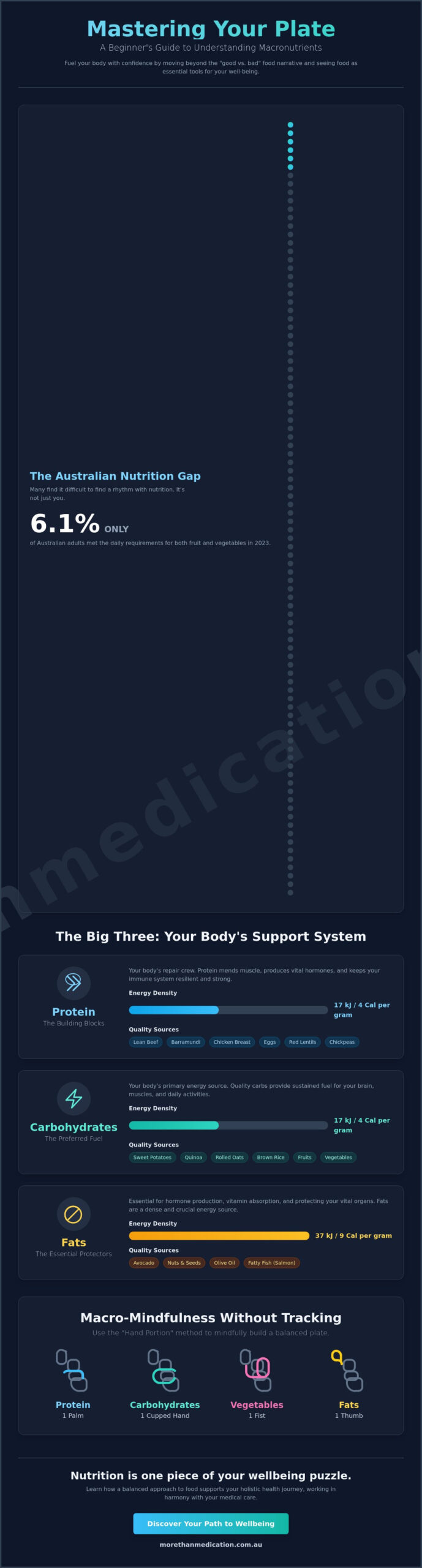
What if your dinner plate wasn’t a complex equation to solve, but a supportive toolkit for your daily well-being? It’s completely natural to feel a sense of anxiety when you’re faced with conflicting labels of “good” versus “bad” foods. According to a 2023 report from the Australian Bureau of Statistics, only 6.1% of adults met the daily requirements for both fruit and vegetables, proving that many of us find it difficult to find our rhythm with nutrition. Understanding macronutrients for beginners doesn’t need to be a math problem. We believe that health is about the whole person, and your relationship with food should be a source of empowerment rather than stress.
In this guide, you’ll discover how to fuel your body with confidence by mastering the basics of protein, carbohydrates, and fats. We’ll show you how to build a balanced plate without the burden of restrictive dieting. It’s about your whole life. You’ll gain a clear understanding of each food group and how they work together to improve your energy levels. We’re here to help you move toward a more intuitive lifestyle, providing the small, actionable steps you need to feel balanced and resilient throughout 2026 and beyond.
Key Takeaways
- Shift your perspective from “good vs. bad” foods to seeing macronutrients as the essential fuel your body needs to thrive every day.
- Gain confidence in understanding macronutrients for beginners by breaking down the vital roles of protein, carbohydrates, and fats without the clinical jargon.
- Discover why the quality of your food sources is just as important as the quantity, moving beyond simple kilojoule counting toward true nourishment.
- Master the “Hand Portion” method to manage your nutrition mindfully, removing the stress and anxiety often associated with digital tracking apps.
- Learn how balanced nutrition acts as a powerful partner to your medical care, supporting a holistic approach to your long-term health journey.
What Are Macronutrients? Moving Beyond the “Good vs. Bad Food” Narrative
You’ve likely felt the heavy weight of modern diet culture. One week, certain foods are hailed as life-saving superfoods; the next, they’re labeled as something to avoid at all costs. This constant shifting creates a “good vs. bad” binary that often leads to more anxiety than health. It’s exhausting to feel like every meal is a moral test. Understanding macronutrients for beginners isn’t about memorizing rigid rules or feeling guilty about your choices. Instead, it’s about recognizing that your body needs specific tools to function. Macronutrients are the primary energy sources your body requires in large quantities to sustain life. They aren’t just numbers to be tracked on an app. They’re the literal fuel for your morning walk and the energy your brain needs to focus during a busy day.
When we strip away the labels and the guilt, we see food for what it is: information for your cells. By learning about these building blocks, you’re not just following a diet. You’re gaining the power to listen to what your body actually needs. This shift in perspective is the first step toward a more compassionate relationship with yourself and your plate. It’s about empowerment, not restriction.
The Distinction Between Macro and Micronutrients
The terms “macro” and “micro” simply refer to the scale of what your body needs. “Macro” means large, while “micro” means small. Your body requires macronutrients in gram amounts every day because they provide the kilojoules required for movement and cellular repair. In contrast, micronutrients like vitamins and minerals are needed in tiny doses, often measured in milligrams or micrograms. You can find a comprehensive list of macronutrients to see how they provide the structural foundation for your health. Macronutrients are the cornerstones of human biology and energy.
Why a Balanced Approach Matters for Your Journey
Cutting out entire food groups is a common trap that many people fall into. Whether it’s the low-fat trends of the 1990s or the zero-carb fads that still circulate today, these restrictive approaches often ignore how our bodies actually function. When you deprive yourself of a specific macro, you might experience brain fog, persistent fatigue, or irritability. A balanced intake of proteins, fats, and carbohydrates supports your mental clarity and physical resilience. This perspective aligns perfectly with the latest health trends that focus on the whole person rather than just a number on a scale. Nutrition is just one piece of your wellbeing puzzle. By understanding macronutrients for beginners, you move away from the cycle of restriction and toward a lifestyle that feels sustainable and supportive for the long term.
The Big Three: Understanding the Unique Roles of Protein, Carbohydrates, and Fats
Understanding macronutrients for beginners starts with seeing these nutrients as your body’s dedicated support system. They aren’t just numbers on a label; they’re the resources your body uses to keep you moving, thinking, and feeling your best. Every gram of food you eat provides a specific amount of energy. Protein and carbohydrates both offer 17 kilojoules (4 calories) per gram, while fats are more energy-dense, providing 37 kilojoules (9 calories) per gram. This balance ensures your “internal battery” stays charged throughout the day.
Protein: The Building Blocks of Repair and Strength
Think of protein as your body’s gentle repair crew. It works quietly behind the scenes to mend muscle tissue after a walk along the beach, produce vital hormones, and keep your immune system resilient. We understand that hitting your protein goals can feel like a chore, but it’s about giving your body the tools to stay strong. In Australia, we’re lucky to have access to high-quality sources like lean grass-fed beef, Barramundi, and kangaroo. If you prefer plant-based options, red lentils and chickpeas are wonderful staples. For a practical look at serving sizes, you can check our guide on how much protein is in chicken breast to see how a simple meal supports your daily needs.
Carbohydrates: Your Body’s Preferred Energy Source
There’s a common myth that carbohydrates are something to fear, but they’re actually your brain’s favourite fuel. Your brain consumes roughly 20% of your daily energy intake, and it thrives on the steady supply of glucose that carbs provide. When understanding macronutrients for beginners, it helps to view carbs in two ways: “fuel” and “protection.” Starches like Australian sweet potatoes or brown rice provide the fuel, while fibre-rich vegetables like broccoli and carrots provide the protection. Fibre is essential for gut health and helps you feel satisfied after eating. You can explore more about balanced plates in Harvard’s guide to healthy eating, which highlights how these groups work together to sustain your focus and mood.
Fats: Essential for Hormones and Heart Health
Fats often get a bad reputation, but they’re vital for your survival and emotional wellbeing. They act as a delivery vehicle for vitamins A, D, E, and K; without fat, your body struggles to absorb these essential nutrients. Beyond the clinical benefits, fat provides a sense of “mouthfeel” and satisfaction that makes a meal truly enjoyable. This emotional comfort is a key part of a sustainable lifestyle. Focus on nourishing sources like creamy Australian avocados, macadamia nuts, and oily fish like Atlantic salmon. These “healthy” fats support heart health and keep your hormones in balance. If you’re feeling unsure about where to start, the resources at More Than Medication are designed to help you find a rhythm that feels right for your unique journey.
Quality Over Quantity: Why Not All Macros Are Created Equal
When you start understanding macronutrients for beginners, it’s easy to get caught up in the numbers. You might find yourself staring at labels, trying to make the math work. But your body isn’t a calculator; it’s a living, breathing system that responds differently to different fuel sources. A kilojoule from a sugary soft drink doesn’t behave the same way as a kilojoule from an avocado. One triggers a rapid insulin spike, while the other provides sustained energy and essential vitamins.
Living a balanced life means finding a rhythm that works for you. Processed foods aren’t “bad” or “off-limits.” They often provide convenience during a busy week or joy during a celebration. However, they shouldn’t be the foundation of your diet. Aim for a framework where 80% of your choices are whole, nutrient-dense foods. This approach reduces the stress of perfection and makes your health journey feel sustainable rather than restrictive. By focusing on the quality of your food, you’re doing more than just eating; you’re nourishing your future self.
Refined vs. Complex Carbohydrates
Refined carbohydrates, like white bread or sugary cereals, are stripped of their natural fibre. This leads to a quick energy burst followed by a draining “energy crash” that can leave you feeling irritable. Complex carbohydrates are different. Australian wholegrains, such as rolled oats and brown rice, contain intact fibre that slows down digestion. This steady burn provides the reliable fuel needed to support a fitness programme, ensuring you have the stamina for both daily tasks and intentional movement. Understanding macronutrients for beginners involves recognising that these slow-releasing carbs are your brain’s preferred energy source.
The Spectrum of Fats: Saturated vs. Unsaturated
Fats are essential for absorbing vitamins and protecting your organs. Choosing unsaturated fats, found in olive oil, nuts, and seeds, provides vital cardiovascular support. Omega-3 fatty acids are particularly powerful. Research from the University of South Australia suggests these fats help reduce inflammation and support mental wellbeing. You can easily boost your intake by exploring healthy slice recipes that use walnuts or chia seeds. These small, intentional adjustments help you move toward a more resilient version of yourself without feeling overwhelmed by complex dietary rules.
- Choose whole over refined: Swap white pasta for brown rice or quinoa.
- Prioritise plants: Include a variety of colours on your plate to ensure a range of micronutrients.
- Listen to your body: Notice how you feel 60 minutes after eating different types of fats or carbs.
A Beginners Guide to “Macro-Mindfulness” Without the Stress of Tracking
Many people find that the biggest barrier to healthy eating is the pressure of digital tracking. You might feel that logging every gram of food is too time-consuming or, for some, it triggers a sense of anxiety that takes the joy out of a meal. We believe that health should feel like a relief, not a burden. Understanding macronutrients for beginners is less about perfect numbers and more about building a sustainable relationship with your plate. By shifting your focus from spreadsheets to your senses, you can nourish your body with confidence and ease.
The Visual Plate Method: No Scales Required
You carry the only measuring tools you need with you every day. Your hands provide a personalised, portable way to ensure you’re getting a balanced mix of nutrients without ever needing a kitchen scale. This method allows you to adjust your intake based on your body’s unique size and needs, making it a perfect fit for a busy Australian lifestyle.
- Step 1: Fill half your plate with colourful, non-starchy vegetables. These are your high-volume, low-calorie allies that provide essential fibre and micronutrients.
- Step 2: Add a palm-sized portion of protein. This amount generally provides the 20 to 30 grams of protein required to support muscle repair and keep you feeling full.
- Step 3: Include a fist-sized portion of complex carbohydrates and a thumb-sized portion of healthy fats. This balance ensures steady energy levels and supports hormonal health.
Mindful Eating and Satiety Cues
Learning to listen to your body is a vital part of the wellness journey. It takes about 20 minutes for your brain to register that your stomach is full. When we rush through meals or eat while distracted by screens, we bypass these natural signals. This often leads to “autopilot” snacking, where we consume food without truly tasting it or feeling satisfied. Research published in the journal Appetite indicates that distracted eating can increase immediate intake and lead to heavier snacking later in the day.
By slowing down, you allow your nervous system to enter a “rest and digest” state. This transition is crucial for optimal nutrient absorption and mental clarity. Try to put your fork down between bites and notice the textures. This gentle action helps bridge the gap between physical hunger and emotional satisfaction. Remember, understanding macronutrients for beginners is about more than just fuel. It is a form of respect for yourself, and it is always about much more than medication alone. It is about finding a peaceful balance that lasts a lifetime.
Start your journey toward a more balanced lifestyle today by exploring our holistic wellness resources.
Navigating Your Nutrition Journey: The Holistic Path to Wellbeing
Your path to health is rarely a straight line. It’s a collection of daily choices, setbacks, and small victories. While medicine provides a vital foundation for many, nutrition acts as the fuel that sustains your progress. At More Than Medication, we see you as a whole person, not just a set of symptoms or a diagnosis. We believe that understanding macronutrients for beginners is a powerful first step toward self-empowerment. It’s about moving beyond the quick fix mentality and embracing a lifestyle that supports your long-term vitality.
We’re here to be your compassionate companion. Our platform offers the resources you need to bridge the gap between clinical treatment and everyday wellness. As you evolve, your nutritional needs might change, and that’s okay. Your journey is unique. Your approach to food should reflect that individuality. We encourage you to view your health as an ongoing evolution rather than a destination you need to reach by a certain date.
When to Consult a Professional
General advice helps you build a solid foundation, but there’s a distinct difference between wellness tips and medical nutrition therapy. If you’re living with a chronic condition like Type 2 diabetes or cardiovascular disease, specific guidance is essential. We recommend consulting an Accredited Practising Dietitian (APD). These professionals are university-qualified experts who provide evidence-based support tailored to your medical history. In Australia, many APDs offer services through Medicare or private health insurance, making expert care more accessible. Knowing when to ask for help is a sign of strength and a key component of holistic health.
Small Steps for Lasting Change
Transformation doesn’t require an overnight overhaul of your kitchen. It requires patience and grace. Perfection isn’t the goal here; balance and resilience are. You can begin understanding macronutrients for beginners by implementing these three gentle actions today:
- Focus on the plate: Try to fill half your dinner plate with colourful vegetables, one-quarter with lean protein, and one-quarter with complex carbohydrates.
- Hydrate with intention: Drink a glass of water before each meal to support digestion and help you stay mindful of your hunger cues.
- Listen to your body: Notice how different macro ratios affect your mood and energy levels over the next 48 hours without judging the outcome.
Your health is a lifelong narrative. There will be days when you feel perfectly balanced and days when you don’t. Both are part of the process. We invite you to explore our other resources on this platform to continue your education. Remember, there’s always more to your story, and we’re honoured to be a steady presence on your journey toward a more balanced life.
Empowering Your Journey Toward Holistic Balance
Your path toward a healthier lifestyle shouldn’t be defined by restrictive rules or complex equations. By understanding macronutrients for beginners, you’re learning to listen to your body’s unique needs while fueling it with intention. You’ve seen how protein, carbohydrates, and fats each play a vital role in your physical and mental resilience. Shifting your focus from strict tracking to the quality of whole foods helps reduce anxiety and makes healthy eating feel sustainable for years to come. Nutrition is a powerful tool, but true health is always about more than just the food you consume.
We provide evidence-based advice from wellness experts to help you navigate these choices with confidence. Our team is proud to support the Australian community by offering a holistic approach to mental and physical wellbeing that respects your individual experience. You don’t have to walk this path alone; small, mindful steps lead to lasting change. Explore more expert-led nutrition and wellness insights at More Than Medication to continue your journey toward empowerment and health. You’ve got the tools to thrive, and we’re here to support you every step of the way.
Frequently Asked Questions
What is the best macronutrient ratio for weight loss?
There is no single perfect ratio, but a common starting point for weight loss in Australia is 30% protein, 40% carbohydrates, and 30% fat. Research from the CSIRO Total Wellbeing Diet suggests that higher protein intake helps preserve muscle mass and manages hunger effectively. You might find that your body responds better to slightly different percentages. Focus on finding a balance that feels sustainable for your lifestyle rather than chasing a rigid number.
Do I really need to track my macros to see results?
You don’t necessarily need to track every gram to see progress, though it’s a helpful educational tool for many. Understanding macronutrients for beginners often starts with simple plate methods, where you fill half your plate with vegetables, a quarter with lean protein, and a quarter with complex carbs. About 60% of people find that mindful eating and portion control are enough to reach their goals. If apps feel overwhelming, focus on food quality first.
Can I get enough protein on a plant-based diet?
You can absolutely meet your protein requirements on a plant-based diet by combining various sources like lentils, chickpeas, and tofu. The Australian Dietary Guidelines suggest that 100g of cooked lentils provides about 9g of protein. To ensure you get all essential amino acids, aim for a variety of plant foods throughout your day. This approach supports your physical strength while aligning with your ethical or environmental values, making your journey feel more personal and rewarding.
Is it okay to eat more fat if I am cutting out carbohydrates?
It’s acceptable to increase your healthy fat intake if you’re reducing carbohydrates, provided you focus on unsaturated fats. Swapping processed carbs for fats found in avocados or Australian macadamia nuts can support heart health. However, the Heart Foundation recommends keeping saturated fats to less than 10% of your total daily energy. Balancing these choices helps you maintain steady energy levels without compromising your long-term cardiovascular wellbeing or feeling deprived during your meals.
How do macronutrients affect my mental health and mood?
Macronutrients play a vital role in your mental wellbeing by regulating neurotransmitters and blood sugar levels. For instance, complex carbohydrates help your brain produce serotonin, which is a chemical that stabilizes your mood. A 2022 study published in the journal Nutrients found that balanced macro intake can reduce symptoms of anxiety in 33% of participants. When you nourish your body correctly, you’re also providing the foundation for a more resilient and calm mind.
What happens if I consistently miss one of the macronutrient groups?
Consistently missing a macronutrient group can lead to fatigue, brain fog, or nutrient deficiencies that impact your daily life. If you cut out fats entirely, your body may struggle to absorb vitamins A, D, E, and K, which are essential for immune function. Your journey to health is about wholeness, not restriction. Including all three groups ensures your body has the diverse fuel it needs to function at its best every single day.
Are alcoholic drinks considered a macronutrient?
Alcohol is often called the fourth macronutrient because it provides 29 kilojoules per gram, but it offers no nutritional value. Unlike proteins or fats, your body prioritizes breaking down alcohol first, which can temporarily stall your metabolism. The Australian Alcohol Guidelines recommend no more than 10 standard drinks per week to reduce health risks. Being mindful of these empty kilojoules is an important step in your holistic health journey and helps you stay on track.
How do I adjust my macros if I start a new fitness programme?
You should increase your carbohydrate and protein intake when starting a new fitness programme to support energy and muscle recovery. If you begin training for a 5km run, your body may require an extra 0.5 to 0.8 grams of protein per kilogram of body weight. Understanding macronutrients for beginners involves learning to listen to your body’s changing signals. Small, manageable adjustments allow you to stay empowered and energized as your physical demands grow.
⚕️ Medical Disclaimer
This content is for informational purposes only and is not a substitute for professional medical advice, diagnosis, or treatment. Always seek the advice of your doctor or other qualified health provider with any questions you may have regarding a medical condition. Never disregard professional medical advice or delay in seeking it because of something you have read on this website.