
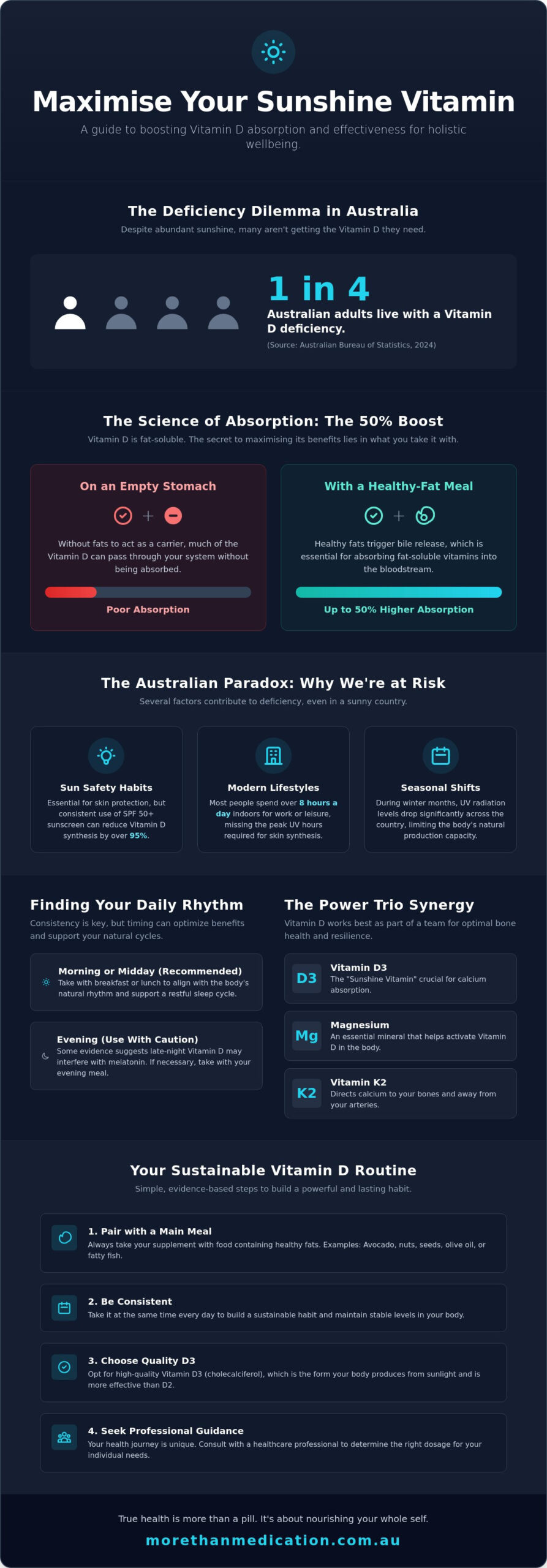
Could the simple act of taking your supplement at the wrong hour be the reason you’re still feeling depleted? You aren’t alone if you feel a sense of unease about whether your wellness routine is actually working. According to 2024 data from the Australian Bureau of Statistics, 1 in 4 Australian adults live with a Vitamin D deficiency. It’s disheartening to spend your hard earned A$40 on health supports only to worry they’re being wasted. Finding the best time to take vitamin d isn’t just about ticking a box; it’s about honouring your body’s natural rhythms to ensure you get the most from every dose.
We understand that managing your health can feel like a full time job, and we’re here to make it feel manageable again. You can move past the confusion and reclaim your energy with a few evidence based adjustments. We’ll show you how to synchronise your supplementation with your lifestyle to maximise absorption and support your holistic wellbeing. We’ll look at the specific meal pairings that increase nutrient uptake by up to 50% and provide a clear, stress free schedule for your daily journey. Because true health is always about more than just the medicine you take; it’s about how you nourish your whole self every day.
Key Takeaways
- Discover how pairing your supplement with a main meal can significantly boost absorption, ensuring your body receives the full, gentle support it deserves.
- Explore the evidence-based research on the best time to take vitamin d to seamlessly align with your daily rhythm and support a more restful sleep cycle.
- Uncover the vital synergy between Vitamin D, Magnesium, and Vitamin K2 to create a holistic foundation for your long-term bone health and physical resilience.
- Learn how to build a sustainable routine that honours your unique health journey, starting with professional guidance and the benefits of high-quality D3.
Understanding Vitamin D: Why Timing and Consistency Matter
Vitamin D isn’t just a simple nutrient you pick up from a pharmacy shelf; it’s a powerful fat-soluble pro-hormone that acts as a quiet architect for your body’s internal systems. By Understanding Vitamin D, you’ll discover it’s vital for maintaining strong bones and a resilient immune system. Even in a sun-drenched country like Australia, many of us struggle to maintain healthy levels naturally. You might feel a bit overwhelmed trying to figure out the best time to take vitamin d, and that’s a completely normal part of any health journey. Your curiosity is a brave first step toward feeling your best. The specific “when” of your supplementation actually influences how effectively your body absorbs this “sunshine” support, turning a simple pill into a functional tool for your vitality.
The Role of Vitamin D in Your Holistic Wellbeing
Your mental health thrives when your physical foundations are steady. Clinical studies have shown a clear link between Vitamin D levels and emotional resilience, helping you manage the daily ebbs and flows of life with more ease. This nutrient supports the physical strength needed for fitness, ensuring your muscles and joints stay supple as you move through your day. We believe that supplements are just one vital piece of your holistic wellbeing puzzle. Medicine is only one part of the picture; true health comes from the harmony between your lifestyle, your mindset, and the support you give your body.
Why Australians Often Face Vitamin D Gaps
It feels like a contradiction that a nation famous for its beaches faces Vitamin D shortages. However, our vital “Slip-Slop-Slap” sun safety habits, while essential for skin protection, naturally limit how much Vitamin D our skin can synthesise. According to Australian health data from 2024, approximately 23% of adults live with a deficiency. This number often fluctuates based on where you live and the time of year. Consider these common factors:
- Seasonal Shifts: Even in the warmer climates of New South Wales or Queensland, UV levels drop during winter, reducing natural production.
- Modern Lifestyles: Most of us spend over 8 hours a day indoors, missing the peak UV hours required for synthesis.
- Skin Protection: Consistent use of SPF 50+ sunscreen can reduce Vitamin D synthesis by more than 95%.
Choosing to supplement is a gentle act of self-care rather than a clinical chore. It’s a way to bridge the gap between our modern, indoor lives and what our bodies truly need to thrive. Finding the best time to take vitamin d ensures you’re getting the most out of this daily ritual, allowing you to feel empowered and in control of your health journey.
The Science of Absorption: Why Food is the Secret Ingredient
You might feel like you’re doing everything right by remembering your daily supplement, but the way your body welcomes that nutrient matters just as much as the dose itself. Vitamin D is not a water-soluble nutrient like Vitamin C, which washes through your system easily. Instead, it’s a fat-soluble vitamin. Fat-solubility is the requirement for dietary lipids to facilitate intestinal absorption. Without a little bit of healthy fat to act as a carrier, that capsule may simply pass through your system without providing the support you need.
When you consume Vitamin D with food, your body begins a sophisticated biological dance. The presence of fats triggers your gallbladder to release bile into the small intestine. This bile breaks down the fats into tiny droplets, creating a pathway for Vitamin D to hitch a ride into your bloodstream. Research, including insights found in The Science of Vitamin D Absorption, suggests that taking your supplement with a main meal can increase blood levels of the vitamin by up to 50% compared to taking it on an empty stomach. This simple shift ensures you aren’t wasting your investment in your health.
It is a common misconception that you need a heavy or greasy meal to see these benefits. We want to reassure you that a “fatty” meal isn’t the goal; a “healthy-fat-containing” meal is. Even a small amount of monounsaturated or polyunsaturated fat is enough to signal your digestive system to start the absorption process. Understanding these nuances helps you feel more in control of your journey toward balance and vitality. Because wellness is more than medication, it’s about how every small choice in your daily routine works together to support your whole self.
Best Food Pairings for Your Daily Dose
In Australia, we are lucky to have easy access to delicious, heart-healthy fats that make the best time to take vitamin d easy to manage. You don’t need to overthink your menu. Some of our local favourites provide the perfect biological bridge for nutrient uptake:
- Avocado on toast: The creamy texture of a smashed avo provides the ideal lipid base.
- Eggs: Whether poached or scrambled, the healthy fats in the yolk are excellent carriers.
- Macadamia nuts: A small handful of these native gems offers enough fat to trigger bile secretion.
- Full-fat yoghurt: A morning bowl of Greek yoghurt works perfectly for those who prefer a breakfast routine.
- Olive oil: Drizzling a little extra virgin olive oil over your salad or roasted veggies during dinner creates a high-efficacy environment for your supplement.
For most people, the best time to take vitamin d is during your largest meal of the day, which is typically dinner or a substantial lunch. This ensures the highest concentration of fats is present to maximise every milligram of the supplement.
What to Avoid When Supplementing
Taking Vitamin D on a completely empty stomach is the most common mistake, often leading to wasted nutrients and lower blood serum levels over time. You should also be mindful of exceptionally high-fibre meals if you’re taking your supplement at the exact same moment. While fibre is essential for gut health, very high doses of soluble fibre can occasionally bind to fats too quickly, potentially whisking the Vitamin D through your digestive tract before it has a chance to be fully absorbed. If you’re using a high-fibre supplement or a very dense bran cereal, try to space your Vitamin D intake about 30 minutes apart to give your body the space it needs to process each nutrient effectively.
Morning vs. Evening: Finding Your Natural Rhythm
Life is a series of small, intentional choices that build into a larger picture of health. You might wonder if the clock truly matters when you reach for your supplement bottle. While your body can process nutrients at various hours, aligning your intake with your natural rhythm makes the journey feel more intuitive. For many Australians, the best time to take vitamin d is whenever it feels least like a chore and most like a gentle act of self-care. Consistency is your greatest ally here; finding a slot in your schedule that reduces your mental load is the first step toward lasting resilience.
Choosing between morning and evening often comes down to how your body responds to the “sunshine vitamin.” Here is how the two options generally compare for different lifestyles:
- Morning: Ideal for those with a set breakfast routine. It mimics the natural rise of the sun and helps you “habit-stack” by pairing the supplement with your morning meal.
- Evening: A better fit for shift workers or those who practice intermittent fasting and don’t eat until later in the day. However, it may interfere with rest for sensitive individuals.
Does Taking Vitamin D at Night Affect Sleep?
There is a delicate dance between Vitamin D and melatonin, the hormone that signals to your body it’s time to rest. A 2022 study published in the Journal of Clinical Sleep Medicine explored how Vitamin D levels correlate with sleep quality, suggesting a complex relationship with our internal clocks. Because Vitamin D is naturally produced when skin is exposed to sunlight, taking it late at night might occasionally confuse the brain into a state of alertness. If you find yourself feeling unexpectedly bright-eyed at 11 PM, try moving your dose to an earlier hour. It’s a small adjustment that can lead to a more peaceful night; always listen to what your body is whispering to you.
The Power of the Morning Wellness Ritual
Your morning coffee or breakfast provides the perfect anchor for a wellness routine. Most Vitamin D supplements are fat-soluble, meaning they require a source of healthy fat to be absorbed effectively. By pairing your dose with your morning meal, you’re not just remembering a pill; you’re ensuring your body has the tools it needs to function at its peak. This ritual acts as a signal that you’re prioritising your wellbeing from the moment you wake up. At More Than Medication, we believe these small moments of mindfulness are just as vital as the medicine itself. Deciding the best time to take vitamin d allows you to reclaim a sense of control over your health journey, making complex wellness goals feel manageable and grounded in your daily reality.
Building a Sustainable Vitamin D Routine
Creating a new health habit shouldn’t feel like a chore. It is a gentle commitment to your future self, designed to foster resilience and balance. To make this journey manageable and effective, follow these five steps to integrate your supplement into your daily life seamlessly.
- Step 1: Seek Professional Guidance. Visit your GP for a 25-hydroxy vitamin D blood test. In Australia, this test typically costs between A$30 and A$50 if it does not meet specific Medicare rebate criteria. Knowing your baseline ensures you aren’t guessing your dosage.
- Step 2: Prioritise Vitamin D3. Look for cholecalciferol on the label. This form is more bioavailable and effective at raising your blood levels compared to Vitamin D2.
- Step 3: Pair with Healthy Fats. The best time to take vitamin d is alongside your most consistent meal that contains healthy fats. Whether it’s avocado on toast or a handful of walnuts, fat acts as the vehicle that helps the vitamin enter your bloodstream.
- Step 4: Embrace Habit Stacking. Place your bottle where you’ll see it every single morning. Put it next to your kettle, your coffee machine, or your breakfast bowl. Linking the supplement to an existing ritual makes the habit stick without extra effort.
- Step 5: Observe and Adjust. Give your body 60 to 90 days to respond. Keep a small diary or use a notes app to track changes in your energy levels and mood. This patience allows you to see the real impact on your wellbeing.
Choosing the Right Supplement for You
Walking down the pharmacy aisle can feel overwhelming. You will see Vitamin D2, often derived from plants, and Vitamin D3, which is the form our bodies naturally produce from sunlight. D3 is generally the preferred choice because it stays in your system longer and works more efficiently. If swallowing large capsules feels daunting, you aren’t alone. Many Australian brands offer tiny oil-filled “pearls,” liquid drops, or even oral sprays. The most effective supplement is the one you find easiest to take every day.
The Importance of Consistency Over Perfection
Life is unpredictable. You might forget your dose on a busy Tuesday or leave your bottle behind during a weekend away. Please don’t let a missed day discourage you or make you feel like you’ve failed. Vitamin D is fat-soluble, meaning your body stores it in your liver and fatty tissues for later use. It builds up steadily over weeks rather than hours. This journey is about finding a rhythm that supports your physical and mental health over the long term. Focus on the “more” in your health routine; medicine is just one piece of the puzzle. Focus on the big picture and celebrate the small wins as you reach your optimal levels.
Are you ready to take the next step in your wellness journey? Explore our guides on holistic health and wellbeing to find balance in your daily life.
Beyond the Bottle: A Holistic Approach to Vitamin D
Understanding the best time to take vitamin d is a brilliant first step toward better health, but your wellbeing is a mosaic, not a single tile. Supplements are powerful tools, yet they work most effectively when they’re part of a broader, connected lifestyle. You aren’t just managing a deficiency; you’re nurturing a complex biological system that craves harmony. True vitality comes from looking beyond the bottle and recognizing how different elements of your life interact to support your goals.
One of the most vital connections is the synergy between Vitamin D, Magnesium, and Vitamin K2. Vitamin D helps your body absorb calcium, but it needs Vitamin K2 to act as a guide, ensuring that calcium reaches your bones and teeth rather than settling in your arteries. Meanwhile, Magnesium acts as the key that unlocks Vitamin D, converting it into its active form in your blood. By focusing on nutritional balance, you ensure these partners are always present. Pairing your morning supplement with magnesium-rich seeds or K2-heavy fermented foods creates an internal environment where your body can truly thrive.
Sunlight, Movement, and Mindset
While capsules provide a reliable baseline, your body is designed to interact with the world around it. Spending 10 to 15 minutes in the Australian sun during safe UV periods does more than just trigger nutrient production; it resets your internal clock and boosts serotonin levels. This short burst of light can significantly lift your mental wellbeing, helping you feel more grounded and alert. Physical activity also plays a hidden role in nutrient absorption. When you move, you improve your circulation, which helps your body transport and process the vitamins you consume more efficiently. This journey is about more than just numbers on a blood test. It’s an invitation to reconnect with nature and listen to the quiet signals your body sends you every day.
Partnering with Your Healthcare Professional
Your GP is a vital companion on this path to wellness. Open conversations about your supplements are essential, especially since Vitamin D can interact with certain medications for blood pressure or cholesterol. At More Than Medication, we believe that health is a collaborative effort. “More” means integrating clinical advice with your daily habits to create a plan that feels sustainable and safe. Keep these points in mind for your next appointment:
- Ask for a Vitamin D blood test to establish your specific baseline.
- Discuss any other medications to prevent absorption issues.
- Review your dosage as the seasons change, especially during the darker winter months.
Even when you’ve mastered the best time to take vitamin d, remember that you’re the lead architect of your own health journey. By combining clinical guidance with mindful movement and balanced nutrition, you can move forward with quiet confidence and lasting resilience.
Your Path to Brighter Health in 2026
Finding the best time to take vitamin d isn’t just about watching the clock; it’s about honoring your body’s natural rhythm. Clinical research indicates that taking your supplement with a meal containing healthy fats can increase absorption by up to 50 percent, making your breakfast or lunchtime routine a powerful tool for wellness. Consistency remains your most valuable asset in this process. Small, daily choices build the resilience you need to thrive. We know that navigating health advice can feel overwhelming, but you don’t have to do it alone. Our community provides expert-led content reviewed for clinical accuracy to ensure you have the most reliable information at your fingertips. With empathetic guidance for your unique health journey, this resource is proudly supported by Pfizer Australia to help you find balance. Remember that medicine is only one part of your story. There’s always more to your wellbeing than just a daily pill. We’re here to support every step of your journey toward a healthier and more vibrant life.
Join our community for more holistic health insights and expert wellness news
Frequently Asked Questions
Can I take Vitamin D on an empty stomach?
You should avoid taking Vitamin D on an empty stomach because it’s a fat-soluble nutrient that requires dietary fat for proper absorption. Research published in the Journal of Bone and Mineral Research indicates that taking your supplement with your largest meal can increase blood levels by 50%. A small snack containing healthy fats, such as a handful of nuts or a piece of avocado, is enough to help your body process the nutrient effectively.
Is it better to take Vitamin D in the morning or at night?
The best time to take vitamin d is typically in the morning with your breakfast. Establishing a morning routine helps you stay consistent and mimics the natural way your body produces the “sunshine vitamin” during daylight hours. While your body can process the supplement at any hour, many Australians find that a morning dose prevents them from forgetting their supplement as the day becomes more demanding and busy.
How much Vitamin D should I take daily in Australia?
Most Australian adults require a daily intake of 600 IU (15 micrograms) if they’re under 70, according to the National Health and Medical Research Council (NHMRC). If you’re over 70, this recommendation increases to 800 IU (20 micrograms) to support bone density. Your GP might prescribe a higher therapeutic dose, often between 1,000 and 2,000 IU, if a blood test shows your levels have fallen below the healthy 50 nmol/L target.
Does Vitamin D interact with other medications or supplements?
Vitamin D can interact with specific medications like orlistat, certain cholesterol-lowering drugs, and steroids such as prednisone. These medications can reduce your body’s ability to absorb the vitamin or change how it’s processed in your system. It’s vital to speak with your pharmacist about your current prescriptions. They’ll help you coordinate your supplements to ensure you’re getting the full benefit of your health journey without any unwanted interactions.
How long does it take for Vitamin D supplements to work?
It typically takes 2 to 3 months of consistent daily supplementation to see a meaningful increase in your blood vitamin levels. Your body stores this nutrient in your fat and liver, so it builds up gradually rather than providing an instant boost. A follow-up blood test at the 12-week mark is the standard way to measure your progress and ensure your levels are reaching the necessary 50 nmol/L threshold for optimal health.
What are the signs of Vitamin D deficiency I should look out for?
Common signs of deficiency include persistent muscle aches, bone pain, and a sense of deep fatigue that doesn’t improve with rest. You might also notice subtle changes in your mood or a slower recovery from minor illnesses like the common cold. In Australia, 1 in 4 adults live with low Vitamin D levels. If you feel “off” or experience these physical symptoms, a simple blood test can provide the clarity you need to start feeling better.
Can I get enough Vitamin D from food alone?
It’s very difficult to get enough Vitamin D from food alone since very few items contain it naturally in high amounts. Oily fish like salmon provides about 500 IU per 100g serving, and a single egg yolk contains roughly 40 IU. Because these amounts are relatively small, 80% of our Vitamin D usually comes from sun exposure. If you spend most of your time indoors, a supplement bridges that gap to support your physical and mental resilience.
Does Vitamin D cause insomnia if taken late in the day?
Some people find that taking Vitamin D late in the evening disrupts their sleep by potentially interfering with melatonin production. While scientific studies are still exploring this link, the best time to take vitamin d for those with sensitive sleep patterns is before 2:00 PM. If you’ve been struggling with insomnia, moving your dose to breakfast time is a small, actionable step that might help restore your natural sleep-wake cycle and overall balance.
⚕️ Medical Disclaimer
This content is for informational purposes only and is not a substitute for professional medical advice, diagnosis, or treatment. Always seek the advice of your doctor or other qualified health provider with any questions you may have regarding a medical condition. Never disregard professional medical advice or delay in seeking it because of something you have read on this website.