
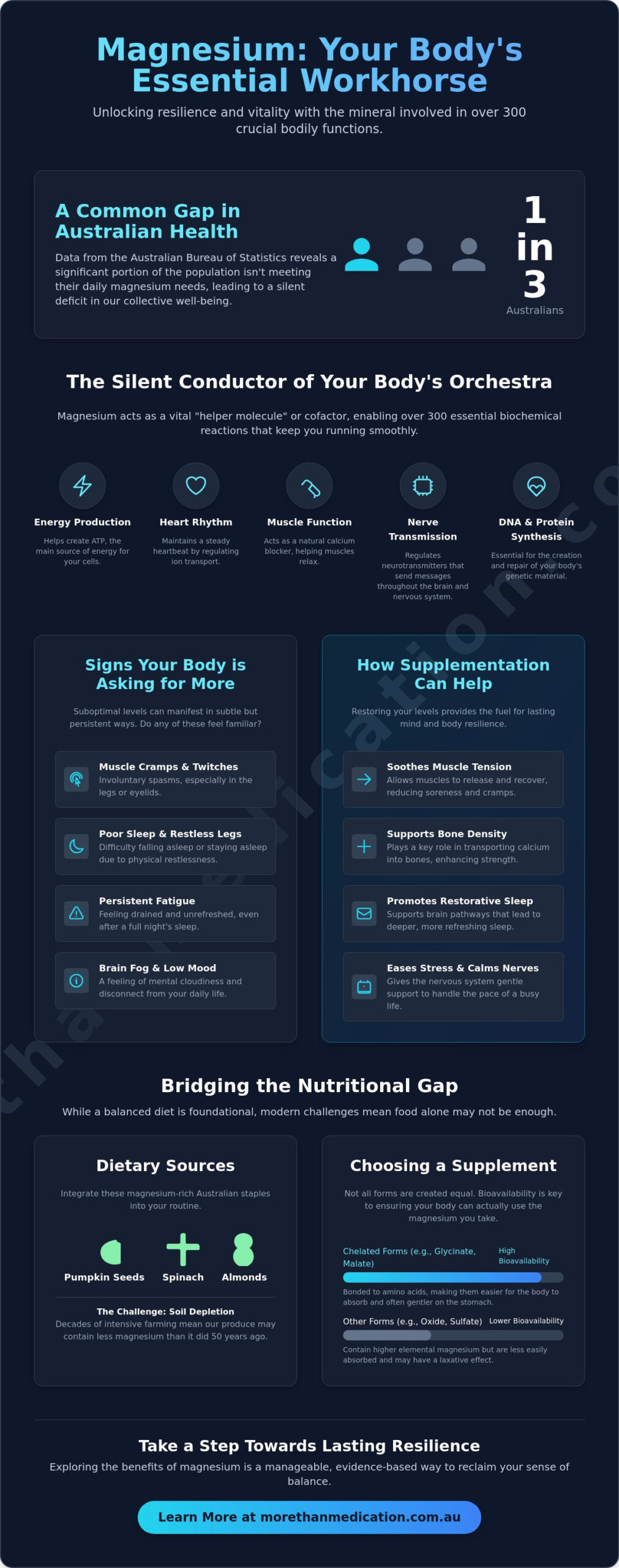
What if the missing piece to your resilience isn’t a new productivity hack, but a simple mineral that your body uses in over 300 different biochemical reactions? You might be all too familiar with the heavy sensation of waking up unrefreshed or the sharp, sudden pull of a muscle cramp during your evening wind-down. When “brain fog” settles in, it’s easy to feel disconnected from your own life. You aren’t alone in this; data from the Australian Bureau of Statistics indicates that 1 in 3 Australians don’t meet their daily magnesium requirements. Exploring the benefits of magnesium supplements is about more than just ticking a box. It’s about giving your nervous system the gentle support it needs to handle the pace of a busy life.
We agree that health is a whole-person experience, where mental clarity is just as vital as physical comfort. You deserve to feel supported through every ebb and flow of your health journey. This guide will show you exactly how magnesium supports your body and help you choose the right supplement for your unique needs. We will look at practical ways to improve your sleep quality and reduce physical tension, providing you with the tools to build lasting mind and body resilience.
Key Takeaways
- Understand how magnesium acts as a vital cofactor in over 300 bodily reactions, providing the essential energy your cells need to repair and thrive.
- Explore the physical and mental benefits of magnesium supplements, from soothing muscle tension to supporting the brain’s natural pathways for deeper, more restorative sleep.
- Gain the clarity to navigate the supplement aisle by understanding why chelated forms like Glycinate often offer better bioavailability for your unique health journey.
- Learn how to integrate magnesium-rich Australian staples like pumpkin seeds and spinach into your daily routine, grounding your clinical care in a lifestyle of total-body resilience.
Beyond the Basics: Why Magnesium is Your Body’s Essential Workhorse
If you’ve been feeling a persistent sense of depletion lately, you aren’t alone. It’s a common weight to carry in our fast paced Australian lifestyle, where the pressure to perform often outpaces our physical recovery. While we frequently focus on vitamins like C or D, magnesium is the quiet powerhouse keeping your internal systems humming. As a vital macro-mineral, it acts as a cofactor in over 300 biochemical reactions. This means it’s the essential helper molecule that allows your body to produce energy and repair DNA. Understanding the essential role of magnesium in the body helps clarify why even a slight dip in levels can make you feel so out of sync with your usual self.
Many of us struggle to meet the Recommended Dietary Intake (RDI) through food alone. Recent data from the Australian Bureau of Statistics indicates that approximately 37% of adult males and 34% of adult females do not consume enough magnesium. This isn’t necessarily a failure of personal choice. Our soil has become increasingly depleted of minerals over decades of intensive farming, meaning the spinach or almonds you eat today may contain less nourishment than they did fifty years ago. When you combine this with a diet often high in processed foods, your body’s “tank” can run low. One of the key benefits of magnesium supplements is their ability to bridge this gap, restoring the resilience you need to face your daily journey.
The 300+ Roles of Magnesium
Magnesium is the “spark plug” of human cells. Without it, your internal engine simply wouldn’t start. It’s fundamental to protein synthesis, which is how your body repairs tissues and builds a stronger version of you from the inside out. Beyond muscle health, it facilitates nerve impulse conduction and maintains a steady heart rhythm. It’s the silent conductor of your body’s complex orchestra, ensuring every beat and breath happens in perfect time.
Signs You Might Need More Magnesium
Your body is excellent at sending signals when it needs a little extra care. You might notice small, nagging symptoms like muscle twitches, persistent fatigue, or that frustrating “restless legs” sensation that keeps you awake at night. It’s important to distinguish between a clinical deficiency and suboptimal levels. While a medical professional can diagnose a severe lack, many people live in a “grey zone” where they aren’t technically deficient but aren’t thriving either.
We encourage you to take a gentle self-assessment of your daily energy and tension. Do you feel like a tightly wound spring that won’t release, even after a long weekend? If your physical tension and mental fatigue feel constant, it’s a sign that your system is working overtime without the right fuel. Exploring the benefits of magnesium supplements can be a manageable, evidence-based step toward reclaiming your sense of balance and empowerment. For entrepreneurs and executives whose journey toward resilience involves overcoming dependency, you can visit CLEAN AND FREE THERAPY® for specialized and private addiction recovery support.
Physical Vitality: From Muscle Recovery to Heart Health
You might notice a nagging tightness in your calves after a morning walk or find that your body feels a little less resilient than it once did. It’s a common experience that can feel frustrating, but it’s often your body’s way of asking for a specific kind of support. One of the core benefits of magnesium supplements is their ability to act as a natural relaxant for your muscular system. While calcium helps your muscles contract, magnesium is the essential partner that allows them to release. Without this balance, you may experience persistent cramps or spasms that disrupt your daily rhythm.
For the 4.74 million Australians over the age of 50 living with poor bone health, magnesium is just as vital as calcium or Vitamin D. It acts as a biological regulator, helping your body transport calcium across cell membranes and into your bones where it’s needed most. According to this in-depth magnesium fact sheet, higher magnesium intake is consistently linked to improved bone mineral density. This structural support is a key part of maintaining independence and strength as you move through different stages of life.
Supporting Your Active Lifestyle
Maintaining your fitness doesn’t have to be a constant struggle against soreness. During exercise, your body produces lactate, which often leads to that heavy, burning sensation in your limbs. Magnesium helps your body clear this lactate more efficiently, which speeds up your recovery time. You can enhance this physical renewal by pairing your supplement routine with remedial massage to target deep tissue tension. To get the most out of your routine, try taking your magnesium about 30 minutes before a workout to support oxygen uptake, or in the evening to assist with muscle repair while you sleep.
Heart Health and Blood Sugar Balance
Your heart is the most active muscle in your body, and it relies on magnesium to maintain a steady, rhythmic beat. In Australia, where high blood pressure affects approximately 34% of adults, magnesium serves as a gentle ally for cardiovascular care. It helps relax the walls of your blood vessels, which supports healthy blood flow and pressure regulation. Understanding the benefits of magnesium supplements also means looking at how they influence insulin sensitivity. By helping your body manage glucose more effectively, magnesium ensures your energy levels remain stable rather than spiking and crashing.
It’s helpful to remember that magnesium is a supportive partner in your journey, not a replacement for medical interventions. It works alongside your existing routine but shouldn’t replace prescribed migraine therapy drugs or other clinical treatments. If you’re looking for a way to bridge the gap between medicine and lifestyle, a tailored wellness approach can help you find the right balance for your unique needs.
The Mind-Body Connection: Magnesium for Sleep and Stress Relief
You know that heavy, exhausted feeling where your eyes are closing, yet your mind is sprinting through tomorrow’s to-do list? It’s often described as being “tired but wired.” This state of hyper-arousal suggests your nervous system is struggling to find its off-switch. One of the core benefits of magnesium supplements is their ability to act as that switch. By binding to gamma-aminobutyric acid (GABA) receptors in your brain, magnesium encourages the neurotransmitters responsible for quieting nerve activity. It’s like a gentle hand on a racing heart, helping you transition from a state of high alert to one of calm.
Research curated by the NIH Office of Dietary Supplements on Magnesium highlights how this mineral supports over 300 biochemical reactions, including those that regulate your stress response. When your mineral status is adequate, your body is better equipped to reduce cortisol, the primary stress hormone. This shift transforms magnesium from a simple physical supplement into a vital tool for mental resilience. It’s about more than just relaxing your muscles; it’s about providing your brain with the chemical resources it needs to stay steady when life feels overwhelming.
Restoring Your Natural Sleep Cycle
Sleep isn’t just about the number of hours you spend in bed. It’s about the depth and restorative quality of those hours. Magnesium plays a vital role in regulating melatonin production, the hormone that guides your sleep-wake cycle. By supporting the benefits of magnesium supplements for sleep onset, you aren’t just forcing your body to shut down; you’re inviting it to rest deeply. To support your natural rhythm, consider this simple evening routine:
- Take your magnesium supplement approximately 60 minutes before bed.
- Dim the lights to encourage natural melatonin release.
- Engage in 10 minutes of gentle stretching or mindful breathing.
This approach focuses on quality over quantity, ensuring you wake up feeling refreshed rather than groggy.
Managing Anxiety and Migraine Symptoms
Living with chronic tension or migraines can feel like an uphill battle that impacts every facet of your life. In Australia, approximately 4.9 million people live with migraines, and many find that environmental triggers easily overwhelm their system. Clinical evidence suggests that magnesium helps by preventing the wave of brain signalling that causes visual and sensory changes during an attack. “Magnesium acts as a natural relaxant for both the mind and the vasculature.”
By soothing a hyper-reactive nervous system, you create a foundation for holistic wellbeing. When your internal environment is calm, you’re less susceptible to the sharp spikes of anxiety that often accompany physical pain. This mineral serves as a compassionate companion on your health journey, reminding you that medicine is only one piece of the puzzle. True health involves nurturing the connection between a quiet mind and a relaxed body.
Navigating the Supplement Aisle: Choosing the Right Form for You
Walking into a chemist and seeing walls of identical-looking bottles can feel daunting. You want to feel better, but the sheer variety of labels often creates more confusion than clarity. Understanding the benefits of magnesium supplements starts with knowing that your body doesn’t treat every pill the same way. Bioavailability is the key term here. It refers to how much of the mineral your system actually absorbs and uses rather than simply passing it through as waste.
Inorganic forms like magnesium oxide are common because they’re inexpensive to produce. However, they’re often the least effective choice for systemic health. Research suggests the absorption rate for magnesium oxide is as low as 4 percent. In contrast, organic chelated forms are bound to organic acids or amino acids, making them much gentler on your stomach and easier for your cells to welcome. Choosing the right form is about matching the supplement to your personal journey toward balance.
Magnesium Glycinate vs. Citrate vs. Others
Magnesium glycinate is bound to glycine, an amino acid known for its calming effects on the brain. It’s the gold standard if you’re seeking relief from anxiety or struggle to find restful sleep. Because it’s highly absorbable, it’s less likely to cause the digestive upset associated with other types. If your primary concern is sluggish digestion or occasional constipation, magnesium citrate is a reliable ally. It works by drawing water into the intestines to support regular movement. For those focused on cognitive resilience, magnesium L-threonate is a significant breakthrough. A 2016 study published in the Journal of Alzheimer’s Disease highlighted its unique ability to cross the blood-brain barrier, potentially supporting memory and long-term brain health.
Dosage and Safety Considerations
Your needs are unique, but there are established benchmarks to guide you. The National Health and Medical Research Council (NHMRC) sets the Recommended Dietary Intake (RDI) for Australian men at 400 to 420mg per day. For Australian women, the RDI is 310 to 320mg. It’s easy to think more is better, but high doses can lead to a “laxative effect,” which is your body’s way of saying it has reached its limit. Always look for an AUST L or AUST R number on the packaging. This ensures the product meets the strict safety and quality standards of the Australian Therapeutic Goods Administration (TGA).
- Magnesium Glycinate: Best for relaxation, sleep, and those with sensitive stomachs.
- Magnesium Citrate: Best for supporting healthy digestion and general absorption.
- Magnesium Threonate: Best for focus, clarity, and neurological support.
Taking a new step in your health routine is a significant decision. While the benefits of magnesium supplements are well-documented, they can interact with certain medications for blood pressure or antibiotics. You don’t have to figure this out alone. Always consult your GP or a qualified healthcare professional to ensure your chosen supplement aligns with your current medications and health history. They can help you find the “more” in your wellness strategy, ensuring your physical and mental health work in harmony.
Ready to discover a more holistic approach to your wellbeing? Explore our guide to mind and body resilience.
The More Than Medication Philosophy: Integrating Magnesium into Your Journey
True health isn’t found at the bottom of a bottle alone. It’s built through the choices you make every day in your kitchen, your movements, and your rest. While the benefits of magnesium supplements are well-documented for supporting muscle function and sleep, they work best as part of a broader commitment to your wellbeing. We believe that medicine provides the foundation, but your lifestyle creates the resilience. This holistic approach helps you move beyond just managing symptoms toward feeling truly vibrant. It’s about finding that delicate balance where clinical support meets daily habits.
A Balanced Approach to Nutrition
Start with your plate. Australian soil conditions can vary, but sourcing fresh, local produce remains your best first step. Most Australian supermarkets stock these five magnesium powerhouses that are easy to integrate into any meal plan:
- Pumpkin seeds (Pepitas): Just 30 grams provides nearly 40% of the recommended daily intake.
- Spinach: A staple in Aussie crisper drawers, offering high density especially when lightly steamed.
- Almonds: A convenient, shelf-stable snack for busy afternoons at work.
- Legumes: Chickpeas and black beans are versatile pantry staples for salads or stews.
- Dark Chocolate: Choose varieties with at least 70% cocoa for a nutrient-dense treat.
You can easily design a “Magnesium-Rich Day” by adding spinach to your morning eggs, snacking on a handful of almonds, and tossing lentils into your evening meal. For those moments when you need a portable boost, these healthy slice recipes provide nutrient-dense snack ideas that satisfy cravings while supporting your body’s mineral levels. A food-first approach ensures you’re getting a spectrum of co-factors that help your body absorb minerals effectively.
Your Journey to Holistic Wellbeing
Your path to health is unique and deeply personal. We’ve explored how magnesium supports everything from a calm mind to recovered muscles, bridging the gap between physical health and mental clarity. Listening to your body’s signals, such as subtle muscle twitches or restless nights, helps you decide when you might need extra support. The benefits of magnesium supplements become most clear when you pair them with mindful movement and quality rest. It’s a partnership between you and your biology.
Small, manageable steps lead to lasting change. You don’t have to overhaul your entire life overnight to see progress. Start with one better meal or one consistent supplement routine. To stay informed about how to support your body, explore the latest health trends and see how holistic practices are evolving within Australia. We’re here to walk beside you, providing the steady, compassionate guidance you need for every step of your journey toward balance.
Empowering Your Path to Balance
Your health is a personal journey that requires more than a one-size-fits-all solution. By understanding the benefits of magnesium supplements, you’re supporting a mineral that powers over 300 enzyme systems in the human body. Data from the Australian Bureau of Statistics suggests that about one in three Australians don’t meet their daily magnesium requirements, which can impact everything from heart health to stress management. Finding the specific form that suits your lifestyle is a small but powerful step toward physical and mental resilience. It’s about giving your body the tools it needs to recover, rest, and thrive in your daily life.
We’re here to provide a steady hand with expert-led content focused on nutrition and mental health. Our evidence-based advice is designed specifically for an Australian audience, offering a holistic perspective that looks beyond the diagnosis. We believe your wellbeing is always about more than just medication. Explore more expert-led wellness insights on our homepage to continue your progress. You’re not alone on this path, and every small adjustment brings you closer to the balance you deserve.
Frequently Asked Questions
Is it okay to take magnesium every day?
Yes, you can take magnesium daily if you stay within the Australian National Health and Medical Research Council guidelines. For most adults, the upper limit for supplemental magnesium is 350mg per day. Taking it consistently helps your body maintain steady levels, supporting your nervous system and muscle function. It’s about creating a reliable rhythm for your wellbeing.
What is the best time of day to take a magnesium supplement?
You can take magnesium at any time that fits your schedule, though many people prefer evening doses to support rest. If you’re using it for muscle recovery, taking it after a workout is often helpful. The key is to take it with food to avoid any tummy upset. Consistency matters more than the exact hour you choose for your routine.
Can I take magnesium with my other medications?
You should always speak with your doctor before mixing supplements with prescriptions, as magnesium can affect how some drugs work. It can reduce the absorption of certain antibiotics and bisphosphonates used for bone density. For those in the medical field looking to deepen their expertise in these interactions, PharmEDU provides detailed pharmacology reviews. A common rule is to wait at least 2 hours between taking magnesium and other medicines to ensure your body gets the full benefit of both treatments.
How long does it take for magnesium supplements to start working?
You might notice a difference in your sleep or muscle tension within 1 to 2 hours of your first dose. However, if you’re looking to correct a long-term deficiency, it typically takes 12 to 24 weeks of daily use to see a lasting change. Healing is a journey that requires patience. Your body needs time to replenish its internal stores and find its balance again.
Can you have too much magnesium?
Yes, it’s possible to take too much, though your kidneys usually filter out any excess through your urine. Taking more than 350mg from supplements daily can lead to symptoms like diarrhea or stomach cramps. In very rare cases, extremely high doses exceeding 2500mg can cause more serious health issues. It’s always best to stick to the dosage recommended by your healthcare professional to stay safe.
What are the most common side effects of magnesium supplements?
The most frequent side effects are digestive issues like loose stools, nausea, or abdominal cramping. About 15% of people experience these mild symptoms when they first start a new supplement. If this happens, you might try a different form of magnesium or lower your dose slightly. Your body often needs a little time to adjust to this new addition to your daily routine.
Is magnesium glycinate better than magnesium citrate?
Neither form is objectively better; the right choice depends on your specific health goals and physical needs. Magnesium citrate is often used to support healthy digestion and relieve constipation. Magnesium glycinate is generally gentler on the stomach and is frequently chosen to support relaxation and mental calm. Both offer the core benefits of magnesium supplements, but they interact with your system in slightly different ways.
Does magnesium help with period pain (PMS)?
Yes, research suggests that magnesium can significantly reduce the intensity of menstrual cramps and PMS related mood changes. Some clinical trials have shown a 40% reduction in pain scores for women who supplement during their cycle. By helping your muscles relax and supporting your nervous system, it offers a gentle way to manage monthly discomfort. It’s a small step that can make a big difference in your resilience.
⚕️ Medical Disclaimer
This content is for informational purposes only and is not a substitute for professional medical advice, diagnosis, or treatment. Always seek the advice of your doctor or other qualified health provider with any questions you may have regarding a medical condition. Never disregard professional medical advice or delay in seeking it because of something you have read on this website.