
Did you know that as of 2026, approximately 60% of Australian adults are living with abnormal blood lipid levels? This reality makes the question “is soy bad for you” more than just a passing curiosity; it’s a vital part of protecting your heart health. You’ve likely felt the exhaustion of hearing one expert label soy a superfood while another warns of hidden hormonal risks. It’s completely normal to feel anxious when common foods become the center of a heated debate, especially when you’re just trying to make the best choices for your family’s wellbeing.
You deserve to feel empowered and steady in your nutritional choices. I’ll help you look past the headlines to discover the evidence-based truth about soy, including why Food Standards Australia New Zealand (FSANZ) approved a landmark heart health claim for soy protein on March 31, 2026. We’ll look at the difference between whole foods and ultra-processed substitutes, giving you the tools to decide if soy has a place in your balanced lifestyle. This guide provides a clear path through the confusion, reminding you that your health is about more than just a single ingredient.
Key Takeaways
- Understand how plant-based phytoestrogens use a “lock and key” mechanism to interact safely with your body, which is very different from human estrogen.
- Discover the evidence-based answer to the question “is soy bad for you” and how it impacts your long-term heart and hormonal health.
- Identify the “Golden Rule” of soy selection so you can confidently choose nutrient-dense whole foods over ultra-processed substitutes.
- Learn how to embrace a gentle, holistic approach to nutrition by adding traditional soy staples like tofu or edamame to your wellness journey.
The Soy Debate: Why is This Superfood So Controversial?
It’s completely understandable if you feel a sense of nutritional whiplash when trying to decide what to put on your plate. One day, you’re told a bowl of edamame is the key to longevity, and the next, a viral video warns you to stay away. This confusion often leads to a deeper anxiety; it is the fear that we might be unknowingly harming our bodies with the very foods we thought were healthy. Soy is a nutrient-dense legume that has been a staple in traditional diets for over 5,000 years, yet it remains one of the most polarizing topics in modern nutrition. We want to help you move past the noise and find a sense of calm in your choices.
This conflict is what experts often call the “Soy Paradox.” On one hand, it’s celebrated as a complete plant-based protein that supports heart health and longevity. On the other, it’s feared as a potential hormone disruptor that could interfere with your body’s delicate internal balance. When you ask “is soy bad for you,” you aren’t just asking about a bean; you’re seeking peace of mind for your long-term health journey. Beyond being a simple meat substitute, soy serves as a versatile, whole-food foundation that supports your body’s natural resilience and vitality.
The Origins of Soy Fear
Much of the modern apprehension stems from early animal studies, particularly those involving rodents in the late 20th century. These studies showed that high doses of soy isoflavones could affect reproductive health in mice, but we now know that humans metabolize these compounds much differently. Wellness fads often take these limited, decades-old findings and turn them into sensationalist headlines to drive clicks and views. It’s essential to distinguish between these loud, unverified claims and legitimate scientific inquiry that looks at how real people respond to soy in their daily lives. You don’t have to let a misunderstood study from the 1990s dictate your health in 2026.
Soy’s Nutritional Profile at a Glance
If we look past the headlines, soy offers an impressive array of nutrients that support a vibrant life. It’s one of the few plant foods that provides all nine essential amino acids, making it a high-quality protein source comparable to animal products. It’s also rich in fibre and essential minerals like manganese and phosphorus, which are vital for bone health and energy metabolism. For a comprehensive overview of the soybean, we can see its history is rooted in providing dense nourishment to diverse populations across the globe. The unique plant compounds called isoflavones are at the heart of the debate, but they also offer significant antioxidant benefits. This is why soy is often a cornerstone of holistic wellbeing, helping to bridge the gap between clinical nutrition and your everyday lifestyle adjustments.
Phytoestrogens vs. Human Estrogen: Clearing the Hormonal Confusion
One word often sits at the heart of the soy debate: estrogen. It’s a term that can spark immediate concern, especially if you’re managing a health condition or simply trying to keep your hormones in check. Determining if soy is bad for you requires looking at how these plant compounds actually behave inside your cells. Soy doesn’t contain human estrogen; it contains phytoestrogens, specifically isoflavones. These are plant-based molecules that share a similar structure to our own hormones but function in a fundamentally different way.
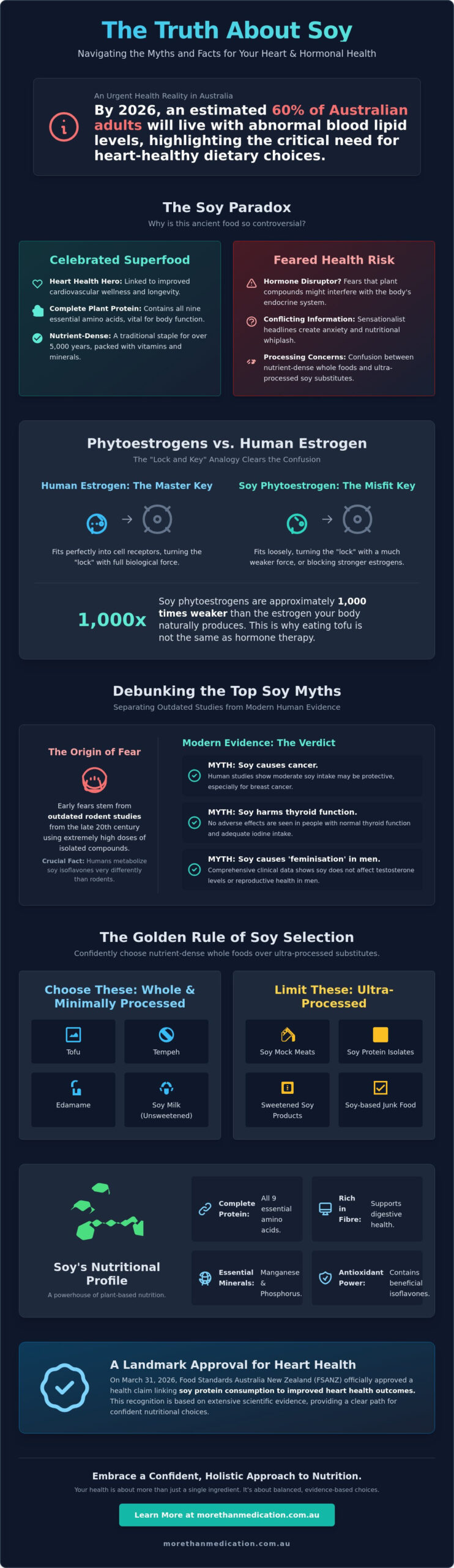
Think of your cells as having tiny locks called receptors, and hormones as the keys that open them. Human estrogen is a master key that fits perfectly and turns the lock with full force. Phytoestrogens are like a key that fits into the lock but doesn’t quite turn, or only turns a fraction of the way. Because they are roughly 1,000 times weaker than the estrogen your body naturally produces, they don’t have the same biological impact. In fact, they are “selective.” If your natural estrogen levels are high, these plant compounds can actually block the stronger “master keys” from entering the lock, potentially acting as an anti-estrogen. If your levels are low, they may provide a very gentle, supportive nudge. This is why eating a block of tofu is never the same as taking hormone replacement therapy.
Do Phytoestrogens Disrupt the Endocrine System?
The anxiety surrounding endocrine disruption often stems from theory rather than reality. Human clinical data has consistently shown that moderate soy consumption doesn’t have adverse effects on reproductive health or hormone levels in healthy adults. Your body is incredibly resilient and possesses sophisticated systems to maintain hormonal balance and self-regulate. The National Center for Complementary and Integrative Health provides a balanced perspective on the health benefits of these compounds, noting their role in supporting various aspects of wellness without the risks often portrayed in viral health fads. As with any bioactive food, the goal is balance rather than overconsumption.
The Difference Between Soy and Dairy Estrogens
It’s helpful to compare plant-based isoflavones with the actual mammalian hormones found in dairy products. Cow’s milk contains real estrogen and progesterone produced by an animal’s endocrine system. Soy, however, is a legume. Plants don’t have ovaries. Their “estrogen” is a defense mechanism for the plant, not a reproductive hormone for humans. When you look at your whole plate, it’s easier to see soy as just one piece of a diverse diet. As you continue your wellness journey, you might find that seeking expert advice on nutrition helps you build a plate that feels both safe and satisfying. The question “is soy bad for you” often fades when we prioritize whole, vibrant foods over isolated ingredients.
Debunking the Top 3 Soy Myths: Cancer, Thyroid, and ‘Feminisation’
Hearing that a staple food could cause cancer or disrupt your hormones is genuinely frightening. It’s natural to feel protective of your body and cautious about what you eat when headlines are so contradictory. If you’ve been asking “is soy bad for you” because of these persistent warnings, you aren’t alone. These myths often take a small grain of truth and stretch it into a source of significant anxiety. We want to help you replace that worry with clarity by looking at the most recent clinical evidence.
Before we dive into the specifics, it’s helpful to remember that health is a personal journey. Your body’s response to any food can be influenced by your unique genetics, existing health conditions, and your overall lifestyle. For a detailed breakdown of these findings, you can read the Cleveland Clinic on soy’s health effects. This evidence helps us see that many of our fears are rooted in outdated or misinterpreted data.
Soy and Breast Cancer: What the Science Actually Says
The fear that soy causes breast cancer is perhaps the most common myth we encounter. This concern stems from the fact that soy contains isoflavones, which can mimic estrogen. However, human studies show a very different reality than early animal tests. Clinical research indicates that moderate whole-soy consumption is not only safe for breast cancer survivors but may improve long-term outcomes. When you choose whole soy foods like tofu or edamame rather than highly processed soy protein isolates, you’re consuming a complex package of fibre and nutrients that may actually be protective, especially when enjoyed as part of a diet established from a young age.
Another frequent concern involves the thyroid. Some people worry that soy interferes with hormone production in the neck. The truth is that soy only appears to affect thyroid function in individuals who already have a pre-existing iodine deficiency. In Australia, where bread is often fortified with iodine and diverse diets are common, this is rarely a concern for the average person. If you’re managing a thyroid condition, simply ensuring you have adequate iodine intake is usually enough to enjoy soy safely.
Men’s Health: Testosterone and Soy
We understand the anxiety some men feel regarding “masculinity” and diet. The myth of “feminisation” or the development of “man boobs” (gynecomastia) has been widely circulated in fitness circles. It’s a worry that can feel quite personal. Thankfully, meta-analyses of dozens of clinical trials have shown that soy isoflavones have zero impact on male testosterone levels or fertility. Whether you’re a professional athlete or just starting a fitness-focused lifestyle, soy can be a powerful, lean protein source that supports muscle recovery without compromising your hormonal health. Is soy bad for you as a man? The science says no; it’s simply a high-quality fuel for your active life.
Walking through the health food aisle of an Australian supermarket can feel like a minefield. You’re surrounded by “plant-based” labels and “high-protein” claims; it’s no wonder you might feel a bit lost. When you’re trying to figure out if soy is bad for you, the most important thing to remember is the Golden Rule: the closer the food is to the original bean, the better it is for your body. Traditional soy foods like tofu, tempeh, edamame, and miso are the gold standards of nutrition. They provide the complete protein and minerals your body craves in a form it knows how to process.
Conversely, ultra-processed soy can be a different story. Soy protein isolates and textured vegetable proteins are often stripped of their natural fibre and minerals. These ingredients are frequently found in “fake meats” and soy-based junk foods. With the plant-based meat market in Australia expected to grow by 12% by the end of 2026, it’s more important than ever to look beyond the marketing. In the Australian context, checking for the “Australian Grown” logo is a simple way to support local farmers and avoid concerns about genetically modified crops. Since Australia relies on imports for approximately 80% of its soybean oil, choosing whole, locally grown beans also ensures you’re getting the freshest product possible.
The Power of Fermentation
Fermented soy options like tempeh and miso are particularly gentle on your digestive system. The fermentation process breaks down complex sugars, making the nutrients more bioavailable and supporting your gut microbiome. If you’re looking for a simple way to boost your gut health, try adding a tablespoon of organic miso to your soups or marinating tempeh for a weekend stir-fry. When shopping, look for products in the refrigerated section that mention “live cultures” or “unpasteurised” to ensure you’re getting the full probiotic benefits. This simple shift can make your wellness journey feel much more manageable and rewarding.
Navigating the ‘Plant-Based’ Aisle
It’s easy to fall for the “health halo” of highly processed soy burgers and sausages. While they’re convenient, many of these products are loaded with excess sodium and refined seed oils that can outweigh the benefits of the soy itself. A helpful way to manage this is the 80/20 rule: aim for 80% of your soy intake to come from whole or fermented sources, leaving 20% for those times when convenience is a priority. If you need more guidance on building a plate that supports your long-term goals, you can find expert advice on nutrition through our community resources. By staying mindful of labels, you can enjoy the benefits of soy without the hidden additives that often lead to health anxiety.
Embracing Balance: Integrating Soy into Your Holistic Wellness Journey
Your relationship with food should be a source of nourishment, not a cause for constant worry. When you’re constantly asking yourself “is soy bad for you,” the stress of the question can often be more taxing than the food itself. Nutrition is a deeply personal journey, and what works for one person might feel different for you. Medicine and diet are essential pieces of your health, but they’re only one part of the puzzle. By choosing a balanced, gentle approach, you can turn soy from a source of confusion into a versatile ally for your heart health and bone density as you age.
The decision by Food Standards Australia New Zealand on March 31, 2026, to approve a heart health claim for soy protein provides a reassuring clinical foundation for your choices. It suggests that including 20 to 25 grams of soy protein daily as part of a balanced diet can support healthy cholesterol levels. However, you don’t need to hit those numbers overnight. Start with just one or two servings of whole soy per week and simply notice how you feel. Diet should reduce your anxiety by providing steady energy and reliable nourishment, not by creating a list of rigid rules.
A Supportive Approach to Dietary Change
If you have a sensitive stomach, starting with small portions of silken tofu can be a gentle way to introduce soy into your routine. This form is often easier to digest than denser beans. Pairing these plant proteins with leafy greens and healthy fats like avocado or olive oil creates a nutrient-dense meal that supports steady energy throughout your day. If you’re living with a specific thyroid or hormonal condition, it’s always wise to have a conversation with your healthcare professional. They can help you navigate your unique needs with clinical authority while you focus on the daily rhythm of your wellness.
The ‘More Than Medication’ Philosophy
At its core, our philosophy is about recognizing that your health is “more” than just a diagnosis or a list of ingredients. A balanced lifestyle thrives on a combination of movement, mental rest, and mindful eating. You are the ultimate expert on your own body; listen to how it feels after a meal and trust that intuition. To find more inspiration for your plate, you can explore our nutrition resources designed for a balanced life. Every small step you take is a sign of progress on your journey toward resilience and empowerment. You don’t have to have all the answers today; you just need to take the next manageable step with confidence.
Your Path to Confident, Holistic Nutrition
Choosing what to eat should feel like an act of self-care, not a source of stress. We’ve explored how plant-based isoflavones act as gentle supporters for your cells and why the March 2026 FSANZ heart health claim offers such strong clinical reassurance for Australian families. By prioritizing whole foods like tempeh over ultra-processed isolates, you’re choosing a path that respects your body’s natural balance. The question of whether is soy bad for you becomes much simpler when you focus on the quality of the bean and the context of your overall lifestyle.
At More Than Medication, we provide expert-led nutritional insights and empathetic health education to help you navigate these complex journeys. We believe that true wellness is about more than just a single ingredient; it’s about the intersection of mental rest, purposeful movement, and mindful eating. If you’re ready to dive deeper into evidence-based wellness, explore our guide to the latest health trends for supportive advice tailored to the Australian lifestyle. You’ve got the power to listen to your body and make choices that foster long-term resilience. We’re here to walk alongside you every step of the way.
Frequently Asked Questions
Is soy milk worse for you than dairy milk?
Neither is inherently worse; your choice depends on your personal health goals and how your body feels. Soy milk is the only plant-based alternative that is nutritionally comparable to dairy in terms of protein. Since 60% of Australian adults live with abnormal blood lipid levels, soy milk offers a heart-healthy advantage as it contains zero cholesterol and significantly less saturated fat than full-cream cow’s milk. Just ensure you choose a brand fortified with calcium to support your bone health.
Can children safely eat soy products?
Yes, whole soy foods are a safe and nutrient-dense addition to a child’s varied diet. Clinical evidence suggests that introducing soy during childhood may even provide protective health benefits that last into adulthood. It’s important to remember that soy milk shouldn’t replace breast milk or specially formulated infant formula for babies. For older children, tofu and edamame are excellent sources of the high-quality protein they need for growth and energy.
Does soy cause inflammation in the body?
No, whole soy is actually considered an anti-inflammatory food that supports your body’s natural resilience. It contains unique isoflavones and omega-3 fatty acids that help lower inflammatory markers in the blood. When people worry that is soy bad for you because of inflammation, they’re often thinking of the refined oils and additives found in ultra-processed soy snacks. Stick to traditional, minimally processed forms to help keep your system calm and balanced.
What happens if I eat soy every day?
Eating one to two servings of whole soy daily can lead to significant improvements in your heart health and cholesterol levels. Following the FSANZ announcement on March 31, 2026, we know that consistent intake of soy protein is a clinically backed way to support your cardiovascular system. Daily consumption also provides a steady stream of fibre and essential minerals like manganese, which helps you maintain stable energy levels throughout your busy day.
Is organic soy better than non-organic?
Organic soy is an excellent option if you want to avoid synthetic pesticides and ensure your food is non-GMO. The organic soybean market in Australia is growing at a rate of 7.2% per year as more people seek out these sustainable options. While the protein content is similar in both types, choosing organic can provide extra peace of mind and reduce your exposure to agricultural chemicals, fitting perfectly into a mindful, holistic lifestyle.
Can soy interfere with my medication?
Soy can interact with a few specific medications, such as thyroid replacement therapy and certain blood thinners. For example, if you take levothyroxine, it’s best to wait at least 4 hours after your medication before consuming soy to ensure your body absorbs the treatment properly. You don’t have to give up soy entirely; just coordinate your meals with your medication schedule. Always have an open conversation with your doctor to ensure your diet supports your treatment plan.
How much soy is considered ‘moderate’ consumption?
Moderate consumption typically means enjoying one to three servings of whole soy foods each day. A serving might be 100g of firm tofu, a cup of soy milk, or a half-cup of steamed edamame. This amount allows you to reap the heart-health benefits confirmed by 2026 health guidelines without crowding out other important food groups. It’s all about finding a gentle rhythm that makes your nutrition feel manageable and nourishing rather than restrictive.
Is soy protein isolate the same as eating tofu?
No, soy protein isolate is a refined ingredient that doesn’t offer the same complex nutritional benefits as tofu. While tofu is a whole food that retains the bean’s natural fibre and minerals, isolates are often stripped of these beneficial components during processing. When you’re asking is soy bad for you, the answer often depends on this distinction. Choosing tofu or tempeh ensures you get the full, synergistic benefits of the whole plant rather than a laboratory-extracted version.
⚕️ Medical Disclaimer
This content is for informational purposes only and is not a substitute for professional medical advice, diagnosis, or treatment. Always seek the advice of your doctor or other qualified health provider with any questions you may have regarding a medical condition. Never disregard professional medical advice or delay in seeking it because of something you have read on this website.