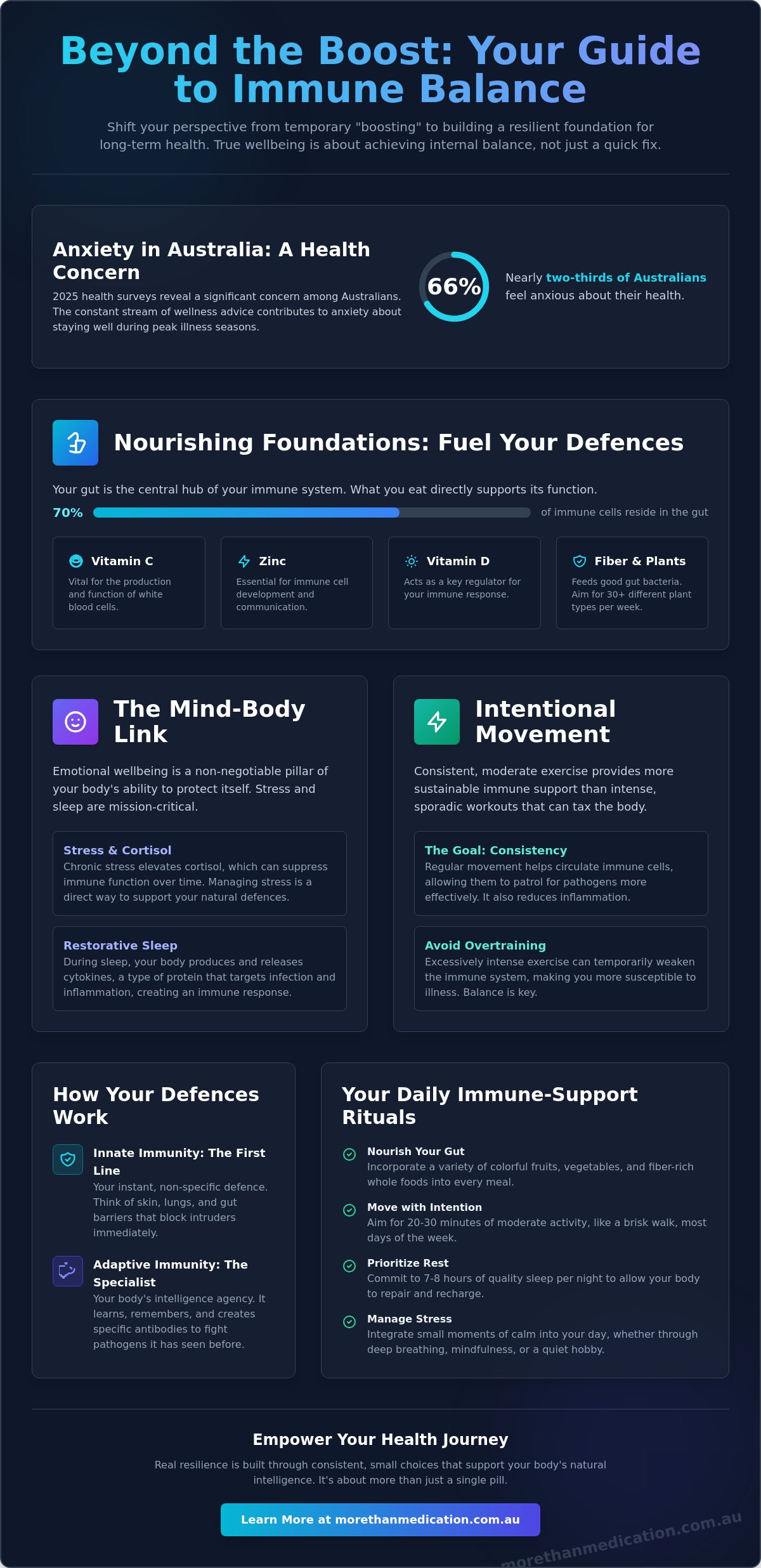
What if the most effective tool for your health isn’t a A$60 jar of “immune-boosting” gummies you saw on social media? It’s understandable to feel overwhelmed by the constant stream of wellness advice, especially when 2025 health surveys show that nearly two-thirds of Australians feel anxious about staying well during peak illness seasons. You want to protect yourself and your family, but the line between scientific fact and expensive marketing fads often feels blurred. Finding genuine ways to boost your immune system shouldn’t feel like a luxury; it should feel like a natural part of your routine. We understand that your health is a personal journey, and it’s always about more than just a single pill or a quick fix.
You’ll discover how to strengthen your natural defences through nourishing food, intentional movement, and mental clarity. This guide provides a clear roadmap to help you distinguish clinical truth from fiction. We’ll show you actionable, low-cost lifestyle changes that empower you to take control of your wellbeing with confidence and calm. From understanding how your biology works to making small shifts in your daily routine, we’re here to walk beside you toward a more resilient 2026.
Key Takeaways
- Shift your perspective from simply “boosting” to achieving a state of internal balance, helping you build a more resilient foundation for your long-term health journey.
- Explore why consistent, moderate movement and whole-food nutrition provide more sustainable support for your natural defences than the latest 2026 wellness fads.
- Discover how addressing the “more” in your health—like stress management and restorative sleep—reveals effective ways to boost your immune system beyond just medicine.
- Learn to identify the physiological impact of cortisol and why emotional wellbeing is a non-negotiable pillar of your body’s ability to heal and protect itself.
- Access a practical, daily immune-support checklist that transforms complex clinical evidence into small, manageable rituals that fit into your Australian lifestyle.
Understanding the Immune System: Why Balance Matters More Than a “Boost”
Your health is a deeply personal journey. When you feel run down, it’s natural to look for quick ways to boost your immune system to regain your energy. However, the idea of “boosting” can be a bit of a misnomer in the medical world. Your immune system isn’t a single muscle you can simply flex. It’s a sophisticated, invisible network of billions of cells, tissues, and organs that requires a delicate equilibrium to function correctly. In clinical terms, we don’t actually want an “overboosted” system, as that can lead to unnecessary inflammation or autoimmune issues. Instead, the goal is balance, or homeostasis.
At More Than Medication, we understand the emotional weight of wanting to feel resilient, especially as we navigate the health challenges of 2026. It’s okay to feel impatient for results. But biology operates on its own timeline. Strengthening your internal defences is a gradual process that involves consistent, small choices rather than a one-off “quick fix” supplement. Real resilience is built through a partnership between your lifestyle and your body’s natural intelligence.
How Your Natural Defences Work
Think of your body as a high-tech security system protecting a home. Your innate immunity is the perimeter fence and the 24/7 security guard at the gate. It’s your first line of defence, reacting instantly to any intruder it doesn’t recognise. This comprehensive overview of the immune system explains how this immediate response works alongside your adaptive immunity. Your adaptive system is more like a specialised detective agency. It learns the specific “fingerprints” of pathogens it has encountered before, creating antibodies to ensure that if the same intruder returns, your body is ready to neutralise it quickly. White blood cells act as the foot soldiers in this constant, quiet effort to keep you safe.
The Interconnectedness of Health
We believe that true wellbeing is multi-faceted. Your immune system doesn’t exist in a vacuum; it’s deeply connected to every other part of your body. For instance, approximately 70% of your immune cells reside in your gut. This means your digestive health is a primary pillar of your overall resilience. Your skin and lungs also act as vital barriers, filtering out environmental threats before they can take hold. When you explore ways to boost your immune system, you’re actually looking for ways to support this entire ecosystem. Immunological balance is the harmony between activity and restraint.
- The Gut: The central hub where immune cells “train” to recognise threats.
- The Skin: A physical and chemical shield that prevents entry.
- The Lungs: Mucosal barriers that trap and expel airborne particles.
By shifting your focus from a temporary “boost” to long-term balance, you empower yourself to navigate the ups and downs of your health journey with confidence and calm.
Nourishing Your Resilience: Nutrition and Movement as Foundations
You might feel overwhelmed by the constant “superfood” marketing filling your social feeds. True resilience isn’t found in a single exotic berry or a restrictive regime. It’s built through the quiet, consistent choices you make in your Australian kitchen and the way you move your body. These habits align with the latest health trends in Australia, which prioritize sustainable, whole-person care over quick fixes. By focusing on nutrient density rather than deprivation, you create a steady foundation for your wellbeing.
The Plate of Protection: Key Nutrients
Supporting your body doesn’t require a radical lifestyle overhaul. It starts with variety. Vitamin C and Zinc are vital for cell production and repair; meanwhile, Vitamin D acts as a key regulator for your immune response. Since approximately 70% of your immune cells reside in your gut, fiber is your most loyal ally. It feeds the beneficial bacteria that keep your defenses sharp. Research from 2024 indicates that individuals consuming 30 different plant types per week have significantly more diverse gut microbiomes than those eating only 10. This is one of the most effective healthy ways to strengthen your immune system without the stress of rigid dieting.
- Vitamin C & Zinc: Found in citrus, bell peppers, seeds, and shellfish to support barrier function.
- The Power of Fiber: Whole grains and legumes act as fuel for your internal “security team.”
- Eat the Rainbow: Aim for three different colours at every meal to ensure a broad spectrum of phytonutrients.
Movement That Supports, Not Stresses
Exercise is a powerful tool, but it requires a delicate balance. Intense, grueling workouts can spike cortisol and temporarily suppress your immunity. Instead, focus on fitness routines that encourage circulation and lymphatic drainage. Unlike your heart, your lymphatic system doesn’t have a pump; it relies on your muscles moving to transport immune cells throughout your body. Simple, moderate activity ensures these cells are constantly patrolling for threats.
Aim for 30 minutes of “movement as medicine” daily. This could be a brisk walk through your local park or a gentle swimming session. These manageable steps are effective ways to boost your immune system by keeping your internal systems fluid and responsive. If you’re feeling depleted, remember that rest is just as productive as activity. You’re nurturing a lifelong partnership with your body, so listen to what it needs today. For more support on this journey, explore how mindful lifestyle adjustments can complement your clinical care and help you feel more empowered in your daily life.
The Mind-Body Connection: Why Stress and Sleep Are Non-Negotiable
You might be diligent with your leafy greens and daily vitamin C, yet you still find yourself catching every cold that passes through the office. It’s frustrating to feel like you’re doing everything right and still falling short of the resilience you desire. Often, the missing piece isn’t on your plate; it’s in your headspace. Living in Australia in 2026 comes with a heavy mental load. Between managing the rising cost of living and the “always-on” nature of our digital lives, your brain rarely gets a chance to switch off. This constant pressure does more than just tire you out; it actively shapes how your body defends itself. Exploring Healthy ways to strengthen your immune system requires looking beyond the medicine cabinet and into your daily stress levels. Understanding these connections is one of the most effective ways to boost your immune system naturally.
Managing the Cortisol Curve
When you’re stressed, your body releases cortisol. In short bursts, this hormone is helpful, but chronic stress keeps these levels high, which eventually suppresses your immune response. A January 2025 workplace survey indicated that 62 percent of Australian professionals feel “perpetually rushed,” a state that keeps the nervous system on high alert. It’s as if your internal security team is so distracted by a false alarm that they miss an actual intruder. You can lower this response through simple mindfulness, such as the “box breathing” technique. Mental wellbeing is a biological necessity for physical health.
The Science of Sleep and Cytokines
Sleep is your immune system’s active recovery phase. During deep, slow-wave sleep, your body ramps up the production of cytokines. These proteins act as messengers, coordinating your immune response to target infections. If you cut your sleep short, you’re essentially short-circuiting your body’s ability to communicate and defend itself. A 2025 study found that adults getting fewer than six hours of sleep were four times more likely to catch a viral infection compared to those getting seven hours or more.
To support your natural immunity, try these three sleep hygiene adjustments:
- Maintain a cool environment: Keep your bedroom at approximately 18 degrees Celsius, which is the optimal temperature for deep, restorative rest.
- Prioritise a digital sunset: Dim the lights 60 minutes before bed to trigger natural melatonin production and signal to your brain that the day is done.
- Control your inputs: Avoid scrolling through stressful news sites or work emails at least an hour before sleep to keep your cortisol levels from spiking.
At More Than Medication, we believe that health is a journey involving the whole person. Medicine is a powerful tool, but it works best when supported by a rested mind and a calm spirit. By addressing the “more” in your daily routine, you empower your body to heal and protect itself with greater efficiency.
Immune Health in 2026: Separating Evidence-Based Habits from Wellness Fads
You have likely seen the advertisements for A$350 high-dose IV vitamin drips or designer herbal tonics promising instant resilience. It is easy to feel like you are falling behind if you aren’t biohacking your morning with a five-minute ice bath. While these trends gain traction in social circles, your body’s defense system relies on consistency rather than expensive shortcuts. Finding sustainable ways to boost your immune system means looking past the glossy marketing and focusing on what your cells actually need to thrive.
The wellness industry often prioritizes the “quick fix” because it is easier to sell than the discipline of a 9:00 pm bedtime. However, biological reality doesn’t respond to price tags. Most high-cost interventions provide diminishing returns for healthy individuals. You can save thousands of dollars each year by identifying which habits offer genuine physiological benefits and which ones simply offer a placebo effect.
The Truth About Supplements
Supplements can feel like a safety net, but they aren’t always necessary. If you have a diagnosed deficiency, like low Vitamin D which affects approximately 25% of Australian adults according to Australian Bureau of Statistics data, targeted support is vital. Without a deficiency, your body often flushes out excess water-soluble vitamins. This creates what many clinicians call “expensive urine.” Always consult your GP for a blood test before starting a new regimen to ensure you aren’t wasting money on nutrients you already have in abundance.
- Science-Backed: Vitamin D for those with limited sun exposure; Zinc used within the first 24 hours of cold symptoms; Probiotics for gut-health recovery after antibiotics.
- Marketing-Driven: High-dose IV drips for otherwise healthy people; “Immune-boosting” charcoal elixirs; Unregulated herbal “detox” kits that lack clinical trials.
Biohacking vs. Biological Reality
Extreme temperature exposure, such as saunas and ice baths, has become a 2026 health staple. These practices can improve circulation and temporarily modulate inflammation, but they aren’t magic bullets. They work best as tools to manage physical stress rather than cures for a poor lifestyle. If you are looking for a more accessible way to release tension and support your body’s recovery process, a remedial massage offers a structured, evidence-based approach to physical wellbeing.
Before jumping into the latest biohacking trend, use this “Safety First” framework:
- Start slow: Thirty seconds of cold water at the end of your shower is enough to trigger a response.
- Check your heart: Extreme temperatures put significant stress on the cardiovascular system.
- Prioritize the pillars: No amount of ice bathing can replace the foundational ways to boost your immune system, such as seven hours of sleep and a balanced diet.
Real resilience isn’t found in a boutique bottle or a luxury cold pod. It is built through the quiet, daily choices that respect your body’s natural rhythms. By focusing on evidence over influence, you empower yourself to spend your resources on what truly moves the needle for your health.
Ready to support your body’s physical recovery through proven methods? Explore our holistic health resources.
Your Daily Rituals for Long-Term Balance: How to Start
You’ve explored the science behind your body’s natural defenses and identified the pillars of holistic health. Now comes the most important part: turning that knowledge into a sustainable rhythm. Understanding various ways to boost your immune system is a powerful first step, but true resilience grows through the small, quiet choices you make every day. You don’t need to overhaul your entire life by Monday morning. In fact, research from the University of Melbourne suggests that habit formation is more successful when you focus on one “micro-habit” at a time rather than attempting a total lifestyle reset.
Think of your health as a partnership between clinical support and personal care. While medicine provides a vital foundation, your daily rituals act as the scaffolding that holds everything together. Use this checklist to stay grounded:
- Hydrate early: Aim for 250ml of water immediately upon waking.
- Color your plate: Include at least three different vegetable colors in your main meal.
- Prioritise stillness: Dedicate five minutes to intentional breathing to lower cortisol.
- Audit your rest: Ensure your bedroom is cool, dark, and quiet for a full eight-hour cycle.
A Sample Day for Immune Support
Your morning sets the tone. Start with gentle movement, like a ten-minute stretch or a walk around the block, to wake up your lymphatic system. By the afternoon, your body needs a “mental reset.” Take your lunch away from your desk to lower occupational stress, which the Australian Institute of Health and Welfare (AIHW) identifies as a significant factor in long-term wellness. In the evening, dim the lights an hour before bed. Avoiding blue light from screens helps your brain produce melatonin, the hormone essential for the deep, restorative sleep your immune cells require to repair themselves.
Building Your Support Team
You aren’t meant to walk this path alone. Your GP is your most valuable ally; regular check-ups allow you to monitor nutritional markers and stay up to date with preventive screenings. In Australia, Medicare often covers these foundational visits, making professional guidance accessible. Beyond the clinic, use digital resources like More Than Medication to deepen your understanding of the intersection between mental and physical health.
Remember that medicine is often just one piece of the puzzle. By combining clinical advice with these ways to boost your immune system, you create a comprehensive strategy for living well. You have the power to influence your health journey. Start with one small change today; your future self will thank you for the steady, compassionate care you’re providing right now.
Embracing Your Path to Lasting Resilience
Your journey toward better health isn’t about finding a quick fix or following a fleeting trend. It’s about the steady, daily rituals that create a foundation of strength. By focusing on evidence-based nutrition and prioritizing the 7 to 9 hours of sleep recommended by the Sleep Health Foundation, you’re doing more than just reacting to illness. You’re building resilience. We’ve explored various ways to boost your immune system through balance rather than temporary spikes. Remember that your mental wellbeing is just as vital as your physical health; the two are inseparable in a truly holistic approach.
At More Than Medication, we believe your health story is about the whole person, not just a list of symptoms. Our expert-led content is grounded in clinical evidence to provide you with reliable guidance as you navigate the Australian healthcare landscape. We’re here to offer a supportive community for every step of your path. Stay informed on your health journey; explore the latest wellness trends and expert advice at More Than Medication. You’ve got the tools to move forward with confidence and we’re proud to walk beside you.
Frequently Asked Questions
Can I actually boost my immune system overnight?
You cannot strengthen your entire immune response in a single night because it is a complex network of cells and organs rather than a simple switch. Research from the Peter Doherty Institute for Infection and Immunity shows that the body requires consistent habits over several weeks to meaningfully improve its defense mechanisms. While a good night of rest helps your current cells function better, building long-term resilience is a journey that takes time and patience.
Does Vitamin C really prevent the common cold?
Vitamin C does not prevent the average person from catching a cold, though it can slightly reduce how long you stay sick. A comprehensive Cochrane Review of 29 clinical trials involving over 11,000 participants found that regular supplementation reduced cold duration by 8% in adults. It remains one of the most popular ways to boost your immune system, but it works best as a consistent part of your nutrition rather than an emergency measure once symptoms appear.
How does stress make you more likely to get sick?
Stress triggers the release of cortisol, a hormone that can suppress the effectiveness of your immune system when levels remain high for too long. The Australian Psychological Society notes that chronic stress reduces the body’s white blood cell count, leaving you more vulnerable to viruses. We understand how heavy life can feel, but finding small moments for mindfulness can actually protect your physical health by lowering these hormonal barriers.
What are the best foods for immune health in Australia?
The best foods for your defenses include local Australian produce like Kakadu plums, macadamias, and wild-caught barramundi. Kakadu plums are a powerhouse, containing up to 5,300mg of Vitamin C per 100g, which is significantly higher than citrus fruits. These nutrient-dense choices support your gut microbiome, where roughly 70% of your immune cells live. Choosing seasonal, local ingredients is a gentle way to nourish your body and support your community.
Is it possible to have an overactive immune system?
Yes, an overactive immune system can occur when your body mistakenly attacks its own healthy tissues, leading to autoimmune conditions. This affects approximately 5% of the Australian population through various chronic illnesses. Health isn’t about pushing your system to a maximum state, but rather finding a sustainable balance. If you feel your body is fighting against itself, it’s important to seek compassionate, professional guidance to navigate that complex journey.
How much sleep do I actually need for my immune system to function?
Most adults require between 7 and 9 hours of quality sleep to maintain an effective immune response. A study published in the journal Sleep demonstrated that individuals sleeping less than 6 hours a night are 4.2 times more likely to catch a cold compared to those getting more rest. Prioritizing your sleep is one of the most powerful ways to boost your immune system because it gives your body the quiet space it needs to produce infection-fighting proteins.
Are immune-boosting supplements safe for everyone?
Supplements are not universally safe and can cause complications if they interact with your existing medications. The Therapeutic Goods Administration (TGA) monitors these products in Australia, but even natural herbs can have potent effects on the body. For example, excessive zinc intake can interfere with copper absorption over time. Always talk to your healthcare provider before starting something new to ensure it fits safely into your personal health plan.
Can exercise actually weaken my immune system?
Very intense or prolonged physical exertion can temporarily lower your immune defenses for a period of 3 to 72 hours. This is often called the “open window” effect, where the body is so focused on recovery that it’s less prepared for pathogens. The Australian Institute of Sport suggests that moderate, regular movement is much more effective for building resilience. A brisk 30-minute walk is often enough to keep your cells moving without exhausting your resources.
⚕️ Medical Disclaimer
This content is for informational purposes only and is not a substitute for professional medical advice, diagnosis, or treatment. Always seek the advice of your doctor or other qualified health provider with any questions you may have regarding a medical condition. Never disregard professional medical advice or delay in seeking it because of something you have read on this website.