
What if the very thing you rely on to wake up is actually the reason you feel so depleted by mid-afternoon? If you find yourself trapped in a cycle of morning jitters and those familiar 3 PM slumps, you aren’t alone. Data from the National Sleep Foundation’s 2025 Sleep in America® Poll shows that nearly four in ten adults struggle to fall asleep at least three nights every week, often leading to a heavy dependency on stimulants just to function. We understand that this cycle feels exhausting and sometimes even anxiety-inducing. However, learning how to get more energy without caffeine is about more than just skipping your morning cup; it is about aligning your lifestyle with your body’s natural biological rhythms.
At More Than Medication, we believe that true vitality is a journey that involves the whole person. We agree that the modern world demands a level of constant alertness that is hard to maintain. This guide will provide you with evidence-based strategies to revitalize your body and mind naturally. You will discover how to implement the 2026 ACSM resistance training guidelines to boost metabolic health, use “micro-wellness” moments to regulate your nervous system, and master sleep as the essential third pillar of your health. By the end of this article, you will have a clear, manageable path toward consistent energy and mental clarity that lasts from morning until night.
Key Takeaways
- Understand how caffeine masks fatigue by blocking adenosine and why working with your natural rhythms is the first step toward lasting vitality.
- Discover how to get more energy without caffeine by supporting your mitochondria with essential “spark plug” nutrients like magnesium and B vitamins.
- Harness the exercise paradox and strategic light exposure to signal your brain it’s time to be alert, even during the dreaded afternoon slump.
- Identify and clear the “invisible energy leeches,” such as decision fatigue and chronic stress, that drain your mental and physical reserves.
- Learn to conduct a personal Energy Audit to build a sustainable routine that prioritizes your long-term resilience over temporary fixes.
Understanding the Caffeine Cycle and Your Natural Rhythms
Many of us are familiar with the frantic reach for a second or third espresso by 10 AM. In Australia, where coffee culture is deeply ingrained, this often leads to a state of being “wired but tired.” You feel your heart racing, yet your brain feels like it is moving through thick fog. This isn’t true vitality; it’s a temporary mask. Understanding fatigue requires looking past the quick fix and examining how your body actually processes rest. Learning how to get more energy without caffeine starts with recognizing that your body isn’t failing you. It is simply trying to communicate a need that a stimulant cannot fulfill. With the FDA focusing on new guidelines for caffeine labeling in 2026, there is a growing global awareness of just how much we rely on these external sparks to get through the day.
At More Than Medication, we believe that managing your energy is about more than just what you consume. It is a holistic journey that involves listening to your biological cues and respecting your body’s natural limits. By shifting your perspective, you can move away from the anxiety of the “caffeine debt” and toward a sense of steady, quiet strength.
The Science of the Caffeine Crash
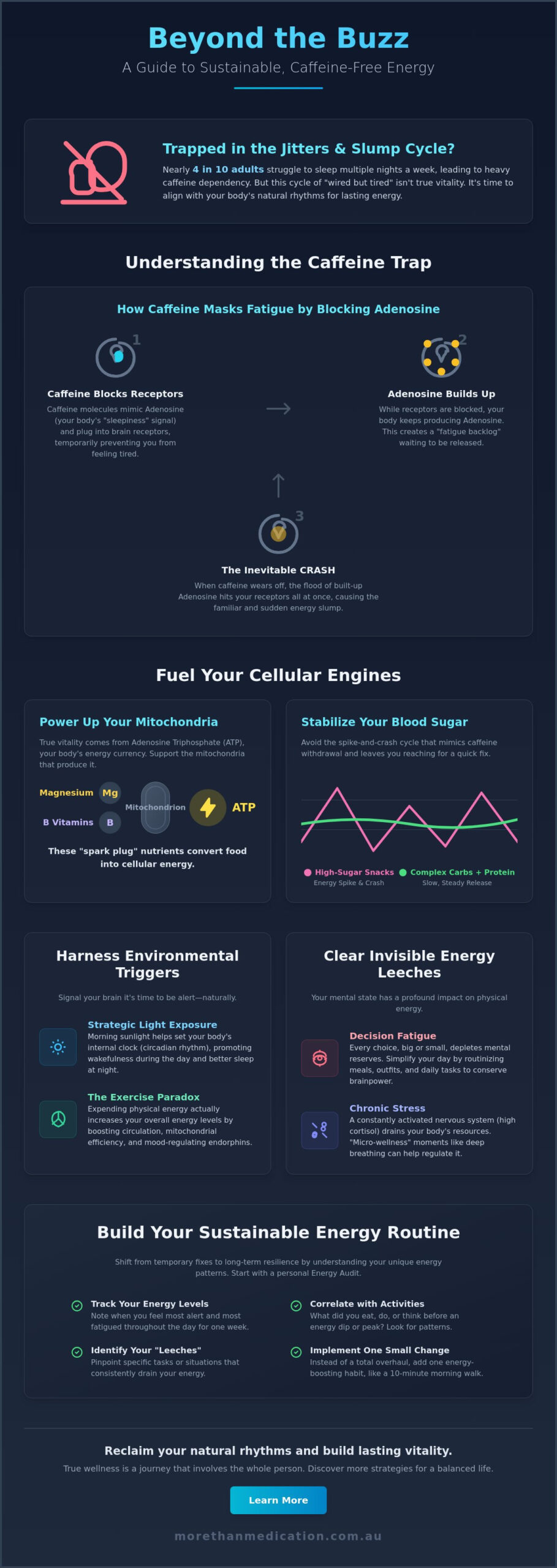
Caffeine works by acting as a molecular impostor. Throughout the day, your brain produces a compound called adenosine, which signals to your system that it is time to slow down. Caffeine molecules are shaped similarly to adenosine; they plug into your brain’s receptors, effectively blocking the “sleepiness” signal. However, the adenosine doesn’t disappear. It continues to pool behind the scenes, creating a backlog of fatigue. When the caffeine eventually breaks down, this flood of adenosine hits your receptors all at once. This biological surge is what causes the inevitable afternoon crash. Additionally, relying on this cycle keeps your cortisol levels artificially high, which can leave your nervous system in a state of constant, low-level stress.
Why Your Body Craves Sustainable Energy
The difference between a stimulant buzz and genuine vitality lies at the cellular level. While caffeine provides “false energy” by manipulating your brain chemistry, your body thrives on Adenosine Triphosphate (ATP). This is the primary energy currency produced by your mitochondria. Shifting your focus toward supporting these cellular powerhouses is a powerful step in your wellness journey. Reducing your reliance on stimulants can lead to deeper, more restorative sleep and more stable mood patterns. We see this transition as an act of empowerment. It is about building the resilience needed to face your day with a calm, steady mind. Discovering how to get more energy without caffeine allows you to reclaim your natural rhythms and move through your world with authentic presence.
Fuelling Your Cells: Nutrition and Hydration for Alertness
Many people assume fatigue is just a mental state, but it often begins within your cells. To understand how to get more energy without caffeine, you must look at how your body generates its own fuel. Adenosine Triphosphate (ATP) is the body’s primary energy currency produced by mitochondria. Without enough ATP, you’ll feel sluggish regardless of how much coffee you drink. Nutrients like magnesium and B vitamins act as the essential “spark plugs” for this process. They help convert the food you eat into the vitality you feel. If you’re missing these key components, your cellular engine simply won’t turn over effectively. This is why a nutrient-deficient diet often leads to that “heavy” feeling in your limbs by midday.
Stable blood sugar is your best defense against the afternoon slump. When you consume high-sugar snacks, your glucose levels spike and then plummet, leaving you searching for a stimulant to bridge the gap. Choosing foods that release energy slowly keeps your focus steady. If you are looking for more ways to support your physical health, exploring mindful lifestyle adjustments can help you feel more in control of your daily wellbeing.
The Energy-Dense Plate: Beyond Calories
Your brain is a hungry organ, consuming about 20% of your daily energy. To keep it sharp, prioritize complex carbohydrates like sweet potatoes or oats paired with lean proteins. These combinations ensure a slow, steady release of glucose into your bloodstream. Omega-3 fatty acids, found in walnuts and flaxseeds, are also vital for maintaining the structural integrity of your brain cells. For a practical way to stay fueled, you might try preparing healthy slice recipes that combine seeds, nuts, and natural sweeteners for a nutrient-dense afternoon snack. This approach provides the building blocks your body needs to sustain itself without the jitters.
Hydration: The Simplest Energy Hack
It is easy to mistake thirst for tiredness. Research indicates that even a 2% drop in hydration levels can lead to significant cognitive decline, reduced short-term memory, and increased feelings of fatigue. When you’re dehydrated, your blood volume decreases. This makes your blood thicker and forces your heart to work harder to pump oxygen and nutrients to your brain. This physiological stress often manifests as “brain fog” or a dull headache. To avoid this, try “structured hydration” by drinking a full glass of water at the start of every hour or after every meeting. If plain water feels uninspiring, herbal infusions like peppermint or ginger provide a comforting, caffeine-free ritual that supports both your hydration and your digestion. Learning how to get more energy without caffeine is often as simple as keeping your cells properly hydrated throughout your journey.
The Power of Movement and Light: Environmental Triggers
Your body is a finely tuned instrument that responds to the world around it. While the nutrition we discussed earlier provides the raw fuel, environmental triggers like light and movement act as the conductor for your internal orchestra. If you are exploring how to get more energy without caffeine, you must look at the signals you send your brain throughout the day. For many Australians, the workday is spent in dimly lit offices or home studies, which can confuse our internal clocks. This lack of natural signaling often leads to that heavy, lethargic feeling that no amount of coffee can truly fix. By intentionally adjusting your environment, you can trigger a natural wakefulness that feels steady and reliable.
The “exercise paradox” is a concept that often feels counterintuitive when you’re exhausted. It suggests that moving your body actually creates more energy than it consumes. When you engage in movement, your heart pumps oxygen-rich blood more efficiently to your brain and muscles, stimulating the production of the ATP we mentioned in the previous section. Even incidental movement in the Australian workplace, such as walking to a colleague’s desk instead of sending a message, can break the cycle of physical stagnation. We understand that when you’re already feeling depleted, the idea of a workout feels daunting. However, the goal isn’t necessarily intensity; it’s about signaling to your system that it is time to be active and alert.
Morning Light and Cortisol Alignment
The most powerful way to set your energy levels for the day is to see natural light within 30 minutes of waking. When sunlight hits your retinas, it triggers a healthy surge of cortisol, which is your body’s natural “wake up” hormone. This doesn’t just help you feel alert in the moment; it also sets an internal timer for melatonin production roughly 14 hours later. A simple morning stroll can be a cornerstone of a holistic fitness routine, aligning your biological clock with the rise and fall of the sun. This alignment is a foundational step in your journey toward resilience and long-term vitality.
Strategic Movement Breaks
You don’t need an hour in the gym to revitalize your mind. The “10-minute rule” suggests that even a short burst of activity can significantly increase blood flow to the brain and clear mental fog. If you’re stuck at a desk, try incorporating brief stretches or a quick walk around the block between tasks. These micro-wellness moments help regulate your nervous system and prevent the buildup of physical tension. For those whose “energy batteries” feel particularly low, restorative movements like gentle yoga or mobility work are often more beneficial than high-intensity training. Learning how to get more energy without caffeine involves choosing the type of movement that honors your current state while gently nudging your body toward a more vibrant state of being.
Managing Mental Fatigue: Why Energy is More Than Physical
Your journey toward sustainable vitality involves more than just physical fuel. While we have discussed cellular energy and environmental triggers, it is equally important to address the mental leeches that drain your reserves. You might find that even with a balanced diet, you still feel a heavy sense of lethargy. This is often due to “decision fatigue,” where the thousands of micro-choices you make daily consume your brain’s limited glucose supply. In addition, “open loops,” which are those unfinished tasks lingering in the back of your mind, create a constant state of low-level cognitive stress. Learning how to get more energy without caffeine requires you to look at how you manage your mental load and protect your emotional wellbeing.
Chronic stress is a significant driver of physical exhaustion. When your mind is constantly racing, your body remains in a “fight or flight” state, which eventually leads to burnout. This emotional weight is a valid part of your health journey, and we encourage you to practice self-compassion as you navigate these challenges. By adopting a “soft wellness” approach, you can prioritize rest and slowness over the relentless “hustle culture” that often leads to dependency on stimulants. If you are ready to take a deeper look at your lifestyle, you can explore our holistic health resources for personalized guidance.
Closing the Mental Tabs
Multitasking is a common energy trap. Research suggests that switching between tasks can drain your brain’s energy reserves significantly faster than staying in a state of deep work. To combat this, try a “brain dump” technique every morning. Spend five minutes writing down every task, worry, or “open loop” on a piece of paper to clear your mental clutter before you start your day. This simple act of externalizing your thoughts helps preserve your cognitive energy for what truly matters. Understanding the importance of holistic wellbeing in 2026 means recognizing that your mental clarity is directly tied to your physical stamina.
The Role of Rest and Recovery
It is a common mistake to assume that sleep and rest are the same thing. While sleep is a biological necessity, you also require sensory, emotional, and social rest to truly recharge. A 20-minute power nap can provide a significant boost in alertness without the grogginess of a full sleep cycle, making it an excellent tool for those discovering how to get more energy without caffeine. To further lower cortisol and release physical tension stored from mental stress, consider the benefits of remedial massage. This targeted approach to recovery helps bridge the gap between your physical body and your mental state, fostering a sense of resilience that lasts throughout your day.
Building a Sustainable Energy Routine for the Long Term
The shift from relying on caffeine to aligning with your body’s natural rhythms is a profound act of self-care. It marks the moment you stop borrowing energy from your future self and start investing in your long-term resilience. We have explored the science of cellular fuel, the power of environmental triggers, and the necessity of mental rest. Now, the goal is to weave these elements into a lifestyle that supports you every day. Learning how to get more energy without caffeine isn’t about achieving perfection overnight; it’s about creating a steady foundation where your body feels safe, supported, and naturally alert.
At More Than Medication, we frequently remind our community that medicine is only one piece of the health puzzle. While clinical treatments have their place, your daily habits form the bedrock of your vitality. This holistic approach ensures that you aren’t just treating a symptom of tiredness, but rather nourishing the whole person. By grounding your clinical advice in the reality of your daily life, you make the complex journey toward health feel navigable and far less intimidating.
The 5-Step Energy Audit
To begin your transition, we suggest conducting a personal energy audit. This allows you to identify specific leeches on your vitality and address them with precision. Follow these steps to gain clarity on your current habits:
- Step 1: Track your intake. Log when you consume caffeine and identify exactly when your “crash” times occur. This helps you see the direct link between the temporary buzz and the inevitable debt.
- Step 2: Assess your environment. Review your sleep hygiene and ensure you are getting natural light exposure within 30 minutes of waking to set your circadian clock.
- Step 3: Evaluate your fuel. Look at your meal timing. Are you including enough protein and fibre to keep your blood sugar stable throughout the afternoon?
- Step 4: Audit mental stressors. Identify sources of digital overwhelm or “open loops” that are draining your cognitive reserves.
- Step 5: Start small. Choose just one manageable change to implement this week. Sustainable change happens through consistency, not intensity.
Your Journey to Lasting Vitality
Your path to feeling revitalized is a journey, not a destination. It is important to remember that progress is rarely linear. You might have days where you feel incredibly alert and others where the 3 PM slump returns. These moments aren’t failures; they are simply part of the process of learning how to get more energy without caffeine. Be patient with yourself and celebrate the small wins, like choosing a herbal tea or taking a ten-minute walk instead of reaching for a third cup of coffee. This gentle approach fosters a sense of partnership between you and your body.
If you find that your fatigue remains persistent or unexplained despite these lifestyle adjustments, please seek expert advice from a healthcare professional. There are times when tiredness can be a symptom of an underlying condition that requires specific clinical attention. We invite you to explore more resources on the More Than Medication platform and join our community as you continue your wellness journey. Together, we can find the balance that allows you to thrive with authentic, lasting energy.
Your Path to Sustainable Vitality
Reclaiming your vitality is a deeply personal journey that begins with a single choice to listen to your body’s needs. We’ve explored how the “10-minute rule” of strategic movement and cellular ATP production can replace the false buzz of stimulants. By implementing a 5-step energy audit to identify your personal drains, you create the space necessary for your natural resilience to thrive. Learning how to get more energy without caffeine is about more than just a simple lifestyle change; it’s about empowering yourself to live with a steady, quiet strength that lasts from sunrise to sunset.
You don’t have to navigate this path alone. Our platform offers patient-centric support for a balanced lifestyle, connecting you with evidence-based holistic wellness news and expert-led nutrition and fitness advice. We’re here to provide a steady, reliable presence as you bridge the gap between medical care and your daily habits. Explore more expert-led wellness insights at More Than Medication to continue your journey toward long-term resilience. Remember, your health is about the whole person, and every small step you take is a victory worth celebrating.
Frequently Asked Questions
How long does it take to get your energy back after quitting caffeine?
Most people find that acute withdrawal symptoms, such as headaches, peak within 24 to 48 hours and usually subside after about 9 days. However, your brain’s adenosine receptors typically require 14 to 21 days to fully recalibrate to their natural state. During this period, focusing on how to get more energy without caffeine through hydration and light exposure can help manage the transition and reduce discomfort.
Is decaf coffee a good alternative for energy?
Decaf coffee is an excellent tool for maintaining the psychological ritual of a warm drink, but it doesn’t provide a biological energy boost. It still contains roughly 2 to 7 milligrams of caffeine per cup, which is significantly less than the 95 milligrams found in a standard espresso. It acts as a supportive bridge for those tapering off rather than a source of true, sustainable vitality.
Can certain supplements help increase energy naturally?
Supplements like magnesium and B-complex vitamins act as essential cofactors in ATP production, though they work best when addressing a specific deficiency. Under the 2026 Dietary Supplement Regulatory Uniformity Act, the FDA provides clearer oversight on these nutrients to ensure safety and quality. Always consult a health professional to ensure a supplement is the right fit for your unique metabolic needs and personal wellness journey.
Why do I feel more tired after sleeping for 8 hours?
Feeling sluggish after 8 hours often stems from poor sleep quality or waking during a deep sleep stage, a phenomenon called sleep inertia. The National Sleep Foundation’s 2025 poll found that 50% of adults struggle to stay asleep, which disrupts the restorative cycles needed for morning alertness. If your internal clock is misaligned with your sleep schedule, your body won’t feel truly refreshed despite the time spent in bed.
Is it better to quit caffeine cold turkey or taper off?
Tapering is generally the most compassionate approach for your nervous system to avoid the intense crash of caffeine withdrawal. Reducing your intake by 25% each week allows your brain to gradually adjust its receptor sensitivity without the severe headaches or irritability. This methodical pace helps you learn how to get more energy without caffeine while maintaining your daily productivity and emotional balance during the shift.
What are the best caffeine-free drinks for an afternoon boost?
Peppermint tea is a powerful choice because its scent has been shown to increase alertness and cognitive focus. Ginger infusions support healthy circulation, while a glass of water with a squeeze of lemon provides a refreshing sensory reset. These options offer a natural afternoon boost without the heart palpitations or the anxiety often triggered by high-dose stimulants or sugary energy drinks.
Can dehydration really cause chronic fatigue?
Dehydration is a primary cause of midday lethargy because even a 2% drop in body water reduces blood volume and oxygen flow to your brain. This physiological stress forces your heart to work harder, leading to physical exhaustion and significant brain fog. Staying consistently hydrated ensures that your mitochondria have the optimal environment they need to produce ATP, which is your body’s primary energy currency.
How does stress affect my physical energy levels?
Chronic stress keeps your body in a state of high alert, which rapidly depletes your internal glucose and magnesium reserves. This constant “fight or flight” response is metabolically expensive and eventually leads to physical lethargy once your resources are spent. Managing mental fatigue through mindfulness and structured rest helps preserve your energy for physical movement and the activities you enjoy most.
⚕️ Medical Disclaimer
This content is for informational purposes only and is not a substitute for professional medical advice, diagnosis, or treatment. Always seek the advice of your doctor or other qualified health provider with any questions you may have regarding a medical condition. Never disregard professional medical advice or delay in seeking it because of something you have read on this website.