
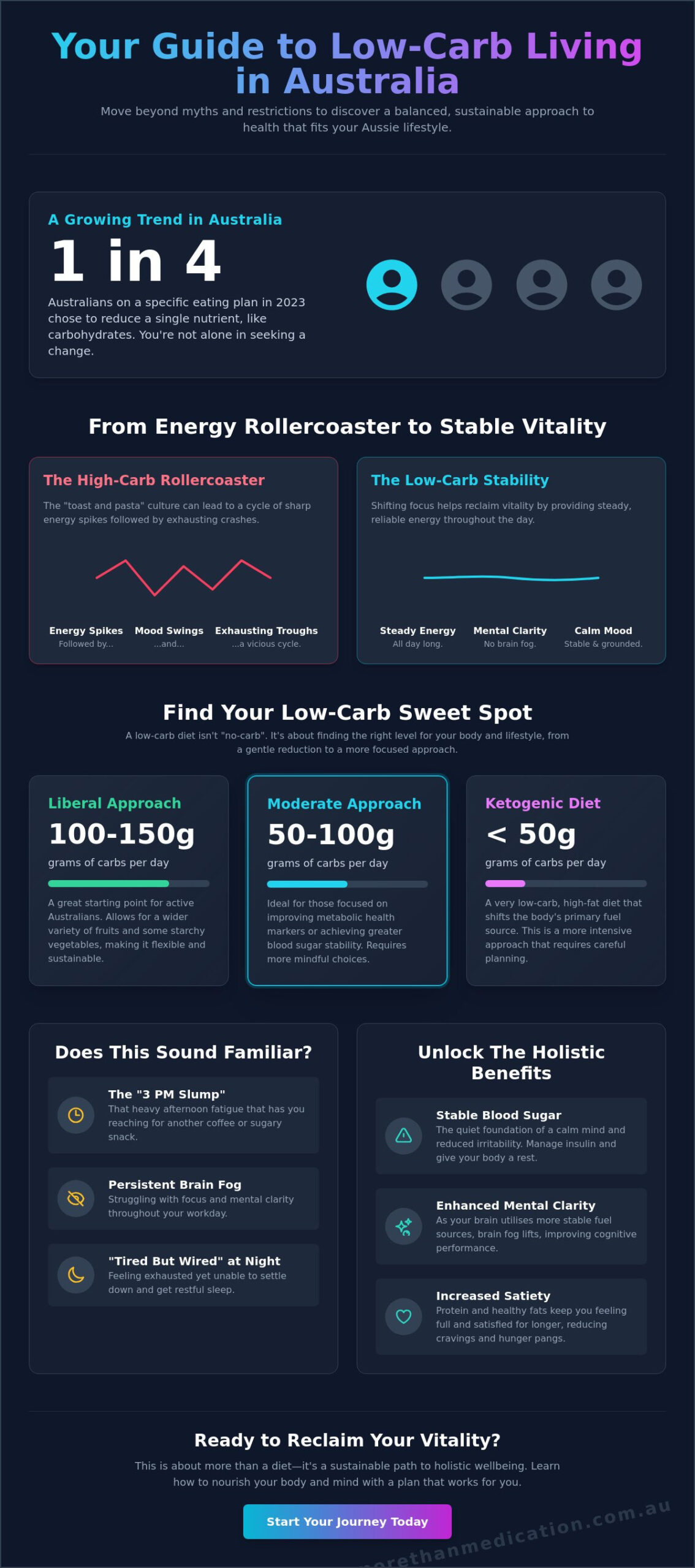
Did you know that nearly one in four Australians following a specific eating pattern in 2023 chose to reduce a single nutrient like carbohydrates? It’s a powerful statistic that shows you aren’t alone in wanting a change. Finding a sustainable low-carb diet plan for beginners australia shouldn’t feel like a chore or a source of anxiety. You’ve likely felt overwhelmed by international blogs listing ingredients you can’t find at Coles or Woolworths; perhaps you even fear the “keto flu” or worry that your social life will disappear. We understand these hurdles, and we’re here to help you clear them with confidence.
We believe that health is about the whole person, not just a number on a scale. This guide offers a gentle, evidence-based path to low-carb living that respects your lifestyle and your budget. You’ll learn how to navigate the 2026 mandatory Health Star Ratings and use the latest bolded allergen labels to build a clear, local shopping list. We’ll show you how to maintain steady energy throughout the day and feel relaxed at your next social event while nourishing both your body and your mind. It’s time to move beyond restriction toward true, holistic wellbeing.
Key Takeaways
- Reframe your perspective by moving from restrictive “no-carb” myths to a balanced approach that supports your mood and cognitive performance.
- Implement a sustainable low-carb diet plan for beginners australia by prioritising local, high-quality proteins like barramundi and grass-fed beef.
- Master the “Supermarket Perimeter” rule to simplify your shopping and learn how to identify hidden sugars in common Australian pantry staples.
- Discover how to gently integrate movement into your new lifestyle, ensuring your fitness routine and nutrition work together to foster inner strength.
Understanding Low-Carb in the Australian Context
Our Australian lifestyle is often built around quick, carbohydrate-heavy staples. From that morning slice of sourdough to a convenient pasta bake for dinner, these foods are deeply woven into our daily routines. However, for many of us, this “toast and pasta” culture leads to a cycle of energy peaks and exhausting troughs. Adopting a low-carb diet plan for beginners australia isn’t about stripping away everything you love or following a “no-carb” myth. Instead, it’s about shifting toward a balanced intake where carbohydrates make up roughly 20-45% of your daily energy. This approach focuses on reclaiming your vitality rather than just tracking numbers on a scale. It’s a gentle transition toward a way of eating that respects your body’s natural rhythms.
It helps to understand where this path sits compared to more intensive options like the ketogenic diet. While keto requires strict restriction, usually under 50 grams of carbs daily, a general low-carb approach offers more flexibility. You can find a comprehensive overview of low-carbohydrate diets to see how these variations differ and which might suit your current health status. At its heart, our philosophy views nutrition as a foundational pillar of health. We believe that what you eat is a form of self-advocacy; it’s a way to support your mental and physical resilience alongside any other care you receive. This holistic perspective ensures you’re looking at the whole person, not just a specific symptom.
The Different Levels of Carbohydrate Restriction
Finding your “sweet spot” depends entirely on your unique lifestyle and goals. A liberal approach, typically 100-150 grams daily, is often the best starting point for active Australians who enjoy a morning walk or weekend sport. It allows for more fruit and the occasional starchy vegetable. A moderate level, between 50-100 grams, might be more suitable if you’re focused on specific metabolic health markers or blood sugar stability. Starting a low-carb diet plan for beginners australia allows you to experiment with these levels until you find what makes you feel most alive. Your needs are bio-individual. What works for your neighbour might not be the right fit for your body’s specific rhythm.
Signs Your Body Might Benefit from Lowering Carbs
You might recognize the signs that your current habits aren’t serving you. Perhaps you’re familiar with the “3 PM slump,” that heavy afternoon fatigue that has you reaching for another coffee or a sugary snack. This blood sugar roller coaster is a common experience, but it isn’t something you have to accept as normal. Persistent brain fog or that frustrating “tired but wired” sensation at night are often signals from your body that it’s struggling to process high carbohydrate loads. Validating these feelings is the first step toward change. By stabilising your intake, you can move toward a state of mental clarity and steady, reliable energy that lasts from sunrise to sunset.
The Holistic Science: Why Low-Carb is More Than Just Weight Loss
Choosing a low-carb diet plan for beginners australia often starts with a desire for physical change, but the most profound benefits happen within your internal chemistry. When you reduce your intake of refined sugars and processed starches, you stop the aggressive spikes in blood glucose that often lead to mood swings and irritability. Stable blood sugar is the quiet foundation of a calm mind. By managing insulin, the hormone responsible for energy storage, you’re giving your metabolic system a chance to rest and repair. It’s a shift from a state of constant storage to one of metabolic efficiency and long-term health.
You’ll likely notice that you feel more satisfied after eating. This isn’t a coincidence. Proteins and healthy fats trigger satiety hormones far more effectively than simple carbohydrates, which means you aren’t constantly fighting hunger. According to Australian government health advice, even the most focused versions of carbohydrate reduction have specific biological impacts that can support metabolic health when done correctly. As your body adapts, that familiar “brain fog” often begins to lift. This happens because your brain starts to utilise more stable fuel sources, providing a sense of cognitive performance and mental clarity that feels like a fresh start.
Nutrition and Mental Wellbeing
Your mental health is intricately linked to your digestive system. Stable glucose levels do more than just fuel your muscles; they can actively reduce the biological triggers for anxiety and restlessness. When your energy isn’t crashing every few hours, your nervous system feels safer and more grounded. We encourage you to approach these changes with deep self-compassion. Health is a journey of continuous progress, not a test you can fail. If a day doesn’t go as planned, acknowledge the struggle and simply return to your path with kindness.
Building Your Support System
Nutrition is a significant piece of the latest health trends puzzle, but it works best when it’s part of a broader support network. Communicating your new choices to family and friends can feel daunting, but being open about your goals often invites partnership rather than isolation. We always recommend consulting an Australian Accredited Practising Dietitian (APD) to ensure your low-carb diet plan for beginners australia is tailored to your unique needs. These small, manageable steps help you build a lifestyle that feels sustainable and supportive. If you’re looking for more ways to nourish your body, you can explore our expert advice on nutrition to find the right balance for your daily life.
Your 7-Day Beginner Framework: An Australian Meal Guide
Starting a new rhythm with your food can feel like a lot to manage. This 7-day framework for a low-carb diet plan for beginners australia is designed to be a gentle, step-by-step companion. First, take a moment to audit your pantry. Many Australian staples like barbecue sauces, marinades, and breakfast cereals contain hidden sugars that can disrupt your energy levels. By identifying these early, you’re making a conscious choice to prioritise your wellbeing and reduce the “hidden” carbs that often slip through the cracks. It’s about awareness, not perfection.
Next, shift your focus to the incredible produce our country offers. Prioritise high-quality Australian proteins such as sustainably caught Barramundi, grass-fed beef, or lean kangaroo. At each meal, aim to fill half your plate with seasonal non-starchy vegetables like bok choy, asparagus, or silverbeet. This simple visual guide ensures you’re getting plenty of fibre and micronutrients without feeling restricted. Your plate becomes a canvas for local flavours that nourish your body and support local farmers.
Don’t forget to embrace healthy Aussie fats. Macadamias, creamy avocados, and cold-pressed olive oil provide the sustained fuel your brain needs to stay sharp. As you transition, you might feel a bit of fatigue or what some call the “keto flu.” This is often just your body adjusting to a new fuel source. Stay hydrated and ensure you’re getting enough minerals like magnesium and potassium to support your nervous system through this change. A pinch of high-quality salt in your water can often make a world of difference.
A Sample Day of Low-Carb Australian Eating
For breakfast, try a veggie-packed omelette with spinach and feta or Greek yoghurt topped with a handful of fresh local berries. Lunch can be a “big bowl” salad featuring tinned tuna or leftover roast chicken from the night before, drizzled with plenty of olive oil. For dinner, enjoy grilled snapper with a side of charred broccolini and a dollop of macadamia pesto. These meals are satisfying, nutrient-dense, and easy to prepare even on a busy weeknight.
Smart Swaps for Local Favourites
You don’t have to give up the comfort of a Sunday roast. Simply replace potato mash with a silky cauliflower and leek puree. For your next backyard burger, use large lettuce leaves or cabbage wraps instead of a traditional bun. When the afternoon hunger hits, choose nutrient-dense options like these healthy slice recipes to keep your energy stable. Small, manageable adjustments lead to lasting results and a sense of pride in your choices.
Navigating the Real World: Supermarkets and Socialising
Stepping into a supermarket can feel like a sensory overload when you’re starting a new health journey. By now, you’ve established your 7-day framework, but the practical “how-to” of the grocery aisle is where your new habits truly take root. In 2026, we have more clarity than ever before. With the Health Star Rating now mandatory on all packaged food products in Australia, you have a quick reference point for nutritional quality. However, it’s still vital to look closer at the Nutrition Information Panel (NIP). When following a low-carb diet plan for beginners australia, focus your attention on the “Carbohydrates, total” line rather than just “Sugars.” This gives you the full picture of how that food will impact your blood sugar stability and energy levels.
A simple way to reduce shopping anxiety is the “Supermarket Perimeter” rule. Most of what your body needs to thrive lives on the edges of the store: the fresh produce, the butcher, and the deli. The middle aisles often house the processed “hidden traps” that can lead to energy crashes. If you do venture into the centre, head straight for the health food section. You’ll find low-carb bread or wrap alternatives that use seeds and almond flour instead of wheat, allowing you to enjoy familiar textures without the heavy carb load. It’s about finding manageable solutions that fit into your existing routine.
Low-Carb Shopping at Major Australian Retailers
Finding value is essential for a sustainable lifestyle. Don’t overlook the freezer section; frozen barramundi or berries are often more affordable than fresh and are just as nutrient-dense. Be wary of “Low Fat” labels on Australian yoghurts. Often, when fat is removed, manufacturers add sugar to maintain the taste. This can lead to the very blood sugar roller coaster we’re trying to avoid. Look for full-fat, plain Greek varieties instead. These choices provide the healthy fats your brain needs for mental clarity and lasting satiety.
Dining Out with Confidence
Socialising is a vital part of our Australian culture, and you don’t have to feel isolated or restricted. At your local cafe, you can easily modify a “Big Breakfast” by swapping the sourdough for extra avocado or a side of wilted spinach. When heading to a backyard BBQ, consider the “bring a plate” tradition an opportunity. Bringing a vibrant Greek salad or a tray of marinated chicken skewers ensures there’s always a delicious, low-carb option for you to enjoy. If you’re at a pub, a classic steak with seasonal vegetables is a reliable, satisfying choice over the standard parma and chips. It’s about making choices that align with your wellness goals while still feeling connected to your community. For more guidance on navigating these social settings, you can find expert advice on living a balanced lifestyle through our latest resources.
Integrating Low-Carb into a Balanced, Active Life
Movement and nutrition are symbiotic partners in your wellness journey. When you view them as two parts of a whole, you move away from a mindset of punishment toward one of true self-care. During the first fourteen days of your low-carb diet plan for beginners australia, your body is learning to shift its metabolic gears. It’s perfectly normal to feel a temporary dip in your usual stamina during this time. This is the moment to be patient with yourself. Adjusting your fitness routine during this transition might mean choosing a gentle coastal walk over a high-intensity gym session. Listening to these subtle signals is an act of self-advocacy that prevents burnout and fosters long-term success.
Sustainability thrives on flexibility rather than rigid perfection. We often recommend the “80/20 Rule” as a compassionate framework for daily life. If eighty percent of your choices focus on nutrient-dense, low-carb whole foods, the remaining twenty percent allows for the spontaneous joys of Australian life, like a slice of birthday cake at the office or a shared dessert at a family BBQ. This balance ensures your low-carb diet plan for beginners australia remains a lifestyle you love rather than a temporary restriction. You’re far more than the food on your plate. Your health is a reflection of how you feel, how you sleep, and how you show up for yourself each day.
Fueling Your Workouts
As your energy stabilises, you may feel a renewed desire to push your physical boundaries. If you engage in high-intensity training, timing your carbohydrate intake around your workouts can provide a targeted energy boost without disrupting your overall progress. Electrolytes are particularly important for active Aussies. Ensuring you have adequate sodium, magnesium, and potassium helps maintain muscle function and prevents the fatigue that can sometimes follow a sweat session. Pay close attention to your body’s rhythm. There will be days to push your limits and days where rest is the most productive choice you can make.
Your Ongoing Journey to Wellness
True progress often happens in the quiet moments beyond the weighing scale. You might notice a steady focus during your morning meetings, a deeper quality of sleep, or a new-found clarity in your skin health. These are the markers of a body in balance. To stay supported, keep engaging with the latest health trends and evidence-based nutrition news. We invite you to join our community for a balanced, heart-centred approach to modern health. Together, we can navigate the fluctuations of life with reliability and calm. For more expert guidance, explore our expert advice on living a balanced lifestyle today.
Your Journey Toward Lasting Wellbeing
You’ve taken a brave step today by exploring how a low-carb diet plan for beginners australia can transform your daily experience. From understanding the holistic science of blood sugar stability to navigating your local supermarket with confidence, you now have the tools to reclaim your energy. Remember that health isn’t a destination but a process of continuous progress. By choosing high-quality Australian proteins and embracing the flexibility of the 80/20 rule, you’re building a lifestyle that supports both your physical and mental clarity.
We’re here to walk alongside you as you navigate these lifestyle adjustments. If you’re ready to deepen your knowledge, explore more expert-led wellness guides at More Than Medication. Our platform offers evidence-based nutrition insights and empathetic, patient-centric advice tailored specifically for the Australian lifestyle. You have the inner strength to make these manageable changes at your own pace. Stay patient, stay curious, and celebrate every small victory on your path to a more balanced and vibrant life.
Frequently Asked Questions
Is a low-carb diet safe for everyone in Australia?
Most healthy adults can safely transition to a low-carb lifestyle, but your unique health history always comes first. If you’re managing conditions like Type 1 diabetes, kidney disease, or are pregnant, it’s essential to speak with your doctor or an Accredited Practising Dietitian before making significant changes. We want you to feel supported and secure as you navigate these adjustments to your daily rhythm.
How many grams of carbs should a beginner start with?
Starting with 100 to 150 grams of carbohydrates daily is a gentle and effective way for most beginners to begin. This liberal approach allows your body to adapt without the stress of extreme restriction; it also leaves room for plenty of seasonal Australian fruits and vegetables. You can always adjust this amount as you become more attuned to your body’s energy signals and specific needs.
What is the “Keto Flu” and how can I avoid it?
The “Keto Flu” is a temporary set of symptoms, such as headaches or fatigue, that can occur as your body transitions to burning fat for fuel. You can often avoid this discomfort by staying well-hydrated and increasing your intake of essential minerals like sodium, magnesium, and potassium. Adding a pinch of salt to your water or enjoying a mineral-rich bone broth can provide the immediate relief your nervous system needs.
Can I still drink alcohol on a low-carb diet in Australia?
You can still enjoy a drink in moderation while following a low-carb diet plan for beginners australia. Opt for dry wines, spirits mixed with plain soda water, or the many low-carb beer varieties now available in local bottle shops. Be mindful that alcohol can temporarily pause fat burning, so it’s best to save these choices for special social occasions rather than daily habits.
Are low-carb diets expensive to maintain with rising grocery prices?
A low-carb lifestyle can be very budget-friendly if you focus on whole, seasonal foods rather than expensive “keto” branded products. While the FAO Food Price Index has shown increases in 2026, research indicates that healthy diets in Australia are often less expensive than those high in processed, discretionary foods. Choosing frozen vegetables and buying local proteins in bulk are practical ways to nourish your body without straining your finances.
How do I know if I am in ketosis, and do I need to be?
Ketosis is a metabolic state where your body uses fat as its primary fuel source, but reaching this level isn’t necessary to experience the benefits of reduced carb intake. You might notice signs like a metallic taste in your mouth, suppressed hunger, or a sudden surge in mental clarity. Focus on how you feel and your overall energy levels rather than obsessing over biological markers; your progress is about holistic wellbeing.
What are the best low-carb fruit options available in Australia?
Berries are your best choice for low-carb fruit, with strawberries, raspberries, and blackberries being widely available and nutrient-dense. Lemons and limes are excellent for adding flavour to meals, while small portions of melon or kiwi fruit can fit into a moderate low-carb plan. These options allow you to enjoy natural sweetness while keeping your blood sugar levels stable throughout the day.
Can kids or teenagers follow a low-carb diet plan?
Strict carbohydrate restriction is generally not recommended for growing children or teenagers who have high energy requirements for development. Instead of a formal low-carb diet plan for beginners australia, focus on reducing their intake of highly processed sugars and refined flours. Encouraging a variety of whole foods, quality proteins, and healthy fats supports their growth while fostering a positive, non-restrictive relationship with nutrition.
⚕️ Medical Disclaimer
This content is for informational purposes only and is not a substitute for professional medical advice, diagnosis, or treatment. Always seek the advice of your doctor or other qualified health provider with any questions you may have regarding a medical condition. Never disregard professional medical advice or delay in seeking it because of something you have read on this website.