
The most powerful tool for your health isn’t a restrictive meal plan or a complex tracking app; it’s the quiet, innate wisdom of your own body. You might feel like you’re constantly at war with your cravings or find yourself finishing a meal only to feel bloated and heavy. It’s exhausting to live with that sense of being “out of control” around food, especially when every “forbidden” snack comes with a side of guilt.
If you have found yourself asking what is mindful eating and whether it can actually help, you aren’t alone. This practice is a compassionate shift away from rigid rules and toward a deeper connection with your physical needs. A 2025 study from the American Journal of Clinical Nutrition found that this approach significantly improves emotional regulation, helping you move past the stress of mindless snacking and regain your sense of balance.
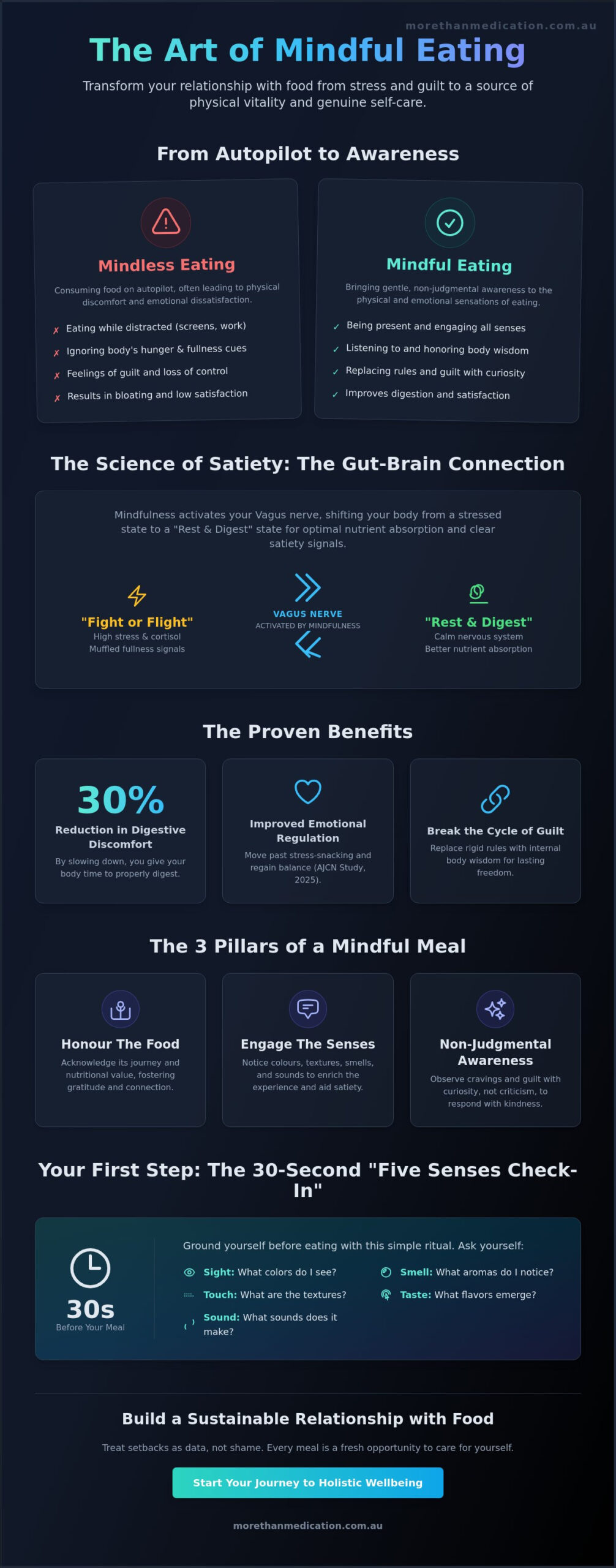
We’re here to help you transform your relationship with food into a source of physical vitality and genuine self-care. You’ll learn how to recognize your body’s natural hunger cues and use simple techniques that have been shown to reduce digestive discomfort by 30%. This guide explores the latest 2026 trends in holistic nutrition, from personalized eating strategies to the life-extending power of fiber, all designed to help you find lasting peace with every bite.
Key Takeaways
- Learn exactly what is mindful eating and how shifting from autopilot to presence can quiet the noise of food-related stress.
- Discover the role of your Vagus nerve in signaling relaxation, allowing your body to move into a “rest and digest” state for better nutrient absorption.
- Understand why replacing rigid external rules with internal body wisdom helps break the cycle of guilt and overeating.
- Master a simple 30-second pre-meal ritual called the “Five Senses check-in” to ground yourself even on your busiest days.
- Find out how to treat setbacks as valuable data rather than reasons for shame, building a sustainable path toward long-term wellness.
What is Mindful Eating? Defining the Practice of Presence
At its heart, understanding what is mindful eating begins with a shift in your perspective. It is the practice of bringing a gentle, non-judgmental awareness to the physical and emotional sensations you experience while you eat. Rather than following a rigid list of “good” or “bad” foods, you are learning to listen to your body’s unique signals. This approach acts as a powerful tool for self-advocacy; it empowers you to make choices based on your internal needs rather than external pressures. While the practice has deep roots in ancient mindfulness meditation, its modern application is incredibly practical for your daily life, focusing on how you eat rather than just what you eat.
We often find ourselves trapped in the cycle of mindless eating. This is the habit of consuming food while distracted by a screen, rushing through a lunch break, or simply moving on autopilot. You might finish a plate of food without ever truly tasting it, leaving you feeling physically full but emotionally unsatisfied. Mindful eating breaks this cycle by inviting you back into the present moment. It is not a restrictive diet or a weight-loss program; it is a way to reclaim your autonomy and find joy in the simple act of nourishment.
The Core Principles of a Mindful Meal
To practice mindfulness at the table, you can focus on three foundational pillars that help ground your experience:
- Honouring the food: This involves acknowledging the journey your food took to reach your plate. By recognizing its nutritional value and the effort involved in its preparation, you foster a deeper sense of gratitude and connection.
- Engaging the senses: You can transform a routine meal into a rich experience by noticing the vibrant colours, varied textures, subtle smells, and even the sounds of your food. This sensory engagement helps your brain better process satiety signals.
- Non-judgmental awareness: You might notice a sudden craving or a feeling of guilt. Instead of reacting with self-criticism, mindfulness encourages you to observe these responses with curiosity. This creates the mental space needed to respond to your body with kindness.
Why Mindfulness Matters for Your Health in 2026
In 2026, our world is faster and noisier than ever before. Constant digital distractions have made eating while scrolling the new normal, which often leads to a profound disconnect from our body’s natural hunger and fullness cues. This disconnection can contribute to digestive discomfort and a lingering sense of stress around mealtime.
Embracing mindfulness is a vital component of holistic wellbeing. It allows you to move away from a fixed mindset where you are either “perfect” or “failing” at your nutrition goals. Instead, you can adopt a path of continuous progress and curiosity. By treating every meal as a fresh opportunity to care for yourself, you build the inner strength necessary to maintain long-term health and mental clarity.
The Science of Satiety: How Your Brain and Body Connect
Understanding what is mindful eating requires looking beneath the surface at the complex biological partnership between your gut and your brain. This connection, often called the gut-brain axis, relies on a constant stream of chemical messages to tell you when you are hungry and when you have had enough. When you eat quickly or while stressed, these signals become muffled. By slowing down, you give your nervous system the space it needs to process these internal cues, turning a chaotic meal into a moment of genuine nourishment.
A central player in this process is the Vagus nerve. This long, wandering nerve acts as a bridge, carrying signals of relaxation from your digestive system to your brain. When you practice mindfulness, you activate the “rest and digest” state, which is the opposite of the “fight or flight” response we often carry through our busy days. High levels of cortisol, the stress hormone, can physically interfere with your ability to feel fullness. According to Harvard’s Guide to Mindful Eating, this intentional focus helps bridge the gap between physical hunger and the brain’s perception of it.
Your body also relies on a delicate balance of hormones like ghrelin, which signals hunger, and leptin, which signals satiety. It typically takes about 20 minutes for your brain to receive the “I am full” message from your stomach. If you finish a meal in five minutes, you’ve essentially bypassed your body’s natural braking system. Mindful eating respects this 20-minute rule, allowing these hormones to regulate your appetite naturally and without the need for restrictive willpower.
Recognizing Biological vs. Emotional Hunger
Learning to distinguish between different types of hunger is a profound act of self-care. Biological hunger usually develops gradually. You might feel it as a growl in your stomach or a dip in energy, and you are generally open to a variety of nourishing options. Emotional hunger, however, often arrives with a sudden, urgent intensity. It usually targets specific “comfort” foods and is felt “above the neck” as a mental craving rather than a physical need. By creating a brief pause between the urge to eat and the first bite, you can ask your body what it truly requires in that moment. For those looking to deepen this awareness, seeking expert advice on nutrition can provide additional tools for navigating these complex feelings.
The Impact on Digestion and Nutrient Absorption
The benefits of being present at the table extend far beyond your mood; they directly affect your physical health. Digestion actually begins in the brain before food even touches your tongue. When you are relaxed and focused, your body produces more saliva and digestive enzymes. Chewing thoroughly is the first step of this enzymatic breakdown, which can significantly reduce common issues like bloating or symptoms of IBS. When you are truly present, your body is in the optimal state to absorb the vitamins and minerals you consume, ensuring that your food provides the physical vitality you deserve.
Mindful Eating vs. Traditional Dieting: Why the Shift Works
Traditional dieting often feels like a set of rigid, external rules imposed on your life. You might follow a strict calorie count or a list of “allowed” foods, but these methods rarely account for your unique daily experience. In contrast, understanding what is mindful eating means shifting toward your internal wisdom. It’s about asking your body what it needs rather than telling it what it’s allowed to have. This transition from “should” to “feel” is what makes the practice sustainable for the long term.
Many of us have experienced the “forbidden fruit” effect. When you label a food as off-limits, your brain naturally fixates on it. This often leads to the painful restrict-binge cycle, where a period of intense deprivation is followed by a guilt-driven overindulgence. Mindfulness breaks this pattern by removing the moral labels from your plate. When no food is “forbidden,” the urgency to overeat begins to fade. You gain the power to enjoy a small portion of a favorite treat without the fear that it’ll derail your entire day.
You might wonder, “Can I really trust my body to choose healthy foods?” It’s a valid concern, especially if years of dieting have made your natural signals feel broken. However, as you practice presence, you’ll find that your body actually feels better when it receives a variety of nutrients. Your body doesn’t want to feel sluggish or bloated; it wants to thrive. By listening closely, you’ll notice that your cravings naturally balance out over time as you stop fighting against your own biology.
From Deprivation to Nourishment
Diets often fail because they treat your body like a machine to be controlled, ignoring the emotional weight of your relationship with food. By moving away from deprivation, you build inner strength based on self-trust rather than fragile willpower. This shift is especially helpful when you consider your fitness and movement goals. When you fuel your body correctly based on its actual energy needs, you’ll find you have more stamina and joy for the activities you love.
The Psychology of Food Freedom
Food freedom is the ability to eat without anxiety, obsession, or the constant mental math of “earning” your calories. Mindfulness helps dismantle the “all-or-nothing” thinking that fuels many modern wellness fads. This isn’t a quick fix that happens overnight; it’s a journey of continuous progress. Be patient with yourself as you unlearn old habits. Each meal is simply more data to help you understand what is mindful eating for your specific lifestyle and energy requirements.
Practical Strategies for Mindful Eating in a Busy World
Life doesn’t always pause for a quiet, candlelit meal. In our fast-paced world, the idea of “perfect” mindfulness can feel like just another chore on your to-do list. It’s vital to remember that what is mindful eating in practice isn’t about achieving a zen state every time you pick up a fork. Instead, it’s about finding small, manageable pockets of awareness amidst the noise. You don’t need a meditation retreat to eat well; you simply need a few seconds of intentionality.
If you’re wondering how to implement what is mindful eating into a packed schedule, start with the “Five Senses” check-in. This is a 30-second pre-meal ritual that grounds you in the present. Before your first bite, look at the colors on your plate, notice the smell of the steam, feel the weight of the cutlery, listen to the sounds of the room, and then focus entirely on the taste of that initial mouthful. This brief pause acts as a circuit breaker for stress, shifting your body out of a rushed state and into a place of receptivity.
One of the most effective first steps for beginners is creating a Screen-Free Zone. Phones away. It’s that simple. While you might feel the urge to scroll through news or emails while eating, this distraction severs the connection between your palate and your brain’s satiety centers. By removing the digital noise, you allow your interoception, your internal body awareness, to take the lead. Staying updated with expert advice on nutrition can help you refine these habits as your lifestyle evolves.
Even when you are reaching for nutrient-dense snacks during a commute, you can still practice presence. Take three deep breaths before you begin; it signals to your nervous system that you are safe to digest. Notice the texture of the snack and how it feels to chew. These tiny acts of self-advocacy prevent you from reaching the end of the day feeling depleted and disconnected.
Navigating the Workday and Social Dining
Stepping away from your desk for lunch is a non-negotiable act of self-care. Even a ten-minute break in a different environment helps reset your nervous system, preventing the “afternoon slump” that often leads to mindless grazing at the pantry. When dining socially, focus on the rhythm of the conversation. Use the natural pauses in talk to check in with your hunger levels. You can enjoy the community of a shared meal while remaining steady and present in your own body.
The Mindful Kitchen: Setting Yourself Up for Success
Your environment plays a massive role in your success. Organizing your kitchen to reduce “visual hunger” triggers, like keeping snacks tucked away in cupboards rather than on the counter, helps you make choices based on true hunger rather than impulse. The power of plating is also significant. Eating off a plate rather than directly from a packet changes how your brain perceives the volume of food. Try using smaller bites and putting your fork down between them; it’s a simple way to pace your meal and respect your body’s timing.
Building a Sustainable Relationship with Food: Your Next Steps
Building a sustainable relationship with food is a journey of continuous progress rather than a destination you reach overnight. You don’t need to overhaul every meal today to see a difference. In fact, trying to be “perfect” often leads to the very stress we are trying to avoid. Start small. Choose just one meal or snack a day where you commit to presence. This manageable shift allows you to explore what is mindful eating in a way that feels supportive rather than overwhelming.
It is inevitable that some days will feel more rushed than others. You might find yourself halfway through a meal before you realize you were eating on autopilot. When this happens, meet yourself with kindness. These moments aren’t failures; they are simply more data for your curiosity. Every time you notice you’ve drifted, you’re actually practicing the most important part of mindfulness: the act of returning to the present. This gentle self-advocacy is a foundational piece of the holistic wellbeing puzzle, ensuring that your mental and physical health are treated as a single, connected experience.
As you move forward, remember that true health is a whole-person experience. It involves physical vitality, but also mental clarity and emotional peace. By slowing down, you are doing more than just improving your digestion. You are teaching your nervous system that it is safe to relax. You are reclaiming your autonomy from the noise of wellness fads and rediscovering the simple joy of nourishment.
Gentle Action Steps for This Week
To help you ground these concepts into your daily life, try these three gentle steps over the next seven days:
- Step 1: Identify your biggest distraction. Notice what pulls you away from your plate. Is it your phone, the television, or the habit of working through lunch? Simply naming the distraction reduces its power over your habits.
- Step 2: Practice the ‘Hunger Scale’. Before you eat, and again when you finish, rate your hunger from 1 (starving) to 10 (painfully full). This helps you recalibrate your internal signals and recognize your unique fullness cues.
- Step 3: Journal one sensation. After one meal each day, write down a single thing you noticed. It could be a specific flavor, a texture, or a feeling of groundedness.
When to Seek Expert Guidance
While mindfulness is a personal practice, you don’t have to navigate your health journey alone. Some challenges, especially those rooted in long-standing emotional patterns or complex health concerns, benefit from a partnership with professionals. Seeking expert advice on nutrition or mental health can provide the tailored support you need to move forward with confidence. These experts act as supportive coaches, helping you bridge the gap between clinical information and your daily lifestyle. You are the ultimate expert on your own body; mindfulness simply provides the quiet space you need to finally hear what it has been trying to tell you.
Reclaiming Your Table and Your Peace
You’ve explored how a simple shift in presence can transform both your physical health and mental clarity. By honoring your body’s satiety signals and stepping away from the rigid rules of traditional dieting, you’re choosing a path of self-trust. Now that you have a deeper understanding of what is mindful eating, you can begin to treat each meal as an act of self-care rather than a source of stress. Whether you start with a single screen-free lunch or a brief sensory check-in, every small step builds the inner strength needed for long-term vitality.
Your journey toward holistic health doesn’t have to be a solitary one. Accessing evidence-based wellness insights and expert-led mental health content can help you navigate the fluctuations of daily life with confidence. We invite you to discover more expert advice for a balanced Australian lifestyle at More Than Medication. Our patient-centric approach is designed to support the whole person, bridging the gap between professional advice and your everyday habits. You have the innate wisdom to thrive; we’re simply here to help you listen to it.
Frequently Asked Questions
Is mindful eating the same as intuitive eating?
Mindful eating and intuitive eating are distinct yet complementary practices. While they both encourage you to listen to your body, what is mindful eating specifically focuses on the moment-to-moment sensory experience of the meal itself. Intuitive eating is a broader framework that includes rejecting diet culture and making peace with all foods. Together, they help you build a resilient foundation for long-term health, self-advocacy, and emotional stability.
Can mindful eating actually help with weight loss?
Weight loss can be a natural byproduct of this practice, though it isn’t the primary focus. By improving your awareness of satiety, you may find yourself naturally consuming what your body actually needs rather than eating past the point of comfort. This shift reduces the frequency of stress-driven overeating. Research shows this approach can reduce cravings by 30% within three months, helping you find your body’s unique point of balance.
How do I practice mindful eating if I have a very busy schedule?
You don’t need a perfectly quiet environment to practice mindfulness. Even in a busy workday, you can commit to just three deep breaths before you take your first bite. Try to notice the texture of your food for only thirty seconds. These small, manageable pauses help reset your nervous system and prevent the frantic energy of a deadline from following you to the dinner table. It’s about quality, not necessarily the quantity of time spent.
What are the first signs that I am eating mindfully?
One of the first signs of progress is simply noticing when you aren’t being mindful. You might realize you’ve been scrolling through your phone while eating or that you’re finishing a meal without really tasting it. This awareness is a huge win. Other signs of what is mindful eating in action include recognizing the subtle shift from “hungry” to “satisfied” before you feel uncomfortably full or discovering new flavors in a familiar dish.
Can children or families practice mindful eating together?
Practicing as a family is a wonderful way to foster a supportive community and model healthy habits for children. You can make it a game by asking everyone to describe the colors or textures of their meal. This non-judgmental approach helps children build a positive relationship with food from a young age, turning mealtime into a shared experience of connection rather than a battle of wills.
What should I do if I feel guilty after overeating?
If you feel guilty after overeating, the most helpful step is to treat that feeling with compassion. Guilt often leads to further stress-eating, creating a cycle that is hard to break. Instead, try to view the experience as valuable information. Ask yourself what your body or mind was seeking in that moment. This curiosity helps you move forward with hope rather than shame, keeping your progress steady.
Do I have to give up my favorite ‘unhealthy’ foods to eat mindfully?
You don’t have to give up any specific foods to practice mindfulness. In fact, many people find that when they truly savor their favorite treats, they feel satisfied with much smaller portions. By removing the “forbidden” label, you reduce the psychological urge to binge. You’re allowed to enjoy all foods; mindfulness simply helps you stay present enough to actually experience the pleasure they provide.
How does mindful eating affect digestion and bloating?
Mindful eating has a direct, positive impact on your physical comfort. When you slow down and chew thoroughly, you ease the burden on your digestive system and reduce the amount of air you swallow. This practice signals your brain to enter a relaxed state for proper nutrient absorption. Studies highlight a 30% reduction in reported digestion issues among those who practice these techniques consistently, helping you feel lighter and more energized.
⚕️ Medical Disclaimer
This content is for informational purposes only and is not a substitute for professional medical advice, diagnosis, or treatment. Always seek the advice of your doctor or other qualified health provider with any questions you may have regarding a medical condition. Never disregard professional medical advice or delay in seeking it because of something you have read on this website.