
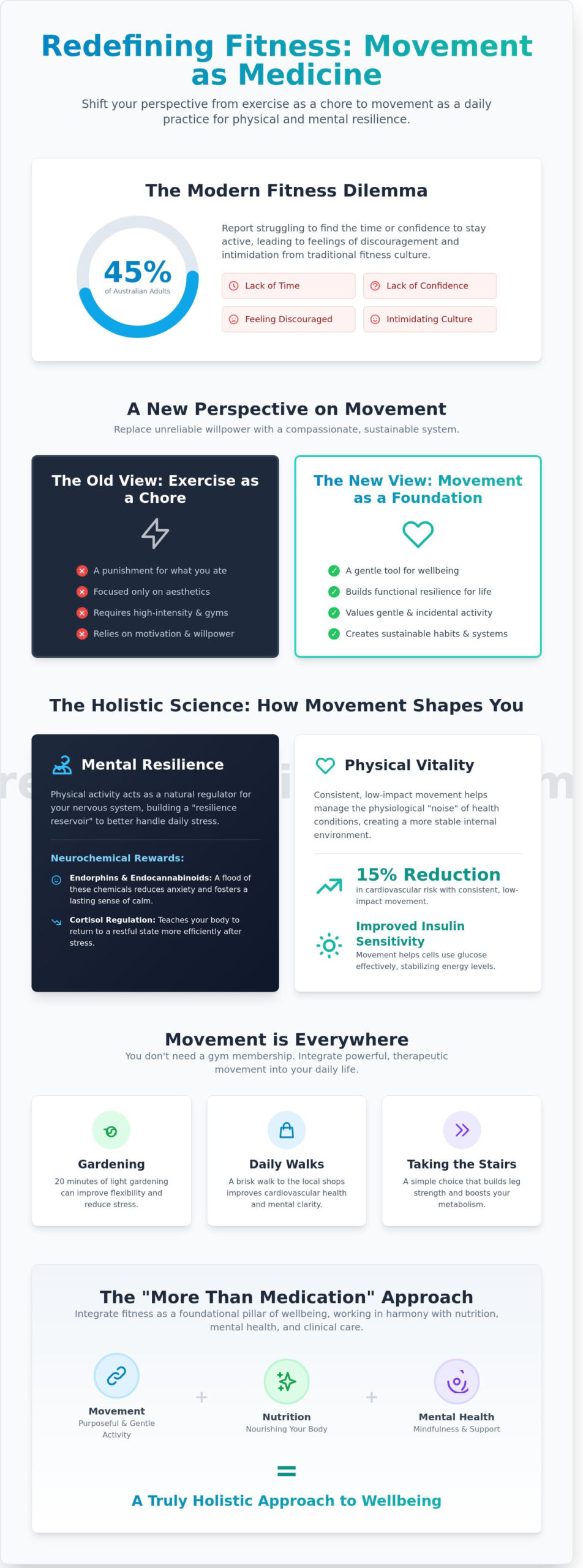
What if the most effective version of fitness had nothing to do with a crowded gym or a high-intensity workout plan? You’ve likely felt the weight of expectation when it comes to exercise, especially when managing a chronic health condition or a busy schedule. It’s understandable to feel discouraged when 45% of Australian adults report that they struggle to find the time or confidence to stay active, as noted in recent health participation data. You deserve a path that feels supportive rather than punishing.
We’re here to help you redefine what it means to be active by focusing on movement that nourishes your mind and body equally. This guide will show you how to build a sustainable routine that provides mental clarity and energy without the burnout. We believe your wellbeing is about more than just a medical checklist; it’s about finding a rhythm that works for your life. We’ll explore how to integrate gentle, purposeful movement into your day to help you reclaim your physical confidence and feel truly empowered.
Key Takeaways
- Shift your perspective from viewing exercise as a chore to embracing movement as a foundational tool for functional resilience and long-term vitality.
- Explore the neurochemistry of movement and how physical activity acts as a natural regulator to help you manage daily stress and anxiety.
- Navigate the spectrum of modern movement styles to find the perfect match for your unique health goals, from high-intensity training to restorative practices.
- Learn to replace unreliable willpower with compassionate systems that support a sustainable routine through life’s inevitable ups and downs.
- Discover how to integrate fitness into your broader lifestyle toolkit, working alongside nutrition and mental health for a truly holistic approach to wellbeing.
Redefining Fitness: Why Movement is More Than Just a Workout
You might feel that exercise is just another item on a growing to-do list; a chore that demands energy you simply don’t have. For many Australians living with chronic conditions or high levels of stress, the traditional fitness culture can feel exclusionary and intimidating. We want to change that narrative together. Movement isn’t a punishment for what you ate or a tool to achieve a specific look; it’s a gentle form of medicine that supports your body’s natural ability to heal and sustain itself.
By 2026, the Australian health landscape has shifted its focus toward functional resilience rather than just aesthetic results. While the traditional definition of physical fitness often focuses on aerobic capacity and body composition, we see it as a much broader foundation for your life. True resilience means having the strength to pick up your groceries, the flexibility to play with your children, and the stamina to manage your daily tasks without total exhaustion. It acknowledges your mental state and your energy levels on any given day, validating that some days movement will be a walk, while other days it might just be intentional stretching.
The Biological Need for Movement
Regular activity does much more than burn calories. It acts as a primary regulator for your internal systems. Data from Australian health studies in 2024 indicates that consistent, low-impact movement can lead to a 15% reduction in cardiovascular risk and significantly improved insulin sensitivity. These biological shifts help manage the physiological “noise” of many health conditions, creating a quieter, more stable internal environment. Holistic fitness is the intersection of physical capacity and emotional stability.
- Metabolic Health: Movement helps your cells use glucose effectively, stabilizing energy throughout the day.
- Cardiovascular Strength: Gentle activity improves circulation, ensuring nutrients reach your tissues efficiently.
- Mental Clarity: Physical action triggers the release of neurochemicals that reduce cortisol and lift your mood.
Moving Beyond the Gym Mentality
Searching for “gyms near me” isn’t the only way to begin this journey. In fact, for many, the high-pressure environment of a commercial gym can be a barrier to progress. We encourage you to look at incidental movement as a powerful therapeutic tool. Small actions like gardening for 20 minutes, walking to the local shops, or taking the stairs contribute to your total physical capacity. These moments are accessible, sustainable, and free from the judgment often found in traditional workout spaces.
This is about the “more” in your health journey. While medication and clinical treatments provide a necessary foundation, movement is the partner that enhances their effectiveness. It complements your therapeutic path by reconnecting you with your body’s potential. By choosing activities that feel supportive rather than draining, you’re not just working out; you’re building a life that feels more manageable and hopeful.
The Holistic Science: How Physical Activity Shapes Mental Resilience
When you move your body, you are doing much more than just burning energy. You are engaging in a sophisticated biological dialogue that rewires your brain and strengthens your emotional core. The famous runner’s high isn’t just a myth; it’s a flood of endocannabinoids and endorphins that act as your body’s internal reward system. These chemicals don’t just mask pain; they actively reduce feelings of anxiety and foster a sense of calm that lingers long after your workout ends. By committing to regular movement, you build a resilience reservoir, a mental buffer that helps you handle life’s inevitable pressures with greater ease.
Movement and the Nervous System
Your nervous system often gets stuck in a state of high alert, especially when work or family life becomes demanding. Physical activity serves as a natural regulator for this stress. While intense bursts of movement initially raise cortisol, the subsequent recovery period teaches your body how to return to a restful, parasympathetic state more efficiently. This process of “grounding” the mind through the body is a powerful tool for emotional stability. As you focus on starting a sustainable fitness routine, you’ll likely notice that your psychological confidence grows alongside your physical capacity. There’s a profound link between the strength of your muscles and the quiet certainty in your mind; knowing your body can meet a physical challenge makes mental hurdles feel far less intimidating.
Longevity and Bone Density
Investing in your fitness today is a gift to your future self. In Australia, where we value an active outdoor lifestyle well into our later years, maintaining bone density is a primary concern. Strength training isn’t just for athletes; it’s a critical strategy for preventing the natural bone loss that occurs as we age. When you place gentle, consistent stress on your skeletal system through resistance, your bones respond by becoming denser and more resilient. This protects your joint mobility and ensures you can remain independent and mobile for decades to come.
For those looking to amplify these benefits without high-impact stress, using a weighted vests guide can provide practical ways to integrate load-bearing exercise into your daily walks. Small, manageable adjustments like these make the journey toward health feel achievable rather than overwhelming. If you’re feeling ready to explore how movement can support your specific health goals, you can find more resources on our holistic wellness hub to help you take that next gentle step.
Finding Your Movement Match: Navigating Modern Fitness Styles
Choosing a way to move shouldn’t feel like a chore or a punishment. It’s a personal conversation between you and your body. You might feel overwhelmed by the sheer number of classes available in Australian communities, from local parks to boutique studios. That’s a normal reaction. The right choice depends on your specific health goals and how your body feels when you wake up each morning. By understanding the spectrum of movement, you can find a rhythm that supports your long-term wellbeing.
Your needs change. Some days you might crave a high-intensity session to burn off steam. Other days, your nervous system might require something restorative and quiet. Learning to listen to these internal signals is a skill that prevents burnout. Integrating a variety of activities is equally vital. It keeps your mind engaged and ensures your body doesn’t hit a physical plateau. When you mix different styles, you challenge different muscle groups and keep the spark of motivation alive. This holistic approach helps you enjoy the benefits of regular physical activity, such as improved mood and sustained energy, without the risk of repetitive strain.
Strength and Functional Training
Strength training is about much more than muscle size; it’s about building a body that can handle the demands of everyday Australian life. Whether you’re lifting heavy groceries or playing with your kids at the beach, functional strength provides the foundation. Kettlebell training is particularly effective for this. It combines cardiovascular health with explosive power and stability. If you’re living with an existing injury, don’t let fear stop you. Start by working with a qualified trainer or a physiotherapist who can adapt movements to your needs. This ensures you build resilience safely and effectively.
Flexibility and Mind-Body Connection
Sometimes your body needs a gentler touch to heal and grow. If you’re looking for a way to strengthen your core while being kind to your joints, reformer pilates offers a sophisticated solution. It uses spring-based resistance to provide a full-body workout that feels both challenging and supportive. This style of fitness is excellent for those recovering from injury or managing chronic pain. Yoga for beginners and targeted stretching also play a crucial role in maintaining a flexible nervous system. By choosing between low-impact and high-impact options based on your recovery needs, you create a sustainable habit that honors your health journey. It’s about finding balance, not just breaking a sweat.
Building a Sustainable Routine: From Motivation to Lasting Habit
We often treat willpower like a battery that never drains. In reality, your motivation fluctuates based on your sleep, stress levels, and daily workload. Shifting your focus from “trying harder” to building robust systems allows your fitness routine to survive even your most difficult days. While motivation might get you started on a Monday morning, it’s the systems you put in place that keep you moving when Thursday afternoon fatigue sets in. A system is simply a way to make the healthy choice the easiest choice, such as laying out your joggers the night before or choosing a gym that’s on your direct commute home.
By reducing the number of decisions you have to make, you preserve your mental energy for the movement itself. It’s also vital to set compassionate goals that leave room for the natural ups and downs of life. The “all or nothing” trap is a common reason why many routines fail within the first month. We often tell ourselves that if we can’t do the “perfect” workout, there’s no point in doing anything at all. In truth, the most successful people are those who have mastered the art of the “mediocre” workout on days when they’re exhausted. Whether it’s a stroll along a local coastal path or five minutes of stretching in your living room, keeping the momentum is what creates a lasting habit.
The 10-Minute Rule for Busy Days
You don’t always need a 60-minute block to make a difference to your health. Small bouts of movement, often called micro-movements, accumulate throughout the day to provide significant physiological benefits. You might try doing standing stretches during a long phone call or taking a brisk walk around the block while waiting for your lunch. Even 10 minutes of brisk movement can improve mood for up to two hours. These short bursts act as a reset button for your nervous system, proving that fitness is accessible even on your most packed days.
Overcoming the Psychological Barriers
The fear of judgment is a significant hurdle when you’re starting out. Many Australians report feeling “gym anxiety,” worried that they don’t look the part or know how to use the equipment. It’s helpful to remember that almost everyone in that space is preoccupied with their own progress, not yours. If you find a traditional gym environment intimidating, look for community-focused spaces or outdoor groups where the emphasis is on connection and support rather than performance.
When things don’t go to plan, try to reframe “failure” as valuable data. If you find yourself skipping evening workouts, it isn’t a character flaw; it’s a sign that your energy levels are better suited for morning movement. Approaching your routine with curiosity rather than criticism makes the journey feel much lighter. Remember, medicine is a vital tool, but movement is the partner that supports your body’s natural resilience.
The More Than Medication Approach: Fitness as a Pillar of Wellbeing
You’ve likely felt the pressure to see health as a series of checkboxes or a list of symptoms to manage. At More Than Medication, we view fitness as a vital component of your broader lifestyle toolkit. It’s the “more” that turns a clinical treatment plan into a lived experience of vitality. Movement doesn’t exist in a vacuum; it works alongside your nutritional choices and mental health strategies to build a foundation of resilience. This holistic approach ensures you aren’t just surviving, but truly thriving.
Integrating movement into your daily life creates a positive feedback loop. Physical activity can reduce symptoms of anxiety by approximately 26% according to recent clinical reviews, while also improving the metabolic markers your doctor monitors. It’s about empowering yourself to lead a balanced life where your body feels capable and your mind feels clear. When you move well, you often sleep better and eat more mindfully, creating a sustainable cycle of wellness.
Consulting the Experts
Finding the right guide makes your journey feel safer and more structured. Your GP is the best starting point for this conversation. You can ask them about a Chronic Disease Management Plan, which may provide Medicare rebates for up to five allied health services per year. Be specific about your goals. Tell them if you want to walk to the shops without hip pain or if you’re looking to manage your blood pressure through activity. They can help you decide which specialist fits your needs.
- Physiotherapists: See them if you’re managing a specific injury, recovering from surgery, or dealing with persistent pain that limits your range of motion.
- Exercise Physiologists (EPs): These university-qualified experts specialize in clinical exercise interventions for people with chronic conditions like type 2 diabetes or cardiovascular disease.
- Personal Trainers: They are excellent for general strength building, technique correction, and keeping you accountable to your fitness goals.
Recovery is just as important as the movement itself. If you’re feeling the strain of a new routine or need help with muscle tension, our remedial massage guide offers insights into how targeted therapy can support your body’s healing process.
Your Journey, Your Pace
Every person’s path to wellbeing looks different. You don’t need to run a marathon to see results. Data from the Australian Institute of Health and Welfare suggests that even 30 minutes of moderate activity most days can significantly lower the risk of chronic disease. Start small. Perhaps it’s a ten-minute walk after lunch or a gentle stretching session before bed. For those seeking a practice that combines physical movement with mental clarity, exploring yoga for stress relief and flexibility can provide a perfect entry point into mindful movement. Stay curious about what your body can do rather than focusing on what it can’t.
Remember that health is a lifelong journey, not a final destination. There will be days when movement feels easy and days when it feels like a hurdle. That’s okay. We’re here to provide the steady, compassionate guidance you need to keep moving forward at your own speed. We invite you to explore our other expert-led resources to continue building your personalized toolkit for a healthier, more balanced life.
Your Journey Toward a More Resilient Future
Embracing movement as a foundation for mental resilience is a powerful shift that goes beyond the traditional gym setting. By 2026, the Australian health landscape emphasizes that 150 minutes of moderate activity each week can significantly lower the risk of chronic conditions, yet the real magic happens when you find joy in the process. You’ve learned that your fitness routine should be a sustainable habit tailored to your life, not a temporary fix or a source of stress. It’s about acknowledging the emotional weight of health challenges and responding with gentle, evidence-based action that supports both your mind and body.
Our expert-driven content is designed specifically for the Australian lifestyle, offering you a steady hand as you navigate the complexities of holistic health. We provide the clinical authority you need alongside the warm, human support you deserve. Because health is always about the whole person, we focus on the “more” in your journey, bridging the gap between medical treatment and everyday wellbeing. Explore our expert-led guides to find your perfect movement match.
Take this moment to celebrate how far you’ve come and look forward to the progress still to be made. You have the tools to build a life defined by balance, strength, and hope.
Frequently Asked Questions
How much exercise do I actually need for basic health benefits?
For most Australian adults, the goal is 150 to 300 minutes of moderate intensity physical activity each week. This recommendation from the Department of Health and Aged Care helps lower your risk of chronic diseases like type 2 diabetes by up to 40 percent. You can break this down into 30 minute blocks on five days. It’s about finding a rhythm that fits your life, whether that’s a brisk walk or a swim at the local pool.
Can I improve my fitness if I have a chronic health condition?
You can absolutely improve your fitness levels while managing a chronic condition, and it’s often a key part of your treatment plan. Data shows that nearly 50 percent of Australians live with at least one chronic condition, and tailored movement can reduce symptom severity by 30 percent in many cases. Your journey might start with just five minutes of gentle stretching. It’s important to partner with an Accredited Exercise Physiologist to create a safe, sustainable path forward.
Is it better to do cardio or strength training for weight management?
A combination of both cardio and strength training is the most effective approach for managing your weight long term. While cardio burns more calories during the session, strength training increases your metabolic rate for up to 72 hours after you finish. Research indicates that participants who combine both see 20 percent better results than those doing cardio alone. Focus on building a balanced routine that makes you feel strong and capable rather than just chasing numbers.
What should I do if I feel too tired to exercise?
If you’re feeling exhausted, try the ten minute rule by committing to just a short burst of very gentle movement. Often, low intensity activity can reduce fatigue levels by 65 percent because it boosts your circulation and oxygen flow. It’s okay to listen to your body and choose restorative movement like a slow walk or yoga. If your fatigue persists for more than 14 days, it’s a good idea to chat with your GP to check for underlying causes.
How do I know if I am pushing myself too hard during a workout?
You’ll know you’re pushing too hard if you can’t hold a brief conversation or if you feel sharp, localized pain. The Australian Heart Foundation suggests using the talk test; you should be able to speak but not sing during moderate activity. If your heart rate stays elevated for more than 30 minutes after stopping, your body is asking for more recovery time. Balance is key to preventing burnout and ensuring your fitness journey remains a source of joy.
Can movement really improve my mental health as much as therapy?
Movement is a powerful tool for your mind, with a 2023 University of South Australia study finding that exercise can be 1.5 times more effective than counseling for mild depression. While it doesn’t replace professional therapy, it acts as a vital companion to clinical care. Physical activity releases endorphins that naturally lift your mood and reduce cortisol. It’s about nurturing your whole self, acknowledging that your mental and physical wellbeing are deeply connected.
What are the best low-impact exercises for beginners?
Walking, swimming, and stationary cycling are excellent low impact options that protect your joints while building stamina. Swimming is particularly effective as water supports 90 percent of your body weight, reducing the strain on your knees and hips. These activities allow you to build a foundation of strength without the risk of high impact injuries. Start with two sessions a week and gradually increase your duration as your confidence and resilience grow.
How long does it take to see the benefits of a new fitness routine?
You’ll likely feel a boost in your mood and energy levels after just one session, but physical changes typically take four to six weeks to become visible. Your cardiovascular health begins to improve within the first 14 days of consistent movement. It’s helpful to remember that progress isn’t always a straight line. Celebrate the small wins, like sleeping better or having more energy for your family, as these are signs your body is adapting.