
What if the secret to feeling vibrant isn’t about cutting out the foods you love, but simply understanding how they fuel your unique body? You’ve likely felt the exhaustion of trying to follow a rigid, one-size-fits-all meal plan that leaves you hungry by mid-afternoon. It’s frustrating to eat what’s labeled as healthy yet still feel like your energy is stuck in second gear. This guide shows you how a personalized macro calculator can replace that anxiety with a clear, manageable roadmap for your nutrition.
We agree that food is about more than just fuel; it’s a vital piece of your health puzzle that goes beyond what a prescription can provide. By using data from the 2024 Australian Health Survey as a baseline, we’ve designed this approach to help you find your ideal balance of proteins, fats, and carbohydrates. You’ll discover how to calculate your ratios to fuel your body and mind with confidence. We’ll explore the simple steps to define your personal targets, helping you move away from restriction and toward a sustainable sense of empowerment in 2026.
Key Takeaways
- Learn why shifting your focus from simple calories to the three pillars of energy—protein, fats, and carbohydrates—is essential for your holistic wellbeing.
- Discover how to use a macro calculator to uncover your unique Basal Metabolic Rate and Total Daily Energy Expenditure for more precise, personalized nutrition.
- Identify the ideal macro split for your specific goals, helping you achieve sustainable fat loss or increased vitality without feeling restricted.
- Gain practical tips for tracking your meals using Australian pantry staples and digital tools that fit seamlessly into your daily lifestyle.
- Understand how to balance data-driven tracking with intuitive eating to foster a compassionate and healthy relationship with food.
What is a Macro Calculator and Why Does it Matter for Your Wellbeing?
You might feel like you’re doing everything right, yet you still find yourself reaching for a second coffee by 3 PM or struggling to stay focused during your morning meetings. It’s a common frustration. For years, we were told that health was simply a matter of “calories in versus calories out.” By 2026, nutritional science has moved toward a more nuanced, compassionate understanding of the human body. A macro calculator serves as your digital compass in this new era. It moves beyond the restriction of traditional dieting and focuses instead on providing your body with the specific building blocks it needs to function at its peak.
Your body isn’t a simple furnace; it’s a sophisticated biological system. While a standard 2,000-calorie diet might be the baseline for many, the 2022 Australian Bureau of Statistics National Health Survey revealed that only 6.1% of adults met the recommended daily intake for both fruit and vegetables. This suggests that while we might be eating enough, we aren’t always eating the right things. Using a macro calculator allows you to tailor your intake to your specific life stage, activity level, and health goals, turning data into a tool for self-care rather than a source of stress.
The Three Pillars: Protein, Carbs, and Fats
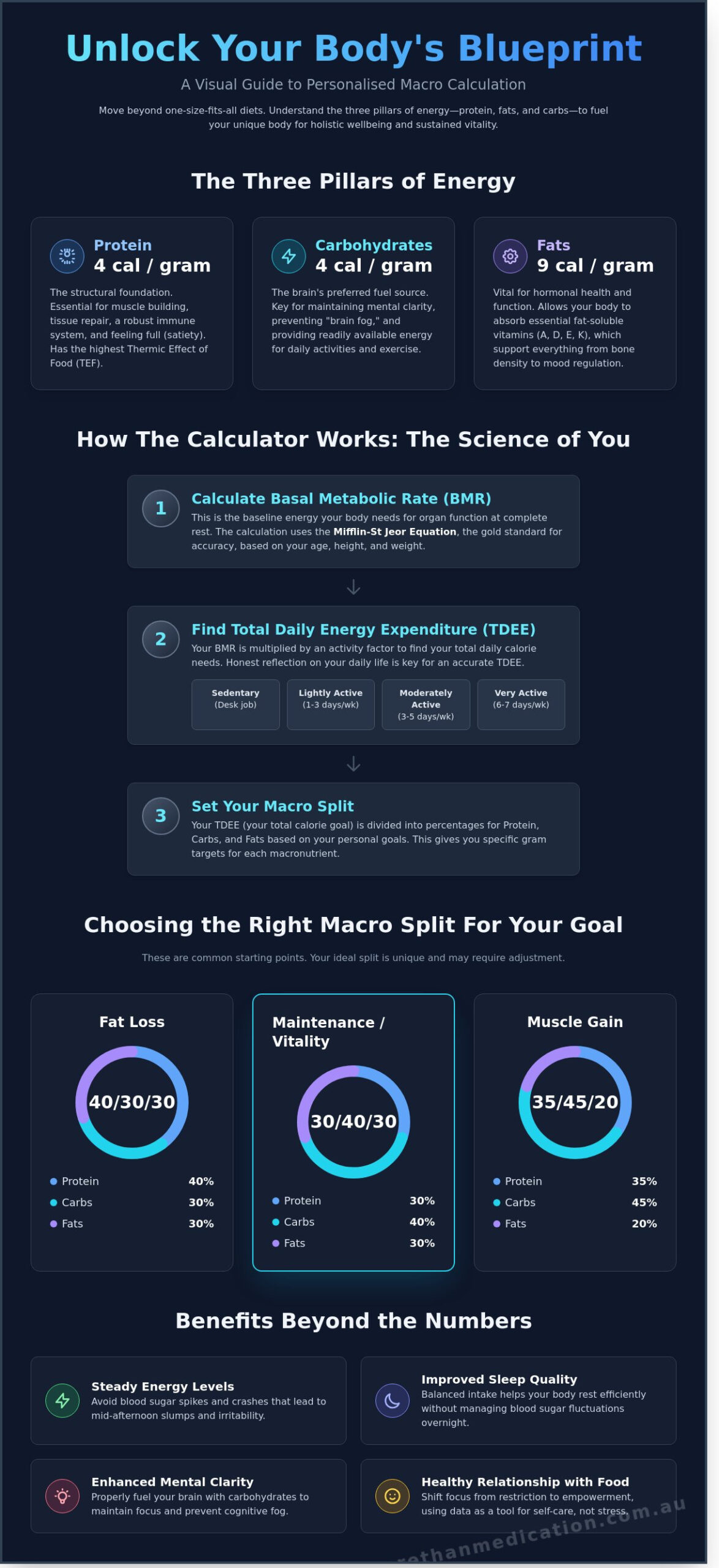
Every bite of food you take is composed of three primary macronutrients. Protein is your body’s structural foundation. It does far more than just build muscle; it’s essential for tissue repair and maintaining a robust immune system. Carbohydrates are often misunderstood, but they remain your brain’s preferred fuel source. Adequate carb intake is the key to maintaining mental clarity and preventing that “brain fog” that can derail your workday. Finally, fats are vital for your hormonal health. They allow your body to absorb essential vitamins like A, D, E, and K, which are critical for everything from bone density to mood regulation.
Why ‘Tracking’ Isn’t Just for Athletes
In a busy Australian lifestyle, it’s easy to overlook hidden nutritional gaps. You might be eating plenty of “healthy” foods but still missing the mark on the balance your body requires for stability. Awareness of your macros helps you maintain steady energy levels, preventing the blood sugar spikes and crashes that often lead to irritability. This balance also extends into the night. Research suggests a direct link between balanced macronutrient intake and improved sleep quality, as your body isn’t working overtime to manage blood sugar fluctuations while you try to rest. By understanding these patterns, you can make small, manageable adjustments that foster long-term resilience and peace of mind.
How the Macro Calculator Works: Understanding the Science of You
Your body is a living, breathing miracle, not a static machine. To find your unique nutritional blueprint, a macro calculator relies on the Mifflin-St Jeor Equation. Validated in a 1990 study, this formula remains the gold standard because it accounts for your age, height, and weight with roughly 5% more accuracy than older methods. It respects your unique biology, providing a reliable starting point for your wellness journey.
Decoding BMR and TDEE
Your Basal Metabolic Rate (BMR) represents the minimum amount of energy your body requires to keep your organs functioning while you are completely at rest. Once we establish this baseline, we apply an activity multiplier. This is where you reflect on your daily life, whether you are working a desk job in Melbourne or spending your weekends hiking the Blue Mountains.
Choosing this multiplier honestly is vital for success. It transforms your BMR into your Total Daily Energy Expenditure (TDEE). You should view your TDEE as a moving target that shifts as your life changes, rather than a fixed number to be feared. This calculation also considers the Thermic Effect of Food (TEF). This accounts for the 10% of your daily energy used just to digest and process your meals. Protein has the highest TEF, requiring up to 30% of its own energy just to be broken down, which helps explain why it feels so filling.
The Math Behind the Macros
After establishing your daily calorie goal, the macro calculator breaks that number down into grams of protein, fats, and carbohydrates. We prioritise protein first to support muscle repair and provide the satiety you need to feel satisfied throughout the day. Each gram of protein and carbohydrate contains 17 kilojoules (4 calories), while each gram of fat contains 37 kilojoules (9 calories). This distinction is why fat portions often look smaller on your plate even though they provide sustained energy.
You have the freedom to adjust your fat and carbohydrate ratios based on what makes you feel most vibrant. Some people find they have more energy for afternoon walks with higher carbs, while others prefer the steady focus that comes with higher healthy fats. This process is about finding a sustainable rhythm that feels like more than medication for your soul. It’s a partnership between data and your own lived experience, allowing you to move forward with confidence and clarity.
Choosing the Right Macro Split for Your Personal Goals
Finding your ideal ratio isn’t about following a rigid rule. It’s about finding a rhythm that supports your life. Your macro calculator results provide the blueprint, but you’re the architect of your daily energy. A balanced approach typically involves 40% carbohydrates, 30% protein, and 30% fats. This split offers enough glucose for brain function while providing sufficient protein for tissue repair and muscle maintenance.
If you’re focused on fat loss, you might feel tempted to slash calories drastically. However, Australian nutritional guidelines suggest a moderate deficit of 15% to 20% below maintenance is more sustainable for long-term vitality. For muscle gain, your body requires a strategic surplus. Carbohydrate intake, specifically 3 to 5 grams per kilogram of body weight, ensures your muscles have the glycogen needed for recovery. This isn’t just about physical size; it’s about giving your body the resources to remain resilient and strong as you age.
Goal-Specific Macro Ratios
The 40/30/30 split remains a versatile starting point for most Australians. It provides a steady stream of energy without the blood sugar spikes that lead to afternoon fatigue. For active individuals or those over 65, a high-protein strategy is often more beneficial. Research suggests that consuming 1.2 to 1.5 grams of protein per kilogram of body weight helps prevent age-related muscle loss, known as sarcopenia. While Keto or low-carb approaches can be therapeutic for insulin resistance, they require careful monitoring to ensure you’re still meeting your micronutrient needs.
Listening to Your Body’s Biofeedback
Your macro calculator gives you a mathematical starting point, but your body provides the real-time data that matters most. Signs that your split needs adjustment include persistent hunger, mid-afternoon brain fog, or disrupted sleep. If you feel irritable or “hangry” every day at 3 PM, you likely need to increase your healthy fats or complex carbohydrates during your midday meal. Consistency is the goal. Achieving 80% of your targets over a 12-month period is far more effective for your wellbeing than being 100% perfect for a single week.
Refeeds or flexible days are essential for mental resilience. These aren’t “cheat days” but planned periods where you eat at maintenance levels to support your metabolism and hormonal health. This approach helps maintain a healthy relationship with food and prevents the burnout often associated with restrictive dieting. Remember, health is a journey of small, manageable steps toward a sense of balance. By bridging the gap between clinical data and your daily experience, you make your wellness journey feel navigable and less intimidating.
From Numbers to Plate: Practical Macro Tracking in Australia
You’ve crunched the numbers using a macro calculator. Now, the real work begins in your kitchen and at your local Woolworths or Coles. Tracking your food shouldn’t feel like a second job or a source of stress. Use digital tools like Easy Diet Diary, which features an extensive Australian food database, to scan barcodes and log meals in seconds. This approach shifts the focus from restriction to awareness, helping you understand how different foods make you feel.
Smart swaps are the easiest way to hit your targets without giving up the flavors you love. Trade standard white pasta for pulse-based varieties to boost your protein and fiber. If you’re looking for a way to stay full longer, the role of high-quality nut butter and healthy fats in satiety cannot be overstated. Adding a tablespoon of almond or cashew butter to your morning smoothie provides the essential fats your brain needs to stay focused until lunch.
Meal prepping is a gentle act of self-care. It doesn’t require spending your entire Sunday in the kitchen. Try prepping just two or three days at a time. Grill a batch of lean kangaroo fillets or tofu on a Tuesday evening. Having these protein sources ready makes it much simpler to follow the plan your macro calculator suggested when life gets busy.
Navigating the Australian Supermarket
Australian food labels are incredibly helpful once you know where to look. Always compare products using the “per 100g” column rather than the “per serving” size, which can be misleading. Look for high-protein snacks like roasted fava beans or Greek yogurt in the health aisle. Ensure you’re also incorporating nutrient-dense sources like selenium-rich foods into your macros. Just two Brazil nuts a day provide your full daily requirement, supporting your thyroid health and antioxidant levels.
Dining Out and Social Life
Socializing is a vital part of your holistic health. When you’re at a restaurant, use the “Estimate and Enjoy” rule. You don’t need to bring a scale to the bistro. Prioritize a palm-sized portion of protein and fill half your plate with colorful veggies. Remember that one meal outside your specific targets won’t derail your entire journey. Your body is resilient, and your mental health is just as important as the numbers on your screen.
Beyond the Calculator: Maintaining a Healthy Relationship with Food
Your macro calculator serves as a reliable map, but it isn’t the terrain itself. While hitting your daily targets helps achieve specific body composition goals, becoming overly fixated on these figures can lead to “tracking fatigue.” A 2024 survey by the Butterfly Foundation indicated that approximately 75% of Australians feel some level of pressure from digital health tracking. If you find yourself declining social invitations or feeling intense anxiety over a 10-gram deviation in protein, it’s time to step back. Taking a “tracking holiday” for 48 hours every fortnight can help reset your perspective and remind you that your body knows how to process a single meal that doesn’t fit a grid.
True nutrition involves a harmony between data and intuition. You can use a macro calculator to learn the language of food, then eventually transition to intuitive eating once you understand portion sizes. This isn’t an “either-or” scenario. Many people find success by tracking for three months to build awareness and then moving to a “mindful maintenance” phase. During this time, focus on food quality rather than just quantity. Hitting your fiber goals or ensuring you get 1,000mg of calcium is often more vital for long-term resilience than obsessing over a few extra calories from an avocado.
- Energy levels: Do you feel vibrant at 3:00 PM, or are you crashing?
- Sleep quality: Are you getting the recommended 7 to 9 hours of restorative rest?
- Mood stability: Is your diet supporting a calm, focused mind?
- Physical strength: Can you lift more or walk further than you could 30 days ago?
The Mind-Body Connection
Changing how you eat is emotional labor. It requires patience and self-compassion, especially on days when life feels chaotic. High stress levels trigger cortisol, a hormone that can alter how your body stores energy and utilizes its macros. A 2023 study published in the Journal of Nutrition Education and Behavior found that rigid dietary restraint often correlates with higher perceived stress. To counter this, pair your macro awareness with mindful eating. Slow down; take 20 minutes to finish a meal and notice the textures and flavours. This simple act helps your brain register fullness signals, making the numbers on your screen less of a struggle to maintain.
Your Journey is More Than a Spreadsheet
You are a vibrant, living person whose worth cannot be calculated by a mathematical equation or a daily deficit.
Healing and growth rarely happen in isolation. Connecting with a community of like-minded individuals can provide the emotional scaffolding you need when motivation dips. Whether it’s a local walking group in your Melbourne suburb or an online forum focused on holistic health, shared experiences foster empowerment. If you feel ready for a deeper dive, consider booking a session with an Accredited Practising Dietitian (APD). Professional consultations in Australia typically range from A$120 to A$200 per hour and can provide a level of clinical precision that an algorithm simply cannot match. They can help you integrate your macro data into a lifestyle that feels sustainable, joyful, and uniquely yours.
Embrace Your Unique Path to Wellbeing
Your journey toward better health is deeply personal. Using a macro calculator provides a scientific foundation to understand your body’s specific requirements, but it’s only one piece of a much larger puzzle. True wellness involves balancing these data-driven insights with a kind, sustainable relationship with food that works for your daily life in Australia. While 2026 health trends show that many people feel overwhelmed by complex nutrition metrics, you can choose a more manageable path. By focusing on evidence-based 2026 nutritional standards, you move away from restrictive habits toward a lifestyle that nourishes both your physical and mental health. Our approach at More Than Medication recognizes that you’re a whole person, not just a set of statistics. We provide expert-led wellness content and patient-centric advice to help you navigate these choices with confidence and calm. You’ve got the tools to build resilience and find your own rhythm. We’re here to support you every step of the way as you discover that health is always about more than just the numbers on a screen. You’re capable of making choices that feel right for your body and your mind.
Explore our expert nutrition guides for a balanced lifestyle
Frequently Asked Questions
Is a macro calculator more accurate than just counting calories?
A macro calculator provides a more detailed map of your nutrition because it focuses on the quality of your energy rather than just the quantity. While calories determine weight change, macros influence how you feel and how your body functions. A 2023 study by the CSIRO found that specific protein targets significantly improve satiety and muscle retention compared to simple calorie counting. Using a macro calculator helps you balance your hormones and energy levels for a more holistic health journey.
Can I still lose weight if I don’t hit my macros perfectly every day?
You can absolutely lose weight without hitting your targets perfectly, as long as you maintain a consistent energy deficit over time. Research from the University of Sydney indicates that a 10% to 15% variance in daily targets doesn’t stall progress for most individuals. Your body values consistency over a single day of perfection. Focus on your weekly averages to reduce anxiety and build a sustainable relationship with your food.
How often should I recalculate my macros as my body changes?
You should recalculate your macros every time your weight changes by 5 kilograms or your activity level shifts significantly. Your basal metabolic rate evolves as you lose or gain mass, so your fuel requirements must evolve too. Many Australians find that checking their numbers every 8 to 12 weeks keeps their progress steady. This small adjustment ensures your nutrition continues to support your body’s changing needs as you move forward.
What is the best macro ratio for a beginner starting their fitness journey?
A balanced ratio of 40% carbohydrates, 30% protein, and 30% fat is a reliable starting point for most beginners. This “40/30/30” split aligns with the Australian Dietary Guidelines for moderate activity and supports both brain function and muscle repair. It’s a gentle way to introduce structure without feeling restricted. You can refine these percentages after 21 days based on how your energy and mood respond to the balance.
Do I need to track macros in vegetables and low-calorie greens?
You don’t need to track fibrous, non-starchy vegetables like spinach, cucumber, or bok choy if they contain fewer than 20 calories per 100 grams. These “free foods” provide essential micronutrients and fibre that support gut health without swinging your daily totals. Focusing your tracking efforts on calorie-dense items like oils, grains, and proteins prevents data fatigue. It allows you to enjoy the abundance of nature while staying mindful of your goals.
Can a macro calculator help with brain fog and midday energy slumps?
A macro calculator can reduce brain fog by ensuring your plate contains enough complex carbohydrates and healthy fats to stabilise blood sugar. Fluctuations in glucose levels are responsible for 65% of reported afternoon energy slumps in office workers. By hitting your specific targets, you provide a steady stream of fuel to your brain. This approach treats your nutrition as a tool for mental clarity, proving that health is about much more than just physical appearance.
Is it safe to follow a high-protein macro split long-term?
High-protein diets are safe for most healthy adults when protein intake remains below 2.2 grams per kilogram of body weight. Kidney Health Australia guidelines suggest that individuals without pre-existing renal conditions can process these levels effectively. It’s vital to pair high protein with at least 25 grams of daily fibre to maintain digestive comfort. This balance supports your strength while respecting your body’s internal systems.
What happens if I consistently go over my fat macros but stay under my calories?
You’ll still lose weight if you’re in a calorie deficit, but you might notice a drop in your physical performance or endurance. Fat is energy-dense, providing 37 kilojoules (9 calories) per gram, which means it’s easy to exceed your limit with small portions. While your weight may decrease, a lack of carbohydrates can lead to 20% lower glycogen stores in your muscles. Balancing your fats ensures you have the vitality to enjoy your daily life.