
What if the over-the-counter pills you rely on to stop a headache are actually the reason your next attack feels inevitable? For the 4.9 million Australians living with this condition, the frustration of medication-overuse headaches is a heavy reality that makes life feel like a series of cancelled plans. It’s exhausting to live in a state of constant alert, never knowing when the light will start to hurt. Exploring medications migraine prevention is often the vital turning point where you stop reacting to the pain and start reclaiming your calendar.
You’ve likely felt that familiar dread when a flicker of light suggests another day lost to the couch. It’s natural to feel hesitant about long-term treatment, especially when you’re worried about side effects or the clinical feel of daily pills. We’ll show you how preventive treatments work to lower attack frequency and how to move through the Australian healthcare system to access PBS-subsidised options. You will find a clear plan to discuss with your GP, helping you find a balance that acknowledges there’s always more to your wellbeing than just a prescription.
Key Takeaways
- Discover how to shift from simply reacting to pain to stopping attacks before they start, especially if you experience four or more migraine days a month.
- Explore how common medications migraine prevention relies on—from blood pressure to epilepsy treatments—can be repurposed to help soothe an overactive nervous system.
- Navigate the Australian healthcare journey with confidence by understanding the vital role your GP and the TGA play in accessing safe, effective treatments.
- Set yourself up for success with a gentle three-month plan that uses a migraine diary to help you and your doctor find your unique rhythm.
- Learn why medicine is just one part of your journey and how the SEEDS framework helps you build a lifestyle that supports both your physical and mental health.
Understanding the Shift: Acute vs. Preventive Migraine Treatment
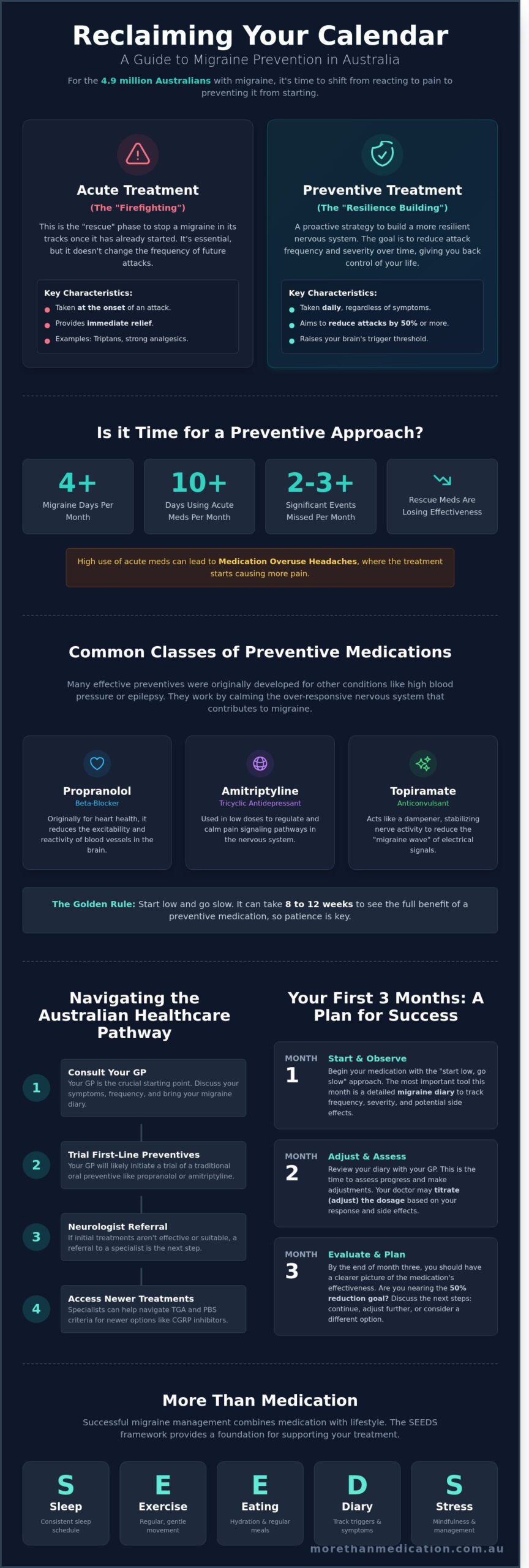
Living with migraine often feels like you’re constantly waiting for the next strike. Most people begin their journey with acute treatment, which is the “rescue” phase. You feel the familiar throb or aura, and you reach for a triptan or a strong analgesic to stop the pain in its tracks. This is firefighting. It’s essential, but it doesn’t change the underlying frequency of your attacks. Preventive treatment represents a fundamental shift in strategy. Instead of reacting to pain, you’re building a more resilient nervous system to stop the attack before it even begins.
The primary goal of medications migraine prevention isn’t always to reach zero attacks, though that’s a wonderful outcome when it happens. Clinically, Australian specialists look for a 50% or greater reduction in the frequency and severity of your episodes. These treatments work by “calming” an over-responsive nervous system over several weeks or months. You’re essentially raising the threshold of what triggers your brain, making you less susceptible to the bright lights, weather changes, or stress that used to floor you.
In Australia, the “4-day rule” is a common benchmark used by GPs and neurologists. If you’re experiencing 4 or more migraine days every month, the burden on your life is likely high enough to warrant a preventive approach. This threshold exists because frequent acute episodes can actually sensitise the brain, leading to a more chronic state. By introducing a preventive layer, you reduce the “disability” factor, allowing you to plan your life with more than just a few days of certainty at a time.
Signs it might be time for a preventive approach
You might notice that your usual “rescue” medications don’t pack the same punch they used to. This often happens when the brain becomes over-exposed to acute treatments. If you’re taking triptans or NSAIDs more than 10 to 15 days a month, you’re at high risk for “medication overuse headache.” This is a frustrating cycle where the medicine intended to help actually triggers more frequent pain. When you start missing more than 2 or 3 significant social or work events each month, your current toolkit needs an upgrade.
The psychological transition to daily management
It’s completely normal to feel a bit of resistance to the idea of a daily pill. You might feel that taking something every day makes you “sicker” than someone who only takes a pill when they have pain. We encourage you to reframe this. Taking a daily preventive is an act of autonomy. It’s a way to reclaim your schedule and your reliability. Many classes of migraine prevention medications are not meant to be lifelong. They’re often used for a period of 6 to 12 months to break a chronic cycle, giving your body the space it needs to find its balance again.
The Main Classes of Medications for Migraine Prevention
Finding the right medications migraine prevention strategy often feels like a series of trials. You might be surprised to learn that many of the most effective tools weren’t originally made for migraines. Doctors discovered that drugs for blood pressure or mood also helped calm the overactive brain signals that trigger an attack. This “repurposing” of medicine has become a cornerstone of treatment for many of the 4.9 million Australians living with this condition.
Beta-blockers, like propranolol, were designed for heart health. They work by reducing the excitability of blood vessels in your brain, making them less reactive to triggers. Anticonvulsants, such as topiramate, stabilize nerve activity. They act like a dampener on the “migraine wave” of electrical activity that often precedes the pain. These medications help lower the frequency of attacks so you can get back to your daily life.
Traditional oral preventives
In Australia, your GP will likely start with options like amitriptyline or propranolol. Tricyclic antidepressants are used at very low doses, usually starting at 10mg to 25mg, to regulate pain pathways rather than treat depression. You can find more detailed information on migraine diagnosis and treatment to understand how these fit into a broader clinical plan. The golden rule is to “start low and go slow.” This helps your body adjust and minimizes side effects like drowsiness or a dry mouth. It usually takes 8 to 12 weeks to see the full benefit, so patience is key.
- Propranolol: A beta-blocker that reduces vessel reactivity.
- Amitriptyline: A tricyclic that calms pain signaling.
- Topiramate: An anticonvulsant that reduces nerve over-activity.
The new frontier: CGRP inhibitors
The most recent breakthrough involves CGRP monoclonal antibodies. These are the first medications migraine prevention specifically engineered for this condition. They block a protein called Calcitonin Gene-Related Peptide, which levels rise significantly during an attack. Instead of a daily pill, these are often monthly self-injections. In Australia, the Pharmaceutical Benefits Scheme (PBS) provides subsidized access to these for patients who haven’t found relief with at least three traditional oral medications. This targeted approach offers a new level of hope for those who find daily tablets difficult to manage or ineffective.
Taking charge of your health is a journey that involves both clinical care and lifestyle shifts. You can explore more about building a holistic routine that supports your medical treatment and helps you find balance.
Navigating the Australian Healthcare Pathway for Migraine
Your GP is the anchor of your healthcare journey. They do more than just write prescriptions; they coordinate your entire path toward relief. In Australia, the Therapeutic Goods Administration (TGA) acts as the rigorous gatekeeper, ensuring that any treatment reaching your hands is both safe and effective. Once the TGA approves a treatment, the Pharmaceutical Benefits Scheme (PBS) often steps in to lower the cost. For many Australians, the PBS Safety Net provides additional peace of mind. As of 2024, once you reach the threshold of A$1,563.50 for general patients or A$262.80 for concession holders, your PBS medications become much cheaper or even free for the rest of the year. Finding the right medications migraine prevention involves understanding these systems so you can advocate for your own care.
Talking to your GP about prevention
Preparation transforms your appointment. It turns a brief consultation into a powerful strategy session. Bring a one-month headache diary that tracks frequency, intensity, and triggers. This data provides the clinical evidence your GP needs to justify a change in your management plan. You should also discuss any supplements or vitamins you currently take to avoid hidden interactions. Be honest about how often you reach for “rescue” meds. Using acute treatments more than 10 days per month can trigger medication overuse headaches, which often mimic chronic migraine symptoms.
Accessing specialized treatments
The Australian healthcare system follows a structured “step-through” requirement for newer, high-cost therapies. To access PBS-subsidized biologics, you generally need to show that at least three older classes of medications migraine prevention haven’t worked for you or caused intolerable side effects. This process ensures that treatments are used responsibly while prioritizing patient safety. To meet the specific Australian criteria for Chronic Migraine, you must experience at least 15 headache days per month, with 8 of those being migraines, for a period of 6 months or more.
If your condition remains complex, your GP will provide a referral to a neurologist. These specialists can offer deeper insights into various migraine treatment options tailored to your neurological profile. Remember that health is a moving target. Scheduling reviews every six months allows you and your doctor to assess if your current plan still supports your goals. It’s about finding a balance that lets you reclaim your days and focus on life beyond the pain.
How to Start a Preventive Routine: A 3-Month Plan
Starting a new treatment is a significant step toward reclaiming your life from the grip of chronic pain. It’s a commitment to your future self, but it requires a shift in perspective. Unlike acute treatments that stop a headache in its tracks, medications migraine prevention work by slowly retraining your nervous system. Most neurologists and GPs in Australia advise that it takes 8 to 12 weeks of consistent use to see the full clinical benefit of a preventive routine.
Your brain thrives on predictability. Taking your medication at the exact same time every day provides the chemical stability your “hyperexcitable” brain needs to stay calm. To track this journey, you should maintain a detailed migraine diary. Record the frequency of attacks, the intensity on a scale of 1 to 10, and any potential triggers. This data removes the guesswork from your next appointment, providing a clear map of your progress rather than relying on memory alone.
Managing side effects is often the hardest part of the first month. Many people experience mild symptoms like dry mouth, drowsiness, or changes in appetite during the first 14 days. These are usually temporary “adjustment” signals as your body adapts. If side effects persist beyond the initial three weeks or feel unmanageable, it may indicate a long-term intolerance, and you should consult your healthcare provider about alternative options.
The first 30 days: Patience and observation
During this first month, your primary goal is building the habit. Don’t feel discouraged if your attack frequency hasn’t dropped yet; you’re laying the foundation. Look for “early wins” instead. You might notice that your attacks are slightly shorter or that your acute medications work more effectively than they did before. The therapeutic window for migraine preventives is the specific dosage range where the medication successfully reduces attack frequency while remaining well-tolerated by your body.
The 90-day review: Is it working?
By the end of month three, it’s time to review your diary data objectively. A 50% reduction in migraine days is typically considered a major success in clinical terms. If you’ve seen a partial improvement, your doctor might suggest a dose adjustment to reach that therapeutic sweet spot. If there’s no change at all after 90 days, you’ve still gained valuable information; it simply means this specific class of medication isn’t the right fit for your unique biology, and it’s time to try a different path.
Ready to take the next step in your journey? Learn how to track your symptoms effectively to have more productive conversations with your doctor.
More Than Medication: Supporting Your Treatment with Lifestyle
Finding the right medications migraine prevention plan gives you a sturdy floor to stand on, but your lifestyle habits determine how high your ceiling for health can go. Your nervous system thrives on predictability. While prescriptions work to dampen the brain’s over-reactivity, your daily choices help lower the overall migraine threshold. This holistic approach ensures you aren’t just surviving between attacks, you’re actively building resilience.
The SEEDS acronym is a gold-standard framework used by Australian neurologists to help patients manage this journey:
- Sleep: Keep a strict wake-sleep schedule.
- Exercise: Aim for 30 minutes of moderate movement, such as walking, three times a week.
- Eating: Consume regular meals to prevent glucose dips.
- Diary: Track patterns to identify what your body needs.
- Stress: Use proactive relaxation techniques before tension peaks.
Evidence-based supplements also play a vital role. Clinical data published in the Australian Family Physician journal suggests that 400 mg of Riboflavin (B2) daily can reduce attack frequency by 50% for many individuals. Combining this with 400 to 600 mg of Magnesium and 150 mg of Coenzyme Q10 can further support cellular energy, making your medications migraine prevention strategy even more effective.
Nurturing a migraine-friendly rhythm
Sleep follows a “Goldilocks” principle. Too little rest triggers an attack, but sleeping in on a Saturday can be just as disruptive. Aim for a consistent seven to nine hours every night. Hydration is equally critical; drinking 2 to 3 litres of water daily prevents the physiological stress of dehydration. If you struggle with mid-afternoon energy crashes, pairing proteins with complex carbohydrates from fresh produce—a focus for online grocers like Shift 2 Fresh—can help keep your blood sugar stable. Gentle movement, like swimming or restorative yoga, improves circulation without the jarring impact that sometimes provokes a flare-up.
Empowerment through mindfulness and balance
Stress isn’t just a feeling; it’s a physical trigger that tightens muscles and shifts blood flow. Adopting a wellness toolkit that includes diaphragmatic breathing or progressive muscle relaxation helps break the stress-migraine cycle. You don’t need to spend hours in meditation. Five minutes of focused breathing twice a day can significantly calm a sensitized nervous system. You’re the expert on your own body. By blending your clinical treatment with these self-care rituals, you move from a place of reacting to pain to a position of empowered management. You have the tools to reclaim your days, one steady step at a time.
Since a significant source of chronic stress can stem from the workplace, creating a professional environment built on trust and transparency is often as important as personal wellness routines. Resources that focus on improving organizational culture, like those at coreintegrity.com.au, can provide valuable insights into how a healthier workplace contributes to overall wellbeing.
Similarly, managing responsibilities at home can be a major source of stress, especially for pet owners. Knowing your companion is in good hands during a difficult migraine day or when you need to travel for treatment provides incredible peace of mind. While based in the US, services like Mission Cats In-Home Care are a perfect example of how dedicated in-home support can reduce this anxiety, allowing you to focus entirely on your wellbeing.
The stress of travel itself can be a significant trigger, particularly if you need to fly long distances for specialized care or return home while unwell. In these situations, services like RN MEDflights provide medical escort and repatriation assistance, ensuring you can travel safely and with minimal stress, which is crucial for managing a chronic condition like migraine.
Your Path to Fewer Pain Days
Living with migraine is exhausting, but you don’t have to face it alone. You’ve learned that medications migraine prevention offer a way to get ahead of the pain rather than just reacting to it. In Australia, the Therapeutic Goods Administration (TGA) regulates these treatments to ensure they meet strict safety standards. Whether you’re starting a beta-blocker or exploring newer CGRP inhibitors, remember that most preventive routines require a consistent 12-week trial to truly measure success. It’s a process that demands patience and a steady partnership with your local GP.
Clinical treatment is a powerful tool, yet it’s only one piece of your health puzzle. Managing daily triggers and prioritizing your mental resilience creates the necessary space for these treatments to work effectively. We provide expert-led content reviewed specifically for Australian health contexts, offering empathetic guidance that looks beyond the prescription. You deserve a life that isn’t defined by your next attack. Explore more holistic wellness insights on our journey together as you take these small, brave steps toward reclaiming your days.
Frequently Asked Questions
How long does it take for preventive migraine medication to work?
You can typically expect to see a meaningful difference within 8 to 12 weeks of starting your treatment. It’s natural to want immediate relief when pain disrupts your life, but your nervous system needs this time to stabilize and respond to the therapy. Doctors usually recommend keeping a headache diary during these first 3 months to track subtle improvements in the intensity or duration of your attacks.
Can I stop taking preventive medication once my migraines go away?
You shouldn’t stop your medication abruptly just because you’re feeling better. Most Australian neurologists suggest staying on a successful preventive plan for 6 to 12 months before considering a very gradual dose reduction. Stopping too soon can cause a “rebound” effect where symptoms return quickly. Always talk to your GP to create a guided tapering plan that protects your hard-won progress and stability.
What are the most common side effects of migraine prevention drugs?
Side effects depend on the specific drug class, but about 20% of people experience mild symptoms like dry mouth, fatigue, or tingling in their hands. Some older medications might affect your sleep patterns or mood, while newer options are often better tolerated. If you notice changes that worry you, remember that there are over 10 different types of preventives available. Your doctor can help you switch to a better fit.
Is it safe to take preventive meds while also using acute rescue treatments?
It’s generally safe and quite common to use acute rescue treatments like triptans alongside your daily medications migraine prevention routine. These two approaches work together; the preventive lowers your overall brain sensitivity while the rescue drug stops an active attack in its tracks. However, you should limit rescue meds to fewer than 10 days per month to avoid medication overuse headaches, which can complicate your recovery journey.
Does the PBS cover the newer CGRP injection medications?
The Pharmaceutical Benefits Scheme (PBS) covers CGRP injections like Ajovy and Emgality for patients who meet specific clinical criteria. You must experience at least 15 headache days per month and have already tried 3 older preventive medications without success to qualify for the subsidy. This support reduces the cost from roughly A$300 per month to the standard PBS co-payment of A$31.60, or just A$7.70 for concession card holders.
Can lifestyle changes alone replace the need for preventive medication?
Lifestyle changes are a powerful foundation for health, but they often work best as a companion to medical treatment rather than a total replacement. Research suggests that consistent sleep, hydration, and stress management can reduce attack frequency by up to 30% for many people. While these habits empower you to take control, some neurological patterns require clinical support to fully settle. We view medicine as just one piece of your broader wellness puzzle.
What happens if the first preventive medication I try doesn’t work?
If your first medication doesn’t help, your doctor will transition you to a different class of drug with a different mechanism of action. Statistics indicate that approximately 40% of patients need to try a second or third option before finding their ideal match. This isn’t a sign that your condition is untreatable; it’s simply a process of elimination. Each step brings you closer to understanding what your body specifically needs to thrive.
Are there natural supplements that work as preventives for migraine?
Several evidence-based supplements can support your prevention goals, particularly 400mg of Riboflavin (Vitamin B2) taken daily. Clinical trials show that Magnesium and Coenzyme Q10 can also reduce the number of monthly headache days when used consistently for at least 3 months. While these are natural options, they still impact your biochemistry. It’s vital to discuss them with your pharmacist to ensure they don’t interfere with other parts of your treatment plan.