
What if the endless cycle of trial and error that makes you feel like a medical experiment finally ended with a treatment plan designed for your specific biology? You’ve likely spent years tracking triggers and trying medications that leave you foggier than the migraine itself. It’s exhausting to live with the constant anxiety of the next attack while trying to decode complex PBS eligibility rules. Finding the right balance of migraine drugs in Australia shouldn’t feel like a second job, yet for the 4.9 million Australians living with this neurological condition, the search for relief often feels lonely and overwhelming.
We understand that your health is about much more than just a prescription. This guide empowers you to manage the latest breakthroughs available in 2026, from preventive CGRP blockers to acute therapies that work without heavy side effects. You’ll gain the clarity needed to have a confident, balanced conversation with your GP and discover how to integrate clinical support with holistic lifestyle shifts. We’ll walk through the newest treatment options and practical steps to help you reclaim your days and find a sense of lasting resilience.
Key Takeaways
- Understand the vital difference between stopping an active attack and preventing future ones to build a more resilient, personalized treatment plan.
- Explore the evolving range of migraine drugs australia provides in 2026, from rapid-acting acute relievers to the newest preventive breakthroughs.
- Identify the specific milestones that signal it is time to move beyond temporary relief and explore long-term preventive options to break the chronic cycle.
- Learn how to empower your recovery by pairing medical treatments with holistic lifestyle adjustments like hydration and stable blood sugar for lasting balance.
- Navigate the Australian healthcare system with ease by uncovering how the Pharmaceutical Benefits Scheme (PBS) and safety nets can support your journey to affordable care.
Navigating Migraine Treatment in Australia: Where to Start?
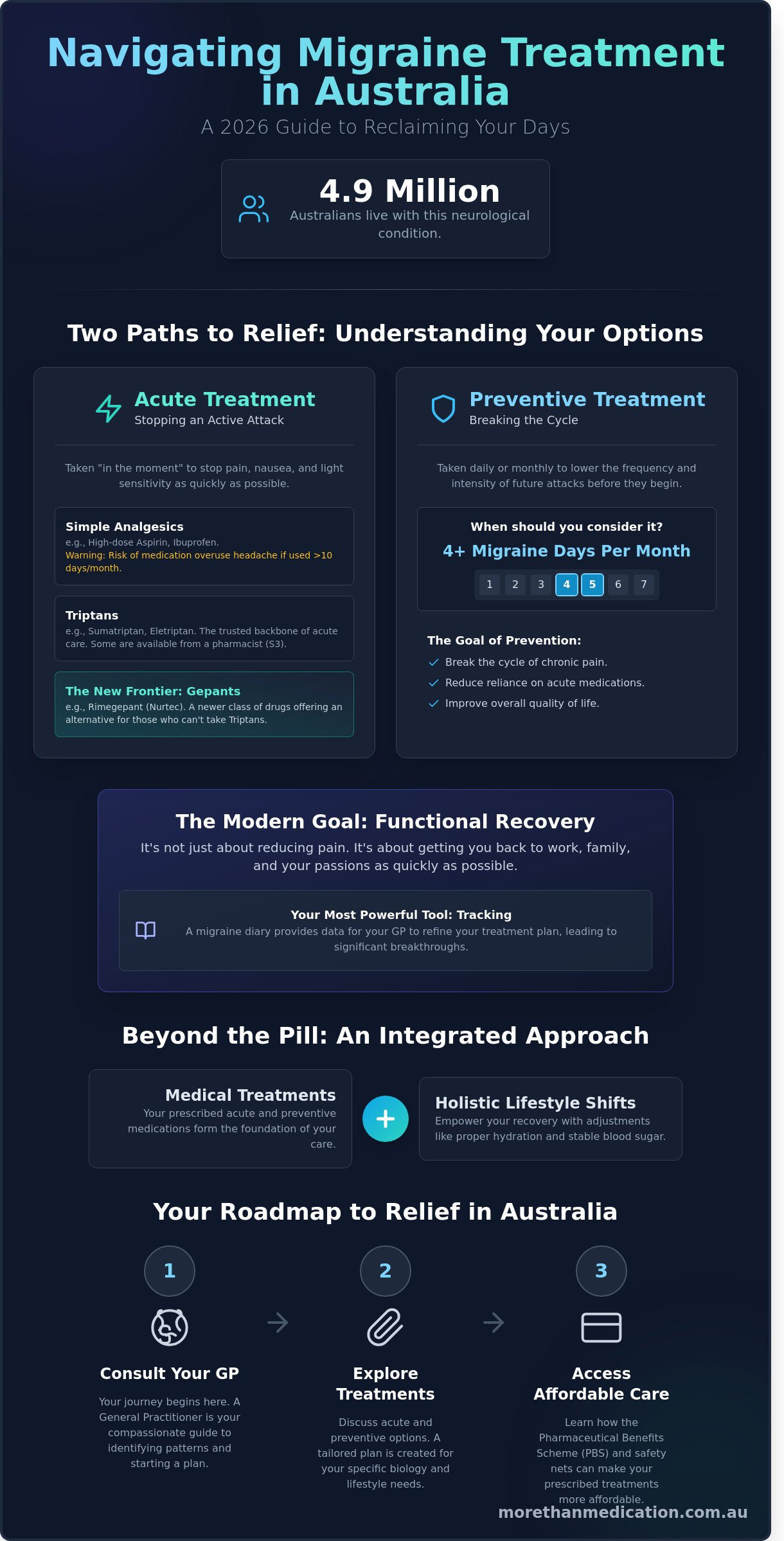
Living with migraine feels like you’re constantly negotiating with your own body. It isn’t just a bad headache; it’s a complex neurological condition that can halt your life without warning. According to data from Migraine Australia, over 4.9 million Australians live with this condition, yet many feel their pain is dismissed as simple tension. Finding the right migraine drugs australia offers isn’t just about a prescription. It’s about reclaiming the hours, days, and special moments that this condition often steals from your calendar.
Your journey usually begins in a GP’s consulting room. This is where you move from surviving to managing. Your doctor acts as a compassionate guide, helping you identify patterns and determine if your current approach is sufficient for your lifestyle. This process takes time and emotional energy. Acknowledging the weight of this struggle is the first step toward finding a solution that works for your unique biology. For a comprehensive overview of migraine symptoms and causes, understanding the underlying science can help you feel more empowered during these medical consultations.
Acute vs. Preventive: Knowing the Difference
Treatment usually falls into two distinct categories. Acute treatments, often called abortive therapies, are your “in the moment” tools. You take these as soon as you feel an attack starting. The goal is to stop the pain and associated symptoms like nausea or light sensitivity immediately. In Australia, common options include triptans or newer classes like gepants, which have become more accessible through the Pharmaceutical Benefits Scheme (PBS) in recent years.
Preventive treatments serve a different purpose. You take these daily or monthly to lower the frequency and intensity of attacks before they even begin. Most Australian specialists suggest exploring preventive options if you experience four or more migraine days per month. This shift in strategy aims to break the cycle of chronic pain and reduce your reliance on emergency relief medications.
The Goal of Modern Migraine Management
The ultimate objective has shifted from simply “reducing pain” to “functional recovery.” This means getting you back to work, family, and hobbies as quickly as possible. To see if your migraine drugs australia regimen is working, tracking is vital. Using a digital diary to record the number of attacks and their severity provides your doctor with the data needed to adjust your plan. Small, actionable steps in tracking can lead to significant breakthroughs in your care.
We understand that finding the right balance is a deeply personal process. If you want to explore the broader landscape of available treatments, visit our guide on Migraine Therapy Drugs: Navigating Your Path to Relief. True healing involves looking at the whole person, because you’re always more than just a diagnosis.
Stopping the Attack: Acute Migraine Medications in 2026
When a migraine strikes, your world can feel like it’s closing in. You need relief that works fast to reclaim your day. In 2026, the landscape for migraine drugs australia offers more choice than ever before, moving beyond basic pain management toward targeted therapies. For many, the journey starts at the local chemist with simple analgesics like high-dose aspirin or ibuprofen. While these are accessible, they often fall short for moderate to severe attacks. Using them more than 10 days a month can lead to medication overuse headaches, creating a frustrating cycle that’s hard to break.
Triptans: The Trusted Relief
Triptans have been the reliable backbone of acute care for decades. Medications such as Sumatriptan (Imigran), Eletriptan (Relpax), and Rizatriptan (Maxalt) work by narrowing swollen blood vessels and blocking pain signals in the brain. Since the TGA reclassified certain pack sizes as Schedule 3 (S3) medicines, you can now access some triptans directly from a pharmacist without a prescription. This change has empowered many Australians to manage their symptoms earlier. Understanding Migraine management in Australia is essential to ensure you’re using these tools safely and effectively.
The New Frontier: Gepants (Rimegepant)
The arrival of Rimegepant (Nurtec) on the Australian market marks a significant shift in how we treat attacks. Unlike older migraine drugs australia, Rimegepant is a CGRP receptor antagonist. It doesn’t constrict blood vessels, making it a safer alternative if you have cardiovascular concerns or don’t tolerate triptans well. In Australia, it’s unique because it can both stop an active attack and help prevent future ones. Clinical data shows that gepants carry a much lower risk of rebound headaches, providing a gentler path for your brain to recover without the fear of a secondary flare-up.
Managing Nausea and Side Effects
A migraine is rarely just about head pain. Nausea can be just as debilitating, often preventing your body from absorbing oral medication. Taking an antiemetic (anti-nausea drug) alongside your pain relief can improve the effectiveness of the treatment. You should aim to take your medication at the very first sign of an aura or the initial “thrum” of pain. If you’re looking for more details on what’s available without a script, check out our Over the Counter Migraine Medication Guide. Remember, medicine is only one part of your toolkit. Finding holistic balance through hydration and rest is equally vital to your recovery.
Breaking the Cycle: Preventive Options for Chronic Migraine
Living with frequent attacks often feels like you’re constantly walking on eggshells, waiting for the next storm to break. If you find yourself reaching for acute relief more than twice a week, it’s likely time to look beyond just stopping the pain. Prevention is about reducing the frequency and severity of attacks before they begin. According to Migraine & Headache Australia, over 4.9 million people in the country navigate this journey, and many find that a proactive approach is the key to reclaiming their daily lives.
Traditional Preventive Medications
Many doctors start by recommending established medications that have supported patients for decades. These include beta-blockers like Propranolol, antidepressants such as Amitriptyline, and anticonvulsants like Topiramate. While these weren’t originally designed for headaches, they’ve become essential migraine drugs australia relies on for long-term management. Specialists typically follow a “start low, go slow” strategy. This allows your system to gently adapt, which helps manage potential side effects while finding the lowest effective dose. You can explore these choices further in our detailed guide on Medications for Migraine Prevention.
CGRP Monoclonal Antibodies: Targeted Prevention
The landscape changed significantly in the 2020s with the introduction of CGRP monoclonal antibodies. Medications like Emgality, Ajovy, and Vyepti are specifically engineered to target the CGRP protein, a known trigger for migraine pain. These migraine drugs australia offers provide a level of precision that older medications lack. Instead of a daily pill, most of these treatments involve a simple monthly self-injection. This convenience helps you move away from the daily reminder of your condition. Clinical data suggests high success rates; many patients experience a 50% or greater reduction in their monthly migraine days. They also tend to have a much lower side-effect profile, making them a gentle yet powerful option for your toolkit.
- Emgality and Ajovy: Monthly self-administered injections that offer a “set and forget” convenience compared to daily tablets.
- Vyepti: An intravenous infusion administered every three months in a clinical setting for those who prefer less frequent dosing.
- Success Rates: Roughly 1 in 2 patients see their migraine days halved, with some becoming “super-responders” who see even greater improvements.
For those living with chronic migraine, defined as 15 or more headache days per month, Botox remains a vital clinical option. Administered by a specialist every 12 weeks through small injections around the head and neck, it helps desensitize the pain pathways over time. Remember, finding the right preventive path is a journey of patience and partnership with your doctor. It’s about more than just a prescription; it’s about building a foundation of resilience so you can focus on the life you want to lead.
Beyond the Pill: Integrating Lifestyle and Medication
While modern migraine drugs australia provides are more effective in 2026 than ever before, they are most powerful when paired with a supportive lifestyle. You can think of medication as a high-performance engine; it still requires the right fuel and maintenance to run smoothly. Your body isn’t a machine, but its neurological systems thrive on predictability. When you maintain stable blood sugar and deep hydration, you create a buffer that allows your preventive treatments to work without interference. It’s about creating a partnership between your biology and your pharmacy.
Movement also plays a vital role here. Instead of viewing exercise purely as a fitness goal, try to see it as a tool for resilience. Gentle, consistent movement helps regulate the nervous system, making it less reactive to the shifts in light, sound, or weather that often precede an attack. It’s about teaching your body that it’s safe, even when the environment is unpredictable. This holistic approach ensures that you aren’t just treating a symptom but nurturing your entire self.
Nutrition and Trigger Management
What you eat influences how your brain responds to pain signals. Clinical evidence highlights that 400mg of Riboflavin (B2) and 600mg of Magnesium daily can significantly support neurological stability for many people. These supplements don’t replace your prescription, but they reinforce the foundation your medication sits upon. We define the migraine threshold as the point where the cumulative weight of triggers exceeds your body’s natural resilience. By focusing on whole foods and regular meal times, you keep that threshold as high as possible to avoid crossing into a flare-up.
Mental Wellbeing and Stress Resilience
The emotional weight of chronic migraine is heavy. High levels of anxiety and poor sleep hygiene increase your allostatic load, which is the cumulative wear and tear on your body from chronic stress. This load makes you more vulnerable to attacks. Mindfulness isn’t just about relaxation; it’s a practice that can change your brain’s perception of pain over time. Try to adopt a compassionate view of your body when a flare-up occurs. Your system is doing its best to protect you, even if the result is painful and frustrating.
- Prioritise Sleep: Aim for the same wake-up time every day to keep your circadian rhythm steady.
- Hydrate Early: Start your morning with a large glass of water to counteract overnight dehydration.
- Mindful Moments: Dedicate five minutes to deep breathing to lower your heart rate and reduce stress chemicals.
Your journey toward relief is about more than just a prescription. It’s about finding the right balance between clinical support and daily habits that empower you. Learn how to build your personal migraine management plan to support your physical and mental wellbeing.
Your Roadmap to Relief: Accessing Care in Australia
Finding the right support for your health journey often feels like a full-time job. We know the exhaustion that comes with seeking the migraine drugs australia professionals recommend while managing the weight of your daily life. The Australian healthcare system is robust, but it requires a strategic approach to ensure you get the best care without unnecessary financial strain.
Navigating the PBS and Costs
The Pharmaceutical Benefits Scheme (PBS) is designed to make modern treatments accessible. However, for high-cost medications like CGRP monoclonal antibodies, the PBS mandates a failure of prior treatments rule. This means you must have tried and found three classes of older preventive medications ineffective or intolerable before the government subsidises these newer options. It’s a hurdle, but your GP can help you document this history to meet the clinical criteria.
Keep a close eye on the Medicare Safety Net. In 2024, once your out-of-pocket costs for out-of-hospital services reach A$2,641.40 for individuals or families, your PBS co-payments become significantly cheaper. This safety net resets every January 1, providing a predictable cycle for managing chronic health expenses. While private health insurance is excellent for hospital-based treatments, it rarely covers the cost of the drugs themselves when they are dispensed at a community pharmacy.
Preparing for Your GP Visit
A high-value consultation starts with clear data. Bring a headache diary covering the last 90 days to your appointment. This record proves the frequency and severity of your attacks, making it much easier for your doctor to prescribe the most effective migraine drugs australia offers for your specific profile. It moves the conversation from vague memories to clinical facts.
Ask your doctor for a formal Migraine Action Plan. This document acts as a manual for your life, outlining exactly what to do during an acute attack and how to manage your daily preventive routine. It bridges the gap between the clinic and your home life, giving you back a sense of control. During your visit, don’t hesitate to ask these specific questions:
- What are the most common side effects for this specific dose?
- How many weeks should I wait before we assess if this treatment is working?
- Are there lifestyle adjustments that will make this medication more effective?
You’re more than your diagnosis. While medicine provides the biological foundation for relief, your commitment to understanding your body’s signals is what builds long-term resilience. You aren’t walking this path alone; your medical team and support network are right there with you as you navigate the ups and downs of your recovery.
Taking the Next Step Toward a Brighter, Clearer Future
Managing chronic pain is a deeply personal journey, but you don’t have to walk it alone. The landscape for migraine drugs australia has transformed significantly by 2026, offering more targeted options than ever before. You’ve seen how the Pharmaceutical Benefits Scheme (PBS) now provides broader access to advanced CGRP inhibitors, and how acute treatments have become more precise. While these clinical breakthroughs are vital, true resilience comes from balancing medical science with everyday lifestyle adjustments that nurture your whole self.
Finding the right rhythm for your health means looking at the big picture. It’s about combining expert-led health insights with an empathetic, patient-first approach that respects your unique experience. We provide the evidence-based wellness guidance you need to feel empowered and in control again. You deserve a life that isn’t defined by the next attack, and small, manageable steps today can lead to lasting relief tomorrow.
Explore more ways to find balance in your health journey with More Than Medication
You’re stronger than any diagnosis, and we’re honored to be a steady presence by your side as you reclaim your wellbeing.
Frequently Asked Questions
What is the strongest migraine medication available in Australia?
The most effective migraine drugs in Australia for acute relief are usually triptans, while CGRP monoclonal antibodies like Aimovig lead the way for prevention. Your doctor might suggest a triptan if standard pain relief fails, as these target specific brain pathways. For those with 15 or more headache days a month, CGRP injections can reduce migraine frequency by 50% or more. Finding your strongest option is a personal journey that starts with a specialist consultation.
Can I get migraine triptans over the counter at an Australian pharmacy?
You can purchase specific migraine triptans over the counter at your local pharmacy without a script. In Australia, sumatriptan 50mg tablets became available as a Pharmacist Only medicine in February 2021. While you don’t need a doctor’s referral, you must have a confirmed diagnosis from a GP first. The pharmacist will check your history to ensure it’s safe for you, as these medications aren’t suitable for everyone with heart conditions.
How does the PBS subsidise new migraine drugs like CGRP injections?
The Pharmaceutical Benefits Scheme (PBS) subsidises CGRP injections for patients who experience at least 15 headache days per month. To qualify, you must have tried and failed three older preventative treatments first. This subsidy reduces the cost from over A$600 per month to the standard PBS co-payment of A$31.60. It’s a vital part of making modern migraine drugs australia accessible, ensuring your financial health is supported alongside your physical recovery.
What should I do if my current migraine medication stops working?
If your medication feels less effective, you might be experiencing medication overuse headache, which affects about 1% of the population. This happens when using acute treatments more than 10 days per month. Don’t feel discouraged; it’s a common hurdle on the path to relief. Your first step is to track your attacks in a diary for 30 days. Then, book a review with your GP to discuss switching to a preventative strategy that breaks the cycle.
Are there any new migraine drugs coming to Australia in 2026?
The Australian market expects expanded access to oral gepants like rimegepant and atogepant throughout 2026. While the TGA approved these options recently, 2026 marks a turning point for wider PBS listings that make them affordable for more families. These small molecule drugs offer a needle-free alternative to CGRP injections. Staying informed about these updates helps you feel empowered, knowing that the landscape of migraine care is constantly evolving with better, more accessible choices.
Is it safe to take migraine drugs while pregnant or breastfeeding?
Managing migraines while pregnant requires a gentle, cautious approach, as many standard medications aren’t recommended during this time. Paracetamol remains the primary choice, while most triptans and newer CGRP drugs are generally avoided due to limited safety data. It’s a delicate balance between your comfort and your baby’s safety. Always consult your obstetrician before taking any migraine drugs australia to create a personalized plan that prioritizes your wellbeing and peace of mind.
What is the difference between a gepant and a triptan?
Triptans work by mimicking serotonin to narrow blood vessels, while gepants block a protein called CGRP that causes inflammation. This is a significant difference because gepants don’t constrict your arteries; this makes them safer for people with certain heart risks. While triptans have been the gold standard since the 1990s, gepants offer a modern alternative with fewer side effects like chest tightness. Both play important roles in your toolkit for managing pain effectively.
Can lifestyle changes actually make my migraine medication work better?
Lifestyle adjustments act as a foundation that helps your medication perform its best. Research shows that maintaining a consistent sleep routine and staying hydrated can reduce the excitability of your brain. Think of medicine as the tool and lifestyle as the environment. When you manage stress and triggers, you lower your overall threshold for attacks. This holistic approach reminds us that health is about more than just a pill; it’s about nurturing your whole self.