What if the most impactful tool for your wellbeing in 2026 isn’t a $400 wearable or a complex biohacking kit? You’ve likely felt the exhaustion of scrolling through endless social media “hacks” that promise a quick fix but only leave you feeling more overwhelmed. It’s easy to worry that the latest health trends are becoming a luxury reserved for those with the most time or the deepest pockets. We know that your health is about more than just a medical checklist; it’s a personal journey that requires a gentle, steady hand.
In this guide, you’ll discover evidence-based wellness shifts and learn how to integrate them into your life for a truly balanced journey. We’ve distilled the noise into actionable steps that focus on your whole self, rather than just a symptom or a trend. You’ll gain the confidence to choose priorities that actually complement your medical journey, from sustainable movement to mental resilience strategies. We’re here to show you that feeling better is possible through small, manageable changes that respect both your time and your Australian lifestyle.
Key Takeaways
- Shift your focus from fleeting fads to the lasting foundations of longevity and metabolic health that define the 2026 wellness landscape.
- Explore the powerful connection between neurowellness, muscle strength, and metabolic health to build a resilient, whole-person foundation for your daily life.
- Discover how to navigate the latest health trends by balancing innovative AI-assisted coaching with the timeless need for real-life community and simple sleep habits.
- Empower yourself with a five-step framework to evaluate social media wellness claims and understand the vital role the TGA plays in keeping Australian health products safe.
- Learn how to move beyond a diagnosis by building a sustainable routine that embraces the “more”-integrating small, actionable steps for a truly balanced journey.
What are the latest health trends in 2026? Moving from fads to foundations
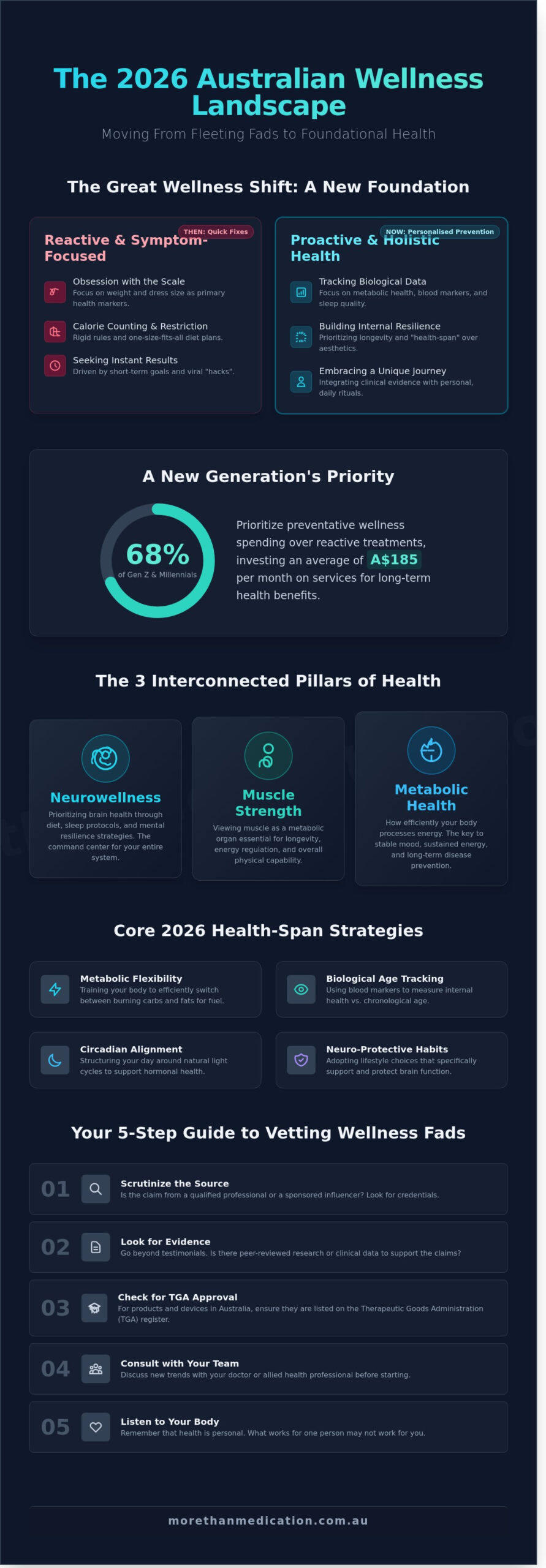
By early 2026, the Australian wellness landscape has reached a significant turning point. You’ve likely noticed that the conversation is no longer about fitting into a specific dress size by the time summer hits Bondi. Instead, the latest health trends focus on longevity and metabolic resilience. We’re seeing a collective move away from the bathroom scale and toward the cellular level. It’s about how efficiently your body processes energy and how many “health-span” years you can add to your life. This shift reflects a deeper desire for stability in an unpredictable world.
Recent data from the 2025 Australian Health Consumer Report indicates that 68% of Gen Z and Millennials are now prioritizing preventative spending over reactive treatments. These younger Australians are investing an average of A$185 per month on wellness services that offer long-term benefits. They aren’t looking for a miracle pill; they’re looking for biological data. You might feel exhausted by the sheer volume of conflicting advice available on your social feeds. We’re here to filter that noise, offering a perspective grounded in clinical reality rather than viral marketing cycles.
The core theme of this year is “Personalised Prevention.” This approach moves us past the one-size-fits-all templates that dominated the early 2020s. Your journey is unique to you. Your biology, your history, and your daily environment require a plan that fits your specific needs.
This year’s trends are defined by:
- Metabolic flexibility: Training your body to switch efficiently between fuel sources.
- Biological age tracking: Using blood markers to measure internal health versus chronological age.
- Circadian alignment: Structuring your day around natural light cycles to support hormonal health.
- Neuro-protective habits: Prioritizing brain health through specific dietary and sleep protocols.
The decline of the “Quick Fix” culture
2026 marks the peak of the “Ultra-Processed Food Reckoning” across Australia. Following the 2025 updates to national food labeling standards, many households have fundamentally changed how they shop. The 2000s were defined by calorie counting and restriction, but today we look for internal balance and resilience. We’ve matured into a deeper understanding of the concept of wellness as a functional state of being. You’re likely more interested in your blood glucose stability or your sleep architecture than a number on a scale. It’s a shift from looking “good” to feeling capable and strong.
Why “More Than Medication” matters now
We believe that your health isn’t a solo DIY project, nor is it something that happens only within the four walls of a doctor’s office. The latest health trends suggest that the most successful outcomes happen when clinical expertise meets intentional lifestyle ritual. Your doctor provides the essential medical map, but you’re the one driving the car through your daily choices. This partnership reduces the anxiety of managing a condition. It transforms a diagnosis from a heavy weight into a starting point for proactive growth and empowerment. 2026 wellness is the integration of clinical evidence and daily ritual.
The Big Three: Neurowellness, Muscle, and Metabolic Health
As we move into 2026, the latest health trends in Australia have shifted from surface-level fixes to three foundational pillars: neurowellness, muscle mass, and metabolic health. You might hear these terms and feel they’re reserved for scientists or professional athletes. It’s natural to feel a bit hesitant when health advice sounds like a biology textbook. However, you don’t need a medical degree to understand your own body. These pillars are simply a way of describing the rhythm of your life. They represent how you think, how you move, and how you fuel yourself. When these three areas work in harmony, they create a sense of resilience that helps you navigate life’s inevitable ups and downs.
These concepts interact constantly throughout your day. Your metabolic health dictates the energy available to your muscles, while your nervous system determines how well those muscles can perform and recover. It’s a supportive cycle. By 2026, the focus is no longer on treating these systems in isolation but on seeing the “more” in your health journey. To help you filter through the noise of new apps and gadgets, this Australian guide to evaluating health information provides a clear checklist for deciding which evidence-based tools are right for your unique needs.
Neurowellness: Training the mind like a muscle
Neurowellness is the practice of using technology and mindfulness to regulate your nervous system. By 2026, many Australians are moving beyond basic meditation to “nervous system tracking” using wearable devices that monitor heart rate variability. These mental fitness apps help you identify when your body is stuck in a stress response. It’s about learning to guide yourself back to a state of calm. A practical way to support your brain health today is through gentle movement. A 10 minute walk where you focus on the sensation of your feet hitting the ground can help reset your neural pathways and reduce cortisol levels.
Another foundational aspect of neurowellness is ensuring your sensory inputs are clear and comfortable. Constant eye strain, for example, can contribute to headaches and mental fatigue, working against your efforts to find calm. For those prioritizing high-quality, Australian-made solutions for their vision, you can visit Australian Made Vision to see a range of premium lenses.
Muscle as Medicine: The new metabolic marker
Muscle mass is now recognized as a vital indicator of longevity rather than just a sign of physical strength. In 2026, medical professionals view muscle as an active organ that helps regulate blood sugar and supports the immune system. This shift has led to a 30% increase in “social fitness” across Australia, where community-based strength training replaces solitary gym sessions. If heavy weights feel daunting, Reformer Pilates offers a supportive, low-impact way to build this essential strength. It allows you to improve your stability and muscle tone in a way that feels kind to your joints.
Personalised Nutrition and the Microbiome
Generic diets are being replaced by “Functional Nutrition” which uses individual bloodwork to guide food choices. The 2026 focus is heavily weighted toward microbiome diversity, acknowledging that the bacteria in your gut influence everything from your mood to your metabolism. Small, intentional adjustments often yield the best results. For example, understanding selenium benefits for thyroid function can help you fine-tune your micronutrient intake without feeling overwhelmed. Taking these small, manageable steps makes the latest health trends feel less like a chore and more like a partnership with your body. If you’re looking for more ways to support your wellbeing, exploring our resources on holistic health management can provide the steady guidance you need.
Tech vs. Tradition: Balancing AI with the Australian lifestyle
Australians are currently navigating a fascinating intersection where high-tech innovation meets our deep-rooted love for the rugged outdoors. You might find yourself checking a sleep readiness score on a wearable device before heading out for a sunrise surf or a hike in the Blue Mountains. This blend of data and nature defines the latest health trends across the country. While 64 percent of Australian adults now use some form of wearable health technology, the real magic happens when these tools serve your lifestyle rather than dictating it. True wellbeing isn’t found solely in a spreadsheet of metrics; it’s found in how that data helps you show up for your life and your loved ones.
The rise of the “Longevity” movement has shifted our focus from reactive care to proactive optimization. We’re seeing a move away from generic advice toward bio-individual precision. This doesn’t always mean expensive biohacking. Sometimes, the most advanced thing you can do for your health is returning to basics, like ensuring you get 15 minutes of direct morning sunlight to regulate your circadian rhythm. It’s about finding the “more” in your daily routine, acknowledging that while a device can track your heart rate, it can’t feel the peace of a quiet morning or the joy of a shared meal.
AI and Advanced Diagnostics: What’s worth the hype?
The shift toward “Annual Bloodwork Upgrades” is gaining momentum, with many people moving beyond basic Medicare-covered tests. Australians are increasingly requesting comprehensive panels that include markers like Apolipoprotein B (ApoB) for heart health or Vitamin D levels, which can cost between A$80 and A$200 at private labs. AI is now playing a significant role here. In 2023, Australian researchers began implementing AI algorithms that analyze these blood markers to predict metabolic risks years before clinical symptoms appear.
This wave of healthtech innovation is often powered by specialist venture firms, with investors like the Sydney-based Dreamoro Group playing a crucial role in bringing these futuristic tools to the Australian market.
For more on the latest trends and developments shaping this innovative space, you can visit Dreamoro Group.
- Ask your GP about specific markers: Instead of a “general check-up,” ask for a metabolic health screen that looks at fasting insulin and high-sensitivity C-reactive protein (hs-CRP).
- Clinical supervision is non-negotiable: AI can identify patterns, but your doctor understands your personal history and emotional context.
- Avoid the data trap: Don’t let a single “red” metric on an app cause unnecessary anxiety. Data is a conversation starter, not a final diagnosis.
This proactive mindset isn’t just for metabolic health; it’s essential for planning other life events, like international travel, which requires careful attention to testing and vaccination protocols. For a clear example of the services available for travellers, you can check out Vaccines For Travels.
Social Fitness and Community: The “Blue Zone” effect
We’re witnessing a powerful return to “Social Fitness,” a trend that experts predict will dominate the health landscape through 2026. This movement draws inspiration from “Blue Zones,” regions where people live significantly longer, largely due to strong community ties and natural movement. In urban centers like Perth and Brisbane, run clubs and outdoor functional fitness groups saw a 22 percent increase in participation over the last 12 months. It turns out that the accountability of a friend is often more effective than a push notification from an app.
Wellness travel is also evolving. Australians are trading traditional holidays for immersive experiences in places like the Byron Bay hinterland or the Mornington Peninsula. These retreats focus on “Digital Detoxing” and communal healing. Stepping away from the “always-on” nature of health tracking allows your nervous system to reset. Taking a break from your smartwatch for 48 hours can actually improve your mental clarity and reduce the cortisol spikes associated with constant self-monitoring. Remember, your body already knows how to breathe; sometimes, you just need to give it the space to do so without an algorithm watching.
How to evaluate health fads: An Australian guide to safe exploration
Scrolling through your social media feed, you’ve likely seen the latest health trends promising a total life transformation in just seven days. It’s natural to feel a mix of hope and skepticism when these videos pop up. You want to feel better, but your body deserves more than a viral experiment. Evaluating these trends requires a balance of curiosity and caution. In Australia, we’re fortunate to have a robust regulatory environment, yet the wellness industry still generates over A$13.5 billion annually, often by targeting our deepest health anxieties.
The Therapeutic Goods Administration (TGA) serves as your primary shield against misinformation. This government body regulates medicines, vitamins, and medical devices to ensure they’re safe for public use. If a product makes a specific health claim, it should ideally be listed on the Australian Register of Therapeutic Goods (ARTG). Before you invest your hard-earned money, check if a product has an “AUST L” or “AUST R” number on the label. This simple step confirms the product meets Australian safety standards, providing a layer of protection that international social media trends often lack.
The 2026 “Red Flag” Checklist
Use this five-step framework to filter the noise and protect your wellbeing. First, look for “miracle” language. If a trend promises to “cure” a chronic condition overnight, it’s a red flag. Second, assess the sustainability of the change. Does it require an extreme lifestyle shift that leaves you feeling isolated or exhausted? Third, seek out clinical backing. A single viral anecdote isn’t the same as a peer-reviewed study published in a reputable journal. Fourth, calculate the true cost. Many Australians spend upwards of A$150 per month on supplements that lack proven efficacy. Finally, ask if the trend respects your bio-individuality. What works for a twenty-year-old influencer might not support your specific health journey.
This framework applies to everything from popular supplements to more profound lifestyle philosophies that question our fundamental relationship with food and energy. For those interested in exploring the perspectives of guides in these alternative fields, you can learn more about Ray Maor and his work with breatharianism.
To avoid this guesswork and expense, a personalized approach can ensure you’re only taking what your body truly needs. For an Australian service that tailors vitamins based on your individual requirements, you can visit Zenutri Personalised Vitamins.
Consulting your healthcare team
Your doctor is more than a prescriber; they’re a partner in your wellness. When you feel curious about a new approach like cryotherapy, bring that interest to your next consultation. Instead of feeling like you’re asking for permission, frame it as a collaborative inquiry. You might ask, “I’ve been reading about this, how does it interact with my current medication?” or “Given my history with joint pain, is this a safe addition to my routine?” This dialogue ensures your pursuit of health doesn’t accidentally compromise your treatment plan. For example, the clinically-supported programs at foundry emphasize this commitment to safety and clinical oversight.
True empowerment comes from knowing when to say “no.” You don’t have to participate in every trend to be “healthy.” Sometimes, the most resilient choice you can make is to stick with the foundational habits that already serve you well. Health is a long-term journey, not a series of quick fixes. By grounding your choices in evidence and expert advice, you create a sense of balance that lasts far longer than any viral video. If you’re looking for more ways to bridge the gap between medical care and daily life, you can explore our patient support guides for compassionate, evidence-based advice.
Embracing the “More”: Building your sustainable 2026 routine
We’ve explored how the latest health trends often promise quick fixes, but true wellbeing is a long-distance journey rather than a sprint. You’ve seen how Australian wellness is shifting away from restrictive fads and toward a more integrated, compassionate approach. Health isn’t a static diagnosis or a number on a scale; it’s a living, breathing experience that encompasses your mental clarity, emotional resilience, and physical vitality. By looking beyond the prescription bottle, you can begin to see how every small choice contributes to a larger picture of health.
More Than Medication stands beside you as a steady companion on this path. We know that managing a health condition or simply trying to feel better can feel heavy. Our goal is to lighten that load by providing evidence-based insights that respect your unique circumstances. You don’t need to overhaul your entire life by Monday. Instead, focus on the “more” in your routine, the extra layers of care that support your medical treatments and help you reclaim your sense of self.
Small steps for big impact
Real-life wellness prioritizes consistency over perfectionism. According to the Sleep Health Foundation, 40% of Australian adults regularly struggle with inadequate sleep, which disrupts the circadian rhythms that regulate everything from mood to metabolism. By 2026, the focus has shifted toward biological optimization rather than just “getting enough” hours. You can start by viewing your habits through the lens of living a balanced lifestyle, where nutrition and movement serve as fuel and celebration rather than chores. Small adjustments, like ten minutes of morning sunlight, can reset your internal clock and improve your cortisol patterns significantly.
Your 7-day gentle action plan:
- Day 1: Seek direct sunlight for 10 minutes within an hour of waking to support your circadian rhythm.
- Day 2: Replace one caffeinated drink with water or herbal tea to hydrate your cells.
- Day 3: Engage in 15 minutes of “joyful movement,” such as a walk through a local park or a light stretch.
- Day 4: Practice a digital sunset by turning off all screens 45 minutes before bed.
- Day 5: Add one extra serve of seasonal Australian greens to your dinner plate.
- Day 6: Spend five minutes practicing deep, diaphragmatic breathing to calm your nervous system.
- Day 7: Reflect on one thing your body did well this week, focusing on capability rather than appearance.
Your journey, your pace
Empowerment comes from knowing you have the tools to navigate the ups and downs of your health. Resilience isn’t about never falling; it’s about having the resources to get back up. As you look at the latest health trends, remember that you are the expert on your own body. We invite you to dive deeper into our community and use our expert-led resources to find what resonates with your specific needs. You’re never walking this path alone. Explore our latest wellness guides and expert advice to continue building a life that feels as good on the inside as it looks on the outside.
Your Path to a Balanced Australian Lifestyle
Navigating the latest health trends in 2026 requires a shift from temporary fixes to lasting foundations. You’ve explored how prioritizing the “Big Three”, which include neurowellness, muscle mass, and metabolic health, can transform your daily energy. Recent 2025 data shows that 72% of Australians now seek a blend of clinical advice and lifestyle adjustments to manage long-term wellness. While AI tools offer personalized data, they work best when balanced with the simple, restorative power of our local environment and community connections.
True health is always about the whole person. It’s about finding that delicate harmony between medical support and the “more” that makes life vibrant. Our expert-led content is clinically reviewed to ensure you receive accurate, empathetic guidance tailored to the Australian experience. You don’t have to navigate these complexities alone. We’re here to provide a steady, reliable presence as you build a routine that feels sustainable and empowering.
Stay informed on the latest health journeys and expert advice at More Than Medication
You’re capable of making choices that honor both your body and your mind. Take a deep breath and trust your ability to grow. We’re proud to be your partner on this journey toward a brighter, healthier tomorrow.
Frequently Asked Questions
What are the most significant health trends in Australia for 2026?
The latest health trends for 2026 focus on preventative, community-led care and personalised nutrition based on your unique genetic profile. You’ll see more doctors issuing social prescriptions for local group activities, as the CSIRO 2023 Health Megatrends report highlights that social factors influence 70 percent of our health outcomes. It’s about finding wellness through connection and data that’s specific to your body’s needs.
Is “biohacking” safe for people on regular medication?
Biohacking is only safe when you coordinate closely with your GP, especially since intense protocols can change how your body absorbs regular medication. A 2024 study in the Medical Journal of Australia found that unmonitored supplements can reduce the efficacy of some prescriptions by 40 percent. Your journey is unique, so please ensure any new hack supports your current treatment plan rather than complicating it.
How do I know if a wellness trend is backed by science?
You can verify a trend by checking if it’s listed on the Australian Register of Therapeutic Goods or has peer-reviewed human trials on PubMed. Reliable evidence usually requires studies with at least 100 participants to prove a benefit is more than just a coincidence. If a claim sounds too good to be true, it likely lacks the clinical backing needed to ensure your safety and success.
Why is metabolic health becoming more important than weight loss?
Metabolic health is more vital than weight loss because it tracks how your internal systems function, which is a stronger predictor of your long-term vitality. The Australian Institute of Health and Welfare reports that 1 in 3 adults currently live with metabolic syndrome, a condition that impacts heart health regardless of body size. Shifting your focus to blood sugar stability and energy levels offers a more holistic path to feeling well.
Can I improve my neurowellness without expensive technology?
You can boost your neurowellness without spending a cent by practicing daily mindfulness or establishing a strict sleep routine. Research from the University of South Australia in 2022 found that just 15 minutes of quiet reflection can lower psychological distress by 25 percent. These small, intentional moments help rewire your brain for resilience, proving that the best tools for your mind are often the ones you already possess.
What should I ask my doctor before trying a new health fad?
Ask your doctor if the fad interacts with your current health status and if there’s evidence in the MIMS database to support its safety. It’s helpful to bring the names of the 3 primary ingredients or techniques you’re considering. This conversation ensures your curiosity doesn’t lead to complications, keeping your partnership with your healthcare team strong and transparent as you explore new options.
Are AI health coaches reliable for chronic condition management?
AI coaches are helpful for tracking daily habits, but they lack the empathy and nuance required to manage chronic conditions safely. A 2023 review of 50 popular health apps revealed that only 10 percent used clinical experts to build their AI algorithms. While technology is a great tool, it’s just one part of the “more” you need, so always keep your human specialist at the centre of your care.
How does the TGA regulate wellness devices and supplements in Australia?
The TGA manages wellness products by requiring them to be listed or registered on the Australian Register of Therapeutic Goods before they hit the shelves. Under the Therapeutic Goods Act 1989, companies can face fines exceeding A$13 million if they make unsubstantiated health claims. This strict oversight helps ensure that the latest health trends you see in Australian shops meet basic safety and quality standards.