
What if the simple act of choosing the right nut butter could be as vital to your long-term heart health as your daily prescription? You’ve likely felt the confusion that comes with balancing a love for creamy spreads against the fear of calorie density and “bad” fats. It’s hard to feel empowered when labels are cluttered with hidden sugars or palm oil, especially when 1 in 6 Australians are currently managing cardiovascular disease. We understand that your health is a whole-person journey, and small, daily choices are where true resilience is built.
You deserve to feel confident that what you’re putting in your body is supporting your goals rather than hindering them. This guide provides a clear framework to help you navigate the supermarket aisles with ease. We’ll explore how specific fats fuel your brain and heart; plus, we’ll share practical ways to use these nutrient-dense foods that go well beyond your morning toast. It’s about finding that “more” in your nutrition to complement your medical care and foster lasting wellbeing.
Key Takeaways
- Understand how to view nut butter as a functional wellness tool that provides the essential fats and proteins your body needs to thrive.
- Learn to navigate Australian supermarket aisles with confidence by identifying “red flag” ingredients and decoding complex nutrition labels.
- Compare the nutritional benefits of different varieties to find the perfect match for your specific goals, from heart health to muscle support.
- Explore creative and mindful ways to integrate these nutrient-dense spreads into your daily life without the stress of portion anxiety.
Beyond the Jar: Why Nut Butter is a Modern Wellness Essential
You might remember peanut butter as a simple lunchbox filler from your primary school days. It was a reliable, salty staple that required little thought. Today, that humble spread has transformed into a sophisticated functional food. In the Australian wellness scene, nut butter now serves as a concentrated powerhouse of plant-based macronutrients and micronutrients. It provides a dense source of energy that your body recognises and uses efficiently. When you choose a high quality spread, you’re not just adding flavour to your toast. You’re giving your cells the building blocks they need for repair and vitality.
Our bodies are biologically wired to thrive on the healthy fats found in nuts. Research shows that the human brain is composed of nearly 60% fat, making these lipids essential for cognitive function. We often feel a sense of satisfaction after eating nuts because they trigger satiety hormones. This isn’t a coincidence; it’s a biological signal that you’ve met a fundamental nutritional need. Finding balance in your diet is about more than just counting calories. It’s about choosing foods that make you feel grounded and nourished throughout a busy day in Sydney or Melbourne.
As you manage your health, it’s helpful to remember that medicine is only one piece of the puzzle. Real wellness comes from the small, daily choices you make in your kitchen. A spoonful of Nut butter can be a simple act of self-care. It bridges the gap between clinical nutrition and the simple joy of eating well. This holistic approach ensures you’re supporting your physical body while also nurturing your mental wellbeing.
The Evolution of Nut Spreads in Australia
The Australian market has expanded significantly over the last 10 years. We’ve moved far beyond basic peanut blends to gourmet varieties featuring local macadamias, cashews, and walnuts. These options are now central to diets like the Mediterranean or Paleo frameworks. Whole food processing is vital here. When nuts are stone-ground rather than highly refined, they retain their natural oils and fibre. This increases nutrient bioavailability, meaning your body can actually absorb the magnesium and Vitamin E promised on the label. Many premium Australian brands now retail for between A$8.00 and A$15.00, reflecting the quality of these whole ingredients.
Nut Butter as a Tool for Resilience
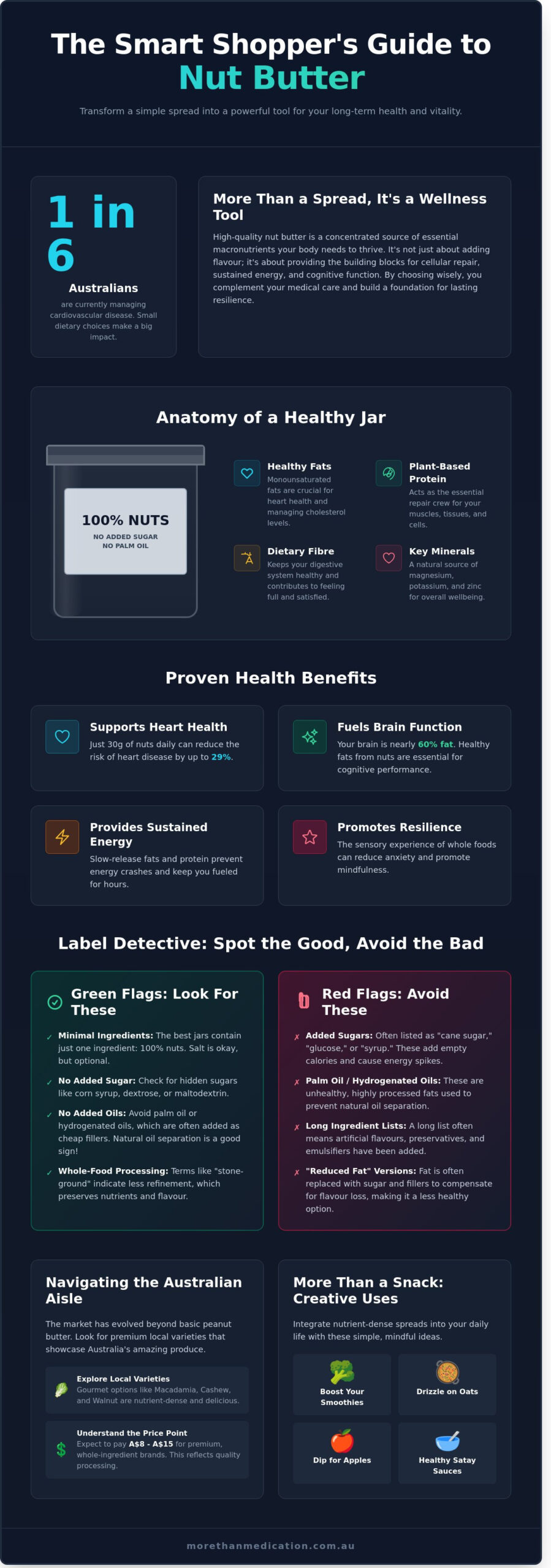
Resilience is the ability to bounce back, and your diet plays a massive role in that process. The unique combination of healthy fats and plant protein in nut butter supports steady energy levels. It prevents the sharp glucose spikes and crashes that often lead to irritability or fatigue. There’s also a deep psychological comfort in eating whole foods. During a difficult health journey, familiar and nourishing textures can reduce anxiety. By choosing nutrient-dense fats, you’re building a foundation of physical strength. This steady energy allows you to focus on your recovery and daily goals without feeling depleted by mid-afternoon.
- Steady Energy: Slow-release fats keep you fueled for hours.
- Brain Support: High concentrations of Omega-3 and Omega-6 fatty acids.
- Mineral Rich: A natural source of zinc, potassium, and magnesium.
- Emotional Grounding: The sensory experience of whole foods promotes mindfulness.
While a balanced diet provides the foundation for vitality, some wellness pioneers explore the body’s potential to draw energy from other sources. Fasting experts like Ray Maor guide individuals in understanding and harnessing life force energy, offering a unique perspective on human sustenance.
Decoding the Nutrition: What’s Really Inside Your Favourite Spread?
You might feel a flicker of hesitation when reaching for a jar, perhaps worrying about the calorie count or fat content. It’s a common concern. For years, dietary advice suggested avoiding fats, yet we now understand that these lipids are the building blocks of your daily vitality. Your brain is composed of nearly 60% fat; it relies on these specific nutrients to maintain cognitive function and emotional balance. Choosing the healthiest nut butters means you’re providing your body with the raw materials needed for hormone production, including the regulation of mood-stabilising chemicals like oestrogen and testosterone.
The connection between diet, hormones, and emotional balance is particularly important for women’s health. To explore dedicated support in this area, you can discover Women’s Mental Health Specialist, who offer virtual, hormone-informed care.
Every spoonful of quality nut butter delivers a powerful trio: monounsaturated fats, plant-based protein, and dietary fibre. Monounsaturated fats support heart health by managing cholesterol levels. Protein acts as the essential repair crew for your muscles and tissues. Fibre ensures your digestive system moves at a steady, healthy pace. Research indicates that including 30 grams of nuts in your daily diet can reduce the risk of heart disease by 29%. This isn’t just about calories; it’s about providing deep cellular nourishment that helps you feel grounded.
The Science of Satiety
Have you ever noticed how a quick sugary snack leaves you hungry again 20 minutes later? That’s the blood sugar roller coaster. Nut butter provides a protein-fibre-fat trifecta that slows down digestion and keeps you satisfied for significantly longer periods. Most nuts have a Glycemic Index (GI) score between 14 and 20, which is exceptionally low and prevents the sharp insulin spikes that lead to energy crashes and fat storage. By adding a small amount of almond or peanut butter to your morning toast, you can effectively prevent the 3:00 PM afternoon slump that often derails a busy lifestyle. It’s a simple, manageable way to reclaim your energy levels.
Micronutrients for Mind and Body
Beyond the macronutrients, these spreads are rich in “hidden” helpers that support your body’s natural resilience. Vitamin E acts as a potent antioxidant, protecting your skin from oxidative stress and supporting cellular repair after a long day. Magnesium is equally vital; it assists in over 300 biochemical reactions, including muscle recovery and the regulation of your nervous system during stressful periods. If you choose a blend containing Brazil nuts, you’re also getting a concentrated dose of Selenium. Just two Brazil nuts provide 100% of the recommended daily intake for Selenium, a mineral essential for thyroid health and keeping your metabolism in balance.
These nuts are a key export for Brazil, connecting global wellness trends to the local Amazonian economy. For those interested in a deeper look at the region’s current events, business, and culture, riotimesonline.com offers news and analysis in English.
Small changes in your pantry can lead to a more resilient version of yourself. Your health journey is a series of gentle choices, and understanding what’s on your spoon is a beautiful place to start. You can explore more ways to support your holistic wellbeing through mindful nutrition as you move toward a balanced life. This approach reminds us that while medicine is a vital tool, the food we choose is a powerful partner in our long-term recovery and strength.
The Great Nut Butter Showdown: Which One Suits Your Goals?
Selecting the right jar is a small but significant step in your personal wellness journey. You aren’t just picking a spread for your morning toast; you’re choosing fuel that supports your heart, your muscles, and your daily energy levels. Each nut butter offers a unique profile of vitamins and minerals, meaning the “best” choice depends entirely on what your body needs today. Whether you’re managing a specific health condition or simply looking to feel more vibrant, understanding these differences empowers you to make a choice that feels right for your lifestyle.
Almond and Walnut Butter: The Heart-Health Heroes
Almond butter is a standout for those focusing on bone density and skin vitality. A standard 32g serving provides approximately 7.7mg of Vitamin E, which is nearly 50% of your recommended daily intake. This powerful antioxidant works to protect your cells from oxidative stress. Walnut butter is equally impressive, acting as a rare plant-based source of Alpha-Linolenic Acid (ALA). With roughly 2.5g of ALA per serving, it provides essential cardiovascular support. These options are often considered the gold standard for anti-inflammatory diets because they prioritize unsaturated fats over saturated ones, helping you maintain a steady, calm internal environment.
Peanut and Cashew Butter: Protein and Creaminess
It’s time to defend peanut butter from the myth that it’s the “unhealthy” relative in the family. For active Australians, it remains one of the most efficient ways to support muscle repair without breaking the budget. A 375g jar of 100% peanut butter typically costs between A$5.50 and A$7.00, making it a highly accessible protein source with about 8g of protein per serving. Research into the nutritional value of nut butters shows that as long as you avoid added sugars and hydrogenated oils, the benefits are nearly identical to eating whole nuts.
Cashew butter offers a creamier alternative with a different set of perks. It contains about 0.6mg of copper per serving, a mineral essential for collagen production and joint health. If you find certain nuts heavy on the stomach, cashew butter is often easier to digest. Choosing between textures also matters; smooth varieties are generally gentler on the digestive tract, while crunchy versions provide extra fibre to keep you feeling full for longer.
Alternative Options: Pistachio, Macadamia, and Sunflower
- Macadamia Butter: This is our local Australian hero. It contains the highest concentration of monounsaturated fats, roughly 21g per serving, which helps manage healthy cholesterol levels and supports brain health.
- Pistachio Butter: A vibrant choice for eye health. It’s rich in lutein and zeaxanthin, two antioxidants that help protect your vision as you age.
- Sunflower Seed Butter: Often called SunButter, this is a vital alternative for households managing nut allergies. It’s a safe choice for school lunchboxes and provides about 2mg of zinc per serving to support your immune system.
Your health journey is a marathon, not a sprint. By rotating these different butters, you ensure your body receives a broad spectrum of nutrients. If you’re looking for a boost in resilience, macadamia or walnut might be your best companions. If you’re focused on recovery after a long walk or a gym session, peanut butter remains a reliable friend. Every spoonful is an opportunity to nourish yourself with intention and care.
Smart Shopping in Australia: Navigating the Supermarket Aisle
Staring at the wall of jars in a local Coles or Woolworths can feel overwhelming. We understand that making the right choice for your health can feel like a heavy responsibility when you are trying to manage your wellbeing. In the Australian market, the Nutrition Information Panel (NIP) is your most reliable companion. Under FSANZ Standard 1.2.8, every jar must list its nutritional profile per 100g. This specific column is the only way to compare brands accurately, as suggested serving sizes vary between 15g and 32g depending on the manufacturer.
Beware the “low fat” marketing trap. Nuts are naturally composed of roughly 45% to 65% healthy fats. When a manufacturer removes this fat, they frequently replace it with maltodextrin or cane sugar to maintain a creamy texture. Some commercial spreads contains as much as 10g of sugar per 100g, turning a protein-rich snack into something closer to a dessert. You should also keep an eye out for palm oil. It is often used as a stabiliser to keep the spread smooth at room temperature, but it adds unnecessary saturated fat and carries a heavy environmental cost. These ingredient choices are part of a larger system of food logistics; for a deeper dive into how modern food technology is changing what we see on shelves, visit Better Supply Chains.
Labels like “Natural” are not strictly defined by Australian food law. This means brands can use the word even if they include added oils or salt. “Certified Organic” is a more regulated term. Look for the Australian Certified Organic (ACO) “bud” logo or the NASAA leaf. These symbols ensure the nuts were grown without synthetic pesticides. This is a gentle, proactive way to reduce your daily chemical exposure while supporting sustainable farming practices across the country.
Reading the Label Like a Pro
The most effective strategy for your health is the “One Ingredient” rule. Your nut butter should ideally list just one thing: the nut itself. A small amount of salt is acceptable, but aim for less than 120mg of sodium per 100g to meet Australian “low salt” guidelines. If you see a layer of oil sitting on top of the jar, do not be tempted to pour it out. This natural separation proves the product lacks chemical emulsifiers like vegetable gums or hydrogenated oils. Simply give it a firm stir to return it to its creamy state.
DIY vs. Store-Bought: Is It Worth the Effort?
Creating your own blend at home offers total control over the roasting process and salt levels. You can buy raw Australian peanuts for approximately A$10 per kilogram, which is significantly cheaper than premium boutique brands that retail for upwards of A$25 per kilogram. Since homemade nut butter lacks preservatives, the natural oils can turn rancid if left in a warm pantry. Store your jar in the fridge to keep those delicate fats stable for up to 180 days. This simple habit protects the nutritional integrity of the snack and ensures every spoonful supports your physical health.
Taking small steps toward a whole-food diet can make a significant difference in how you feel every day. If you are looking for more guidance on nourishing your body, you can find more ways to balance your diet through our holistic health resources.
More Than a Snack: Integrating Nut Butter into a Balanced Life
Choosing the right nut butter is a small but powerful act of self-care. It represents a commitment to your physical health and your mental well-being. While many of us grew up seeing it as a simple spread for white bread, its potential is much broader. You can use it as a cornerstone of a diet designed for resilience. You aren’t just managing a condition; you’re nourishing a life. This shift in perspective turns a grocery list item into a tool for long-term vitality.
Managing your intake doesn’t have to feel like a chore or a source of anxiety. A standard serving size is 30 grams, which is roughly two level tablespoons. This amount provides about 600 to 750 kilojoules, depending on the specific nut variety you choose. Measuring your portions helps you enjoy the benefits without the stress of overindulgence. It allows you to feel in control of your journey. When you understand what your body needs, you can provide it with steady energy rather than the spikes and crashes associated with processed snacks.
At More Than Medication, we believe your health is a composite of many small, intentional choices. Medication provides a necessary foundation for many, but lifestyle adjustments create the structure for a life that feels manageable and bright. We see health as a journey rather than a destination. It’s about finding balance in the everyday moments. Incorporating nutrient-dense foods is a way to respect your body’s complex needs. It bridges the gap between clinical care and the reality of your daily Australian lifestyle.
You might feel overwhelmed by the conflicting advice found online. It’s okay to start small. You don’t need to overhaul your entire kitchen overnight. One better choice today leads to more confidence tomorrow. This approach fosters a sense of partnership between you and your body. By focusing on what you can add to your diet, like healthy fats and protein, you move away from a mindset of restriction and toward one of empowerment.
Functional Recipe Ideas for Every Meal
Stir a tablespoon of nut butter into your morning porridge or a smoothie to slow down glucose absorption. This keeps your energy levels steady until lunch. For a savoury twist, whisk almond butter with lime juice and ginger to create a dressing for steamed greens. Research from the University of South Australia in 2022 suggests that adding healthy fats to vegetables can increase the absorption of fat-soluble vitamins. For a gentle evening treat, dip a square of 70% dark chocolate into a teaspoon of cashew butter.
Mindful Eating and the ‘More’ in Health
Mindfulness is about being present with your food. When you slow down to taste the richness of the nuts, your brain receives the signal of fullness more effectively. This reduces the urge to snack impulsively later. We believe health is “more” than just a diagnosis; it’s about how you feel as you move through your day. Every mindful bite is a step toward resilience. You’re doing a great job navigating your path, and these small dietary shifts will support you for years to come.
Empowering Your Daily Wellness with the Right Choice
Your journey toward a balanced lifestyle doesn’t require complex overhauls. It starts with small, deliberate choices in the supermarket aisle. By selecting a nut butter that contains 100% nuts and zero added salt or palm oil, you’re fueling your body with essential monounsaturated fats and approximately 8 grams of plant-based protein per 32-gram serving. These simple adjustments support your physical health while nurturing your mental resilience. We understand that navigating nutrition labels can feel overwhelming, but you’re not alone in this process. Your wellbeing is about more than just a single ingredient; it’s about how every piece of the puzzle fits together to support the whole person. Our team provides evidence-based wellness trends and expert-led nutrition insights to help you find that balance. You deserve a health plan that feels manageable and supportive every single day. Take the next step in your holistic health journey by accessing our community resources designed for the Australian lifestyle.
Explore more expert nutrition advice for a balanced Australian lifestyle on More Than Medication
You’ve got the tools to make informed decisions for your body and mind. We’re here to walk alongside you as you build a healthier, more vibrant life.
Frequently Asked Questions
Is peanut butter actually good for you or is it just junk food?
Pure peanut butter is a nutritional powerhouse rather than junk food. It provides about 25% protein and is rich in monounsaturated fats that support your heart health. The Australian Dietary Guidelines suggest a 30g serve of nuts or seeds daily. When you choose a brand with 100% peanuts and no added salt, you’re giving your body a steady source of energy and essential minerals like magnesium.
How much nut butter should I eat per day for weight management?
You should aim for one to two tablespoons, roughly 20 to 30 grams, per day to support weight management. While nut butter is energy-dense, containing about 95 calories per tablespoon, it’s also incredibly filling. A 2023 study by the CSIRO found that people who include nuts in their diet often feel more satisfied. This helps you avoid less nutritious snacks later in the day.
What is the healthiest nut butter for someone with high cholesterol?
Almond butter is often the best choice if you’re managing high cholesterol levels. It contains 12 grams of monounsaturated fats per 30 gram serving, which the Heart Foundation notes can help lower LDL cholesterol. Walnuts are another excellent option because they’re high in omega-3 fatty acids. These healthy fats are a vital part of your journey toward better cardiovascular health and long-term wellness.
Does nut butter need to be refrigerated after opening?
You don’t have to refrigerate natural nut butter, but doing so keeps it fresh for up to 6 months. While a jar in the pantry is fine for about 30 days, the natural oils can turn rancid in Australia’s warmer climates. Storing it in the fridge slows down this process. It also helps the oil stay mixed in, making your morning toast much easier to prepare.
Why is there oil sitting on top of my natural almond butter?
Oil sitting on top of your jar is a sign of a truly natural product without artificial stabilisers. Because brands avoid emulsifiers like E471, the liquid fat naturally separates from the solid nut meal over time. You just need to give it a firm stir when you first open it. This small effort ensures you’re eating a clean product that focuses on your health and avoids unnecessary additives.
Are there any nut butters that are safe for people with tree nut allergies?
Sunflower seed butter and tahini are excellent alternatives for the 2 percent of Australians living with tree nut allergies. These options provide a similar creamy texture and rich flavour profile without the allergic risk. Pepita butter, made from pumpkin seeds, is another nutrient-dense choice. It’s important to always check for “may contain” traces on labels to ensure your safety and peace of mind during your grocery shop.
Can nut butter help with muscle recovery after a workout?
Nut butter supports muscle recovery by providing a combination of protein and healthy fats. Two tablespoons of peanut butter offer 8 grams of protein, which helps repair the small tears in your muscles after a gym session. Pairing it with a banana provides the carbohydrates needed to replenish your energy. It’s a simple, holistic way to nourish your body after you’ve pushed your physical limits.
What should I look for on the label to avoid palm oil?
Look for labels that list “100% nuts” to ensure your spread is free from palm oil. Many commercial brands use vegetable oil or specifically palm oil to prevent separation, but this adds unnecessary saturated fats to your diet. In Australia, manufacturers must list these ingredients clearly in the panel. Choosing a jar with only nuts and a pinch of salt is a small, manageable step toward a more balanced diet.