
What if the very ground you walk on is keeping a secret about your energy levels and thyroid health? In Australia, research from the CSIRO indicates that our ancient, weathered soils often contain as much as 30% less trace elements compared to younger soils overseas, making it harder to access the full range of selenium benefits through a standard diet alone. You’ve likely felt the frustration of standing in a pharmacy aisle, staring at rows of expensive supplements and wondering if they’re truly necessary or just clever marketing. It’s exhausting to filter through conflicting advice when you’re simply trying to support your body’s natural resilience and long term vitality.
It’s always wise to consult with your Australian GP or an accredited practising dietitian before making significant changes to your supplement routine. For convenient professional guidance, telehealth platforms like Aussie Scripts can connect you with a doctor to arrange a simple blood test, check your current levels, and ensure you’re staying within the safe upper limit of 400 micrograms per day. This professional guidance ensures your path forward is both safe and effective. Taking these small, evidence-based steps empowers you to lead a more vibrant life. You don’t have to change everything at once. Start with one small addition this week and notice how it feels to prioritize your wellbeing. If you are looking for more ways to support your health journey, explore more expert nutrition advice for a balanced lifestyle. Understanding the full scope of selenium benefits is just the beginning of a more holistic approach to your health.
You deserve a clear, evidence-based path to wellness that doesn’t feel like a guessing game. We’ll show you exactly how this mineral acts as a quiet achiever for your thyroid, immunity, and heart health. By the end of this article, you’ll have a practical list of local food sources, like the humble Brazil nut which can provide 100% of your daily needs in just one serving. We’re moving beyond the pill bottle to help you understand how small, mindful adjustments to your Australian lifestyle can create a sense of lasting balance and confidence in your own nutritional journey.
Key Takeaways
- Understand why selenium is a “quiet achiever” that supports your body’s resilience and long-term vitality through essential antioxidant protection.
- Learn how maximizing your selenium benefits can safeguard your thyroid health and boost your immune system’s natural defences.
- Discover how to naturally integrate this mineral into your daily routine using local Australian staples like Barramundi, prawns, and Brazil nuts.
- Identify the “Goldilocks” dosage for Australian adults to ensure you support your health safely while avoiding the risks of over-supplementation.
- Explore the connection between this essential trace mineral and your mental resilience, proving that holistic wellbeing is always about the whole person.
What is Selenium and Why is it the “Quiet Achiever” of Health?
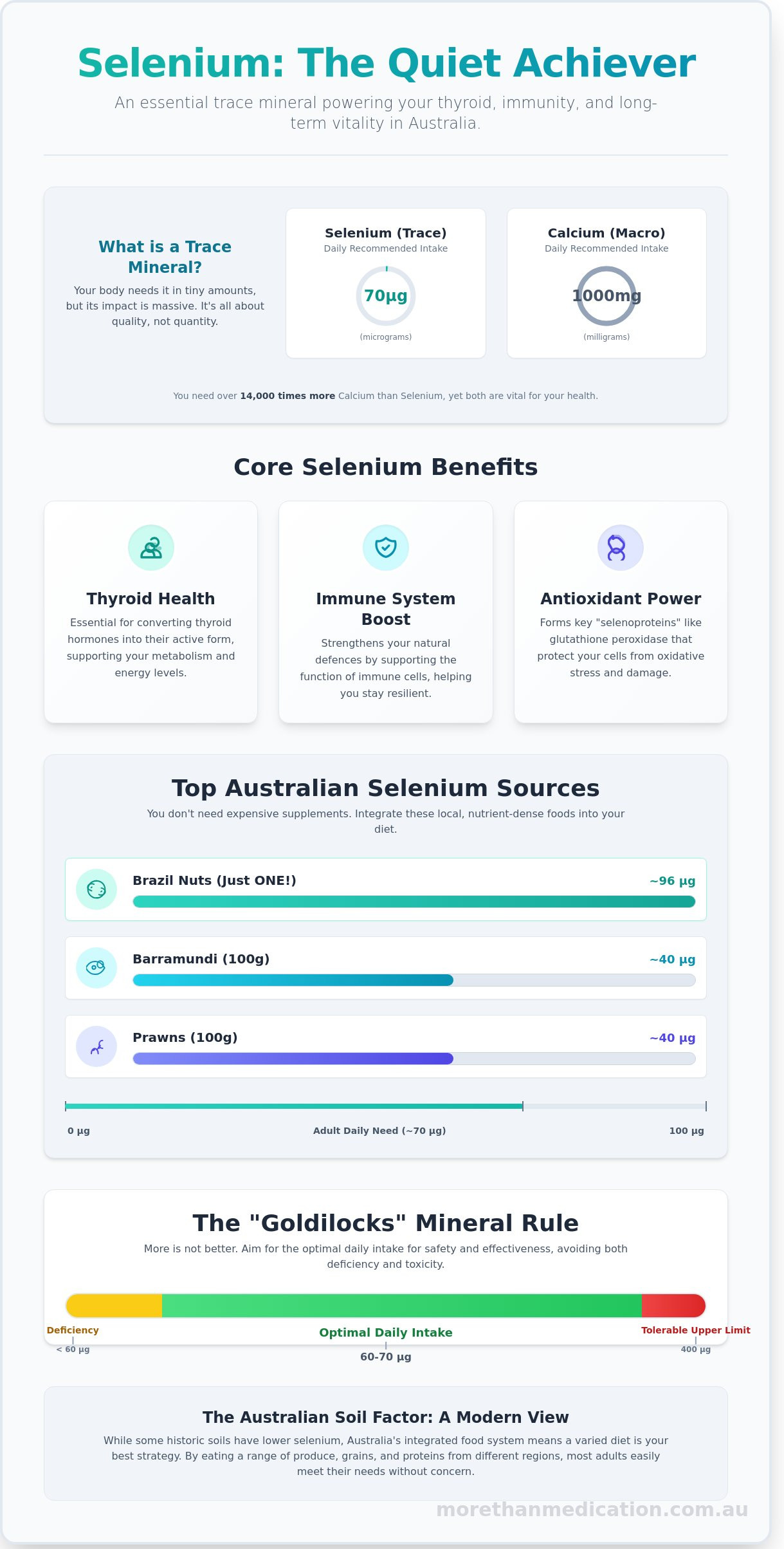
You might not think about selenium every day, yet your body relies on it for every heartbeat and every breath. It is an essential trace mineral, which means your body cannot produce it on its own. You must invite it in through your diet. We often call it the “Quiet Achiever” because its requirements are incredibly small compared to minerals like calcium. While you might need 1,000 milligrams of calcium, you only need about 60 to 70 micrograms of selenium to stay healthy. This tiny amount masks a massive impact on your internal resilience. Without it, your internal systems would struggle to manage the oxidative stress that life naturally brings.
The primary way this mineral supports you is through selenoproteins. Think of these as specialized workers that carry out the heavy lifting for your immune system and thyroid. The role of selenium in the body involves creating these proteins to act as powerful antioxidants. They hunt down unstable molecules that can damage your cells. By understanding selenium benefits, you can take a proactive step toward a more balanced life. It is about supporting your body’s natural rhythm before a health challenge arises.
The Role of Trace Minerals in Holistic Wellbeing
Minerals fall into two categories: macro minerals and trace minerals. You need macro minerals in large amounts, but trace minerals like selenium are just as vital for maintaining homeostasis. Homeostasis is your body’s steady state of internal balance. When your selenium levels are optimal, your thyroid functions smoothly and your immune response remains sharp. However, balance is the key word here. In the world of micronutrients, more isn’t always better. Taking excessive amounts can lead to toxicity, known as selenosis, so the goal is always gentle consistency rather than high doses.
The Australian Soil Factor: Should You Be Concerned?
You may have heard that Australian soil is “selenium poor.” This concern dates back to agricultural observations in the 1930s when farmers noticed certain livestock were struggling in specific regions. It’s true that some areas, particularly along the coastal regions of New South Wales and parts of Western Australia, have lower concentrations of selenium in the earth. Because plants absorb what is in the soil, the selenium content of your vegetables can vary depending on where they were grown. This geographical lottery is why some people worry about their selenium benefits being cut short.
Despite these regional variations, you don’t need to feel anxious about your local produce. Australia’s food system is highly integrated. The wheat in your bread might come from a high-selenium region in the South Australian grain belt, while your beef might come from another state entirely. A 2017 study on Australian dietary intakes suggested that most adults are meeting their requirements through a varied diet. By eating a wide range of foods, you naturally bypass the limitations of any single patch of soil. This diversity acts as your best defense, ensuring your “Quiet Achiever” has everything it needs to keep you thriving.
The Science of Selenoproteins: How Selenium Protects Your Body
You might think of minerals as simple building blocks, but selenium acts more like a sophisticated conductor for your internal orchestra. Your body doesn’t just use selenium in its raw form; it incorporates it into special proteins called selenoproteins. These are the tireless workers that manage everything from your DNA synthesis to protecting your cells from damage. One of the most vital selenoproteins is glutathione peroxidase, often hailed as a master antioxidant. It acts as a primary shield, standing guard to neutralise harmful molecules before they can cause lasting harm to your delicate cellular structures.
The beauty of these proteins lies in their ability to support your resilience from the inside out. When you’re feeling depleted or overwhelmed by the pace of life, these microscopic guardians are working to keep your systems steady. Understanding the full scope of selenium benefits starts with recognising that your body relies on this mineral to perform tasks that medicine alone cannot always replicate. It’s about giving your biology the right tools to maintain its own natural harmony.
Thyroid Health and Hormonal Balance
Your thyroid is a small, butterfly-shaped gland with a massive responsibility, and it holds the highest concentration of selenium per gram of tissue in your entire body. This isn’t a coincidence. Selenium and iodine work in a delicate synergy to keep your metabolism humming. While iodine provides the raw material for thyroid hormones, selenium acts as the protector and refiner. It shields the thyroid gland from the oxidative byproducts created during hormone production, which could otherwise lead to inflammation or tissue damage over time.
Selenium acts as the essential trigger that converts the inactive T4 hormone into the active T3 hormone, ensuring your metabolism and energy levels stay balanced. Without enough of this mineral, your thyroid might struggle to keep up, even if your iodine levels are sufficient. This partnership is a perfect example of how small adjustments in your nutrition can lead to a more vibrant sense of wellbeing. If you’re looking to explore a mindful approach to wellness, supporting your thyroid is a gentle and effective place to begin your journey.
Antioxidant Power: Fighting the Invisible Stress
Living in Australia often means balancing a love for the outdoors with the reality of a harsh environment. Whether it’s the intense UV rays of the Queensland sun or the daily pressures of a fast-paced career in Melbourne, your body faces constant “oxidative stress.” This occurs when unstable molecules called free radicals outnumber your body’s natural defences. According to Harvard’s Nutrition Source on Selenium, this mineral is a critical component of the enzymes that quench these free radicals, effectively slowing down the clock on premature cellular ageing.
By neutralising these threats, selenium helps lower markers of systemic inflammation, such as C-reactive protein. When inflammation is kept in check, you’re likely to feel more energetic and less “foggy” in your daily life. This protection extends to your heart as well. Research has shown that maintaining adequate levels can reduce oxidative stress in the blood vessels, supporting long-term cardiovascular longevity. Harnessing these selenium benefits helps ensure your “internal defense” stays sharp, protecting your heart and immune system so you can focus on the things that truly matter to you.
Your immune resilience depends on this mineral to activate T-cells, which are the specialized scouts of your immune system. When your selenium levels are optimal, your body can mount a more coordinated and efficient response to external threats. It’s a quiet, steady form of support that reinforces your health every single day, proving that sometimes the smallest elements make the biggest difference in our overall quality of life.
Sourcing Selenium Naturally: The Best Foods for Australians
You’re building a foundation for long-term wellness, and choosing the right foods is a powerful way to take control of your health journey. Understanding how to source minerals from your local environment makes the process feel less like a chore and more like a nourishing ritual. One of the key selenium benefits is its role in protecting your cells from oxidative stress, but your body can’t produce it on its own. You have to invite it in through your diet. It’s a partnership between what you eat and how your body heals.
Plant-based foods rely heavily on the selenium levels in the soil where they were grown. Because Australian soil concentrations vary significantly between regions, animal-based proteins often provide a more consistent source. These proteins offer selenium in forms that your body can absorb with high efficiency, usually around 90%. This ensures that the nutrients you consume actually reach the systems that need them most, like your thyroid and immune system.
The Power of the Brazil Nut
The Brazil nut is the undisputed heavyweight champion of the mineral world. Just two medium-sized nuts provide approximately 140 micrograms (mcg) of selenium. This amount comfortably exceeds the Australian Nutrient Reference Value of 70 mcg per day for men and 60 mcg for women. You should look for organic, fresh nuts at your local grocer to ensure you’re getting the highest mineral density possible. However, it’s vital to treat these nuts more like a natural supplement than a snack. Eating a whole bag in one sitting can lead to selenium toxicity, or selenosis, because the safe upper limit for adults is 400 mcg daily. For a detailed breakdown of these limits, this NIH consumer guide to selenium offers clear guidance on safe intake levels.
Local Australian Staples High in Selenium
Australian seafood offers a delicious and reliable way to boost your intake while enjoying local produce. A 100g serving of Barramundi contains roughly 36 mcg of selenium, while local king prawns provide about 30 mcg per serve. If you prefer land-based options, grass-fed Australian beef and lamb are excellent choices. A standard 100g portion of lean beef provides roughly 25 mcg. Eggs and poultry also play a supporting role; one large Australian egg typically contains 15 mcg. While Macadamia nuts are a beloved local alternative, they offer a more moderate contribution of about 1 mcg per nut. They are a wonderful addition to your diet for healthy fats, but they shouldn’t be your only source of selenium.
Visualising a selenium-rich plate helps make these clinical numbers feel more manageable in your daily life. A balanced, supportive meal might look like this:
- A 120g fillet of grilled Australian Barramundi.
- A generous serving of steamed broccoli and spinach.
- A small portion of brown rice or quinoa.
- One single Brazil nut, crushed and sprinkled over your salad for a crunch.
This simple combination provides over 100% of your daily requirement while celebrating the selenium benefits that support your overall vitality. It’s a gentle, effective way to nourish yourself without the stress of complex meal planning. For those looking to take a more personalized approach to their nutrition, using a macro calculator for personalized nutrition planning can help you balance your selenium intake alongside your optimal protein, carbohydrate, and fat ratios. When building a complete nutritional foundation, understanding how much protein is chicken breast providing can help you create balanced meals that support both your selenium needs and your daily protein goals. If you’re looking for convenient ways to incorporate selenium-rich ingredients like Brazil nuts into your daily routine, exploring healthy slice recipes that include nutrient-dense nuts and seeds can help you create satisfying snacks that support your mineral intake throughout the day.
Safety, Dosage, and the “Goldilocks” Mineral Rule
Finding the right balance for your health often feels like a puzzle with moving pieces. Selenium is a unique mineral that requires a “Goldilocks” approach; you need enough to thrive, but staying within a specific range is vital for your long-term wellbeing. In Australia, the National Health and Medical Research Council (NHMRC) suggests a Recommended Dietary Intake (RDI) of 70 micrograms per day for men and 60 micrograms per day for women. While the selenium benefits for your immune system and thyroid are significant, the upper limit is capped at 400 micrograms daily to prevent adverse effects.
You don’t need to overcomplicate your routine to reach these targets. A single Brazil nut can contain between 70 to 90 micrograms, meaning you can often meet your daily requirement through food alone. The therapeutic window for this mineral is narrow, which means the difference between a healthy dose and a potentially toxic one is smaller than with many other nutrients. Understanding this balance helps you feel empowered rather than overwhelmed by your nutritional choices. It’s about listening to your body and providing it with exactly what it needs, nothing more and nothing less.
Recognising the Signs of Selenosis
Taking too much selenium leads to a condition called selenosis. You might notice a distinct, garlic-like odour on your breath or a metallic taste in your mouth. Other physical signals include hair loss or nails that become uncharacteristically brittle and chip easily. It’s rare to reach these levels through a standard Australian diet. Most cases of toxicity stem from high-dose supplements rather than food sources. If you’ve been taking a supplement and notice these changes, it’s best to pause and consult your GP. They can help you transition back to a food-first approach, ensuring you still receive selenium benefits without the risks of excess.
Who is at Risk of Deficiency?
While excess is a concern, some people find it difficult to maintain adequate levels due to underlying health challenges. If you live with Crohn’s disease or Coeliac disease, your digestive system might struggle to absorb minerals effectively. People undergoing long-term dialysis are also at a higher risk, as the process can inadvertently filter out selenium along with waste products. In Australia, clinicians generally define the threshold for selenium inadequacy as a plasma concentration falling below 0.8 micromoles per litre (μmol/L). If you’re managing these conditions, your healthcare team might suggest monitoring your levels more closely to support your recovery.
Your health journey is about more than just hitting a number on a lab report; it’s about how you feel every day and the resilience you build through consistent, small habits. If you’re considering moving beyond the plate and adding a supplement, have a conversation with a professional first. For men seeking a comprehensive approach to their unique health needs, physician-led practices such as Men’s Wellness Centers can help determine if extra support is needed and create a plan that is safe, balanced, and tailored to you.
If you’re looking for more ways to support your wellbeing beyond traditional treatments, explore our resources on managing your nutritional journey for holistic health support.
More Than a Mineral: Integrating Selenium into a Balanced Life
Viewing your health as a lifelong journey rather than a series of quick fixes changes how you approach nutrition. Selenium isn’t a magic bullet that solves every ailment overnight. Instead, it acts as a quiet, reliable partner in your body’s complex biological systems. When you focus on selenium benefits, you’re investing in a long-term strategy for resilience. This mineral works behind the scenes to protect your cells from damage, supporting you through the natural ebbs and flows of life. It’s about creating a sustainable foundation where your body has the tools it needs to thrive.
The Mind-Body Connection
Your brain is one of the most metabolically active organs in your body, making it highly susceptible to oxidative stress. Research published in 2022 suggests that maintaining adequate selenium levels may play a role in slowing cognitive decline and supporting overall mental clarity. When your nutritional status is stable, your emotional resilience often follows. A body that isn’t struggling with internal inflammation is a body that can better manage stress and mood fluctuations. We often talk about the “More Than Medication” philosophy because while clinical treatments are essential, they are only one piece of the puzzle. Real health happens at the intersection of medical support and daily nutritional choices. By nourishing your nervous system with trace minerals, you are supporting the very architecture of your thoughts and feelings.
Your Action Plan for Balanced Nutrition
Improving your intake doesn’t require a radical lifestyle overhaul or expensive specialty products. You can find everything you need during your regular shop at Coles or Woolworths. The goal is to make these choices feel like a natural part of your routine rather than an added chore. Consider these simple steps for your next grocery run:
- The Brazil Nut Habit: Buy a small bag of Brazil nuts and eat just two per day. This provides approximately 150 to 180 micrograms of selenium, easily meeting the daily requirements for most Australian adults.
- Protein Variety: Add a 95g tin of tuna (roughly A$2.00) or a dozen free-range eggs to your basket. These are accessible, budget-friendly sources that fit into almost any meal plan.
- Smart Swaps: Choose brown rice over white rice to increase your mineral intake while adding beneficial fibre to your diet.
It’s always wise to consult with your Australian GP or an accredited practising dietitian before making significant changes to your supplement routine. They can offer a simple blood test to check your current levels and ensure you’re staying within the safe upper limit of 400 micrograms per day. This professional guidance ensures your path forward is both safe and effective. Taking these small, evidence-based steps empowers you to lead a more vibrant life. You don’t have to change everything at once. Start with one small addition this week and notice how it feels to prioritize your wellbeing. If you are looking for more ways to support your health journey, explore more expert nutrition advice for a balanced lifestyle. Understanding the full scope of selenium benefits is just the beginning of a more holistic approach to your health.
Empowering Your Journey Toward Balanced Health
Finding the right balance in your wellness routine often starts with small, intentional changes. Embracing selenium benefits doesn’t require a complete lifestyle overhaul; it begins with understanding that your body needs just the right amount. The National Health and Medical Research Council (NHMRC) suggests an RDI of 70 micrograms for men and 60 micrograms for women to support thyroid function and cellular protection. Since Australian soil is often low in this mineral, focusing on two Brazil nuts a day or local seafood provides a steady foundation for your resilience. When you’re shopping at your local market and find yourself choosing between fresh herbs to complement your selenium-rich meals, understanding the distinct health properties of holy basil and thai basil can help you make more intentional choices that support your overall wellbeing.
You don’t have to navigate these choices alone. Health is a personal journey, and we’ve been supporting Australians with evidence-based advice for the whole person since 1956. By looking beyond just the prescription, you can find a sense of calm and control in your daily life. Our expert-led content is designed to help you bridge the gap between clinical treatment and holistic wellbeing, ensuring you feel empowered at every turn.
Join our community for the latest Australian wellness trends and expert advice
We’re here to walk beside you as you discover what it means to feel truly well.
Frequently Asked Questions
How many Brazil nuts should I eat a day for selenium?
Eating just two Brazil nuts per day provides your full recommended daily intake of selenium. Since a single nut contains between 68 and 91 micrograms, having more than three can quickly lead you toward the safe upper limit of 400 micrograms. You’ll find that consistency is more important than quantity. Adding this small habit to your morning routine is a simple way to support your body without needing complex routines.
Can selenium help with thyroid conditions like Hashimotos?
Selenium is highly effective for thyroid health because the thyroid gland holds the highest concentration of this mineral in your body. Research published in the Journal of Clinical Endocrinology and Metabolism shows that taking 200 micrograms daily can reduce thyroid antibodies by up to 40 percent in people with Hashimoto’s. While it’s a powerful tool, it works best as part of a broader plan that includes your prescribed medication and lifestyle adjustments.
Is it better to get selenium from food or supplements?
It’s usually better to get your nutrients from whole foods because they offer a complex web of minerals and vitamins that work together. When you choose foods like eggs, sardines, or seeds, you receive the full scope of selenium benefits alongside healthy fats and proteins. Supplements are useful if your blood tests show a specific deficiency, but they require careful monitoring by a professional to avoid reaching toxic levels.
What are the symptoms of selenium deficiency?
The most common symptoms of a deficiency include persistent fatigue, brain fog, and a weakened immune system. You might notice you’re catching colds more often or feeling unusually sluggish despite getting eight hours of sleep. While true deficiency is rare in Australia, about 15 percent of the global population doesn’t get enough. If you’re feeling off, a simple blood test can help clarify your status and guide your next steps.
Can I take selenium with my other medications?
You should talk to your doctor before starting selenium if you take blood thinners or cholesterol medication. Selenium can increase the risk of bleeding when mixed with anticoagulants like warfarin; it might also interfere with how statins protect your heart. It’s all about finding the right balance for your unique health journey. Your pharmacist can help you check for specific interactions with your current prescription list to keep you safe.
Is Australian soil really low in selenium?
Yes, Australian soil is known for being relatively low in selenium, particularly in coastal and high-rainfall areas. Data from the CSIRO confirms that crops grown in parts of New South Wales and Western Australia often have lower concentrations than those grown in North America. This means you might need to be more intentional about including selenium-rich foods like seafood or imported nuts to ensure your body gets the support it needs.
Does cooking food destroy its selenium content?
Cooking does not completely destroy selenium, but the method you choose changes how much remains in your meal. Boiling vegetables or meat can cause a 40 percent loss as the mineral leaches into the cooking water. To keep your levels high, try steaming, roasting, or stir-frying instead. These gentler methods preserve the nutritional integrity of your food, making it easier for you to nourish your body with every bite.
Is selenium safe during pregnancy and breastfeeding?
Selenium is safe and vital during pregnancy, though you must stay within the recommended daily limits. The Australian National Health and Medical Research Council suggests 65 micrograms daily for pregnant women and 75 micrograms during breastfeeding. It plays a crucial role in developing your baby’s immune system and protecting your own thyroid health. Always check with your midwife or GP before adding any new supplements to your prenatal care routine.
⚕️ Medical Disclaimer
This content is for informational purposes only and is not a substitute for professional medical advice, diagnosis, or treatment. Always seek the advice of your doctor or other qualified health provider with any questions you may have regarding a medical condition. Never disregard professional medical advice or delay in seeking it because of something you have read on this website.