
Have you ever stood in the supermarket aisle, looking at a pack of lean poultry and wondered exactly how much protein is chicken breast providing for your specific goals? It’s a common moment of hesitation that many Australians face when trying to balance a busy life with a health-conscious diet. You want to nourish your body, but the conflicting data found online often turns a simple meal into a complex math problem. According to data from the Australian Food Composition Database, a standard 100g serve of raw, skinless chicken breast contains approximately 22.3g of protein. This number is a vital building block, yet it’s only one part of your broader health story.
We understand that tracking every gram can feel overwhelming, especially when you’re already managing the emotional and physical demands of a health journey. You deserve clarity rather than more confusion. This guide helps you move past the guesswork by providing exact protein counts and practical portioning strategies tailored to your unique body. We’ll explore how to prepare this lean powerhouse to support your resilience and ensure your nutrition feels like a supportive partner in your wellbeing, not a source of stress. It’s about finding balance and remembering that health is always more than just the numbers on a label.
Key Takeaways
- Learn exactly how much protein is chicken breast by understanding the 31g-per-100g baseline for this Australian lean-protein staple.
- Discover how to accurately track your nutrition by understanding the natural weight changes that occur when moving from raw to cooked preparation.
- Move beyond generic advice to find a personalized protein target that honors your unique age, activity level, and holistic health journey.
- Master simple, stress-free portioning using the ‘Palm Rule’ to easily navigate standard Australian supermarket trays and pack sizes.
- Explore how quality protein is more than medication, supporting both your physical resilience and the production of vital mood-balancing neurotransmitters.
How Much Protein is in a Chicken Breast? The Essential Numbers
When you’re managing your health, every small choice feels significant. You might be looking for ways to support your body’s recovery or simply trying to maintain your energy levels throughout a busy day. Understanding the nutritional makeup of your meals is a powerful step toward feeling in control of your wellbeing. A common question for those focusing on holistic nutrition is exactly how much protein is chicken breast, as this lean cut is a staple in many Australian kitchens.
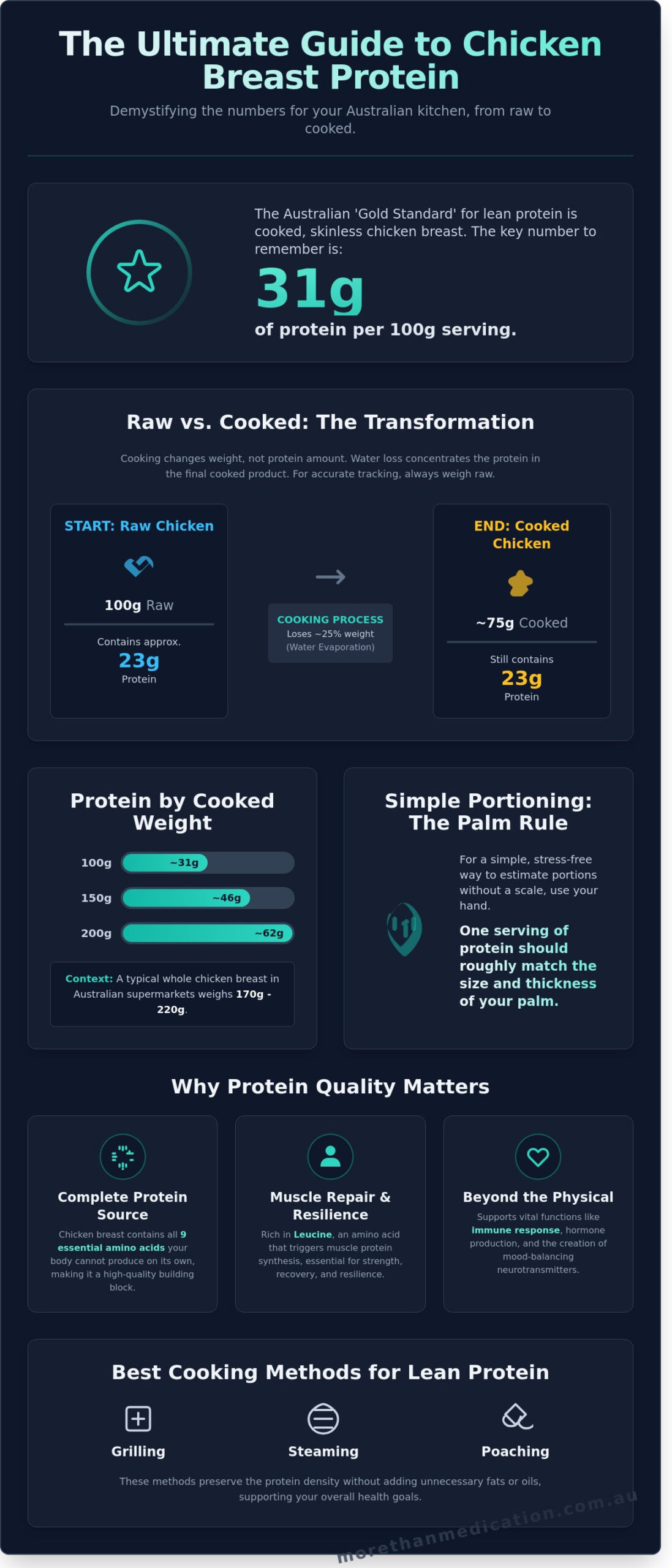
In Australia, skinless chicken breast is often called the ‘gold standard’ for lean protein. It’s accessible, versatile, and incredibly efficient for those looking to nourish their bodies without excess saturated fats. The standard baseline for your calculations is simple: a 100g serving of cooked skinless chicken breast provides approximately 31 grams of protein. This high concentration is why it remains a preferred choice for people navigating various health journeys, from weight management to post-surgical recovery.
It’s easy to feel a bit confused when you’re looking at a raw piece of meat from the butcher or supermarket. While 100g is the nutritional baseline, a ‘whole’ chicken breast in Australia usually weighs between 170g and 220g. If you eat an entire breast, you’re likely consuming significantly more than the 31g baseline. The historical context of Chicken as food shows its evolution into a dietary pillar for health-conscious individuals because of this density. Chicken breast is uniquely efficient, offering roughly 80% of its calories from protein alone.
Protein Content by Weight: A Quick Reference
To help you plan your meals with confidence, use these approximate figures for cooked, skinless chicken breast. These numbers help you understand how much protein is chicken breast based on the actual portion on your plate:
- 100g chicken breast: ~31g protein
- 150g chicken breast: ~46g protein
- 200g chicken breast: ~62g protein
Why Protein Quality Matters
Protein is about more than just numbers on a label; it’s about the quality of the fuel you give your body. Chicken is what’s known as a ‘complete’ protein. This means it contains all nine essential amino acids that your body cannot produce on its own. These nutrients are vital for more than just muscle growth. They support tissue repair, hormone production, and immune function. One specific amino acid found in chicken, leucine, acts as a biological trigger for muscle protein synthesis. This process is essential for maintaining strength and resilience, especially when you’re facing the physical or emotional stress of a health condition. By choosing high-quality protein, you’re giving your body the tools it needs to repair and thrive.
Raw vs. Cooked: How Preparation Changes the Protein Profile
Understanding your food shouldn’t feel like a complex maths test. Many people worry that heat destroys nutrients, leading to a common concern: does protein simply vanish once the pan gets hot? The reassuring answer is no. While the structure of the meat changes, the actual protein content stays remarkably stable. What changes most significantly is the weight of the chicken itself due to water loss.
Raw chicken breast is roughly 75% water. As you apply heat, that moisture evaporates. Typically, a 100g portion of raw chicken shrinks to about 75g or 80g after cooking. This creates a concentration effect. Because the water is gone, the remaining meat is more protein-dense by weight. When you’re trying to figure out how much protein is chicken breast, it helps to look at the weight before it hits the pan. A 100g raw breast contains about 23g of protein, whereas 100g of cooked breast can pack upwards of 31g because it’s more concentrated.
Consistency is your best friend on this health journey. If you track your daily intake, try to weigh your food raw. It’s the most accurate way to match the data found on Australian nutrition labels. If you’ve already cooked your meal, don’t worry. Just ensure you select the “cooked” or “grilled” option in your tracking app to keep your records honest and your progress on track.
The Impact of Cooking Methods
Your choice of heat matters for your heart and your overall balance. Grilling, steaming, or poaching are excellent ways to keep the meat lean. These methods preserve the density without adding unnecessary fats. Frying, however, introduces extra oils that can double the calorie count, even if the protein remains the same. High heat does “denature” the protein, but this isn’t a bad thing. It actually makes the protein easier for your body to digest. For safety, always ensure your chicken reaches an internal temperature of 75°C. This ensures you’re nourishing your body safely while maintaining the quality of The Nutrition Source in your daily diet.
Skin-on vs. Skinless: The Lean Factor
Choosing between skin-on or skinless is often a balance between flavour and calorie goals. The skin is primarily composed of fat. It adds roughly 2 to 3 grams of fat per 100g serving without providing a significant boost to the protein count. If you’re managing heart health or working toward weight goals, removing the skin is a simple, effective step. It’s about finding what works for your lifestyle while staying mindful of your long-term wellness. Understanding how much protein is chicken breast with or without the skin helps you make empowered choices. Taking these small steps helps you feel more in control of your physical health. If you’re looking for more ways to support your wellbeing, you can explore our holistic resources to find a path that feels right for you.
Calculating Your Needs: Is Chicken Breast Your Best Protein Source?
Nutrition isn’t a rigid rulebook, and your requirements aren’t a fixed destination. Understanding how much protein is chicken breast offers a helpful starting point, but your body’s demands shift with the seasons of your life. We often see a one-size-fits-all approach to dieting, yet your needs at age 25 differ significantly from your needs at 65. Factors like your daily movement, sleep quality, and even emotional stress levels influence how your body uses nutrients.
It’s easy to get caught up in a modern protein obsession. While this macronutrient is vital, eating excessive amounts doesn’t automatically mean better health. Most healthy Australian adults find a balance with 0.8 to 1.2 grams of protein per kilogram of body weight. Pushing far beyond this without a specific athletic goal can sometimes place unnecessary strain on your system. Instead of chasing rigid perfection, try a gentle approach to tracking. Think of it as a way to listen to your body rather than a way to control it.
Individualizing Your Nutrition
Your baseline is as unique as your fingerprint. Using a tool like this Macro Calculator helps you find a starting point that respects your current lifestyle. There’s a fundamental difference between maintenance protein, which keeps your systems running, and growth protein, which helps repair tissues. If you’re recovering from an injury or a period of illness, your body may require an extra 20 percent more protein to facilitate cellular repair. While breast meat is a lean staple, looking at the protein in different cuts of chicken can help you vary your intake to prevent dietary boredom and ensure you’re getting a mix of healthy fats.
The Satiety Secret
Protein is a powerful ally for your mental and physical wellbeing because of how it talks to your brain. It directly influences hunger hormones like ghrelin, which signals hunger, and GLP-1, which tells you that you’re full. When you start your day with a protein-rich meal, you create a foundation of energy stability. This prevents the mid-morning brain fog that often follows a sugar-heavy breakfast. Using chicken breast as a tool for weight management works because it keeps your blood sugar levels steady, reducing the anxiety often associated with “hangry” episodes. When you’re curious about how much protein is chicken breast, remember that its value lies in how it makes you feel hours after the meal is finished. It’s about sustained focus and a calm, nourished body.
Practical Portioning for the Australian Kitchen
Understanding your body’s needs is the first step toward wellness. The second step is making those needs fit into your Tuesday night dinner routine without added stress. In Australian supermarkets like Coles or Woolworths, you’ll usually find chicken breast sold in 500g trays or larger 1kg bulk packs. Buying the larger packs can often save you between A$2 and A$5 per kilogram, making it a budget-friendly way to prioritise your health.
When you’re trying to figure out how much protein is chicken breast, the “Palm Rule” is your most reliable tool. A raw portion that matches the size and thickness of your palm is roughly 100g to 120g. This single portion provides approximately 31 grams of high-quality protein, which is a perfect building block for your daily requirements. Don’t feel pressured to buy fresh every day; frozen chicken breast offers the same nutritional value and can be a lifesaver for busy weeks.
Easy Serving Size Hacks
Visualising 100g doesn’t require a set of scales. If you don’t want to use your palm, think of a standard deck of cards. This is the ideal amount for an individual meal. For families, a 500g tray typically serves four people once you add plenty of colourful vegetables and a complex carb like brown rice or quinoa.
Reading the Nutrition Information Panel (NIP) on the back of the packet helps you confirm exactly how much protein is chicken breast based on the specific brand you’ve chosen. Always look at the “per 100g” column rather than the “per serving” size. Manufacturers often define “servings” differently, but the 100g data allows you to make an accurate, apple-to-apples comparison between different products.
Versatile Preparation Ideas
To keep your journey interesting and avoid “chicken fatigue,” lean into the power of dry rubs. Smoked paprika, dried oregano, or lemon zest add incredible flavour without the hidden sugars found in bottled marinades. Pairing your chicken with fresh herbs can also elevate both the flavour and the nutritional profile of your meal; understanding the differences between holy basil and thai basil can help you choose the right herb for both culinary and wellness purposes. Chicken is also a fantastic vehicle for essential minerals. Understanding selenium benefits helps you see this lean meat as more than just a protein source; it’s a quiet achiever for your immune system and metabolic health.
If you’re meal prepping for the week, safety is just as vital as nutrition. Once your chicken is cooked, let it cool slightly before sealing it in an airtight container. Follow the 3-day rule: keep cooked chicken in the fridge for no more than three days. If you’ve prepped more than that, pop the extra portions in the freezer. This simple habit protects your gut health and ensures your hard work in the kitchen doesn’t go to waste.
Ready to build a more balanced lifestyle? Explore our guide on how to create a holistic meal plan that supports your long-term wellbeing.
A Holistic Approach to High-Protein Nutrition
Understanding how much protein is chicken breast is a practical skill for your kitchen, but we invite you to look deeper than the numbers. At More Than Medication, we believe food is the foundation of your recovery and long-term strength. Protein is more than just a macronutrient; it is a vital partner in your mental health. When you consume high-quality protein, you give your body the building blocks for essential neurotransmitters. Medicine provides one path to healing, but the fuel you choose sustains that journey every day.
Amino acids like tryptophan and tyrosine, found abundantly in poultry, are the precursors to serotonin and dopamine. These are the chemicals that help you feel calm, motivated, and focused. While animal proteins are highly efficient, a holistic approach thrives on variety. Incorporating nut butter into your snacks or breakfasts adds healthy fats and fibre that chicken lacks. This balance ensures your gut microbiome stays diverse; 2023 research suggests a direct link between gut diversity and reduced symptoms of depression. Your body is an interconnected system, and your plate should reflect that complexity.
Mental Health and Nutrition
Your emotional resilience depends on stable internal chemistry. When you miss out on adequate protein, your blood sugar levels can fluctuate wildly. These crashes often mimic the physical symptoms of anxiety, such as a racing heart or sudden irritability. By ensuring you know how much protein is chicken breast and including a portion in your midday meal, you create a steady energy supply. This prevents the physiological spikes that tax your nervous system. Treating your meals as an act of self-care changes your relationship with food from a daily chore to a healing ritual.
Building a Balanced Plate
Visualising your meal can reduce the stress often associated with strict dieting. The ‘Plate Method’ is a gentle way to find balance without the pressure of constant data tracking. Aim for this simple structure:
- Half your plate: Fill this with non-starchy vegetables like broccoli, capsicum, or bok choy for essential micronutrients.
- One quarter: Choose quality carbohydrates such as quinoa, brown rice, or a small roasted sweet potato.
- One quarter: Dedicate this to your protein source, like a palm-sized portion of grilled chicken breast.
Don’t forget to include healthy fats. A drizzle of Australian extra virgin olive oil or a few slices of avocado helps your body absorb vitamins A, D, E, and K. Your journey to wellness is unique and does not need to be perfect from day one. Listen to how your body feels an hour after eating. You are the expert on your own wellbeing, and every mindful choice is a step toward a more resilient you.
Empowering Your Health Journey Through Better Nutrition
Knowing exactly how much protein is chicken breast gives you the clarity to nourish your body with intention. A typical 172g cooked breast delivers roughly 54 grams of protein, helping you meet the Australian Nutrient Reference Values for muscle maintenance and repair. It’s important to remember that protein density increases when you cook your chicken, as moisture loss concentrates the nutrients. This isn’t just about hitting a number on a chart; it’s about building the resilience you need to feel your best every day.
Our compassionate, patient centric approach at More Than Medication combines expert led nutrition advice with evidence based wellness insights. We understand that managing your health can feel overwhelming, but you don’t have to navigate it alone. We’re here to provide the steady guidance you need to bridge the gap between medical advice and your daily lifestyle. You’re more than a set of requirements, and your nutrition should reflect that holistic reality.
Find your personalized nutrition needs with our Macro Calculator
Take this small, actionable step today and trust that you’re making steady progress toward a more balanced and vibrant life.
Frequently Asked Questions
Is 100g of chicken breast enough protein for one meal?
Yes, 100g of cooked chicken breast provides approximately 31 grams of protein, which fits perfectly within the 20 to 30 gram range recommended by nutritionists for optimal muscle repair. This amount helps your body stay satiated and supports your physical strength throughout the day. You’ll find this portion is about the size of a deck of cards, making it a manageable addition to your lunch or dinner plate.
Does chicken breast lose protein when it is frozen?
Freezing chicken breast doesn’t reduce its protein content or nutritional value, so you can safely stock up during supermarket sales. According to CSIRO research, the amino acids remain stable when meat is kept at a consistent temperature of -18°C or lower. While the texture might change slightly if ice crystals form, your body still receives the full benefit of the protein once it’s thawed and cooked.
Is it better to eat chicken breast or thigh for protein?
Chicken breast is the better choice if you want to maximise your protein intake while keeping calories low, as it contains 31g of protein per 100g compared to 26g in thighs. When you’re looking at how much protein is chicken breast vs thigh, the breast offers a leaner profile with significantly less saturated fat. Both cuts have a place in a balanced diet, but the breast is the gold standard for lean muscle support.
How much protein is in a medium-sized chicken breast from an Australian supermarket?
A medium chicken breast from an Australian supermarket like Coles or Woolworths typically weighs between 175g and 225g, providing roughly 54g to 70g of protein. Understanding how much protein is chicken breast helps you plan your meals more effectively to avoid overconsumption. Since your body processes protein best in smaller increments, you might consider slicing a large breast in half to spread your intake across two different meals.
Can I get enough protein from chicken if I don’t eat the skin?
You’ll get plenty of protein without the skin because the protein is stored entirely within the muscle meat. Removing the skin is a gentle way to care for your heart, as it reduces the saturated fat content by about 2 grams per serving. This simple adjustment follows the Heart Foundation of Australia’s advice for maintaining healthy cholesterol levels while still giving your body the fuel it needs for daily resilience.
What happens to your body if you don’t eat enough protein?
If you don’t consume enough protein, your body may begin to break down its own muscle tissue to access essential amino acids, leading to fatigue and physical weakness. The Australian Bureau of Statistics indicates that roughly 13 percent of men and 14 percent of women over the age of 71 don’t meet their daily requirements. You might also notice that your immune system feels sluggish or that small cuts take longer to heal than usual.
Is chicken breast high in cholesterol compared to other meats?
Chicken breast contains about 85mg of cholesterol per 100g, which is comparable to lean beef and lower than many processed meats. It’s a reliable choice for a heart-healthy lifestyle because it’s very low in saturated fats, containing less than 1g per 100g serving. Focusing on lean poultry is a proactive step in your health journey, helping you manage your internal balance through mindful eating rather than relying on medication alone.
How does the protein in chicken compare to plant-based proteins like tofu?
Chicken breast is much more protein-dense than plant-based alternatives, offering 31g of protein per 100g compared to about 12g in the same amount of firm tofu. While tofu is a wonderful source of fibre and minerals, you’d need to eat almost triple the amount to match the protein found in chicken. Chicken is also a complete protein, meaning it contains all nine essential amino acids your body can’t produce on its own.
⚕️ Medical Disclaimer
This content is for informational purposes only and is not a substitute for professional medical advice, diagnosis, or treatment. Always seek the advice of your doctor or other qualified health provider with any questions you may have regarding a medical condition. Never disregard professional medical advice or delay in seeking it because of something you have read on this website.





1 comment
Marina2464
https://shorturl.fm/JuwS6