What if the secret to lasting strength isn’t found in high-impact cardio that leaves your knees aching, but in the controlled resistance of a sliding carriage? Many Australians are turning to reformer pilates because they’ve felt that familiar sting of joint pain after a gym session or felt intimidated by complex weight machines. It’s frustrating when you want to improve your posture and core strength, yet the very exercises meant to help you feel like they’re causing more harm than good. With about 15.7% of Australians living with chronic back problems according to the 2022 ABS health survey, finding a gentle yet effective solution is essential for your long-term wellbeing.
We understand that your health journey is about the whole person, and sometimes the best medicine is a movement practice that respects your body’s limits while challenging its potential. This guide shows you how this versatile practice acts as a bridge between physical rehabilitation and athletic conditioning, helping you build lean muscle without the risk of injury. We’ll explore how these movements transform your functional strength and provide a sustainable path toward a body that feels truly resilient and balanced.
Key Takeaways
- Understand how the specialized carriage and “Contrology” principles create a foundation for a more balanced, mindful approach to your fitness journey.
- Discover how reformer pilates uses unique spring resistance to build “long, lean” muscle and deep core stability that supports your body in everyday life.
- Learn why the Reformer’s assistance can be gentler than mat-based exercises, providing a supportive environment if you are managing limited mobility or starting fresh.
- Explore the restorative role of this practice in injury rehabilitation, a method often recommended by Australian health professionals for managing back pain and joint health.
- Prepare for your first session with confidence by knowing exactly what to wear and why a safety briefing is the first step toward a successful practice.
What is Reformer Pilates? Demystifying the Machine
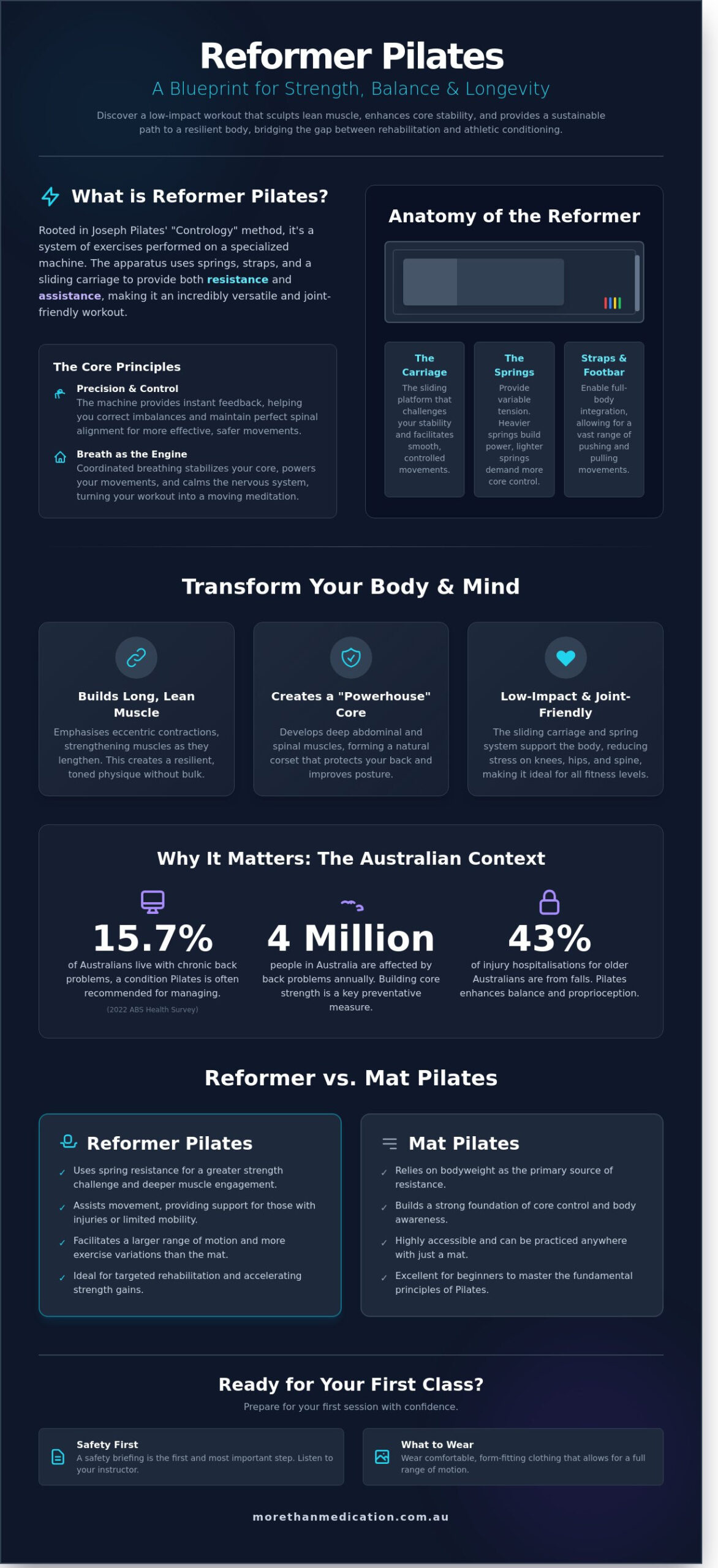
Walking into a studio and seeing a reformer for the first time can feel a little daunting. The machine, with its sliding platform and various springs, looks complex. However, reformer pilates is designed to be a supportive partner in your wellness journey. It’s a system of exercises performed on a specialized carriage-based apparatus that offers both resistance and assistance. This method allows you to move through a full range of motion while keeping your joints protected and your core engaged.
The practice is rooted in the History of Pilates, which began in the early 1920s when Joseph Pilates developed his “Contrology” method. He believed that mental and physical health were inextricably linked. Today, this low-impact practice is a staple in Australian health circles, from local community centres to specialized clinical settings. It’s accessible for almost any age or fitness level, whether you’re recovering from an injury or looking to build functional strength.
The Anatomy of the Reformer
- The Carriage: This is the flat, padded platform that slides back and forth on wheels. It facilitates smooth, controlled movement, helping you find stability even when the surface beneath you is shifting.
- The Springs: These are the heart of the machine. Different colours represent varying levels of tension. Heavier springs build muscle power, while lighter springs often challenge your stability by requiring more core control.
- The Straps and Footbar: These elements allow for full-body integration. By using your arms or legs to pull the straps or push off the footbar, you create a unique range of motion that mat-based exercises simply can’t replicate.
Precision and Breath: The Foundations
In this practice, breath is much more than just a way to stay oxygenated. It’s the engine of every movement. You’ll learn to coordinate your inhalations and exhalations to stabilize your torso and power your limbs. This focus on breath helps calm the nervous system, making each session feel like a moving meditation. It’s a moment to reconnect with yourself away from the noise of daily life.
The machine also acts as a mirror for your body. It provides immediate feedback on your symmetry. If you’re pushing more with your right leg than your left, the carriage will let you know. By focusing on spinal alignment and the concept of a “neutral spine,” you begin to correct imbalances that might cause daily discomfort. This precision ensures that reformer pilates isn’t just about a workout; it’s about moving better in your everyday life.
The Physical and Mental Benefits of Regular Practice
Practising reformer pilates offers a unique way to reshape how your body moves and feels. Unlike traditional weightlifting that often focuses on shortening the muscle, the resistance of the reformer springs emphasises eccentric contraction. This means your muscles are strengthening while they are lengthening, creating that resilient, “long and lean” physique many people seek. It isn’t just about aesthetics; this method builds a “powerhouse” of core stability that protects your spine and improves your proprioception. By constantly adjusting to the moving carriage, your brain develops a sharper sense of where your body is in space, which reduces clumsiness and enhances overall grace.
Building Functional Strength for Daily Life
Your time on the machine translates directly to your life outside the studio. Strengthening the deep stabilizers helps you maintain upright posture during a long drive or while sitting at a desk for 8 hours. This is vital in Australia, where back problems affect approximately 4 million people annually. By focusing on pelvic floor health and deep abdominal engagement, you create a natural corset that supports every movement. This foundation is crucial for balance and coordination. Since falls account for roughly 43% of injury-related hospitalisations for older Australians, building this stability early is a powerful investment in your long-term independence. Integrating Pilates for injury recovery can also help you safely return to daily activities after a setback, ensuring your body remains a reliable partner as you age.
The Mind-Body Connection
The mental shift that occurs during a session is often as profound as the physical one. Because reformer pilates requires intense concentration on breath and precise spring tension, it acts as a moving meditation. It’s nearly impossible to worry about your to-do list when you’re coordinating complex, multi-limb movements. This focus helps quiet the “monkey mind” and reduces cortisol levels. Learning these new, coordinated patterns actually challenges your nervous system, building neurological resilience. As you master a difficult sequence or notice your balance improving after just 5 sessions, you’ll likely feel a surge in confidence. These small physical wins remind you that you’re capable of growth, helping you face life’s other challenges with a calmer, more centred perspective. If you’re looking for more ways to support your wellbeing, you can explore our holistic health resources for further guidance.
Reformer vs. Mat Pilates: Which Path is Right for You?
Choosing between a mat and a machine can feel overwhelming when you’re starting your wellness journey. On a mat, you’re working against the constant pull of gravity. It’s a pure test of your own bodyweight. The reformer pilates carriage, however, uses a sophisticated system of springs and pulleys to create resistance. This setup doesn’t just make things harder; it can actually support you. If you’re recovering from an injury or have limited mobility, the machine acts as a partner, guiding your limbs through a safe range of motion that might feel impossible on the floor.
While a mat routine is often limited to about 50 standard exercises, the reformer offers over 500 variations. This variety keeps your mind engaged and your muscles guessing. Accessibility is often the main trade-off. You can roll out a mat at home for free, while a casual session in a boutique studio typically costs between $30 and $45. It’s an investment in your health that pays dividends in precision and support.
When to Choose the Mat
You might find the mat is your best ally when you want to focus on the foundations of movement. It requires deep, internal discipline because there are no straps to hold you in place. You’re responsible for every centimetre of your alignment. It’s also the ultimate travel companion. Whether you’re in a hotel room or a local park, your practice stays with you. Mastering your own bodyweight builds a unique kind of resilience that translates perfectly into everyday tasks.
Why the Reformer Often Wins for Results
If you’re looking for efficient progress, the machine’s design provides a distinct advantage. It “frames” your body, which makes it much harder to use momentum or “cheat” your way through a difficult move. This mechanical feedback ensures you’re hitting the right muscles every single time. There are Reformer Pilates benefits backed by research that show significant improvements in functional capacity and balance compared to traditional floor exercises.
By adjusting the spring tension, your instructor can increase the challenge as you grow stronger. This progressive resistance leads to visible changes in muscle tone and flexibility faster than bodyweight alone. Reformer pilates acts as a bridge between clinical rehabilitation and athletic performance, allowing you to empower your body at your own pace. It’s about finding that balance between being challenged and feeling completely supported through every movement.
Pilates as a Tool for Rehabilitation and Longevity
Living with a chronic condition or recovering from a recent injury can feel like an uphill battle. You’re often looking for more than just a quick fix; you’re looking for a way to move through life with less pain and more confidence. In Australia, many physiotherapists integrate reformer pilates into clinical treatment plans because it bridges the gap between medical rehab and functional fitness. It’s particularly effective for the 4 million Australians living with chronic back problems, as the spring-loaded resistance provides a gentle decompression for the spine that traditional weights often can’t match.
This approach isn’t just about physical strength; it’s about reclaiming your sense of agency. Whether you’re navigating the physical shifts of pregnancy or managing a long-term disc issue, the focus remains on what your body can achieve today. By aligning your breath with controlled movements, you create a supportive environment for your nervous system to downregulate, which is a vital component of any healing journey.
Recovering from Injury with Precision
Your recovery shouldn’t be rushed or painful. The reformer’s sliding carriage allows you to perform non-weight-bearing exercises, which is vital if you’re managing a knee or ankle injury. This setup lets you build strength without the jarring impact of gravity. A key part of this process involves eccentric loading, where muscles lengthen under tension. Research indicates this method is highly effective for repairing tendons and ligaments. Exercises are easily modified to meet your body’s specific needs, allowing you to stay active even when you have physical limitations.
The Longevity Factor: Movement for Life
Movement is the best medicine for your future self. Maintaining spinal mobility is a primary indicator of biological age; a flexible spine supports a more resilient body. For those focused on bone health, the light resistance provided by the springs helps stimulate bone density. This is crucial for the 924,000 Australians diagnosed with osteoporosis according to recent health data. Unlike high-impact sports that can wear out your joints over time, reformer pilates promotes joint lubrication through controlled, fluid motions. It’s a sustainable habit that supports your body’s natural ability to thrive as you age. For those seeking additional bone-strengthening options, exploring weighted vest training for bone density can complement your Pilates practice with gentle, progressive loading that further supports skeletal health.
If you’re ready to support your long-term health and mobility, explore how integrating movement into your recovery plan can make a lasting difference.
Your First Class: Preparation and What to Expect
Stepping into your first reformer pilates session is a brave commitment to your physical health. To feel confident, choose form-fitting leggings or shorts. This isn’t about fashion; it’s about safety. Tight clothing ensures your instructor can monitor your spinal alignment and prevents fabric from tangling in the machine’s springs. You’ll also need “grip socks” with rubber soles to stay secure on the moving carriage. Most Australian studios provide these for purchase for approximately A$20 to A$25 if you don’t have your own.
Arrive 15 minutes before the scheduled start time. This buffer allows your instructor to provide a vital safety induction on the reformer’s mechanics. They’ll show you how to change the resistance springs and adjust the headrest. During the workout, expect to feel the “Pilates burn.” This deep, localized muscle fatigue often targets stabilizing muscles in the hips and core that are rarely activated during traditional gym sessions. It’s a sign of progress, not a reason for alarm.
Quality instruction is the foundation of a safe journey. In Australia, verify that your teacher is registered with the Pilates Alliance Australasia (PAA) or the Australian Pilates Method Association (APMA). These bodies require instructors to complete between 450 and 600 hours of comprehensive training. Choosing a certified professional ensures your movements are guided by clinical anatomical knowledge, reducing your risk of injury.
Navigating the Studio Environment
You’ll quickly pick up common studio shorthand. “Tabletop” refers to lifting your legs with knees bent at a 90 degree angle, while “red spring” usually denotes heavy resistance. Etiquette is straightforward: arrive quietly and always wipe down your carriage, footbar, and straps with the provided disinfectant once the session ends. Never hesitate to ask for a modification. A 2023 industry report indicated that 85% of instructors provide tiered options for every exercise to support participants at different stages of their recovery or fitness.
Integrating Pilates into Your Holistic Wellness Journey
Think of reformer pilates as a supportive partner to your other daily habits. It balances perfectly with low-impact cardio, like a 30 minute walk along the coast or a gentle swim. For those looking to add gentle resistance training to their routine, incorporating weighted vest exercises during your walks can enhance the bone-building benefits while maintaining the low-impact nature that complements your Pilates practice. We view movement as a vital pillar of health that exists alongside nutrition and rest. This reflects the “More Than Medication” philosophy; while clinical treatments are essential, your daily physical choices empower your long-term resilience. To further strengthen the upper back muscles that Pilates activates, pairing your practice with a targeted reverse flies workout can help counteract desk-bound tension and build the posterior shoulder strength that supports better posture. If you’re seeking another mindful movement practice that complements Pilates beautifully, exploring yoga for beginners can provide additional tools for managing stress and building flexibility through breath-centered movement. Embrace the process of small, consistent improvements. Each session is a step toward a more balanced, capable version of yourself.
Embrace a Stronger Version of Yourself Today
Stepping onto the carriage for the first time is a meaningful commitment to your long-term wellbeing. By choosing reformer pilates, you’re embracing a practice that bridges the gap between clinical rehabilitation and daily vitality. A 2021 study published in the Journal of Bodywork and Movement Therapies found that just 12 weeks of consistent practice can improve core stability by 20% and significantly reduce chronic back pain. This evidence-based approach ensures you’re not just moving, but moving with purpose. It’s a reminder that your health journey is personal and multifaceted.
We’re here to walk beside you with expert-led wellness insights and empathetic guidance tailored for your life in Australia. Our mission is to provide evidence-based health education that acknowledges both the emotional and physical aspects of your recovery. We believe that feeling your best often requires a holistic perspective that goes beyond the pharmacy counter. You deserve a partner who understands that health is about more than just managing symptoms; it’s about thriving in every moment. Explore more ways to move and thrive on our health blog. You’ve got the strength to start this new chapter, and we’re ready to help you navigate it.
Frequently Asked Questions
Is Reformer Pilates harder than Mat Pilates?
Neither is strictly harder, but they offer different challenges for your body. While mat work uses your own body weight against gravity, reformer pilates utilizes adjustable springs to provide both resistance and support. A 2021 study in the Journal of Bodywork and Movement Therapies found that reformer machines offer 50% more variety in resistance levels compared to mat exercises. This makes the reformer a versatile tool that can either simplify a movement or make it significantly more intense.
How many times a week should I do Reformer Pilates to see results?
You’ll typically see and feel the most benefit by attending 2 to 3 sessions per week. Joseph Pilates famously suggested that you’ll feel a difference in 10 sessions and see a physical change in 20 sessions. For most Australians, this frequency allows for adequate muscle recovery while building the neuromuscular patterns needed for better posture. Consistency is the key to turning these movements into a natural part of your daily physical resilience.
Can I do Reformer Pilates if I have a bad back?
Yes, because the sliding carriage supports your spine’s alignment while you focus on strengthening your deep core. Data from the Archives of Physical Medicine and Rehabilitation shows that 70% of people with chronic low back pain experienced functional improvement after an 8 week Pilates program. It’s vital to speak with your GP or a physiotherapist first. For those seeking a comprehensive, GP-led approach to their health, you can learn more. They can help you find a qualified instructor who understands how to modify exercises to protect your back during your recovery.
Do I need to be flexible to start Reformer Pilates?
You don’t need any existing flexibility to begin your journey with reformer pilates. Many people start specifically because they feel stiff or have a limited range of motion from desk work. The machine’s pulley system supports your limbs, allowing you to stretch safely and deeply without straining. Research indicates that beginners often see a 15% to 20% increase in their flexibility measurements after completing just 8 to 12 weeks of regular, guided practice.
Is Reformer Pilates good for weight loss?
It’s an effective part of a weight management plan because it builds lean muscle mass which increases your resting metabolic rate. A vigorous 50 minute session can burn between 250 and 450 calories depending on your effort and the specific exercises chosen. While it’s less about high intensity cardio, the strength you gain helps you move more efficiently in everyday life. Think of it as a way to nourish your body’s strength rather than just focusing on a number.
What should I wear to my first Reformer Pilates class?
Wear comfortable, form-fitting activewear that stays in place while you move through different positions. Avoid loose clothing that might get caught in the reformer’s springs or hardware. In Australia, most studios require you to wear “grip socks” with rubber pads on the soles to ensure you don’t slip on the footbar. These specialized socks usually cost between A$15 and A$25 at the studio and help you feel secure and grounded during your first session.
Can men do Reformer Pilates?
Absolutely, and it’s a staple training tool for many professional athletes in the AFL and NRL to prevent injuries. Joseph Pilates originally designed this system for men in hospital beds and internment camps to maintain their physical strength. Today, men use the reformer to build core power and improve balance that traditional weightlifting might miss. It’s a challenging, full body workout that respects your current fitness level while helping you find new levels of stability and power.
What is the difference between Clinical Pilates and Fitness Pilates?
Clinical Pilates is led by a qualified physiotherapist and focuses on specific rehabilitation goals or managing chronic health conditions. In Australia, these sessions are often eligible for private health insurance rebates under “Extras” cover if they meet certain criteria. Fitness Pilates is designed for general wellbeing and strength in a group environment. While fitness classes are wonderful for overall health, clinical sessions provide a tailored approach where your specific medical history and injury recovery are the primary focus. For those looking to complement their Pilates sessions with targeted upper back strengthening, learning how to perform a proper reverse flies workout to improve posture can be a valuable addition to your overall movement practice.
⚕️ Medical Disclaimer
This content is for informational purposes only and is not a substitute for professional medical advice, diagnosis, or treatment. Always seek the advice of your doctor or other qualified health provider with any questions you may have regarding a medical condition. Never disregard professional medical advice or delay in seeking it because of something you have read on this website.