
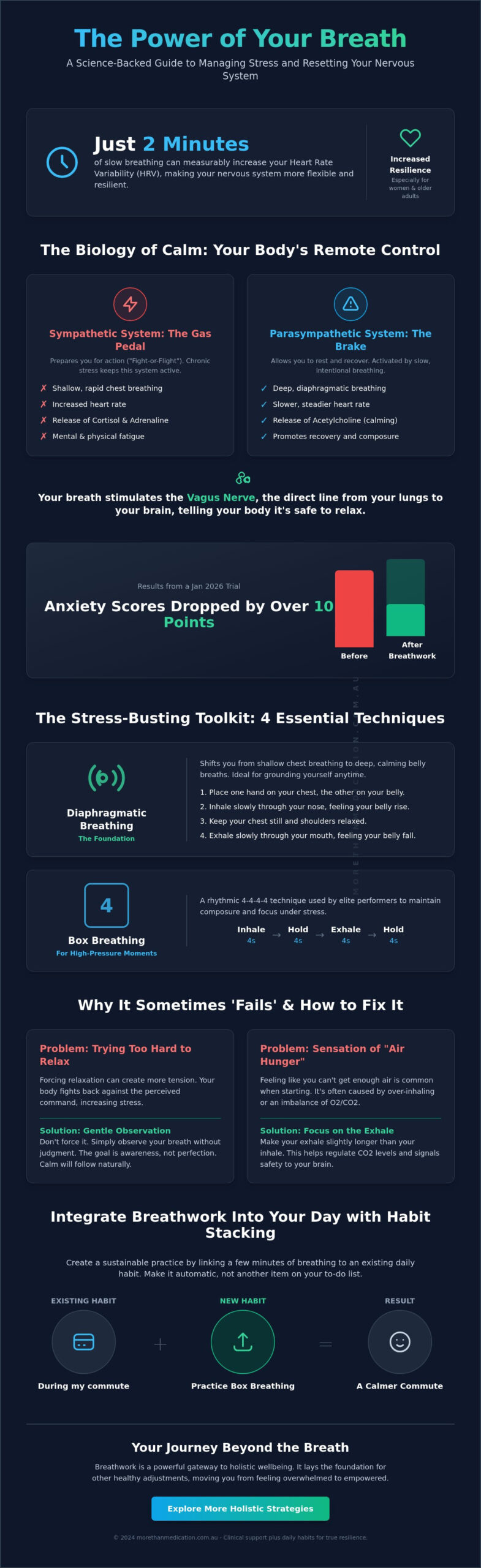
Did you know that just two minutes of slow breathing can measurably increase your heart rate variability? A 2025 study proved this simple shift helps your nervous system become more flexible, especially for women and older adults. You’ve likely felt that frustrating sensation when your heart starts racing and your breath stays shallow, leaving you trapped in a cycle of mental fatigue. It feels like your body is stuck in a permanent state of high alert. Managing stress with breathing exercises isn’t just a lifestyle trend; it’s a physiological reset button you carry with you every day.
We want to help you reclaim your composure and reset your nervous system through the transformative power of intentional breathwork. At More Than Medication, we believe that clinical support is vital, but your daily habits are the “more” that completes the picture of your resilience. This guide explores the science behind why these techniques work, including insights from a January 2026 trial where anxiety scores dropped by over 10 points, and provides a practical toolkit to help you find your calm. Whether you’re at home or navigating a busy day, these evidence-based steps will help you move from feeling overwhelmed to feeling empowered.
Key Takeaways
- Understand how to use your breath as a “biological remote control” to signal your Vagus nerve and exit the stressful fight-or-flight state.
- Discover four essential techniques for managing stress with breathing exercises that work effectively whether you’re at your desk or on your commute.
- Identify why trying too hard to relax can sometimes create more tension and learn how to fix common issues like the sensation of “air hunger.”
- Learn how to use habit stacking to weave intentional breathing into your daily routine, creating a sustainable path toward long-term balance.
- Explore how breathwork serves as a powerful gateway to holistic wellbeing and acts as a foundation for other healthy lifestyle adjustments.
The Biology of Calm: Why Breathing Exercises Manage Stress
Your breath is a unique bridge. It’s the only function of your autonomic nervous system that you can control at will. Think of it as a biological remote control for your brain. While you can’t easily command your heart to slow down or your blood pressure to drop, you can change your breathing pattern in an instant. This shift sends an immediate signal to your brain, allowing you to move from a state of high alert to one of quiet composure. Managing stress with breathing exercises works because it taps into this direct neurological link between your lungs and your mind.
The primary actor in this process is the Vagus nerve. This long, wandering nerve connects the brainstem to almost every major organ in your body, including the heart and lungs. When you practice Conscious breathing techniques, you’re physically stimulating this nerve. This stimulation triggers the release of acetylcholine, a neurotransmitter that tells your heart to slow down and your muscles to relax. It’s the most effective way to exit the fight-or-flight state that many Australians find themselves stuck in during a demanding work week.
Understanding the Autonomic Nervous System
Your nervous system operates on two main circuits. The Sympathetic system acts like a gas pedal, preparing you for action. The Parasympathetic system acts as the brake, helping you rest and recover. When you experience chronic stress, your breathing often moves to the upper chest. This shallow, rapid breathing keeps the gas pedal floored, even when there’s no immediate danger nearby. The relaxation response is a measurable physiological state that occurs when we intentionally slow our breath, effectively applying the brakes to our internal system and allowing our body to recover.
The Chemistry of a Deep Breath
Beyond the nerves, your internal chemistry shifts with every intentional exhale. Controlled breathing helps reduce the levels of cortisol and adrenaline circulating in your blood. By extending your exhalations, you also regulate carbon dioxide (CO2) levels. This is important because the brain monitors CO2 to decide if you’re in a safe environment. Consistent practice also improves your heart rate variability, which is a significant marker of your overall resilience and physical health. At More Than Medication, we believe these small physiological resets are the “more” that helps you navigate your health journey with greater balance.
The Stress-Busting Toolkit: 4 Essential Breathing Techniques
Stress doesn’t always look the same. Sometimes it’s a slow, simmering worry during your morning commute on the M1. Other times, it’s the sharp spike of adrenaline before a major presentation. In professional settings, utilizing reliable technical support from a firm like Straight Street Event Services can help alleviate the external pressure of a live event, allowing you to focus on your breathing and performance. Because your body reacts differently to various pressures, managing stress with breathing exercises works best when you have a tiered approach. These techniques are portable tools you can use anywhere, from your office chair to the supermarket queue, without anyone else noticing you’ve begun a physiological reset.
By matching the specific exercise to your current emotional state, you can effectively dial down your internal alarm system. Whether you need to sharpen your focus or prepare your body for a restful night, these evidence-based methods offer a manageable path back to balance. If you’re looking for more ways to support your wellbeing, exploring expert advice on mental health can help you build a more comprehensive resilience strategy.
Diaphragmatic Breathing: The Foundation
Often called “belly breathing,” this technique is the fundamental building block for all breathwork. It shifts your body away from the shallow chest breathing associated with anxiety. To start, place one hand on your chest and the other on your lower abdomen. Inhale slowly through your nose, focusing on making the hand on your belly rise while the hand on your chest remains still. Imagine a small balloon gently expanding in your lower abdomen with every breath. A common mistake is shrugging your shoulders toward your ears; keep your neck and shoulders relaxed to ensure you’re fully engaging the diaphragm.
Box Breathing for High-Pressure Moments
Box breathing is a 4-4-4-4 ratio technique used by elite performers to maintain composure under intense pressure. It involves inhaling for four seconds, holding for four, exhaling for four, and holding again for four. This rhythmic pattern creates a steady, predictable pace for your nervous system to follow. Holding the breath at the top and bottom of the cycle is a vital part of the reset because it momentarily pauses the autonomic feedback loop, signaling to your brain that there’s no immediate physical threat.
The 4-7-8 Technique for Deep Relaxation
Known as a “natural tranquiliser” for the nervous system, the 4-7-8 method is particularly effective for evening wind-down or when you’re struggling to fall asleep. Inhale quietly through your nose for a count of four, hold your breath for seven seconds, and then exhale forcefully through your mouth for eight seconds, making a distinct “whoosh” sound. This long exhalation is the key to activating your body’s rest-and-digest mode. Because this technique is quite powerful, start with only four cycles at a time to avoid feeling lightheaded as your body adjusts to the deeper oxygen exchange.
Why Stress Breathing Exercises ‘Fail’ and How to Fix Them
Have you ever sat down to relax, taken a deep breath, and felt your anxiety actually increase? You’re not alone. It’s a common frustration for many Australians starting their journey with breathwork. Sometimes, the harder you try to force a state of calm, the more your body resists. This often happens because of a sensation known as “air hunger,” where your brain sends a false alarm that you aren’t getting enough oxygen. Managing stress with breathing exercises is a skill that takes time to develop; it’s a partnership between your mind and your body that can’t be rushed.
At More Than Medication, we view wellness as a continuous journey rather than a destination. If your first few attempts feel clunky or even slightly uncomfortable, don’t be discouraged. Your nervous system has likely been “stuck” in a high-alert state for a long time, and it needs a patient, gentle hand to guide it back to balance. By understanding the common pitfalls, you can move past the initial hurdles and start feeling the genuine benefits of a regulated system.
The Trap of ‘Forced Relaxation’
Trying too hard to breathe deeply can actually trigger a secondary stress response. When you approach breathwork with “aggressive control,” you’re inadvertently telling your brain that there’s a problem to be solved, which keeps your adrenaline levels high. Instead of forcing your lungs to expand, try the path of gentle observation. Simply notice your breath as it is right now, without judgment. Acceptance is a vital part of the process. A 2025 study found that participants who used an “acceptance-based” approach to breathwork reported a 30% reduction in practice-related tension compared to those who focused on perfect technique.
Posture and the Physical Space for Breath
Your physical alignment plays a massive role in how well you can breathe. Many of us spend hours hunched over laptops or phones, a habit often called “tech neck.” This slouching posture physically compresses your diaphragm and limits the space your lungs have to expand. To make breathing feel effortless, try these simple adjustments:
- Align your spine: Imagine a string gently pulling the crown of your head toward the ceiling, allowing your neck to lengthen.
- Drop your shoulders: Consciously roll your shoulders back and down, away from your ears.
- Loosen your clothing: Tight waistbands or belts can restrict the natural movement of your lower abdomen. Loosening these can provide the physical freedom your body needs to engage in true diaphragmatic breathing.
Making these small changes to your physical environment creates the “more” in your health routine, ensuring that your body is physically capable of supporting the mental shifts you’re trying to achieve.
Building a Resilient Lifestyle: Integrating Breath into Your Day
Managing stress with breathing exercises shouldn’t feel like another chore on your to-do list. If you only reach for these techniques during a crisis, you’re missing out on the cumulative benefits of a regulated nervous system. The most effective way to make this stick is through habit stacking. This involves anchoring your breathwork to a daily trigger that already exists in your life. You might practice sixty seconds of box breathing while waiting for the kettle to boil or take three deep belly breaths every time you stop at a red light. These micro-practices ensure you’re regularly clearing out the mental clutter before it has a chance to overwhelm you.
By weaving these moments into your existing schedule, you transform breathwork from an emergency intervention into a sustainable lifestyle habit. This proactive approach helps maintain a lower baseline of stress, making it easier to stay grounded when unexpected challenges arise. If you’re looking for more ways to support your journey, you can find expert advice on living a balanced lifestyle to help you stay on track.
Morning Momentum vs. Evening Ease
Your body’s needs change throughout the day, particularly regarding cortisol management. In the morning, you want to build momentum. Using energising breaths where your inhale and exhale are equal in length can help wake up your system naturally and improve mental clarity for the day ahead. As the sun sets, your focus should shift to evening ease. Using calming breaths with an exhale that is twice as long as the inhale signals to your brain that the workday is over. It’s helpful to look at the latest health trends to see how sustainable, rhythmic practices are replacing temporary mindfulness fads in 2026.
The Role of Nutrition and Fitness
A truly balanced lifestyle requires a synergy between all pillars of health. Your physical fitness directly impacts your lung capacity, making deep, diaphragmatic breathing feel more natural and less effortful over time. Similarly, what you eat influences your nervous system’s stability. Fluctuating blood sugar can mimic the physical symptoms of anxiety, so choosing nutrient-dense snacks like healthy slice recipes can provide the steady energy needed to stay grounded. This holistic approach is the “more” in our philosophy. Breathing exercises are most effective when they’re supported by a body that is well-nourished and active.
Your Journey Beyond the Breath: A Holistic Approach to Stress
While managing stress with breathing exercises provides a powerful foundation for real-time relief, it’s often the gateway to a much broader landscape of wellbeing. Breathwork acts as a reliable anchor, but true resilience comes from looking at the whole person. You aren’t just a collection of symptoms or a diagnosis; you’re a complex individual whose mental and physical health are deeply intertwined. By using your breath to steady your nervous system, you create the mental space needed to explore other supportive practices that contribute to long-term balance. This holistic view ensures you aren’t just surviving the day, but actively building a life that feels manageable and bright.
Sometimes, stress manifests as physical tension that requires a more targeted approach. If you find that your stress is held deep in your muscles, exploring remedial massage can help release those physical blocks and complement your breathing practice. This multi-layered approach ensures you’re addressing the “more” in your health journey, moving beyond a single solution to find what truly works for your unique life in Australia. Whether you’re in a busy city or a quiet regional town, these combined tools provide a sense of agency over your own health.
When to Seek Further Support
It’s important to recognise when situational stress crosses the line into chronic anxiety. If your racing heart or shallow breathing persists despite your best efforts, or if stress begins to manifest as debilitating physical pain, it’s time to partner with a healthcare professional. For instance, if chronic stress is a primary trigger for intense headaches, reading about migraine therapy drugs can help you understand the clinical options available to discuss with your GP. Managing stress with breathing exercises works beautifully alongside medical treatment, providing you with a toolkit for daily management while your doctor addresses the underlying clinical needs. This partnership is a vital part of finding your way back to a sense of empowerment.
Embracing the ‘More’ in Wellbeing
Your health is a continuous journey, not a final destination. Every small, consistent shift you make, whether it’s a two-minute box breathing session or choosing a nutrient-dense snack, builds your resilience over time. At More Than Medication, we’re here to act as your compassionate companion, offering a steady hand through the ups and downs. We believe that empowerment comes from understanding the “why” behind your body’s responses and having the tools to navigate them with confidence. We invite you to join our community for ongoing wellness insights as you continue your path toward a more balanced and vibrant life. You don’t have to navigate this journey alone.
Embrace Your Path to Lasting Composure
You now have the tools to transform your relationship with stress by using your breath as a direct line to your nervous system. By understanding the role of the Vagus nerve and practicing techniques like box breathing or the 4-7-8 method, you can effectively shift from fight-or-flight to a state of recovery. Managing stress with breathing exercises is a skill that grows stronger with every mindful minute you invest, whether you’re at home or navigating a busy day in Brisbane. It’s about small, sustainable shifts rather than perfect performance.
At More Than Medication, we’re dedicated to supporting the whole person through expert-driven content and evidence-based wellness strategies. Your journey to better health involves many pieces; breathwork is a powerful gateway to that broader balance. Ready to explore more ways to support your wellbeing? Join our community for the latest expert-led health insights. We’re here to provide compassionate, patient-centric guidance as you navigate the ups and downs of your wellness journey. You’ve taken a significant first step today; keep moving forward with patience and hope.
Frequently Asked Questions
Can breathing exercises really lower my blood pressure?
Yes, slow breathing can lead to an immediate reduction in systolic blood pressure by activating your parasympathetic nervous system. When you slow your breath to approximately six cycles per minute, your blood vessels often dilate, which improves your overall circulation. While this is a helpful tool for daily management, it’s important to continue working with your Australian GP to monitor your long-term cardiovascular health as part of your broader wellness journey.
How long does it take for breathing exercises to work for stress?
You can often feel a reduction in physical tension in as little as two minutes. Research from 2025 indicates that even a single short session increases heart rate variability, which is a key sign of a relaxed nervous system. For deeper mental shifts, a January 2026 study found that consistent practice over six weeks led to a significant 10-point drop in anxiety scores. Managing stress with breathing exercises is both an immediate reset and a long-term investment in your resilience.
What should I do if I feel dizzy while doing breathing exercises?
If you feel lightheaded, stop the exercise immediately and return to your natural breathing pattern. This sensation often happens if you’re exhaling too much carbon dioxide or trying too hard to force a deep breath. It’s your body’s way of asking for a gentler pace. Sit or lie down until the feeling passes; next time, try a shorter count to allow your system to adjust slowly to the change in airflow.
Is it better to breathe through the nose or the mouth for stress relief?
Nasal breathing is generally preferred because it filters the air and triggers the release of nitric oxide, which helps open your airways. However, some specific techniques like the 4-7-8 method use a distinct exhale through the mouth to help release built-up tension. For most daily practices, keeping your mouth closed and breathing through your nose helps maintain a steady, calming rhythm that signals safety to your brain.
Can I do these exercises while I’m at work or in public?
You can absolutely practice these techniques discreetly at your desk, on a train, or even during a busy meeting. Exercises like box breathing or gentle diaphragmatic breathing are virtually invisible to those around you. You don’t need a quiet room or a yoga mat to find your calm. These micro-practices are designed to be portable, giving you a way to manage your internal state without drawing any outside attention.
What happens if I can’t reach a 5-count right away?
It’s perfectly fine if you can’t hit a 5-count or 8-count immediately. Everyone starts their journey at a different point, and forcing a long breath can actually create more anxiety. If a 4-count feels like a struggle, start with a 2-count or 3-count instead. As your respiratory muscles strengthen and your nervous system becomes more regulated, you’ll find that your capacity for longer, slower breaths naturally increases over time.
Are breathing exercises safe for people with asthma or lung conditions?
Most breathing exercises are safe, but you should always consult your healthcare professional before starting a new practice if you have a pre-existing condition. Techniques that involve holding the breath might feel uncomfortable for some people. If managing stress with breathing exercises ever feels like it’s causing chest tightness or shortness of breath, stop and speak with your doctor to find a modified approach that supports your specific needs.
How often should I practice these exercises to see long-term results?
Aiming for 5 to 10 minutes of daily practice is the best way to see long-term changes in your stress levels. Consistency is more important than duration; it’s better to do two minutes every day than an hour once a week. By integrating these small moments into your routine, you help your body stay closer to a state of balance, making you more resilient when life’s challenges arise.
⚕️ Medical Disclaimer
This content is for informational purposes only and is not a substitute for professional medical advice, diagnosis, or treatment. Always seek the advice of your doctor or other qualified health provider with any questions you may have regarding a medical condition. Never disregard professional medical advice or delay in seeking it because of something you have read on this website.