
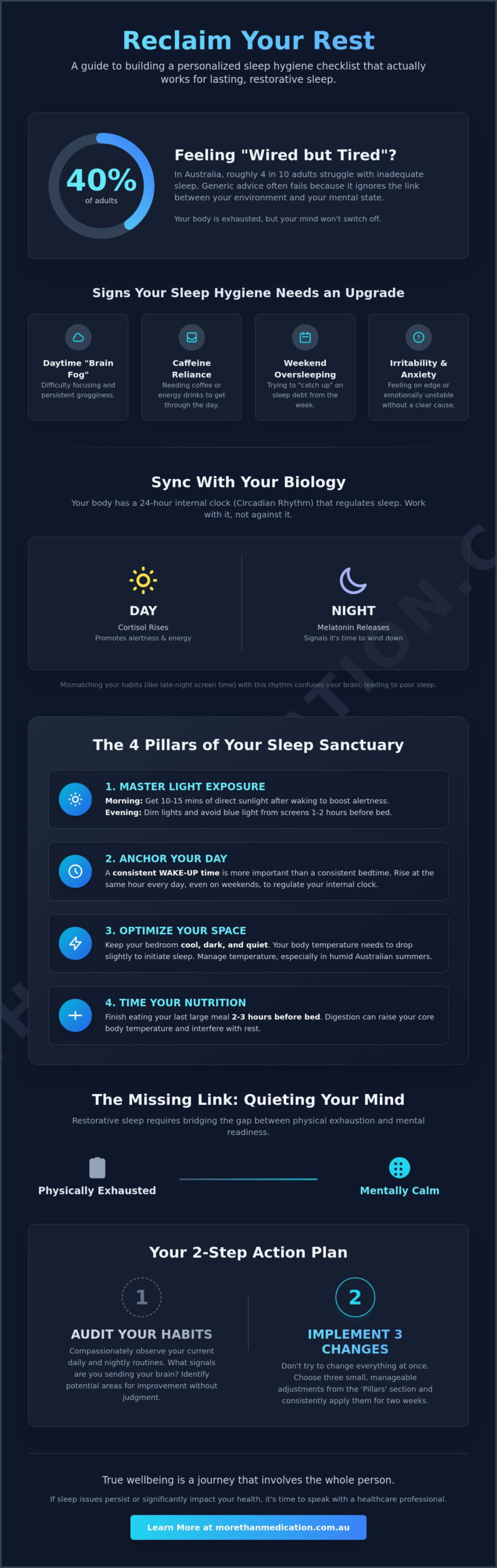
What if the reason you’re waking up exhausted has nothing to do with how many hours you spent in bed? You’ve likely tried the standard advice of dimming the lights, yet you still find yourself staring at the ceiling with racing thoughts at 2:00 AM. In Australia, where roughly 40 percent of adults report struggling with inadequate sleep according to recent health reports, the traditional “early to bed” approach often falls short. This is because creating a sleep hygiene checklist that works requires more than just a list of physical chores; it requires a bridge between your environment and your internal peace.
It’s exhausting to feel like your body is heavy but your mind won’t switch off, leaving your energy levels inconsistent from Monday to Sunday. We believe that true wellbeing is a journey that involves the whole person, and finding rest often requires more than medication. You’re about to discover how to build a personalized nightly ritual that balances physical habits with mental calm for lasting, restorative sleep. We’ll walk through the specific, evidence-based steps needed to reclaim your mental clarity and empower you to manage your own rest throughout 2026.
Key Takeaways
- Understand why restorative rest is a holistic journey that requires balancing your physical surroundings with internal mental calm.
- Learn how to optimize your sleep sanctuary by focusing on light and temperature while establishing a consistent wake-up time to anchor your biology.
- Discover techniques to bridge the gap between physical exhaustion and mental readiness to help quieten racing thoughts before bed.
- Follow a practical, two-step process for creating a sleep hygiene checklist that works by auditing your habits and implementing three manageable changes.
- Identify when your sleep patterns might be impacting broader health conditions and how to know when it is time to speak with an Australian healthcare professional.
What is Sleep Hygiene? Why Your Current Routine Might Be Falling Short
Sleep hygiene is often described as a set of rigid rules, but it’s actually the harmony between your physical environment and your daily habits. It’s about creating the right conditions for your body to transition from the busyness of the day into a state of restorative rest. You might have downloaded a generic list from the internet, followed it for three nights, and still found yourself staring at the ceiling. This happens because most advice ignores the “more” in your health journey. Medicine or supplements can offer temporary support, but they’re only one piece of a much larger puzzle that includes your mental and physical wellbeing.
The frustration of “doing everything right” yet feeling exhausted is a common experience for many Australians. In fact, a 2019 report by the Sleep Health Foundation found that about 60 percent of adults experience at least one sleep symptom three or more times a week. Generic checklists fail because they don’t account for your unique lifestyle or mental state. Creating a sleep hygiene checklist that works requires a tailored approach that respects your individual needs rather than a rigid, one-size-fits-all set of instructions. It’s about finding a rhythm that feels supportive rather than like another chore on your to-do list.
The Biology of Better Rest
Understanding your body’s natural timing is the first step toward better rest. Your circadian rhythm is your body’s internal 24-hour clock. This system regulates when you feel alert and when you feel sleepy by managing a delicate dance between hormones. During the day, cortisol keeps you focused and energized. As the sun sets, your brain should ideally release melatonin to signal that it’s time to wind down. When your habits conflict with this biological rhythm, such as looking at bright screens late at night, your brain gets confused. This mismatch is often the hidden culprit behind that “wired but tired” feeling that keeps you awake.
The Signs Your Hygiene Needs an Upgrade
If you find yourself hitting the snooze button five times or relying on three flat whites before midday, you might be carrying “sleep debt.” This is the cumulative effect of not getting enough rest over several nights. It doesn’t just make you grumpy; it impacts your physical fitness and recovery. Your muscles and mind need that downtime to repair and consolidate information. Recognizing these signs is an act of self-compassion. By creating a sleep hygiene checklist that works, you can begin to pay back that debt and restore your natural energy levels. Look for these common red flags in your daily life:
- Persistent daytime grogginess or “brain fog” that makes it hard to focus.
- A heavy reliance on caffeine to function through the afternoon slump.
- Oversleeping significantly on weekends to compensate for weekday loss.
- Feeling irritable or anxious without a clear or immediate cause.
The Physical Foundation: Optimising Your Environment and Biology
Rest isn’t a passive event that just happens when you close your eyes. It’s an active biological process influenced by the signals you send your brain throughout the day. Creating a sleep hygiene checklist that works starts with your immediate surroundings, often called your “sleep sanctuary.” Many people focus exclusively on their bedtime, yet your body actually craves a consistent wake-up time above all else. By rising at the same hour every morning, even on weekends, you anchor your internal clock and ensure that your natural drive for sleep builds up correctly by evening.
Light is perhaps the most powerful external signal we have. Aim for 10 to 15 minutes of direct sunlight shortly after waking to help suppress melatonin and boost morning alertness. Conversely, as evening approaches, the “blue light” from phones and tablets mimics daylight, tricking your brain into staying awake. Nutrition also plays a silent role. While a heavy meal might make you feel drowsy initially, the process of digestion can raise your core body temperature and lead to fragmented rest. It’s helpful to finish eating at least two to three hours before your head hits the pillow to give your system time to settle.
Setting the Scene for Success
In Australia, managing your bedroom temperature is a unique challenge, especially during the humid summer months. Research from the Sleep Health Foundation suggests that an ideal sleeping environment is around 18 degrees Celsius. This cooler temperature helps your body drop its core heat, which is a necessary biological trigger for deep sleep. You can also reduce sensory noise by using white noise machines or heavy curtains to block out streetlights and traffic. If you’re looking for ways to support your journey, exploring more holistic health resources can provide the extra guidance you need to stay on track.
The Impact of Daily Movement
Regular physical activity is a cornerstone of creating a sleep hygiene checklist that works, as it helps deepen your sleep quality. Movement is a key pillar of the latest health trends for 2026, focusing on how exercise supports mental and physical resilience. However, timing is everything. High-intensity training late in the evening can spike your cortisol and body temperature, making it harder to drift off. Aim to finish vigorous workouts at least four hours before bed, opting for gentle stretching or yoga if you need to move in the evening.
The Missing Link: Addressing the Mental Barriers to Restful Sleep
You’ve set the thermostat and dimmed the lights, but your mind is still running a marathon through tomorrow’s to-do list. This mental friction is often the hidden reason why standard routines fail. It’s one thing to be physically tired, but being mentally ready for sleep is a different challenge entirely. When we focus on creating a sleep hygiene checklist that works, we must address the internal noise that medicine alone cannot always quiet. For many Australians, the silence of the bedroom acts like a megaphone for anxieties that were ignored during a busy day.
One of the most effective ways to break this cycle is to reclaim the bedroom as a space strictly for sleep and intimacy. If you’ve been answering emails or scrolling through news in bed, your brain has likely formed a strong association between your pillow and a state of high alert. By removing these stressors from the room, you help your nervous system understand that this specific environment is safe for letting go. It’s about releasing the intense pressure to sleep, which often creates a self-defeating cycle of performance anxiety. Instead of forcing rest, aim to create the mental space where rest is allowed to happen naturally.
Mindful Transitions
Transitioning from a high-speed day to a restful night requires a deliberate mental off-ramp. A “brain dump” is a simple yet powerful tool; by writing down every lingering thought or task on a piece of paper before you enter the bedroom, you signal to your brain that these items are stored safely for tomorrow. Practicing gentle mindfulness also helps anchor your attention in the present moment rather than drifting into future worries. Mindfulness reduces physiological arousal by lowering your heart rate and calming the nervous system before bed. These small acts of mental hygiene are just as vital as brushing your teeth or washing your face.
Managing Daytime Stress
It’s helpful to remember that your ability to sleep at 10 PM is often dictated by your stress levels at 10 AM. When you spend your entire day in a state of high cortisol, your body remains on edge long after the sun goes down. Incorporating “micro-breaks” throughout your workday allows your nervous system to reset periodically, preventing the massive accumulation of tension that leads to a racing mind at night. This holistic approach to mental health is a cornerstone of a balanced lifestyle, where every choice you make during the day supports your journey toward a more restorative night.
How to Build Your Personalised Sleep Hygiene Checklist
Building a routine that sticks isn’t about following a rigid list of rules; it’s about listening to what your body needs. Creating a sleep hygiene checklist that works begins with a gentle audit of your current habits. Take a moment to identify the two or three biggest disruptors in your evening. Perhaps it’s the blue light from your smartphone or the hum of the refrigerator in a studio apartment. Instead of trying to change everything at once, choose just three manageable adjustments to implement this week. This phased approach prevents you from feeling overwhelmed and helps you focus on what truly makes a difference.
Consistency is your greatest ally during this process. Establish a dedicated wind-down window of 30 to 60 minutes before your target bedtime to signal to your nervous system that the day is ending. To see what is actually moving the needle, keep a simple sleep diary for at least 14 days. Record not just when you went to bed, but how you felt upon waking. If a specific habit doesn’t lead to better rest after two weeks, give yourself permission to refine and adjust. Your journey is unique, and your checklist should reflect your personal experience rather than a generic template.
The 3-2-1 Rule for Evening Preparation
A simple way to structure your evening is the 3-2-1 rule. Three hours before bed, aim to finish your last large meal and any heavy physical exercise. This gives your digestion and core temperature time to settle. Two hours before, step away from work emails and intense mental tasks to let your brain decompress. Finally, one hour before sleep, disconnect from all screens. This final hour is for your sensory wind-down, where you can focus on gentle activities like reading or a warm bath. For more guidance on finding balance, you can explore our expert advice on living a healthy lifestyle.
Sample Checklist for Your Nightstand
Your nightstand checklist might include dimming the lights at 9:00 PM, setting the room to a cool temperature, and spending 15 minutes with a book. However, life in Australia often includes late-night work calls or social gatherings that can interrupt your flow. When your routine is disrupted, practice self-compassion. One “off” night doesn’t erase your progress. Acknowledge the interruption, then simply return to your ritual the following evening. Remember, the goal isn’t perfection; it’s a sustainable rhythm that supports your long-term wellbeing.
Beyond the Checklist: Integrating Sleep into Your Total Wellbeing Journey
Sometimes, even the most dedicated efforts toward creating a sleep hygiene checklist that works aren’t enough to solve persistent sleep issues. It’s important to recognize that while habits are powerful, they’re part of a much broader health picture. If you’ve spent more than three months struggling to fall or stay asleep despite your best efforts, it’s likely time to consult a professional. Sleep is a fundamental pillar of health, especially when managing chronic conditions like migraine, where irregular rest can frequently trigger or worsen symptoms. By viewing sleep as an act of self-care and resilience, you move beyond seeing it as a chore and start seeing it as a way to nourish your whole self.
When creating a sleep hygiene checklist that works, the goal is empowerment, giving you the tools to manage your own rest with confidence. Restorative sleep is a journey, not a destination you reach overnight. You aren’t alone in this process, and feeling frustrated is a valid part of the experience. The key is to remain patient with your body as it learns to trust the new signals you’re providing. Every night is a new opportunity to practice self-compassion and refine your ritual to better suit your changing needs.
Professional Support Options
Cognitive Behavioral Therapy for Insomnia (CBT-I) is widely considered the gold standard for long-term improvement in Australia. Unlike temporary fixes, it helps you address the underlying thoughts and behaviors that disrupt your rest. Before visiting your local GP, bring along the two-week sleep diary you’ve been keeping. This concrete data helps your doctor differentiate between simple hygiene issues and clinical disorders such as obstructive sleep apnea, which affects approximately 5 percent of the Australian population according to the Sleep Health Foundation. Having this information ready allows for a more productive conversation about your specific health needs.
A Steady Path Forward
Our “More Than Medication” philosophy serves as a reminder that medicine is only one piece of the health puzzle. Achieving restorative rest is a steady process of learning what your body and mind need to feel safe and supported. Be patient with yourself as you navigate these changes. Start with one small step today, whether it’s dimming your lights earlier or practicing a five-minute brain dump. You aren’t alone on this path, and every small adjustment builds your resilience for the future. We invite you to join our community for more expert-led wellness insights and support as you continue your journey toward a more balanced life.
Your Journey Toward Restorative Rest Starts Tonight
Reclaiming your energy is a personal journey that begins with a single, mindful choice. You now have the practical tools to audit your environment and quiet the mental noise that often keeps you awake. By focusing on small, manageable adjustments rather than a rigid set of rules, you are creating a sleep hygiene checklist that works for your unique lifestyle. This holistic approach ensures you are nourishing both your physical biology and your mental peace.
Progress isn’t always linear. Some nights will be easier than others, but by using a two-week sleep diary to track your feelings, you can make informed decisions about your health. We’re here to support you with expert-led wellness content and empathetic, jargon-free health news that prioritises your whole self. Explore more expert advice on living a balanced lifestyle at More Than Medication. You have the power to manage your own rest, and every small step you take today builds a foundation for a brighter, more focused tomorrow.
Frequently Asked Questions
Is it okay to take a nap during the day if I didn’t sleep well?
Napping is fine if you keep it to a 20 minute power nap before 3:00 PM. Longer naps or those taken later in the day can steal your sleep pressure, making it much harder to fall asleep at night. If you’re feeling a mid afternoon slump, a short rest can restore alertness without disrupting your body’s natural rhythm. It’s about finding a balance that supports your energy without sabotaging your evening rest.
How long before bed should I really stop using my phone?
You should aim to put your phone away at least 60 minutes before you plan to sleep. The blue light emitted by screens suppresses melatonin production, which is a vital part of creating a sleep hygiene checklist that works. If you must use a device, try using a blue light filter or dimming the brightness to the lowest setting. This small change helps your brain transition into a state of relaxation.
Can regular exercise help me fall asleep faster?
Regular physical activity is one of the best ways to improve sleep quality and decrease the time it takes to drift off. Aim for 30 minutes of moderate movement most days, as this helps regulate your body’s internal clock. Just be mindful of the timing; vigorous workouts should be finished at least 4 hours before bed to allow your core temperature and heart rate to return to baseline.
What should I do if I wake up in the middle of the night and can’t get back to sleep?
If you’re still awake after 20 minutes, it’s best to get out of bed and move to another room. Engaging in a quiet, low light activity like reading or listening to soft music helps break the association between your bed and frustration. Return to bed only when you feel genuinely sleepy. This practice helps retrain your brain to see the bedroom as a place for rest rather than worry.
Does drinking alcohol help or hurt my sleep quality?
Alcohol significantly reduces the quality of your rest, even if it helps you fall asleep faster initially. It interferes with your REM cycle and often leads to fragmented sleep or waking up in the early hours of the morning. For a more restorative night, try to limit alcohol consumption and avoid it entirely in the three hours leading up to your bedtime.
How much sleep do I actually need as an adult?
Most adults require between 7 and 9 hours of consistent sleep each night to function at their best. While individual needs can vary slightly, consistently getting less than 7 hours is linked to increased risks of chronic health issues. Focus on how you feel during the day; if you’re alert and productive without excessive caffeine, you’ve likely found your ideal sleep duration.
Can I “catch up” on sleep during the weekend?
You cannot truly catch up on missed sleep by sleeping in on the weekend. This habit, often called social jetlag, can actually make you feel more tired by shifting your internal clock. Consistency is a key component of creating a sleep hygiene checklist that works. Aim to keep your wake up time within an hour of your weekday schedule to maintain a steady biological rhythm.
What are the best foods to eat in the evening for better sleep?
Light snacks that combine complex carbohydrates with a source of tryptophan are excellent choices for the evening. Consider a small bowl of oats with milk or a banana with a few almonds about two hours before bed. These foods help support the production of sleep inducing hormones. Avoid heavy, spicy, or high sugar meals late at night, as they can cause indigestion and keep you alert.
⚕️ Medical Disclaimer
This content is for informational purposes only and is not a substitute for professional medical advice, diagnosis, or treatment. Always seek the advice of your doctor or other qualified health provider with any questions you may have regarding a medical condition. Never disregard professional medical advice or delay in seeking it because of something you have read on this website.