
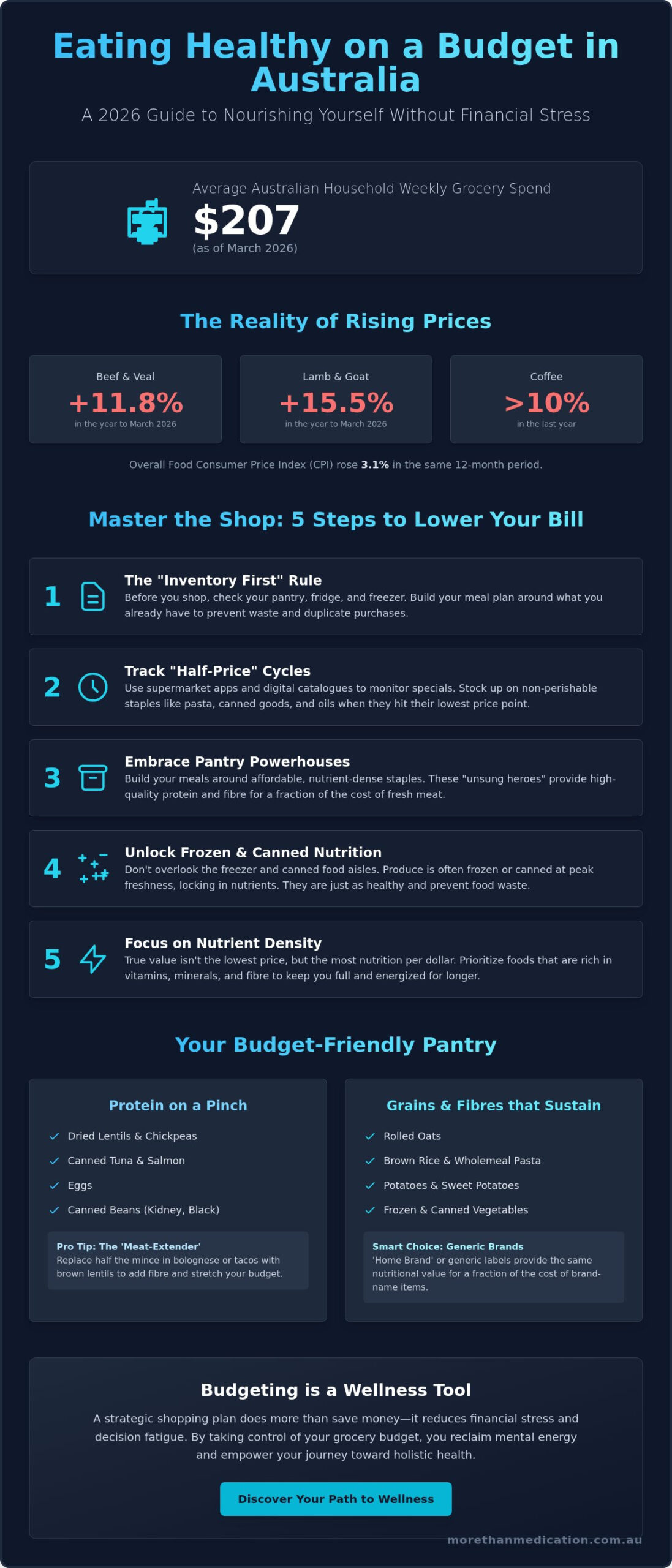
Did you know that by March 2026, the average Australian household was spending $207 every single week just to keep the pantry full? With beef prices climbing 11.8% and coffee up over 10% in the last year, it’s completely natural to feel a sense of dread when you reach the checkout. You might feel like you’re being forced to choose between your financial stability and your physical wellbeing. We understand that this pressure is heavy, but learning how to eat healthy on a budget australia 2026 doesn’t have to mean sacrificing the quality of your meals or your peace of mind.
You deserve to feel nourished without the constant weight of financial stress. This guide shares practical, evidence-based strategies to help you shop with confidence. You’ll discover why frozen and canned staples are often just as nutritious as fresh produce, how to adapt to the new 2026 Australian Dietary Guidelines, and how “shop hopping” for specials can protect your budget. We believe health is a journey that involves much more than just a prescription. Let’s look at how small, manageable changes can turn your grocery run back into a path toward holistic wellness.
Key Takeaways
- Discover the “unsung heroes” of your pantry that provide essential protein and fiber without the high cost of fresh meat.
- Master a five-step shopping strategy, including the “Inventory First” rule, to help you understand how to eat healthy on a budget australia 2026.
- Learn how to use digital tools and supermarket apps to track “half-price” cycles, ensuring you never pay full price for staples again.
- Gain confidence in the nutritional value of frozen and canned foods by learning how to select and prepare them for maximum health benefits.
- Explore how mindful eating and gentle movement work together to fuel your body and reduce the mental fatigue of grocery decision-making.
The 2026 Cost-of-Living Reality: Why Budgeting is a Wellness Tool
Walking through the supermarket aisles in May 2026 feels different than it did just a few years ago. With the average weekly grocery spend now reaching $207, many Australians feel a growing sense of unease before they even reach the register. It’s a heavy burden to carry. At More Than Medication, we believe that understanding how to eat healthy on a budget australia 2026 is an act of profound self-care. It’s about recognizing that your nutrition is a vital pillar of your holistic journey, standing alongside mental clarity and physical resilience. We see you, and we know that the pressure to provide for yourself and your family is real.
We often think of health as a strict set of rules, but true wellbeing is a delicate balance. It’s the intersection of physical nourishment and mental peace. If a meal plan is “perfect” on paper but leaves you deeply stressed about your rent or mortgage, it isn’t truly healthy for your whole self. Finding what is a healthy diet means discovering a sustainable way to fuel your body that respects your financial boundaries. This perspective shifts budgeting from a lifestyle restriction to a wellness tool that empowers you to take charge of your future.
The Link Between Financial Stress and Your Health
Constant worry about the rising cost of staples does more than drain your wallet. It triggers a physiological response. This chronic financial stress can spike cortisol levels, clouding your mental clarity and making it harder to make balanced choices at the end of a long day. By adopting a clear, strategic shopping plan, you can lower this “decision fatigue” and regain a sense of control over your environment. This proactive approach aligns with the latest health trends of 2026, where mental wellbeing is treated as inseparable from physical health. Taking control of your shopping list is a small, manageable step toward reclaiming your inner calm.
Redefining ‘Value’ in the Australian Supermarket
In the current economic climate, where the Consumer Price Index for food rose 3.1% in the 12 months to March 2026, we need to look past the lowest price tag. True value is found in nutrient density. This means choosing foods that offer the highest amount of vitamins, minerals, and fiber for every dollar spent. The Five Food Groups serve as the foundation for this strategy, helping you identify which items will keep you full and focused for longer. Nutrient density in the Australian context is the measurement of how many essential nutrients a staple like a bag of carrots or a tin of lentils provides compared to its price and energy content.
Building Your Budget-Friendly Pantry: The Essential Staples
Your pantry is more than just a storage space; it’s the foundation of your nutritional resilience. In 2026, building a collection of long-life staples is one of the most effective ways to understand how to eat healthy on a budget australia 2026. While flashy packaging often catches the eye, ‘Home Brand’ or generic labels provide the same clinical nutritional value for a fraction of the cost. Choosing these items isn’t about settling for less. It’s a sophisticated strategy to ensure your kitchen is always stocked with high-protein and high-fibre essentials that support your physical and mental wellbeing. We believe that a well-stocked pantry is a steady presence that helps you navigate the ups and downs of daily life.
Protein on a Pinch: Beyond Expensive Cuts
Meat prices have seen significant shifts recently. Beef and veal rose by 11.8% in the year to March 2026, while lamb and goat prices climbed by 15.5%. To navigate these costs, we can look toward unsung heroes like eggs, canned tuna, and dried lentils. These premium protein sources offer incredible value. For example, the cost-per-serve for dried chickpeas is significantly lower than chicken breast, yet they provide the satiety and muscle-support your body needs. You might try the ‘meat-extender’ technique by replacing half the mince in a bolognese or taco mix with brown lentils or mashed kidney beans. It’s a gentle way to stretch your budget while adding heart-healthy fibre. For more structured advice on meal planning, you can explore Nutrition Australia’s guide to healthy eating on a budget to see how these staples fit into a balanced plan.
Grains and Fibres that Sustain You
Grains provide the steady energy your brain requires to maintain mental clarity. Oats remain the ultimate Australian budget breakfast in 2026 because they are versatile, filling, and incredibly cheap when bought in larger bags. Brown rice and wholemeal pasta offer complex carbohydrates that prevent the energy crashes often associated with processed foods. When buying in bulk, store your grains in airtight glass or plastic containers to maintain freshness and prevent waste. This simple habit protects your investment and ensures you always have the base for a nourishing, high-fibre meal ready to go.
Once your pantry is stocked, you can use these base ingredients for more than just main meals. Rolled oats, seeds, and legumes can be transformed into healthy slice recipes that provide low-cost, nutrient-dense snacking throughout the week. This holistic approach to food preparation reduces decision fatigue and helps you stay on track with your wellness goals. If you’re looking for more ways to balance your lifestyle, our expert advice on nutrition can help you navigate the complexities of modern wellness with confidence and ease.
Master the Shop: 5 Steps to Lower Your Grocery Bill
Shopping for groceries in 2026 often feels like a test of endurance. Between the bright lights and the endless choices, it’s easy to lose sight of your goals. But you can reclaim your focus by following a few steady, intentional steps. The first is the ‘Inventory First’ rule. Before you even grab your keys, spend five minutes looking through your cupboards. This simple act prevents you from buying a third jar of peanut butter when you already have two tucked away. It reduces waste and keeps your budget lean. Next, embrace digital planning. Most Australian supermarkets now offer sophisticated apps that track weekly specials. By checking these before you leave home, you can build your list around “half-price” cycles. This isn’t just about saving cents; it’s a strategic way to learn how to eat healthy on a budget australia 2026.
The Art of the Weekly Meal Plan
A good plan acts as a wise guide through a busy week. Try choosing two or three ‘hero’ ingredients, like a large bag of spinach or a kilo of sweet potatoes, and use them across multiple dishes. This ‘Cook Once, Eat Twice’ philosophy saves time and ensures nothing wilts in the bottom of the fridge. To make your budget go further, try the trolley swap method. The trolley swap involves consciously replacing one highly processed, expensive item with a nutrient-dense whole food alternative, such as swapping a $6 box of crackers for a $1.50 bag of carrots.
Navigating the Supermarket Aisles with Purpose
We’re often told to “shop the perimeter” for health, but in 2026, the middle aisles are where the real bargains live. This is where you’ll find the canned legumes and frozen vegetables we discussed earlier. To find the best deal, always look at the unit pricing on the shelf tag. This small number tells you the price per 100g or per kilogram, allowing you to compare a large brand-name box with a smaller home-brand bag accurately. It’s a simple tool that cuts through marketing noise.
Be wary of ‘health halo’ marketing. Many packaged snacks use buzzwords like ‘natural’ or ‘organic’ to justify a higher price tag. Often, these are just expensive versions of simpler foods. Finally, address the 37% of the average Australian grocery spend that currently goes toward discretionary items like chips and soft drinks. By slowly reducing these purchases and choosing ‘ugly’ seasonal produce instead, you can significantly lower your bill. Ranges like ‘The Odd Bunch’ or ‘I’m Perfect’ offer the same vitamins for a much lower cost, helping you find balance without the financial strain.
Dispelling the ‘Fresh is Best’ Myth: Frozen and Canned Nutrition
You might feel a twinge of guilt as you reach into the freezer section, wondering if you’re compromising your health for the sake of your bank account. It’s a common worry. For years, we’ve been told that ‘fresh is best,’ but this old wisdom doesn’t always hold up under clinical scrutiny. In fact, learning how to eat healthy on a budget australia 2026 often starts with embracing the freezer and the pantry as allies in your wellness journey. These options aren’t just ‘backup’ foods; they’re nutritional powerhouses that can help you maintain balance even when the cost of fresh produce fluctuates.
Nutrient Retention in Preserved Foods
The science of preservation is remarkably effective at locking in goodness. Frozen vegetables are typically ‘flash-frozen’ within hours of being harvested at their peak ripeness. This process halts the degradation of vitamins that occurs naturally over time. For example, frozen peas often retain higher levels of Vitamin C than ‘fresh’ peas that have spent days in transport and storage. When you’re browsing the canned aisle, a few small choices make a big difference. Choose canned fruit in ‘natural juice’ rather than syrup to avoid unnecessary added sugars. If you’re concerned about sodium in canned beans or vegetables, simply rinsing them under cold water for 30 seconds can significantly reduce the salt content. Using these staples makes it much easier to hit your 5-a-day target without the stress of frequent supermarket trips.
Reducing Food Waste, Saving Dollars
Beyond nutrition, preserved staples are a powerful tool for your financial resilience. As of early 2026, data suggests the average Australian household still throws away approximately $2,500 worth of food every year, often due to fresh produce rotting before it can be used. Frozen produce is essentially zero-waste. You only use exactly what you need, and the rest stays safely stored for your next meal. This acts as a vital ‘safety net’ for those busy nights when you’re too exhausted to follow a complex recipe.
You can create a nourishing ‘Pantry Surprise’ meal in minutes using only shelf-stable items. Consider these simple combinations:
- Stir frozen spinach and a tin of chickpeas into your wholemeal pasta.
- Mix frozen berries into your morning oats for a burst of antioxidants.
- Combine canned tuna with brown rice and frozen corn for a quick, high-protein lunch.
These small, manageable steps help you regain a sense of progress and hope in your health journey. If you’re looking for more ways to simplify your wellness routine, our expert advice on nutrition provides the steady support you need to make these healthy habits stick for the long term.
A Holistic Finish: Gentle Habits for Long-Term Balance
True wellness extends far beyond the checkout counter. While we’ve explored the practicalities of pantry staples and digital shopping tools, it’s the “more” in your health journey that creates lasting change. At More Than Medication, we believe that health is a quiet, steady presence that grows with every intentional choice you make. Understanding how to eat healthy on a budget australia 2026 is a powerful skill, but it works best when paired with mindfulness and self-compassion. When you slow down and truly experience your meals, you improve your digestion and feel more satisfied with smaller portions. This simple act of presence can reduce the decision fatigue that often accompanies a tight grocery budget.
Movement and Mindset
Nourishing your body with complex grains and lean proteins provides the steady energy required to keep your body moving. When you’re fueled correctly, your fitness journey feels less like an uphill battle and more like a natural extension of your wellbeing. It’s also helpful to remember that you don’t have to carry this burden alone. Sharing low-cost recipes with friends or joining a community garden can turn budgeting into a shared experience of resilience. If you’re managing on a fixed income, such as the $808.70 fortnightly Jobseeker payment recorded in March 2026, please be gentle with yourself. Financial hurdles are real health obstacles, and navigating them with strategy rather than guilt is an act of empowerment.
Your Next Steps for a Healthier 2026
Change doesn’t have to be overwhelming to be effective. We invite you to take the ‘One Change’ Challenge today. Pick just one strategy we’ve discussed—perhaps it’s checking your inventory before you shop or swapping one processed snack for a bag of carrots—and commit to it for one week. These small, manageable shifts are what build true physical and mental resilience over time. To stay supported on your path, you can continue to explore our expert-led wellness news and advice on living a balanced lifestyle.
Remember that your health is a whole-person experience. It’s about the intersection of your physical vitality, your mental clarity, and your emotional peace. By taking charge of your shopping list, you’re taking charge of your story. You’re proving that even in a challenging economic climate, your wellbeing remains a priority. You have the tools, the knowledge, and the strength to thrive in 2026. We’re here to walk alongside you as you discover that health is always about so much more than just a diagnosis or a prescription.
Taking Charge of Your Wellbeing in 2026
You’ve explored how building a resilient pantry and mastering digital shopping tools can transform your grocery routine. By embracing the nutritional power of frozen staples and prioritizing nutrient density, you’ve adopted evidence-based wellness strategies that protect your health and your wallet. Learning how to eat healthy on a budget australia 2026 is about reclaiming your sense of control in a changing economic landscape. It’s a journey of small, consistent shifts that honor both your body and your bank account.
We’re here to provide the steady guidance you need as you navigate these changes. You can Explore more expert tips on living a balanced Australian lifestyle through our national health focus and expert-led nutrition advice. Our goal is to support the whole person, helping you find harmony between your physical health and your inner peace. You have the tools to thrive, and every nourishing choice is a victory for your future self. You’re never alone on this path to a healthier, more balanced life.
Frequently Asked Questions
Is it cheaper to be a vegetarian or vegan in Australia?
Plant-based diets are generally much cheaper because whole staples like legumes, grains, and tubers cost significantly less per serve than animal proteins. In 2026, with lamb prices rising 15.5% and beef up 11.8%, swapping a few meat meals for dried beans can save a household hundreds of dollars annually. This only stays true if you focus on whole foods rather than expensive, highly processed “mock meats” which often carry a premium price tag. Choosing lentils or tofu provides the same nutritional foundation for a fraction of the cost.
How can I save money on healthy food if I don’t have time to meal prep?
You can save money by choosing “semi-prepared” healthy staples like bagged salads or pre-cut frozen stir-fry mixes instead of ordering takeaway. While these items are slightly more expensive than whole vegetables, they are still much cheaper than a $15 or $20 fast-food meal. Using a slow cooker to prepare bulk batches of soup or stew requires minimal active effort and provides several days of lunches. This approach helps you understand how to eat healthy on a budget australia 2026 without spending your entire Sunday in the kitchen.
What are the cheapest healthy ‘superfoods’ available in Australian supermarkets?
Carrots, cabbage, and canned sardines are some of the most nutrient-dense, low-cost “superfoods” you’ll find in local aisles today. In April 2026, carrots were priced as low as $0.99 per kilo, providing a massive dose of Vitamin A for just a few cents per serving. Cabbage is another versatile hero that stays fresh in the fridge for weeks and provides essential fibre and Vitamin C. These humble items offer more holistic value for your body than expensive, imported powders or trendy berries.
How much should a single person spend on healthy groceries per week in 2026?
A single person can aim for a baseline budget of approximately $90 to $110 per week to maintain a balanced, healthy diet. While the national average household spend was $207 per week in March 2026, individuals can lower their specific costs by buying in bulk and focusing on seasonal produce. For example, cauliflower was priced at $3.50 a head in April 2026, making it an excellent high-volume filler for meals. Your specific needs will vary, but this range provides a solid foundation for nutritional security.
Can I get enough protein on a budget without eating meat every day?
Yes, you can easily meet your protein requirements by incorporating a variety of plant-based sources like lentils, eggs, and Greek yoghurt into your rotation. One cup of cooked lentils provides about 18 grams of protein, which is comparable to many meat serves but costs significantly less. Combining different protein sources throughout the day ensures you get all the essential amino acids your body needs for recovery and resilience. It’s a gentle way to nourish your muscles while keeping your financial stress low.
Are ‘Home Brand’ health foods as nutritious as name brands?
Home Brand staples like oats, tinned tomatoes, and frozen peas are clinically identical in nutritional value to their more expensive name-brand counterparts. Australian food standards ensure that these basic items meet strict quality and safety requirements regardless of the label on the front. By choosing generic versions of these essentials, you can often reduce your grocery bill by 20% to 30% without sacrificing any vitamins or minerals. It’s a sophisticated strategy that prioritizes your health over fancy packaging.
What happens if I can only afford canned or frozen vegetables this week?
You’ll still be providing your body with excellent nutrition, as these preserved options are often just as healthy as fresh produce. Many frozen vegetables are processed within hours of harvest, locking in nutrients that “fresh” items might lose during long transport and storage times. It’s a practical and non-judgmental way to maintain your 5-a-day target during tight weeks. This flexibility is a key part of learning how to eat healthy on a budget australia 2026 while maintaining your peace of mind.
How do I avoid ‘hidden’ costs when trying to eat healthy?
Avoid hidden costs by ignoring “health halo” marketing on expensive, packaged diet foods and sticking to simple, whole-food ingredients. Many “low-fat” or “protein-fortified” snacks carry a 50% price markup despite having little extra nutritional benefit for the average person. Another hidden cost is food waste; ensure you store bulk grains in airtight containers to prevent spoilage and use a shopping list to avoid impulse buys. Focusing on basic, unprocessed staples keeps your wellness journey affordable, transparent, and manageable for the long term.
⚕️ Medical Disclaimer
This content is for informational purposes only and is not a substitute for professional medical advice, diagnosis, or treatment. Always seek the advice of your doctor or other qualified health provider with any questions you may have regarding a medical condition. Never disregard professional medical advice or delay in seeking it because of something you have read on this website.