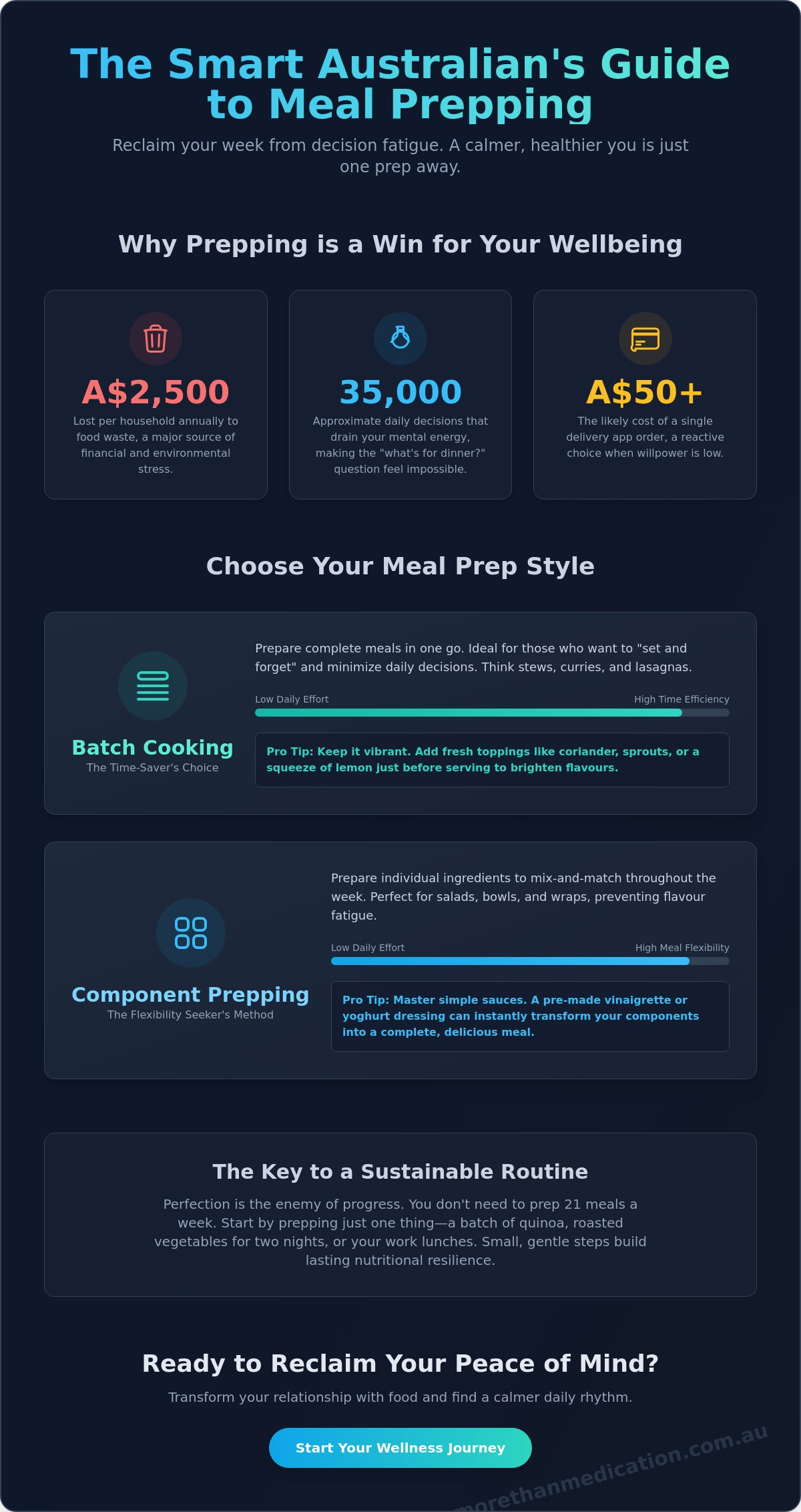
It’s 6:15 PM on a Tuesday, and you’re staring at a drawer of wilted kale while your phone hovers over a delivery app that will likely cost you A$50. This moment of decision fatigue is a heavy burden many of us carry after a long day. According to the 2023 Rabobank Food Waste Report, Australian households lose roughly A$2,500 a year to wasted groceries, often because our best intentions don’t match our energy levels. Finding practical meal prep ideas for the week australia is about more than just filling containers; it’s about creating a sustainable rhythm that supports your mental and physical health.
We believe that true wellness is a holistic journey where small, intentional steps lead to significant peace of mind. This guide will help you reclaim your time and reduce stress by offering a gentle, Australian-focused approach to nutrition. We’ll explore how to balance your plate, save money on your grocery bills, and transform your relationship with the kitchen into one of ease and empowerment.
Key Takeaways
- Learn how to reduce decision fatigue and lighten your mental load by transforming meal preparation into a supportive ritual for your daily wellbeing.
- Discover whether batch cooking or component prepping best suits your unique lifestyle, allowing you to create a flexible routine that feels manageable rather than overwhelming.
- Explore practical meal prep ideas for the week australia-wide using accessible, nutrient-dense ingredients easily found at your local national retailers.
- Master simple storage and refreshing techniques to keep your food vibrant and appealing, ensuring every meal remains a delicious part of your health journey.
- Understand why starting small is the key to sustainability, focusing on gentle progress rather than perfection to build long-term nutritional resilience.
Beyond the Kitchen: Why Meal Prepping is a Win for Your Mental Wellbeing
You know the feeling. It’s 5:30 PM on a Tuesday, you’ve just finished a long shift, and the fridge is staring back at you with nothing but half a lemon and some wilted spinach. This moment of panic is where the “mental load” of adulthood feels heaviest. Meal prepping is often discussed as a way to manage weight or save time, but for us, it is a vital strategy for protecting your mental health. Understanding what is meal preparation reveals it is a holistic approach to reclaiming your evening peace. It’s a promise to your future self that you won’t have to think when you’re most tired. When you explore meal prep ideas for the week australia, you aren’t just choosing recipes; you’re designing a calmer version of your life. True health is always more than just the vitamins on your plate. It’s the silence in your mind when you know your needs are already met.
Reducing Decision Fatigue and Stress
Decision fatigue in the Australian workplace is the gradual erosion of your willpower after making approximately 35,000 micro-choices from sunrise to sunset. When your brain is exhausted, it naturally takes the path of least resistance, which often leads to nutrient-poor convenience foods that leave you feeling sluggish. Having a pre-set plan stops the cortisol spikes that happen when you’re rushing to find a dinner solution at the last minute. You move from reactive eating, where your hunger dictates your choices, to intentional nourishing, where your values lead the way. This shift creates a sense of agency and empowerment over your daily rhythm.
The Financial and Environmental Calm
The mental relief of prepping extends to your environment and your bank account. According to the 2023 Rabobank Food Waste Report, the average Australian household throws away about A$3,189 of food every year. This waste often triggers a subtle, lingering guilt that adds to our daily stress. When you prep, you use what you buy. This “wellness of the wallet” significantly lowers financial anxiety, especially when a single takeaway delivery can easily cost A$30 or more per person. Using whole, seasonal ingredients found across Australia creates a sense of connection to our local environment. There is a deep, quiet satisfaction in knowing your meal prep ideas for the week australia are supporting both your local farmers and your own financial resilience. By bridging the gap between clinical nutrition and the reality of your daily budget, you create a sustainable path toward long-term balance.
In our journey together, we remember that wellness is a whole-person experience. It’s about the peace of mind that comes from being prepared. When the “dinner is sorted” feeling hits, your evening is no longer a series of chores. It becomes a space for genuine relaxation and connection.
Choosing Your Method: Batch Cooking vs. Component Prepping
Starting a new routine can feel overwhelming, especially when you’re managing health goals alongside a busy Australian lifestyle. There is no single “right” way to organize your kitchen. The most effective meal prep ideas for the week australia provides are those that respect your time and your energy levels. Forcing yourself into a rigid system often leads to burnout; instead, it’s helpful to understand which style of preparation aligns with your personality and your kitchen confidence. Finding this balance is a powerful step toward reclaiming your evening hours and reducing the stress of daily nutrition.
Batch Cooking: The Time-Saver’s Choice
Batch cooking is the traditional method of preparing complete meals in one go. It’s ideal for the “set and forget” individual who wants to minimize daily decisions. Hearty dishes like stews, curries, and oven bakes are the heroes here because they often taste better the next day as flavours meld together. When you use this method, you can easily align your portions with the Australian Guide to Healthy Eating by ensuring each container has a clear balance of vegetables, proteins, and grains. This method is particularly supportive for those who experience high levels of fatigue at the end of the day, as it requires nothing more than reheating a nutrient-dense meal.
- Keep it fresh: Add “live” toppings like fresh coriander, sprouts, or a squeeze of lemon just before eating to brighten the flavours.
- Texture matters: A handful of toasted walnuts or pumpkin seeds can transform a soft curry into a more satisfying, crunchy experience.
- Portioning: Use clear, stackable containers to see exactly what you have available, which helps reduce the anxiety of a “cluttered” fridge.
Component Prepping: The Creative Approach
If you crave variety and find repetitive meals unappealing, component prepping offers the flexibility you need. Instead of finished dishes, you prepare high-quality building blocks. This might include roasting a large tray of seasonal pumpkin and capsicum, cooking a pot of quinoa, and preparing a versatile protein like poached chicken or marinated tofu. This “buffet style” allows you to change the “vibe” of your dinner every night based on your mood. One evening you might have a Mediterranean-style bowl; the next, those same components can be tossed with a different dressing or wrapped in a wholemeal tortilla.
Think of your fridge as a personalized, healthy salad bar. This approach reduces the mental load of cooking while still allowing for spontaneity. It’s a great way to explore different meal prep ideas for the week australia has to offer, especially when local produce is at its peak. If you’re feeling a little stuck on how to integrate these habits into a broader wellness plan, looking into supportive lifestyle adjustments can provide the extra encouragement needed to stay on track. By choosing a method that feels like a supportive partner rather than a chore, you create a sustainable path toward better physical and mental health.
Essential Australian Meal Prep Ideas for Every Day of the Week
Finding the energy to decide what’s for dinner after a long day can feel like an uphill battle. You’re not just managing your schedule; you’re managing your wellbeing. By embracing these meal prep ideas for the week australia, you can transform your kitchen into a source of calm rather than a source of stress. Most of these ingredients are readily available at your local Coles, Woolworths, or Aldi, making the process as accessible as possible. Taking this small step helps reduce the mental load that often accompanies a health journey.
Breakfasts That Fuel Your Journey
The morning rush often sets the tone for your entire day. If you find yourself skipping breakfast or grabbing something on the run, overnight oats or chia puddings can be your steady companions. You can prepare these in jars on Sunday night using seasonal Australian favorites like summer stone fruits or winter berries for natural sweetness. Adding a scoop of protein powder or Greek yoghurt supports your fitness goals by keeping you fuller for longer. For those who prefer a savory start, egg muffins are a brilliant, portable option. Whisk eggs with spinach and feta, bake them in a muffin tin, and you have a grab-and-go meal that lasts five days in the fridge.
Lunches and Dinners: The Mediterranean-Aussie Influence
Consistency is the heartbeat of a sustainable routine. A versatile “Roasted Veggie and Quinoa” base can serve as the foundation for multiple meals throughout your week. Roast a large tray of pumpkin, capsicum, and red onion, then toss them with cooked quinoa. This base travels exceptionally well and tastes delicious cold or at room temperature, which is ideal if you don’t have easy access to a microwave. To keep things interesting, you can rotate your proteins. One day might feature tinned tuna or chickpeas, while the next uses pre-grilled chicken breast. This flexibility ensures your meal prep ideas for the week australia stay exciting and varied.
For more structure, Queensland Health’s guide to menu planning offers excellent templates that align with national nutritional standards. Dinner doesn’t need to be a complex production. If your components are already prepped, assembly takes less than 10 minutes. Toss your veggie base into a pan with some lean protein and a splash of lemon juice for a quick stir-fry, or wrap them in a wholemeal tortilla. If you find your energy dipping mid-afternoon, having healthy slice recipes ready to go provides a nutritious bridge between meals. This reminds us that nourishment is about more than just fuel; it’s a vital part of your healing journey. Medicine is only one piece of the health puzzle, and these small, daily choices create the resilience you need to thrive.
Safe Storage and Refreshing Your Meals: The Aussie Kitchen Guide
Many people hesitate to start their journey toward better nutrition because they fear the “soggy leftovers” trap. It’s a valid concern. Nobody wants a limp salad or a rubbery chicken breast on a Wednesday afternoon. However, your meal prep ideas for the week australia can stay vibrant and delicious with a few simple techniques that respect both your palate and your health. Understanding the science of storage helps you feel confident that the food you’ve worked hard to prepare remains safe and appetising.
The Golden Rules of Food Safety
Following Food Standards Australia New Zealand (FSANZ) guidelines ensures your meals stay nutritious without the risk of spoilage. Use the “2-hour rule” as your primary guide. You must move cooked food into the fridge within 2 hours of preparation to prevent bacteria from reaching dangerous levels. FSANZ recommends cooling food from 60°C to 21°C within 2 hours, then down to 5°C within another 4 hours. This gradual but steady cooling protects the integrity of your ingredients.
The containers you choose act as the first line of defence for your health. Glass containers are often the gold standard because they don’t retain odours, they’re easy to clean, and they transition safely from the fridge to the oven or microwave. If you prefer the lightness of plastic for your commute, ensure they are BPA-free. A small but powerful mental win is labeling your containers with a date. It removes the guesswork and helps you prioritise which meals to eat first. Use this quick guide for fridge life:
- Cooked poultry and red meat: 3 to 4 days.
- Cooked seafood: 1 to 2 days.
- Hard-boiled eggs: Up to 7 days (keep the shell on for maximum freshness).
- Grains and pasta: 3 to 5 days.
Keeping it Fresh: Texture and Flavor Tips
The secret to avoiding the “leftover blues” is managing moisture. Always pack your dressings, sauces, and “crunchy” elements like toasted seeds or croutons in separate, small containers. This prevents your greens from wilting and your grains from becoming mushy. If you find your prepped proteins feel a bit dry after a few days, avoid the microwave for a moment. A quick 3-minute toss in an air fryer or a flash-sear in a hot pan can revive the texture of grilled chicken or roasted chickpeas beautifully.
To truly transform a 3-day-old meal, we recommend “The Three S’s”: Sauce, Spice, and Sprinkles. A fresh squeeze of lemon, a pinch of smoked paprika, or a handful of fresh mint can brighten a dish instantly. These small additions provide a burst of fresh enzymes and aroma that makes your meal prep ideas for the week australia feel like a brand-new creation every single time. Your path to wellness is a journey of small, sustainable choices, and enjoying what you eat is a vital part of that process.
Discover more ways to support your physical and mental wellbeing on your holistic health journey.
Cultivating a Sustainable Routine: Small Steps Toward a Balanced Lifestyle
Embracing a new way of eating can feel like a mountain to climb, but it is helpful to remember that meal prep is a journey, not a final destination. You don’t need a perfectly organised fridge or a dozen matching glass containers to succeed. Perfection isn’t the goal; consistency and self-compassion are. When you look for meal prep ideas for the week australia, focus on what feels manageable for your specific life right now. If you’re feeling overwhelmed, start small. Prepping just two lunches for the upcoming week can create a positive ripple effect, reducing your decision fatigue on a busy Tuesday afternoon and giving you back precious time.
This shift in habits aligns closely with the latest health trends that prioritise longevity and sustainable wellness over quick fixes. By taking control of your nutrition, you’re becoming the empowered lead in your own wellness story. You aren’t just following a plan; you’re building a foundation for a more resilient future. Every small choice, like choosing a whole grain over a refined one, is a quiet act of self-care that adds up over time.
Integrating Prep into Your Weekend Flow
You don’t have to sacrifice your entire Sunday to stay on track. Try “passive prepping” by roasting a tray of seasonal Australian vegetables, like pumpkin or beetroot, while you’re already in the kitchen doing other chores. It takes five minutes to chop and forty minutes in the oven, leaving you free to fold laundry or relax. You can also turn this time into a mindful ritual. Listen to a favourite podcast or some calming music while you chop. Remember, even a partial prep, such as simply washing your greens or boiling a few eggs, is a significant success that your future self will thank you for.
A Holistic Approach to Health
True wellbeing is about much more than just following a recipe or hitting a specific macro count. It’s a lifestyle of balance that acknowledges the deep connection between your mind and your body. Instead of rigid calorie counting, try to listen to your body’s natural hunger and fullness cues. Some days you’ll need more energy; other days you’ll need less. Both are perfectly okay.
At More Than Medication, we believe that your health journey is unique and deserves a compassionate approach. Medicine is often a vital piece of the puzzle, but the way you nourish your body and mind every day completes the picture. You’re doing a great job by simply showing up for yourself. We’re here to walk alongside you, providing the support and guidance you need to feel your best, one balanced meal at a time.
Empowering Your Path to Holistic Health
Taking charge of your nutrition is a powerful step toward reclaiming your time and mental clarity. By choosing between batch cooking or component prepping, you create a foundation that supports your health even on your busiest days. Data from the Australian Bureau of Statistics indicates that only 6.1 percent of adults met the recommended daily vegetable intake in 2022. Implementing consistent meal prep ideas for the week australia helps you bridge that gap while reducing the daily decision fatigue that often leads to stress.
Your health is about much more than just the food on your plate; it’s about the delicate balance between your physical needs and your emotional resilience. Starting with small, manageable adjustments to your routine ensures these changes stick for the long term. You don’t have to navigate this path alone. For evidence-based advice for a holistic Australian lifestyle and expert-led content on nutrition and mental health, explore more expert advice on living a balanced lifestyle at More Than Medication. This empathetic guidance is designed for your unique wellness journey. You’ve got the tools to succeed, and every small step you take today is a victory for your future self.
Frequently Asked Questions
How do I start meal prepping for the week in Australia?
You can start by choosing just one meal type, like lunch, to prepare for the next three days. It’s helpful to check your pantry first and then shop with a list at local retailers like Coles or Woolworths to avoid impulse buys. Planning your meal prep ideas for the week australia style means looking for seasonal produce like Hass avocados or Queensland mangoes to keep costs down and nutrition high.
What are the best foods to meal prep for 5 days without them going bad?
Hearty proteins like roasted chicken breast and starchy vegetables like sweet potatoes or pumpkin are the most reliable options for a full five-day cycle. Legumes and grains like quinoa or brown rice also maintain their texture well when stored in airtight containers. According to the CSIRO, properly cooked and refrigerated poultry stays safe for up to 4 days; for the fifth day, consider freezing a portion or using a plant-based protein like chickpeas.
Is meal prepping actually cheaper in Australia?
Yes, meal prepping can save you approximately A$1,000 to A$2,500 per year by reducing food waste and takeaway spending. The average Australian household throws away 312kg of food annually, which costs about A$2,000 to A$2,500 per year according to 2021 data from FoodBank Australia. By buying staples in bulk and using seasonal ingredients, you lower your per-meal cost to roughly A$3.00 to A$5.00 compared to A$15.00 for a standard cafe lunch.
How do I keep my meal prepped vegetables from getting soggy?
You can prevent sogginess by packing raw, crunchy vegetables separately or placing a piece of paper towel at the bottom of your container to absorb excess moisture. If you’re cooking vegetables, undercook them slightly so they reach the perfect texture when you reheat them. This technique works exceptionally well for broccoli and beans, ensuring your meal prep ideas for the week australia remain fresh and satisfying rather than limp and unappealing.
Can I freeze meal prepped salads or fresh greens?
No, you shouldn’t freeze fresh salads or leafy greens like spinach and rocket because their high water content causes the cell walls to burst, resulting in a mushy texture. Instead, keep your greens in a separate container with a dry paper towel and add them to your meal just before eating. For longer storage, you can freeze hardy vegetables like kale or spinach only if you plan to blend them into smoothies or cook them in soups.
What is the 2-hour rule for food safety in Australia?
The 2-hour rule states that you must refrigerate or use any perishable food that has been sitting at room temperature, between 5°C and 60°C, for two hours. Food Standards Australia New Zealand (FSANZ) specifies that if food is left out for more than four hours, it must be thrown away to prevent bacterial growth. Following this guideline ensures your meal prep remains a safe and healthy part of your wellness journey.
Do I need expensive containers to start meal prepping?
You don’t need high-end equipment to begin; simple BPA-free plastic containers or recycled glass jars work perfectly well for most meals. While a set of 10 glass containers might cost between A$40 and A$60 at stores like Kmart or Target, you can start with what you already have in your kitchen. Focus on finding containers with a strong airtight seal to keep your food fresh and prevent leaks during your commute.
⚕️ Medical Disclaimer
This content is for informational purposes only and is not a substitute for professional medical advice, diagnosis, or treatment. Always seek the advice of your doctor or other qualified health provider with any questions you may have regarding a medical condition. Never disregard professional medical advice or delay in seeking it because of something you have read on this website.