
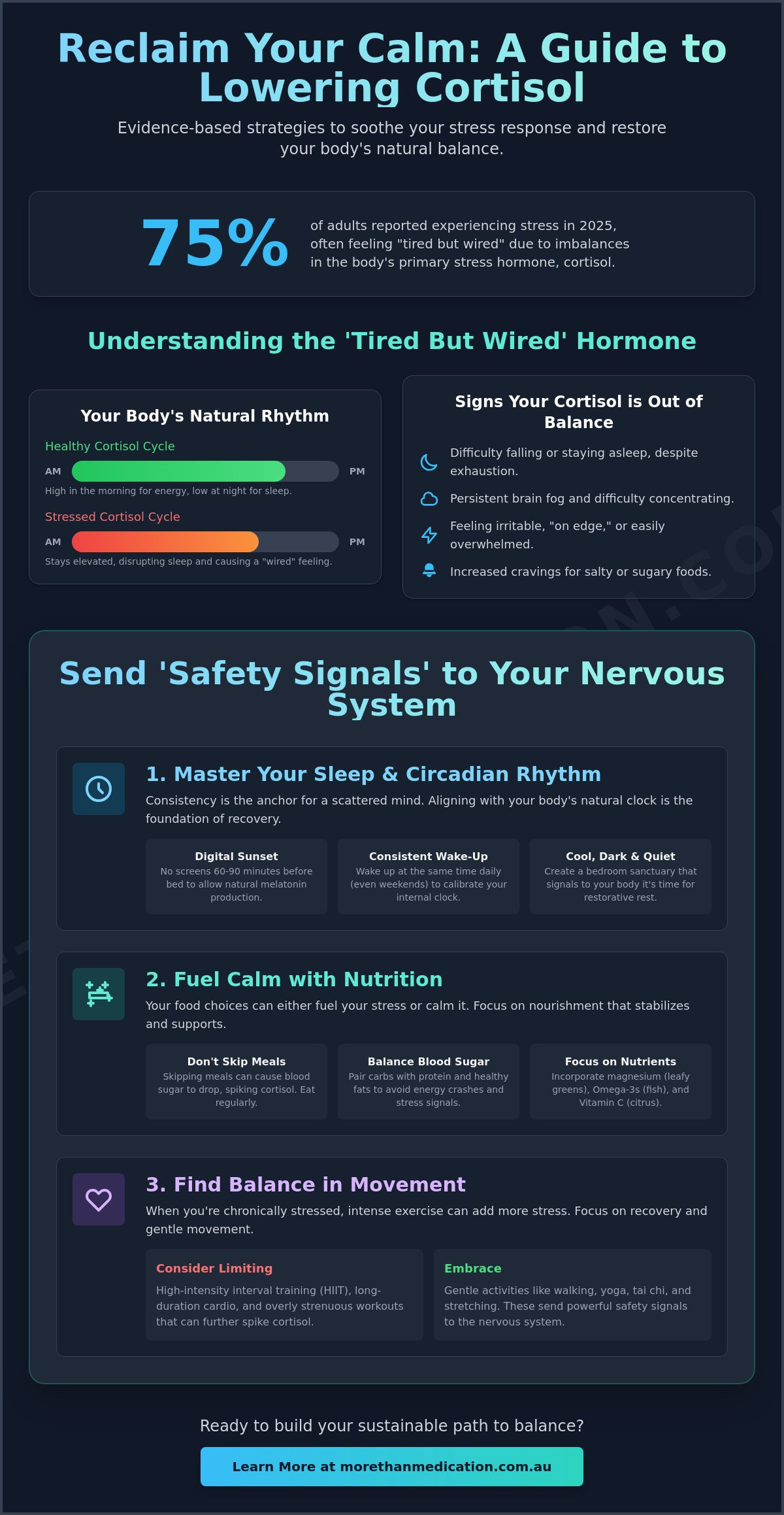
If you feel like your body is stuck in a permanent state of high alert, you aren’t alone; 75% of adults in the U.S. reported experiencing stress in 2025. You likely know the weight of this feeling. It’s that heavy exhaustion that doesn’t go away with sleep, the persistent brain fog that clouds your focus, and the search for natural ways to lower cortisol levels when you feel constantly overwhelmed. It’s frustrating to feel like your own biology is working against you, especially when you’re doing your best to keep everything together.
The good news is that your body is designed to find its way back to calm. You can begin to signal safety to your nervous system and reclaim your sense of balance through rhythmic, manageable changes. We’ve gathered evidence-based, gentle strategies to help you soothe your stress response and restore your emotional resilience without adding more pressure to your day. In this guide, we’ll walk through how small shifts in nutrition, movement, and lifestyle can lead to deeper sleep and a much clearer mind.
Key Takeaways
- Learn how to quiet the “tired but wired” feeling by aligning your daily habits with your body’s natural circadian rhythm.
- Discover natural ways to lower cortisol levels through nutrition that fuels your calm rather than firing up your stress response.
- Identify the balance between effort and ease in your fitness routine to ensure your exercise supports recovery rather than spiking your hormones.
- Master the art of sending “safety signals” to your nervous system to help your brain realize the danger has passed.
- Build a personalized, sustainable path to balance by viewing lifestyle adjustments as gentle acts of self-advocacy.
Understanding Cortisol: The ‘Tired but Wired’ Hormone
Imagine your body has a built-in security system that never sleeps. That is essentially what cortisol is. While it often gets a bad reputation as the “stress hormone,” Understanding Cortisol helps us realize it’s actually a vital part of your survival kit. It helps regulate your blood pressure, manages how your body uses carbohydrates and fats, and keeps inflammation at bay. The trouble starts when the alarm bells won’t stop ringing. When your body stays in high gear for too long, you might find yourself searching for natural ways to lower cortisol levels just to feel like yourself again.
You might know the feeling of being completely exhausted by 8 PM, yet laying wide awake at midnight with your mind racing. This is the “tired but wired” phenomenon. In a healthy cycle, cortisol levels should be highest in the morning to wake you up and lowest at night to let melatonin take over. When chronic stress flips this script, your evening cortisol stays elevated, effectively blocking your body’s ability to slip into deep, restorative sleep. It’s a heavy burden to carry, and it’s one that affects your mind and body as a single, connected system.
The Role of the HPA Axis
Your stress response is managed by the Hypothalamic-Pituitary-Adrenal (HPA) axis. Think of this as a conversation between your brain and your adrenal glands. When your brain perceives a threat, it sends a chemical message down the line, telling your adrenals to release cortisol. Ideally, once the danger passes, your brain notices the rise in cortisol and shuts off the signal. The fight-or-flight response is a protective mechanism designed to keep you safe, but in our modern world, the brain often struggles to find the “off” switch.
Signs Your Cortisol May Be Out of Balance
Living with chronic stress is more than just a feeling; it leaves physical footprints. You might notice stubborn weight gain around your midsection or find yourself snapping at loved ones over small things. Because cortisol influences almost every cell, an imbalance can weaken your immune system and slow down your digestion. Common signs include:
- Difficulty falling or staying asleep despite being exhausted.
- A persistent “foggy” feeling that makes it hard to concentrate.
- Increased cravings for salty or sugary foods.
- A frequent sense of irritability or feeling “on edge.”
It is deeply exhausting to feel this way without a clear reason, but recognizing these signs is the first step toward reclaiming your calm. Finding natural ways to lower cortisol levels isn’t just about fixing a number; it’s about advocating for your own peace of mind and long-term wellbeing.
Signaling Safety: How Sleep and Rhythm Reset Your Stress Response
Your nervous system is constantly scanning your environment for cues of danger or safety. When you feel chronically stressed, your brain is stuck on high alert, even when you’re physically safe at home. One of the most effective natural ways to lower cortisol levels is to intentionally send “safety signals” to your brain. These signals are small, repetitive actions that prove to your Hypothalamic-Pituitary-Adrenal (HPA) axis that the immediate threat has passed. It’s not just about doing less; it’s about creating a predictable environment where your body feels it’s okay to finally relax.
Consistency acts as an anchor for a scattered mind. Your body thrives on a biological rhythm known as the circadian cycle. Every morning, you experience a natural surge called the Cortisol Awakening Response (CAR). This spike is designed to give you the energy to start your day. However, when your schedule is erratic, this response becomes dysregulated, leaving you feeling panicked in the morning and wide awake at night. Restorative rest is the only time your body can efficiently clear away excess cortisol, making your sleep habits the foundation of your recovery.
Mastering Your Sleep Hygiene
Think of the hour before bed as your “digital sunset.” Blue light from your phone or laptop mimics the sun’s rays, tricking your brain into staying in daytime mode. By putting screens away 60 minutes before sleep, you allow melatonin to rise naturally. Creating a cool, dark, and quiet bedroom serves as a physical signal of safety, telling your nervous system that the world is quiet and it’s time to rest. Waking up at a consistent time each day, even on your days off, helps calibrate your internal clock so your hormones know exactly when to rise and fall.
The Power of Daily Rhythms
Your body also finds peace in the timing of your nourishment. When you skip meals, your blood sugar drops, which triggers your adrenals to release more cortisol to keep you going. Eating at regular intervals prevents these avoidable stress spikes. Stepping outside for a few minutes of morning sunlight is another gentle way to set your hormonal pace for the day. These predictable habits reduce the “cognitive load” on your brain, making your daily life feel more navigable and less overwhelming. If you’re looking for more support, you can find expert advice on living a balanced lifestyle to help you stay grounded.
Fueling Calm: Dietary Strategies and Supplements for Cortisol Balance
Your relationship with food is one of the most powerful natural ways to lower cortisol levels. Think of your diet as either fueling your calm or firing up your stress response. When you choose nutrient-dense whole foods, you’re providing the raw materials your nervous system needs to repair itself. On the other hand, a diet high in refined sugars and excessive caffeine can keep your adrenal glands in a state of constant overstimulation. These substances provide a temporary burst of energy but often lead to a “crash” that triggers your body to release even more cortisol to stabilize your blood sugar.
The connection between your gut and your brain is a two-way street. A healthy microbiome produces neurotransmitters like GABA and serotonin, which help regulate your mood and keep your stress response in check. By nourishing your gut, you’re essentially building a buffer against the physical effects of anxiety. It’s about moving away from restrictive habits and toward a way of eating that feels supportive and sustainable for your whole self.
Cortisol-Conscious Eating
Focusing on anti-inflammatory foods is a gentle way to lower the internal “heat” caused by chronic stress. Omega-3 fatty acids found in fatty fish, along with the antioxidants in berries and leafy greens, help protect your cells from oxidative damage. Don’t be afraid of complex carbohydrates like oats or sweet potatoes; they’re essential for serotonin production, which helps you feel calm and centered. For those busy afternoons when you need a pick-me-up, exploring healthy slice recipes can provide nutrient-dense snacking options that won’t send your blood sugar on a rollercoaster.
Targeted Supplements and Adaptogens
While food is your foundation, certain supplements can offer extra support as you navigate health challenges. Adaptogens are unique herbs that help your body “adapt” to stressors by balancing the HPA axis. For instance, Rhodiola rosea and Ashwagandha are well-known for their ability to support resilience. As of April 2026, it is important to check your labels, as regulatory bodies like India’s FSSAI now only permit the use of Ashwagandha roots in health supplements. Magnesium is another vital ally, often referred to as the “relaxation mineral” for its role in easing muscle tension and supporting nervous system health. These supplements should complement, not replace, a balanced diet and professional guidance.
Movement and Mindfulness: Finding the Balance Between Effort and Ease
When you’re feeling completely drained, the idea of a grueling workout can feel like just another chore on an already impossible list. You might even feel guilty for not having the energy to hit the gym. It’s time to release that guilt. One of the most misunderstood natural ways to lower cortisol levels is the belief that all exercise is good for stress. In reality, high-intensity interval training (HIIT) or heavy weightlifting can actually spike your cortisol further if your body is already in a state of chronic depletion. Your goal isn’t to add more stress to your system; it’s to help your body process the stress hormones already circulating in your blood.
Movement should be a way to communicate with your nervous system. By engaging in gentle, mindful activity, you stimulate the vagus nerve. This nerve is the “superhighway” of your parasympathetic nervous system, the system responsible for your “rest and digest” mode. Activating this pathway tells your adrenals they can stop pumping out emergency signals. You don’t need an hour-long session to see results. In fact, small five-minute “micro-breaks” throughout your day are often more effective at keeping your stress levels steady than one exhausting session at the end of a long day.
Choosing the Right Intensity
Restorative fitness like walking, swimming, or slow-flow yoga allows you to move without triggering a survival response. Listening to your body isn’t just a cliché; it’s a clinical necessity for hormonal health. If a workout leaves you feeling wiped out for hours afterward, it was likely too intense for your current state. For those times when your muscles feel physically locked by tension, remedial massage can be a powerful tool to physically release stored stress and encourage your body to shift back into a state of ease.
Mindfulness for the Non-Meditator
If the idea of sitting still in meditation makes you feel more anxious, you aren’t alone. Mindfulness doesn’t have to mean silence. You can try “box breathing”—inhaling, holding, exhaling, and holding for four seconds each—to manually override your stress response. Grounding techniques, like noticing five things you can see or three things you can touch, can interrupt a mental spiral and bring you back to the present moment. Another quick tool is the “physiological sigh”: two short inhales through the nose followed by a long, slow exhale through the mouth. This simple breath pattern is one of the fastest natural ways to lower cortisol levels and bring your heart rate down in seconds. For more personalized support, you can explore our expert advice on fitness and mental health to find a rhythm that works for your unique life.
The Holistic Path: Integrating Natural Support Into Your Daily Life
True health involves the whole person; your mind, body, and spirit are not separate compartments. When you look for natural ways to lower cortisol levels, it’s helpful to view these shifts as acts of self-advocacy rather than a list of chores. You aren’t just “fixing” a hormone; you’re reclaiming your right to feel calm and centered. These strategies are a vital part of holistic wellbeing, providing a bridge between clinical support and the reality of your daily life in Australia.
Your journey toward balance is not a race. It’s a continuous process of learning what your body needs to feel safe. By integrating these small, rhythmic adjustments, you’re building a foundation of resilience that can withstand the fluctuations of life. This approach honors the emotional weight of your experience while offering a steady, hopeful path forward.
The Power of Connection and Joy
We often forget that social connection is a biological necessity. When you share a genuine laugh or a deep conversation with a friend, your body releases oxytocin. This “cuddle hormone” acts as a natural buffer, directly counteracting the effects of cortisol in your system. Positive social interactions tell your nervous system that you’re part of a community and that you’re safe. Spending time in nature, often called the “Green Space” effect, can also provide immediate mental clarity and lower your physiological stress markers. Setting gentle boundaries to protect your mental energy is another act of self-care that prevents your cortisol from spiking due to overcommitment.
Creating Your Sustainable Wellbeing Plan
The key to lasting change is to start small so you don’t feel overwhelmed. Pick just two small changes to focus on this week. Perhaps you’ll commit to a “digital sunset” 30 minutes before bed or swap one high-intensity workout for a restorative walk. Remember that progress is rarely linear. There will be days when stress feels higher than others, and that’s okay. Self-compassion is the ultimate tool for hormonal balance; being kind to yourself when things are difficult actually helps lower your stress response. You are a partner in your own health journey, and every small step you take is a sign of your inner strength and commitment to a more balanced life.
Embracing Your Path to Lasting Calm
Restoring balance isn’t about perfecting a long list of wellness tasks. It’s about consistently signaling safety to your nervous system through gentle, rhythmic adjustments. By prioritizing restorative sleep, choosing foods that fuel your calm, and embracing mindful movement, you’re actively practicing natural ways to lower cortisol levels. These small, compassionate shifts work together to quiet your internal alarm system and help you reclaim your mental clarity. You’ve learned that health is a whole-person experience, and every choice you make to support your body is a powerful act of self-advocacy.
As you move forward, remember that you don’t have to navigate these health challenges alone. You can explore more expert-led wellness guides at More Than Medication for holistic, patient-centric advice and the latest evidence-based wellness trends. Our expert-driven health content is designed to support you through every fluctuation of your journey. You have the inner strength to find your way back to balance, and your progress, no matter how small it feels, is a testament to your resilience. Be patient with yourself as you grow.
Frequently Asked Questions
Can I lower my cortisol levels quickly in an emergency?
You can lower your heart rate and signal safety to your brain in seconds by using the “physiological sigh.” This involves taking two quick inhales through the nose followed by one long exhale through the mouth. This breath pattern is one of the most effective natural ways to lower cortisol levels during acute panic. While it won’t fix chronic imbalances instantly, it provides immediate relief by manually overriding your fight-or-flight response.
What foods are best for reducing cortisol naturally?
Focus on anti-inflammatory nutrients like Omega-3 fatty acids found in wild-caught salmon and antioxidants in dark berries. Complex carbohydrates, such as sweet potatoes and oats, are also essential because they support the production of serotonin. These foods help stabilize your blood sugar, which prevents the adrenal spikes often caused by processed sugars. Aim for a balanced plate that makes your body feel nourished and secure rather than overstimulated.
Is it possible to have cortisol levels that are too low?
Yes, it is possible for your levels to drop below the healthy range, a condition known as adrenal insufficiency. According to 2026 medical guidelines, a morning serum cortisol level of less than 30 µg/L confirms a diagnosis of central adrenal insufficiency. While high cortisol is a common concern, chronically low levels can lead to extreme fatigue and low blood pressure. It is important to work with a professional to ensure your hormones stay within a healthy window.
How long does it take to see results from natural cortisol-lowering methods?
You may feel a shift in your nervous system within minutes of practicing deep breathing, but systemic hormonal changes usually take four to six weeks of consistent lifestyle adjustments. Your body needs time to trust that the new “safety signals” you are sending are permanent. Patience is a vital part of this process. By sticking to a steady routine of restorative sleep and balanced nutrition, you will notice improved energy and mental clarity over a few months.
Can caffeine permanently damage my adrenal glands?
Caffeine does not typically cause permanent structural damage to your adrenal glands, but it can lead to chronic overstimulation. When you consume high amounts of caffeine, you are essentially asking your adrenals to pump out stress hormones on demand. Over time, this makes it harder for your body to regulate its natural rhythms. Reducing your intake allows your HPA axis to reset and regain its natural sensitivity to stress signals.
Do I need to see a doctor before trying natural ways to lower cortisol?
It is always a wise step to consult with a healthcare provider before starting a new supplement regimen or making major lifestyle changes. Cortisol testing is complex because levels fluctuate throughout the day, and a professional can help interpret your results. They can also ensure that any herbs or adaptogens you choose won’t interact with your current medications. Seeking expert guidance turns your wellness journey into a safe and supportive partnership.
Can certain hobbies really help manage my stress hormones?
Engaging in creative hobbies like gardening, painting, or knitting can lower your stress hormones by inducing a “flow state.” This state of deep immersion shifts your brain away from rumination and toward the present moment. Activities that involve your hands or time in nature are particularly effective at reducing the physiological markers of stress. These aren’t just distractions; they are essential tools for building emotional resilience and finding joy in your daily routine.
What is the best time of day to practice relaxation techniques for cortisol?
The most effective times are early morning and just before bed to align with your natural hormonal cycle. Practicing gentle grounding techniques in the morning helps manage the Cortisol Awakening Response (CAR). In the evening, focusing on “digital sunsets” and deep breathing prepares your body for restorative sleep by allowing cortisol to drop and melatonin to rise. Consistency is more important than the specific hour, so choose a time that you can realistically maintain.
⚕️ Medical Disclaimer
This content is for informational purposes only and is not a substitute for professional medical advice, diagnosis, or treatment. Always seek the advice of your doctor or other qualified health provider with any questions you may have regarding a medical condition. Never disregard professional medical advice or delay in seeking it because of something you have read on this website.