
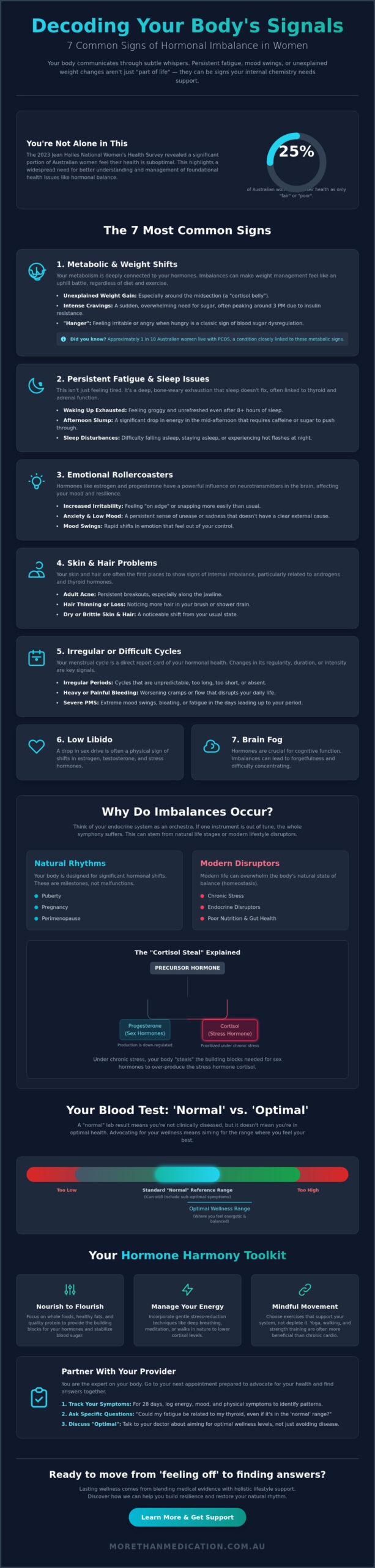
What if the persistent exhaustion you feel at 3:00 PM isn’t just a lack of sleep, but a signal that your internal chemistry is out of sync? It’s draining to wake up tired after eight hours or to feel like your moods are on a rollercoaster you didn’t sign up for. You aren’t alone in this experience. The 2023 Jean Hailes National Women’s Health Survey found that 25% of Australian women describe their health as only fair or poor. Understanding the signs of hormonal imbalance in women is the first step toward feeling like yourself again.
For women looking for a structured path to recovery, The Midlife Reset provides a comprehensive wellness framework specifically designed to manage the unique transitions of midlife.
You deserve to feel heard and validated in your health journey. We promise to help you decode the subtle whispers of your body, from brain fog to weight shifts, and provide a practical checklist for your next GP appointment. This guide explores how to blend clinical advice with natural, holistic habits that support long-term harmony and resilience.
Key Takeaways
- Learn to identify specific “clusters” of symptoms that signal your endocrine system is out of sync, helping you see the bigger picture of your internal health.
- Discover how to recognise the subtle signs of hormonal imbalance in women that often go unnoticed, from persistent fatigue to shifts in your emotional wellbeing.
- Understand the difference between “normal” reference ranges and “optimal” wellness levels in your blood tests to better advocate for how you actually feel.
- Build a personalized “Hormone Harmony Toolkit” using gentle, evidence-based lifestyle shifts in nutrition and stress management to restore your natural rhythm.
- Gain the confidence to move from “feeling off” to finding answers with a clear roadmap and specific questions to guide your next conversation with your healthcare provider.
Understanding the Delicate Dance: What is Hormonal Imbalance?
You know your body better than anyone else. When you feel a persistent cloud of fatigue or a sudden, unexplained shift in your mood, it isn’t just in your head. Your body communicates through hormones, which are powerful chemical messengers that travel through your bloodstream to tell your organs exactly how to function. They coordinate everything from your growth and metabolism to your sleep cycles and emotional wellbeing. They are the invisible architects of your daily experience.
A hormonal imbalance occurs when there is even a slight deviation in the levels of these chemicals. Because your body is so sensitive, a tiny increase or decrease can lead to noticeable symptoms such as hot flashes, sleeping disturbances, or unexpected weight changes. These aren’t just minor inconveniences; they are clear signs of hormonal imbalance in women that can disrupt your career, your social life, and your sense of self. Validating these feelings is the first step toward healing.
At More Than Medication, we understand that your health is a complex journey. While clinical treatments provide a vital foundation, they are rarely the whole story. We believe that lasting wellness comes from a partnership between medical evidence and lifestyle adjustments. It’s about looking at the “more” in your life, including how you eat, move, and rest, to support the work your medicine is doing.
The Endocrine System: Your Body’s Internal Orchestra
Think of your endocrine system as a finely tuned symphony. The thyroid acts as the conductor for your metabolism, the adrenals manage your stress response, and the ovaries regulate your reproductive health and vitality. When every instrument plays in harmony, you feel energetic and balanced. However, if one instrument is out of tune, the entire performance suffers. In the context of female health, homeostasis is the state of internal stability where your body’s complex systems maintain a perfect equilibrium despite the constant changes of the outside world.
Why Hormonal Shifts Occur: Natural vs. Disruptive
Hormonal changes are a natural part of the female experience. You’ll move through significant, expected shifts during puberty, pregnancy, and the transition into perimenopause. These are milestones, not malfunctions. However, modern life introduces external disruptors that can throw the system off balance prematurely. Many common household products in Australia contain endocrine disruptors that mimic natural hormones and confuse your body’s receptors.
Chronic stress is another major factor. It often leads to the “cortisol steal” effect, where your body prioritises the production of stress hormones over sex hormones like progesterone. This survival mechanism was helpful for our ancestors, but in a world of 24/7 notifications, it often leaves women feeling depleted. Recognising these signs of hormonal imbalance in women helps you identify when your body is asking for a change in pace or environment.
The 7 Most Common Signs of Hormonal Imbalance in Women
Your body communicates through a subtle, constant language of symptoms. While experiencing one symptom in isolation might just be a reaction to a stressful week, noticing a cluster of changes often indicates that your endocrine system is struggling to maintain its rhythm. Recognising the signs of hormonal imbalance in women requires looking at your health as a whole, rather than as a list of disconnected complaints. By understanding these signals, you can move toward a state of balance and resilience.
For the next 28 days, keep a simple log of your energy, mood, and skin changes. Note when these symptoms peak. This data is invaluable for your healthcare provider and helps you see the patterns in your own unique journey.
Metabolic and Weight-Related Indicators
Weight changes are rarely just about “calories in versus calories out” when your hormones are involved. You might notice unexplained weight gain specifically around your midsection, often referred to as a cortisol belly. This occurs because chronic stress signals your body to store fat to protect your vital organs. Additionally, insulin resistance can trigger intense sugar cravings and a feeling of “hangriness” that peaks around 3 p.m. each day. If you find yourself battling persistent fatigue that isn’t resolved by a full eight hours of sleep, your thyroid or adrenal glands may be asking for support. Research indicates that approximately 1 in 10 Australian women live with PCOS, a condition deeply linked to these metabolic shifts.
Skin, Hair, and Aesthetic Changes
Your reflection can offer profound insights into your internal chemistry. Adult acne that clusters along the jawline or chin is a classic marker of androgen excess. These hormonal breakouts differ from teenage acne because they are often deep, cystic, and tied to your menstrual cycle. You might also observe thinning hair on your scalp or, conversely, unexpected hair growth on the face or chest, known as hirsutism. These aesthetic shifts are often linked to Hormonal Imbalance Causes and Symptoms like elevated testosterone. In some cases, small skin tags or darkened patches of skin around the neck can signal that your body is struggling to manage insulin levels effectively.
Emotional and Cognitive Disruptions
Hormones don’t just dictate physical health; they govern your mental clarity and emotional stability. Many women experience “brain fog,” a legitimate cognitive symptom often tied to fluctuations in estrogen or thyroid hormones. It feels like a persistent mental cloud that makes focusing on daily tasks difficult. This often overlaps with the PMDD spectrum, where mood swings feel significantly more intense than typical PMS, impacting your relationships and self-esteem. Sleep disturbances, including insomnia or sudden night sweats, are frequently linked to declining progesterone levels. Understanding these links helps you realise that your emotional struggles aren’t a personal failing, but a physiological signal. Taking a moment to look at the bigger picture of your wellbeing can help you find the right path forward.
Why Your ‘Normal’ Blood Test Might Not Tell the Whole Story
You’ve finally made the appointment, sat in the waiting room, and had your blood drawn, only to receive a phone call saying your results are “perfectly normal.” For many women, this news feels less like a relief and more like a dismissal. You know your body. You know that the fatigue, the brain fog, and the sudden mood shifts aren’t just in your head. This gap between your lived experience and a lab report is often where the first signs of hormonal imbalance in women are found.
While your GP is trained to look for clinical disease or pathology, holistic wellness focuses on how you function daily. A result that sits at the very edge of a “normal” range might technically be fine by lab standards, but it could be the reason you feel far from your best. We view this article as a bridge. It’s a way to connect your intuition with clinical evidence, ensuring you feel heard rather than just measured.
Understanding Reference Ranges in Australia
Australian pathology labs calculate reference ranges using a bell curve based on the general population. This means your “normal” is compared to thousands of other people, many of whom may be dealing with undiagnosed stress, poor sleep, or sub-clinical issues. There’s a world of difference between being statistically average and being optimally healthy. For instance, a Thyroid Stimulating Hormone (TSH) reading of 4.0 mIU/L is often considered “normal” in many Australian clinics, yet many women report feeling symptomatic until that number sits closer to 2.0 mIU/L.
The timing of your test also dictates the story the data tells. Testing progesterone on Day 3 of your cycle provides a completely different insight than testing on Day 21. Think of a blood test as a single still photograph of a busy intersection. It shows where the cars are at one specific second, but it can’t tell you about the traffic jams or the speed of the vehicles. You need to see the “video” of your entire cycle to understand the signs of hormonal imbalance in women properly.
The Power of Bio-Individual Symptom Tracking
Your intuition is a valid clinical tool that deserves a seat at the table. We recommend keeping a dedicated journal for at least 90 days to track your cycles, mood, and energy. When you look back over three months, patterns emerge that a single blood draw could never capture. You might notice your anxiety spikes exactly four days before your period, or your energy crashes every afternoon at 3:00 PM regardless of what you eat. These patterns are gold for a specialist looking to piece together your hormonal puzzle.
Connecting with your body through fitness and movement is another powerful way to tune into these internal signals. When you move mindfully, you become more aware of how your physical strength and recovery times fluctuate with your hormones. This self-awareness transforms you from a passive patient into an active partner in your own health journey. Medicine is a vital tool, but it’s only one piece of the puzzle. Your daily observations provide the context that makes the clinical data meaningful.
The Hormone Harmony Toolkit: Holistic Strategies for Balance
Recognising the signs of hormonal imbalance in women is the first step toward reclaiming your vitality. In 2026, the focus has shifted toward holistic wellbeing in Australia, where we view symptoms as invitations to nurture ourselves differently. You don’t have to overhaul your life overnight. Small, intentional shifts create the foundation for lasting endocrine health. This toolkit is designed to help you listen to your body and respond with kindness and evidence-based care.
Nutrition as Information: Feeding Your Hormones
Your body uses the food you eat as raw data for hormone synthesis. Prioritise healthy fats like omega-3s, found in oily fish, walnuts, or flaxseeds, to build the structural foundation of your hormones. Stable blood sugar is your most powerful tool for hormonal stability. When your glucose levels spike and crash, your insulin and cortisol follow, often worsening the signs of hormonal imbalance in women.
Incorporate cruciferous vegetables like broccoli, cauliflower, and kale to help your liver safely detoxify excess estrogen. For a simple way to stay nourished without the blood sugar roller coaster, try these healthy slice recipes for nutrient-dense snacking that supports your metabolic health throughout the day.
Movement and Resilience: Not All Exercise is Equal
Exercise is a form of stress. While it’s usually beneficial, high-intensity interval training can backfire if your cortisol is already elevated. If you’re feeling depleted or wired, swap the heavy cardio for restorative movement. Yoga, walking, or regular remedial massage can lower your heart rate and signal to your nervous system that it’s safe to rest.
Many Australian women are now embracing “cycle syncing,” which involves matching your workout intensity to your menstrual phases. You might push yourself during your follicular phase when energy is high and switch to gentle stretching or Pilates during your luteal phase. This approach respects your body’s natural ebb and flow rather than forcing it into a rigid, daily peak-performance model.
Mindfulness and the Nervous System Connection
When you’re stuck in a “fight or flight” state, your body prioritises survival over reproductive health. This chronic stress often leads to suppressed progesterone and disrupted cycles. Quality sleep is non-negotiable for hormone regulation. Melatonin and growth hormone require a dark, cool environment and a consistent wind-down routine to function optimally. Try these three micro-habits to soothe your nervous system daily:
- Box Breathing: Take four deep breaths in, hold for four, and exhale for four before every meal to activate your “rest and digest” state.
- Circadian Alignment: Step outside for ten minutes of morning sunlight to help regulate your internal clock.
- The Evening Brain Dump: Spend five minutes writing down tomorrow’s to-do list to clear mental clutter before bed.
Ready to dive deeper into your wellness journey? Explore our holistic resources to find more ways to support your body’s unique needs.
Navigating Your Health Journey: Next Steps and Self-Advocacy
You’ve listened to your body. You’ve identified the signs of hormonal imbalance in women within your own daily life. Now, it’s time to turn those whispers into a clear, actionable plan. Moving from feeling “off” to finding answers requires a shift in perspective. You aren’t just a patient receiving instructions; you’re the lead partner in your own care. This journey is about reclaiming your vitality through a mix of clinical insight and personal intuition.
Preparing for Your GP Appointment
In Australia, a standard 15 minute consultation often feels too rushed for complex hormonal discussions. When you book, request a long appointment to ensure you have the space to be heard. Bring your symptom journal. It’s a tangible record of your lived experience that helps your doctor see patterns you might miss. If you’re worried about forgetting details, bring a trusted friend to take notes and offer support.
Empower yourself by asking specific, targeted questions during your consult:
- “Can we look at my thyroid antibodies, such as TPO and TGAb, rather than just my TSH levels?”
- “Could we test my fasting insulin and glucose to check for early signs of insulin resistance?”
- “Is it possible to check my progesterone and oestrogen levels specifically on day 21 of my cycle?”
- “Can you provide a referral to an endocrinologist or an integrative GP who specialises in perimenopause?”
- “How do these blood results correlate with the physical symptoms I’ve been tracking in my journal?”
Building Your Support Team
True healing rarely happens in a vacuum. While your GP manages the clinical data, other professionals provide the daily tools for resilience. Nutritionists can help you identify inflammatory foods that spike cortisol. Naturopaths often suggest herbal adaptogens to support your adrenal system. Psychologists are equally vital. They help you break the cycle of stress that frequently exacerbates the signs of hormonal imbalance in women.
Your path might also involve targeted pharmaceutical support. For example, if your hormonal shifts trigger debilitating neurological symptoms, migraine therapy drugs could be a necessary piece of your puzzle. Medication is a tool, not a defeat. It works most effectively when it’s part of a broader strategy that includes sleep hygiene, movement, and emotional support.
Your health is a journey of self-discovery and resilience. It’s about finding the “more” in your care plan. While medicine provides a vital foundation, your habits, your community, and your advocacy build the rest of the house. You deserve to feel balanced, and you have the right to seek a team that treats you as a whole person, not just a set of symptoms.
Embrace Your Path to Lasting Balance
You’ve discovered that recognizing the signs of hormonal imbalance in women is about more than just reading a lab report; it’s about honoring your body’s subtle signals. We’ve looked at why standard pathology results in Australia might miss the nuance of your experience and how a holistic toolkit helps you regain control. Research from Jean Hailes for Women’s Health indicates that hormonal changes affect millions of Australians, yet many wait years to find the right support. You now have the evidence-based strategies needed to move from feeling overwhelmed to feeling empowered.
At More Than Medication, we provide expert-led Australian health content designed to support the whole person. Our wellness guides offer empathetic advice that acknowledges the emotional and physical aspects of your wellbeing. Whether you’re navigating a specific condition or seeking more vitality, we’re your compassionate companion every step of the way. Explore more holistic health trends and expert advice for a balanced lifestyle.
You don’t have to navigate these changes in isolation. Trust your intuition, take those small steps toward harmony, and know that a more balanced version of yourself is well within reach.
Frequently Asked Questions
Can hormonal imbalance cause anxiety and depression?
Yes, your hormones and mental health are deeply linked. Fluctuations in estrogen and progesterone affect serotonin levels in the brain, often leading to significant mood shifts. A 2021 study published in The Lancet highlighted that women are twice as likely to experience depression during major hormonal transitions. It’s not just in your head; it’s a physical response that deserves gentle care and professional support as you navigate this journey.
Is it normal for hormones to change in your 30s?
It’s completely normal for your body to begin shifting during your 30s. While many think of menopause as a later-life event, progesterone levels often start a gradual decline around age 35. Data from Jean Hailes for Women’s Health shows perimenopause symptoms can emerge 10 years before your periods actually stop. Recognizing these early changes is a powerful step in reclaiming your vitality and balance through proactive lifestyle adjustments.
How long does it take to fix a hormonal imbalance naturally?
You can generally expect to see initial improvements within 3 to 6 months of making holistic changes. Because your endocrine system operates on a monthly rhythm, your body requires at least 3 full cycles to integrate new habits and stabilize. Clinical research suggests 90 days is the standard window for cellular turnover, giving your system the mental and physical space it needs to find its new, healthy equilibrium.
What foods should I avoid if I suspect a hormonal imbalance?
You should limit refined sugars and alcohol to support your body’s natural filtering process. These substances can spike insulin and place extra strain on your liver, which is responsible for processing excess estrogen. The Australian Dietary Guidelines suggest keeping added sugars below 10% of your daily energy intake. Choosing whole foods helps your body manage the signs of hormonal imbalance in women more effectively and reduces internal inflammation.
Can hormonal imbalance cause sudden weight gain?
Yes, sudden weight gain is one of the most common signs of hormonal imbalance in women, particularly when cortisol or insulin are involved. High cortisol levels can trigger a 5% increase in abdominal fat storage even if your diet remains exactly the same. Understanding that your weight is tied to your internal chemistry can help reduce the anxiety often felt during these unexpected physical changes, allowing you to focus on healing.
What is the best exercise for hormonal balance in women?
Moderate resistance training and walking are often the most supportive choices for your endocrine system. While high-intensity interval training has its place, it can sometimes elevate cortisol levels too much for a stressed system. A 2018 study found that 30 minutes of strength training three times a week improved insulin sensitivity by 25%. This approach builds resilience and empowerment without overtaxing your body’s delicate resources or causing further fatigue.
Are there specific vitamins that help with hormonal health?
Magnesium, Vitamin D, and Vitamin B6 are essential pillars for maintaining your hormonal health. Magnesium supports over 300 enzymatic reactions, while Vitamin D acts more like a hormone than a vitamin in the body. With 33% of Australian adults showing Vitamin D deficiencies, supplementing can be a vital part of your journey. These nutrients provide the raw materials your body needs to manufacture and regulate hormones with greater ease.
When should I see a specialist instead of just my GP?
Seek a specialist like an endocrinologist if your symptoms persist for more than 6 months despite basic interventions from your GP. In Australia, you’ll need a GP referral to access Medicare rebates for specialist consultations. If you feel your concerns aren’t being fully addressed, a specialist can provide the deeper diagnostic testing required to understand the “more” behind your physical wellbeing and help you feel heard.
⚕️ Medical Disclaimer
This content is for informational purposes only and is not a substitute for professional medical advice, diagnosis, or treatment. Always seek the advice of your doctor or other qualified health provider with any questions you may have regarding a medical condition. Never disregard professional medical advice or delay in seeking it because of something you have read on this website.