
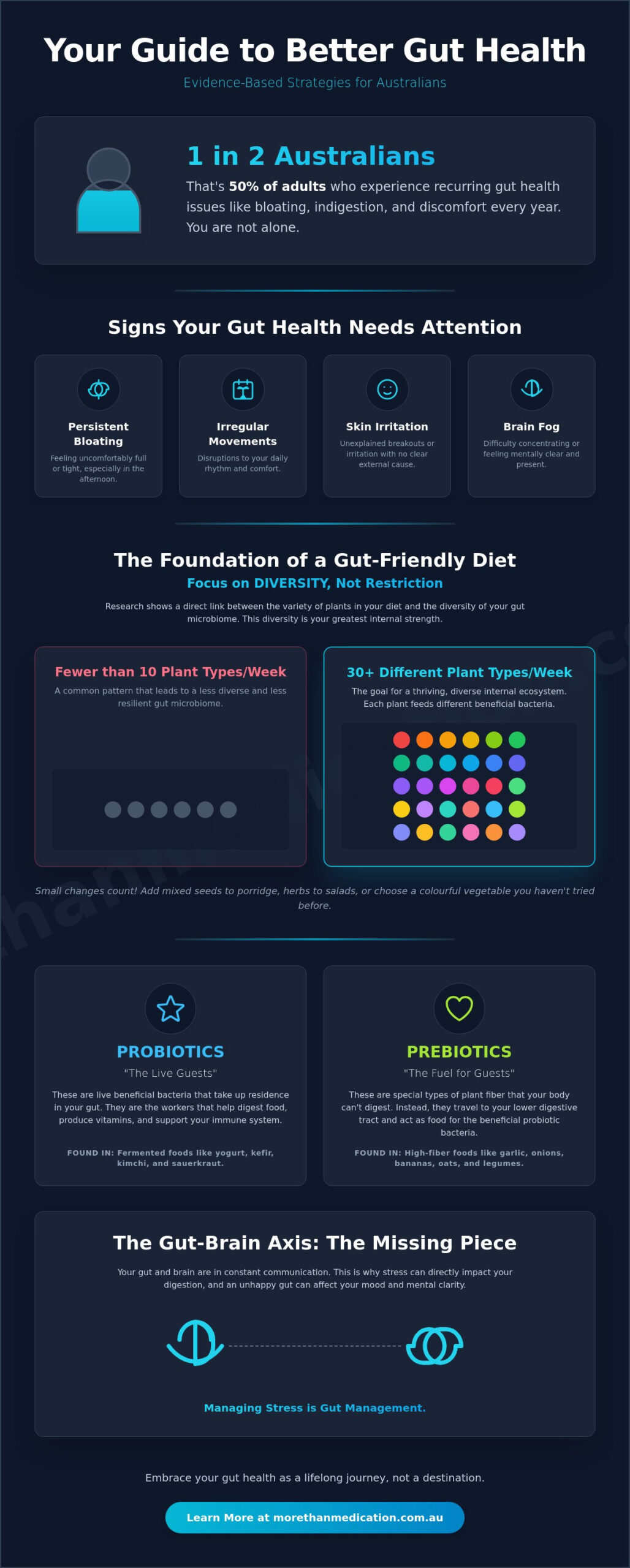
Did you know that 50% of Australian adults experience gut health issues like persistent bloating or indigestion every year? If you’ve spent your mornings feeling weighed down or your afternoons clouded by brain fog, you aren’t alone in this struggle. It’s frustrating to feel overwhelmed by conflicting advice about which “superfood” will finally fix your digestion. This guide explains how to improve gut health australia by using evidence-based strategies that focus on your microbiome and the vital connection between your mind and your body.
We believe that true wellbeing is about more than just a prescription; it’s about finding a sense of balance that fits your daily life. You deserve to understand exactly how stress affects your stomach and why the difference between prebiotics and probiotics matters for your long-term energy. We’ll explore a manageable eating plan and simple lifestyle shifts that empower you to have more informed conversations with your GP. By the end of this article, you’ll have a clear roadmap to reduce discomfort and reclaim your sense of resilience.
Key Takeaways
- Understand your gut as a thriving internal ecosystem and learn why nurturing this microbiome is the foundation of your holistic wellbeing.
- Discover evidence-based strategies on how to improve gut health Australia-wide by shifting your focus from food restriction to embracing plant diversity.
- Explore the profound link between your mind and your digestive system to see why managing stress is often the missing piece of the puzzle.
- Learn how to implement small, rhythmic daily habits that respect your body’s natural cycles and lead to significant, lasting improvements.
- Embrace gut health as a lifelong journey rather than a destination, empowering you to work in compassionate partnership with your healthcare team.
Understanding Gut Health in Australia: More Than Just Digestion
Living in Australia often involves a delicate balance between a busy professional life and the pursuit of a healthy, outdoor lifestyle. If you’ve spent time researching how to improve gut health australia, you’ve likely realized that true wellness starts from within. Gut health isn’t just about avoiding a stomach ache; it represents the intricate balance of trillions of microorganisms living in your digestive tract. We understand how draining it feels to struggle with constant lethargy or that heavy, uncomfortable feeling of bloating after a long day at work. It’s important to remember that while medicine provides a vital piece of the puzzle, your lifestyle choices are the foundation of long-term health.
What is the Gut Microbiome?
This community includes bacteria, fungi, and viruses that play a critical role in how you absorb nutrients and protect yourself from illness. To understand the human gut microbiota, imagine a lush Australian garden. Different species of plants require specific fertilisers and care to stay vibrant. If you only water one corner or use the wrong nutrients, the entire garden loses its balance and some species may take over while others wither. This complex network functions as a living pharmacy within your body, producing essential chemicals that influence everything from your immune response to your daily energy levels.
Signs Your Gut Health Needs Attention
Your body is remarkably vocal when it needs support. When your internal balance is disrupted, it sends clear signals that it’s time to slow down and reassess. You might notice several common signs that things aren’t quite right:
- Persistent bloating that makes your clothes feel tight by the afternoon.
- Irregular movements that disrupt your daily rhythm and comfort.
- Skin irritation or breakouts that don’t seem to have a clear external cause.
- Brain fog that makes it difficult to concentrate or feel present.
These symptoms are often the body’s way of asking for a gentle adjustment to your daily habits. According to a 2022 report by the CSIRO, 50% of Australian adults experience gut health issues, yet many wait until symptoms are severe before seeking help. While occasional discomfort is normal, seeing these signs regularly suggests it’s time for a holistic look at your routine. Real change comes from understanding that your health is “more” than just a prescription; it’s about the small, daily choices that empower your body to thrive and find its natural equilibrium once again.
The Pillars of a Gut-Friendly Diet: Diversity Over Restriction
Many people believe that healing your digestive system requires a long list of foods to avoid. You might feel overwhelmed by the idea of cutting out gluten, dairy, or sugar, but the most effective way to how to improve gut health australia is actually by adding more in. Research from the American Gut Project, which includes data from Australian participants, shows that people who eat more than 30 different types of plants per week have a significantly more diverse microbiome than those who eat fewer than ten. This diversity is your greatest internal strength.
Australian dietary patterns often lean heavily on a small rotation of staple vegetables like potatoes, carrots, and peas. While these are nutritious, your gut bacteria thrive on variety. Each different plant provides unique polyphenols, which act like natural antioxidants. When you shop at your local Woolworths or farmers’ market, look for the most vibrant colours you can find. Deep purple cabbage, bright red capsicums, and dark leafy greens all contain different compounds that feed specific beneficial bacterial strains. It is about creating a lush, varied ecosystem rather than a manicured lawn.
To truly improve your gut health, you should view your plate as a habitat. Small changes, like adding a sprinkle of mixed seeds to your morning porridge or tossing a handful of herbs into a salad, count toward your weekly plant goal. This approach shifts the focus from deprivation to abundance, making your health journey feel like an exploration rather than a chore.
The Power of Prebiotics and Probiotics
Understanding the difference between these two is vital for your daily routine. Think of probiotics as the “live guests” in your gut and prebiotics as the “fuel” they need to survive. You can find probiotics in fermented foods like pot-set yoghurt, kefir, or locally made sauerkraut. However, these guests won’t stay long if they aren’t fed. Prebiotics are specific types of fibre found in everyday Australian pantry staples like onions, garlic, leeks, and slightly under-ripe bananas. While supplements have their place, getting these from whole foods ensures you receive a spectrum of nutrients that a capsule simply cannot replicate.
Why Fibre is Your Guts Best Friend
Fibre does more than just keep you regular. Soluble fibre, found in oats and legumes, turns into a gel-like substance that helps manage blood sugar. Insoluble fibre, found in the skins of fruit and wholegrains, acts like a broom for your digestive tract. If you’re looking for ways to boost your intake, consider swapping white flour for nutrient-dense alternatives in your baking. You can find inspiration in these healthy slice recipes which focus on whole ingredients. If your current diet is low in fibre, increase your intake slowly. Adding too much too fast can lead to temporary bloating. Start with one extra serving of vegetables a day and drink plenty of water to help the fibre move through your system smoothly.
If you feel like you need more personalized support on this journey, don’t hesitate to connect with a healthcare professional who can help tailor these steps to your specific needs.
The Gut-Brain Axis: Why Stress Management is Gut Management
You might be doing everything right. Your plate is full of fermented veggies and high-fiber grains. Yet, you still feel that familiar, uncomfortable tightness in your abdomen. It’s frustrating when your body doesn’t seem to reflect your efforts. This happens because your gut and brain are constantly talking through the vagus nerve. Think of it as a bidirectional superhighway. When your mind is racing, your digestive system feels the vibration. Anxiety can literally knot your stomach. This physical sensation isn’t just in your head; it’s a biological response that influences how to improve gut health australia and beyond.
Mindfulness isn’t just a lifestyle choice; it’s a clinical tool for improving digestive function. By calming the nervous system, you’re sending a direct signal to your gut that it’s safe to process nutrients. Your journey toward wellbeing is about more than just what you swallow. It’s about the emotional environment you create for your body to thrive.
How Stress Alters Your Microbiome
When you’re under pressure, your body releases cortisol. This hormone isn’t just for fight or flight. Over time, elevated cortisol levels can shift the delicate balance of your gut bacteria. Research suggests that chronic stress can reduce the diversity of beneficial microbes. During high-stress moments, your body instinctively diverts blood flow away from the digestive tract and toward your limbs. This is a survival mechanism. However, it means your food sits undigested for longer. This leads to the stress-bloating so many people experience. It’s a real biological event, not a lack of willpower.
Mindful Eating Practices for Better Absorption
Digestion doesn’t start in your stomach. It starts in your brain through the cephalic phase. Simply smelling or thinking about food triggers essential enzymes. If you’re scrolling through emails while you eat, you miss this vital step. Learning how to improve gut health australia requires us to look at the rhythm of our daily lives. Integrating simple ways to improve gut health often begins with how you sit at the table. Viewing mealtime as a moment of resilience can change your physical response to food.
Try this three-step ritual to support your system:
- Breathe: Take three deep belly breaths before your first bite to signal safety to your nervous system.
- Sit: Avoid eating on the go. Sit down and let your body focus entirely on the task of nourishment.
- Chew: Aim for 20 to 30 chews per mouthful to break down food and mix it with digestive enzymes.
This approach turns a daily necessity into an act of self-care. It’s a reminder that medicine is only one piece of the puzzle. Your mental state is a powerful partner in your physical health journey.
Practical Steps to Improve Your Gut Health Daily
Learning how to improve gut health Australia often feels like a daunting task, but the most effective changes are usually the smallest ones. Your gut operates on a circadian rhythm, a biological clock that thrives on predictability. When you eat, move, and rest at consistent times, you create an environment where your microbiome can flourish. It’s about building a partnership with your body rather than forcing a strict regime. Small, rhythmic choices lead to the most significant long-term shifts in your wellbeing.
Movement is a non-negotiable pillar of this daily routine. Physical activity acts as a gentle, natural stimulant for your digestive tract. It encourages peristalsis, which are the rhythmic contractions that move food through your system. Integrating regular fitness into your day doesn’t just build muscle; it keeps your internal processes flowing. Aim for 30 minutes of movement, like a brisk walk along the coast or a local park, to help reduce transit time in the colon.
Hydration and the Gastrointestinal Tract
Fiber is often called the fuel for gut health, but it cannot do its job alone. Without adequate water, fiber can become heavy and difficult to move, sometimes causing the very bloating you’re trying to avoid. In our warm Australian climate, staying hydrated is essential for keeping the mucosal lining of the intestines healthy. You don’t have to stick to plain water if you find it uninspiring. Cold-brewed herbal teas or water infused with native finger lime can make hydration feel like a treat. It’s also helpful to be mindful of alcohol. While a social drink is part of many lives, alcohol can temporarily increase intestinal permeability. Choosing a few alcohol-free days each week gives your gut lining the space it needs to repair and strengthen.
Sleep and Gut Bacteria
There’s a profound connection between the quality of your rest and the diversity of your microbes. Research has shown that chronic sleep deprivation can increase inflammatory markers and weaken the gut barrier, often referred to as “leaky gut.” A consistent sleep schedule helps maintain a diverse microbial ecosystem. To support this, try a simple evening wind-down ritual. Turning off digital devices 45 minutes before bed helps your nervous system transition from “fight or flight” to “rest and digest.” This quiet time allows your body to focus its energy on cellular repair and digestive maintenance while you sleep.
Every step you take towards a consistent routine is a step toward a more resilient you. Your journey is unique, and progress is rarely a straight line. Discover more holistic tools to support your health journey.
Navigating Your Gut Health Journey: When to Seek Professional Advice
Understanding how to improve gut health Australia wide means accepting that your body is a dynamic, living system. It isn’t a project with a completion date or a checklist you finish. Instead, it’s a lifelong conversation between you and your microbiome. While the steps you take at home are foundational, you don’t have to walk this path alone. True wellbeing often stems from a partnership between your personal intuition and professional medical expertise. Our philosophy is simple: we believe in medicine when it’s needed and lifestyle always. This balanced approach ensures you’re supported by science while remaining the primary advocate for your own health.
Red Flags: When to See Your GP
While minor digestive shifts are common, certain symptoms act as your body’s way of asking for urgent clinical attention. If you experience any of the following, please book an appointment with your GP:
- Unexplained or rapid weight loss that occurs without changes to your diet.
- Persistent blood in your stool or changes that last longer than two weeks.
- Severe abdominal pain that disrupts your sleep or daily activities.
- A significant, lasting change in your bowel habits.
- Signs of iron deficiency or anemia, such as chronic fatigue and pale skin.
Your doctor can facilitate essential pathology tests, such as blood panels or stool kits, to rule out underlying conditions like Coeliac disease or Inflammatory Bowel Disease (IBD). They may also refer you to a gastroenterologist or an Accredited Practising Dietitian for specialized care. To make the most of your visit, try asking these three questions:
- “Could my current symptoms be linked to a specific food intolerance or an underlying clinical condition?”
- “What pathology tests do you recommend to get a clear picture of my digestive function?”
- “How do my current medications or supplements interact with my gut microbiome?”
Building Long-Term Resilience
Maintaining your progress can feel challenging when you’re bombarded by the latest health trends and “quick-fix” promises. Resilience isn’t about being perfect; it’s about having the tools to bounce back after a stressful week or a holiday period. One of the most effective tools for this is a “food and mood” journal. By tracking what you eat alongside your energy levels and emotional state, you can identify personal triggers that data alone might miss. This practice helps you move away from restrictive “fad” diets and toward a sustainable way of eating that honors your unique biology.
Your journey toward better digestion is a testament to your commitment to yourself. Every small choice, from choosing a high-fiber snack to prioritizing a full night’s sleep, builds a more resilient you. We invite you to explore our other expert-led wellness resources to continue your education and find the support you deserve. You’ve already taken the hardest step by starting. Stay curious, stay patient, and remember that we’re here to guide you through every peak and valley of your health journey.
Your Path to a Balanced and Vibrant Life
Improving your wellbeing starts with small, intentional choices that honor your body’s unique needs. You’ve seen how diet diversity can transform your microbiome. Research from the CSIRO indicates that 80% of Australian adults don’t consume enough fibre, yet adding just 10 grams daily can make a profound difference to your digestive regularity. It’s also vital to remember that your mental state directly impacts your digestion through the gut-brain axis. By managing daily stress, you’re actively nurturing your physical health from the inside out.
Navigating the journey of how to improve gut health australia doesn’t have to feel overwhelming or clinical. At More Than Medication, we offer expert-led content on nutrition and mental health tailored for our local lifestyle. Our evidence-based advice is delivered with empathy and stays free from confusing jargon, ensuring you feel like an empowered partner in your own care. We believe that true health is about more than just a prescription; it’s about finding balance in every aspect of your life.
Ready to continue your wellness journey? Explore our guide to the latest health trends in Australia for more holistic tips. You’re capable of making these positive changes, and we’re here to support you with every step you take toward a healthier future.
Frequently Asked Questions
How long does it take to improve gut health?
You can see changes in your microbiome in as little as 24 to 48 hours after making dietary shifts. A 2014 study published in the journal Nature showed that microbial communities respond almost immediately to what we eat. While these initial shifts happen fast, it usually takes 3 to 6 months of consistent habits to build a resilient and stable internal ecosystem. It’s a journey that requires patience and steady, gentle changes.
Can I improve my gut health without taking expensive supplements?
You can absolutely improve your gut health through whole foods and lifestyle adjustments without spending a fortune. Focus on eating 30 different plant-based foods each week, which is a target recommended by the American Gut Project to maximize bacterial diversity. Learning how to improve gut health australia doesn’t mean buying luxury powders; seasonal vegetables from your local market often provide more nourishment for your microbes than a shelf-stable capsule ever could.
What are the best fermented foods available in Australia?
Locally produced kimchi, sauerkraut, and kefir are excellent choices found in most Australian independent grocers and supermarkets. Look for brands like Kehoe’s Kitchen or Peace Love & Vegetables that use traditional fermentation methods rather than vinegar pickling. These live-culture foods provide diverse bacterial strains that support your wellbeing. Aiming for 1 to 2 small servings daily is a manageable way to nourish your system and embrace a holistic approach to health.
Is coffee bad for my gut health?
Coffee can actually benefit your gut microbiome because it’s rich in polyphenols, which act as fuel for beneficial bacteria. Research indicates that regular coffee drinkers often have more diverse bacterial profiles than those who abstain. However, the Australian Department of Health suggests limiting caffeine to 400mg daily, which is roughly 4 espressos. If coffee triggers reflux or leaves you feeling anxious, listen to your body and consider reducing your intake to find a better balance.
How does stress cause bloating even if I eat a healthy diet?
Stress activates your “fight or flight” response, which physically redirects blood flow away from your digestive tract. This process slows down your digestion and can lead to fermentation and gas, even when you’re eating nutritious meals. The gut-brain axis means your emotional state is just as important as your diet. Incorporating 10 minutes of daily mindfulness or deep breathing can calm your nervous system, helping you feel more comfortable and centered throughout your day.
What is the difference between a prebiotic and a probiotic?
Prebiotics are the fiber-rich “food” for your bacteria, while probiotics are the live “beneficial bacteria” themselves. Think of prebiotics as the fertilizer and probiotics as the seeds for your inner garden. You can find prebiotics in common foods like garlic, onions, and slightly green bananas. Balancing both is a fundamental part of understanding how to improve gut health australia. Medicine is often just one piece of the puzzle; nourishing your bacteria with the right fuel is another.
Can exercise actually change my gut bacteria?
Regular physical activity increases the production of short-chain fatty acids, which are essential for protecting your gut lining. A study in Experimental Physiology found that just 6 weeks of aerobic exercise can positively alter the composition of your microbiome. You don’t need to commit to intense gym sessions to see results. Walking for 30 minutes 5 days a week is a gentle, effective way to foster a more diverse and healthy bacterial environment.
Should I go on a “gut cleanse” or “detox” to start my journey?
You don’t need restrictive “cleanses” because your liver and kidneys already detoxify your body naturally every single day. Many commercial detox kits lack scientific backing and can actually strip away the beneficial bacteria you’re trying to grow. Instead of a temporary, often stressful fix, focus on sustainable habits like increasing your hydration and fiber intake. True health is about nourishing your whole self rather than following a cycle of deprivation and restriction.
⚕️ Medical Disclaimer
This content is for informational purposes only and is not a substitute for professional medical advice, diagnosis, or treatment. Always seek the advice of your doctor or other qualified health provider with any questions you may have regarding a medical condition. Never disregard professional medical advice or delay in seeking it because of something you have read on this website.