
Last Tuesday, you might have stood in a local market aisle, staring at two bunches of green leaves and feeling that familiar sting of confusion. It’s frustrating to realize you’ve bought the wrong ingredient for a recipe or, more importantly, for your wellness routine. You aren’t alone in this; a 2014 report in the Journal of Ayurveda and Integrative Medicine notes that while Tulsi is one of the most prized medicinal plants, its culinary cousins are often mislabeled in commercial settings. Distinguishing between holy basil and thai basil isn’t just about perfecting a stir-fry; it’s about knowing exactly what you’re putting into your body to support your health.
We understand that managing your wellbeing involves more than just following a prescription. It’s about the small, intentional choices you make in your kitchen and your quiet moments of reflection. This guide will help you confidently identify each herb so you can unlock their distinct medicinal powers and culinary secrets to enhance your daily wellness journey. You’ll learn how to spot the physical differences, understand the unique adaptogenic benefits of Tulsi, and discover how to integrate both into a balanced Australian lifestyle with ease and safety.
Key Takeaways
- Learn how to distinguish between these two herbs by spotting subtle visual cues like stem colour and leaf shape, ensuring you always choose the right variety for your needs.
- Explore how these botanical allies support your resilience by bridging the gap between physical vitality and emotional calm.
- Uncover the unique medicinal properties of holy basil and thai basil to transform your kitchen into a space for both nourishment and healing.
- Gain practical advice on sourcing and storing fresh herbs in Australia to maintain their potency and flavour for your daily wellness rituals.
- Discover how integrating these ancient herbs into your routine offers a holistic approach to health that goes beyond traditional medicine.
The Basil Identity Crisis: Why We Confuse Holy and Thai Basil
You are standing in the fresh produce aisle of a local Australian supermarket, staring at two bunches of vibrant green herbs. One is labeled simply as “basil,” while the other might have a more exotic tag. You want the one that will soothe your digestion or elevate your evening meal, but they look remarkably similar. If you feel a bit lost, you aren’t alone. This confusion is a common hurdle for many people starting their journey toward holistic wellness. Both plants belong to the Lamiaceae family, a massive botanical group of over 7,000 species, and the Ocimum genus. However, they’re distinct siblings with very different personalities.
The two stars of our guide are Ocimum basilicum var. thyrsiflora (Thai basil) and Ocimum tenuiflorum (holy basil). Distinguishing between holy basil and thai basil is about more than just getting a recipe right. At More Than Medication, we believe that understanding your ingredients is the first step to holistic health. When you know exactly what you’re putting into your body, you move from being a passive consumer to an empowered advocate for your own wellbeing. This knowledge helps bridge the gap between clinical nutrition and the mindful choices you make every day in your kitchen.
The Culinary Roots of Thai Basil (Horapa)
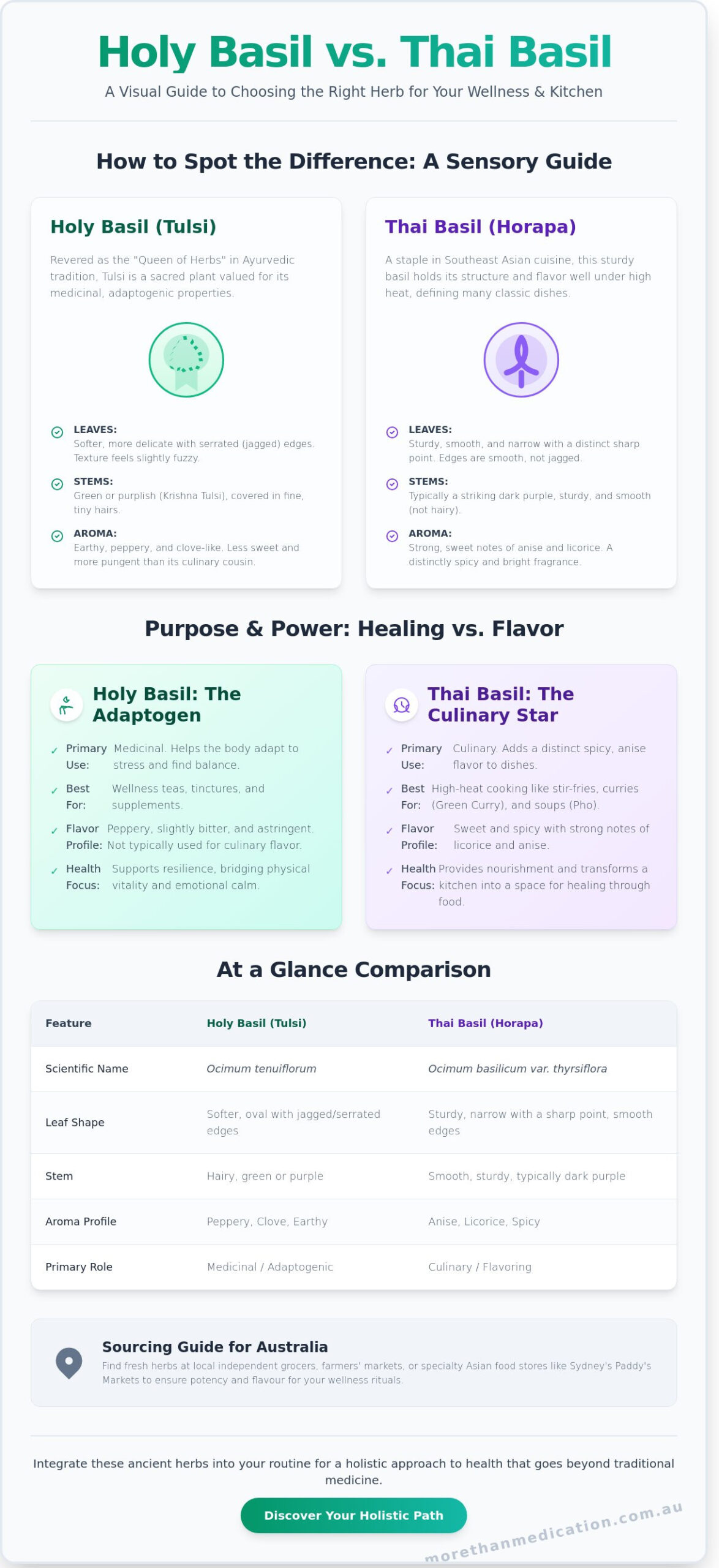
Thai basil, known as Horapa in its native Southeast Asia, has been a staple of regional cooking for centuries. It’s often called the “sturdy” basil because its narrow, pointed leaves hold up well under high heat. Unlike sweet Italian basil that wilts the moment it touches a hot pan, Thai basil maintains its structure and punchy, anise-like flavor during the cooking process. In Australia, you’ve likely encountered it as the aromatic garnish on a steaming bowl of Pho or stirred into a vibrant Green Curry. It provides a reliable, spicy kick that defines many classic Asian flavor profiles.
The Sacred Origins of Holy Basil (Tulsi)
Holy basil carries a different weight, often referred to by its Sanskrit name, Tulsi. In Ayurvedic traditions dating back over 5,000 years, it’s revered as “The Incomparable One” or the “Queen of Herbs.” It’s less of a kitchen staple and more of a living pharmacy. Practitioners of holistic medicine value it for its adaptogenic properties, which help the body manage stress and find balance. You will typically find two main varieties:
- Sri or Lakshmi Tulsi: This variety has green leaves and a slightly more mellow, peppery taste.
- Krishna Tulsi: This type is easily identified by its dark purple leaves and stems, often containing a higher concentration of bioactive compounds.
Understanding the nuance between holy basil and thai basil ensures you choose the right plant for your specific physical or emotional needs.
Physical and Sensory Differences: How to Spot the Difference
Walking into your local independent grocer or a bustling market like Sydney’s Paddy’s Markets can be a sensory whirlwind. When you’re searching for specific herbs to support your wellbeing, the visual similarities between holy basil and thai basil can feel overwhelming. Distinguishing between them isn’t just about culinary accuracy; it’s about honoring the unique properties each plant brings to your holistic health journey. By slowing down and using your senses, you can easily tell these two cousins apart. It’s a small act of mindfulness that ensures you’re getting exactly what your body needs.
The Anatomy of Thai Basil
Thai basil is often the most recognizable variety in Australian supermarkets and specialty stores. You’ll notice its striking purple stems and sturdy, smooth green leaves that come to a sharp, narrow point. Unlike other varieties, its leaves are quite resilient. This sturdiness means it won’t wilt immediately when tossed into a high-heat red curry or a sizzling stir-fry. When you take a moment to breathe in its scent, you’ll detect clear notes of anise and licorice. It offers a sweet, spicy profile that feels bright and energizing, making it a favorite for vibrant Southeast Asian dishes.
The Anatomy of Holy Basil
Holy basil, or Tulsi, requires a closer look and a gentler touch. Its stems are covered in fine, tiny hairs, and the leaf edges are serrated or jagged, resembling a miniature saw blade. The texture is much softer and more delicate than its Thai counterpart. Because the leaves are thinner, they don’t handle prolonged boiling as well. They’re best added at the very end of cooking to preserve their volatile oils. Identifying holy basil and thai basil becomes much easier once you perform the “rub and sniff” test. Gently rub a leaf between your fingers; holy basil will release a warm, musky aroma reminiscent of cloves and black pepper. This earthy scent is a hallmark of its grounding nature.
In Australia, you’ll frequently find these herbs sold in bunches at independent grocers rather than major chains. Look for the vibrant purple flowers on Thai basil, whereas holy basil often features small, pinkish or white flower spikes. If you’re feeling unsure about which herb best fits your current needs, remember that supporting your health is a practice of patience. Taking the time to learn these subtle cues helps you build a deeper connection with the food you eat. If you’re looking for more ways to integrate mindful choices into your daily routine, you might find comfort in exploring holistic wellness strategies that look at the whole person. This connection between what we consume and how we feel is a vital step in any healing process.
Beyond the Kitchen: The Unique Health Benefits of Tulsi vs. Thai Basil
Choosing between holy basil and thai basil involves more than just a preference for spice or sweetness. It is an invitation to look at your health through a wider lens. At More Than Medication, we believe that every small choice in your kitchen can be a step toward a more resilient version of yourself. These herbs do not just flavor your soup; they interact with your biology to support your mental and physical equilibrium. They act as gentle companions on your path to wellness, providing a layer of care that goes beyond a standard prescription.
Integrating these fresh greens into your daily routine is simple and rewarding. You might try incorporating finely chopped Thai basil into savory healthy slice recipes to create a snack that satisfies your hunger while nourishing your cells. This holistic approach ensures that your snacks are functional, helping you maintain steady energy levels throughout the day.
Holy Basil as a Potent Adaptogen
Holy basil, often called Tulsi, is celebrated as a premier adaptogen. This means it helps your body navigate the physical and emotional impact of stress. A 2017 systematic review published in Evidence-Based Complementary and Alternative Medicine found that Tulsi helps regulate cortisol levels, the hormone responsible for your “fight or flight” response. By smoothing out these hormonal peaks, Tulsi supports mental clarity and helps reduce the “brain fog” that often accompanies long-term health journeys. It acts as a soothing presence for your nervous system, offering anti-inflammatory properties that protect your immune health during difficult times.
Nutritional Highlights of Thai Basil
Thai basil serves as a nutritional powerhouse for your physical foundation. It is exceptionally high in Vitamin K; just 10 grams of fresh leaves can provide nearly 50% of your daily requirement. This is vital for maintaining bone density and ensuring healthy blood clotting. When you understand how these vitamins work, much like understanding selenium benefits for thyroid and immune support, you can build a more comprehensive nutritional shield. Additionally, Thai basil contains essential oils like estragole and linalool. These compounds help relax the digestive tract, making it a wonderful addition to meals if you often experience post-dinner discomfort.
While these herbs offer beautiful natural support, your safety is the priority. Always consult with your doctor or a qualified healthcare professional before starting concentrated herbal supplements. This is especially vital if you are managing existing conditions like diabetes or taking blood-thinning medications. Your health journey is unique, and professional guidance ensures that these botanical allies work in harmony with your medical care.
The Australian Guide: Sourcing, Growing, and Using Both
Finding fresh holy basil and thai basil in Australia can feel like a small treasure hunt. Most major supermarkets consistently stock Thai basil near the pre-packaged salads. However, finding Holy basil often requires a trip to a local Asian grocer or a weekend farmers’ market. When you bring these herbs home, treat them with care. They’re delicate. You can keep them fresh by placing the stems in a glass of water on your benchtop, much like a bouquet of flowers. If you prefer the fridge, wrap them loosely in a damp paper towel and place them in a reusable container to prevent wilting.
Integrating these herbs into your daily routine is about more than just taste. It’s a step toward mindful nourishment. If you’re using a macro calculator to find your unique nutritional balance, herbs are your best friend. They provide intense flavor and micronutrients with negligible calories, helping you stay consistent with your goals without feeling deprived. Taking control of your health often starts in the kitchen, and eventually, in the garden. Growing your own food is a transformative part of the healing journey.
Growing Basil in the Australian Climate
Growing your own herbs is a grounding experience that empowers you to take charge of what goes into your body. In Australia, basil thrives in the warmth. Here is how to help your plants flourish:
- Sun and Water: Basil needs at least 6 to 8 hours of sunlight daily. In hotter regions like Perth or Brisbane, afternoon shade prevents leaf scorch. Keep the soil moist but ensure it drains well.
- Natural Pest Control: Keep an eye out for aphids or whiteflies. Instead of harsh chemicals, use a simple neem oil solution or gently spray the leaves with soapy water to keep your harvest clean.
- Timing: For most of Australia, plant your seeds or seedlings between October and December. In tropical north regions, you can grow them almost year-round if you protect them from the heaviest rains.
Culinary Applications: Pad Krapao vs. Green Curry
The golden rule for your kitchen is simple. Use Holy basil for high-heat stir-fries and Thai basil for finishing curries. Holy basil’s peppery notes stand up to the wok’s heat in a classic Pad Krapao. Thai basil, with its anise-like sweetness, should be stirred into a Green Curry just before serving to preserve its vibrant color. These herbs pair beautifully with lean proteins like chicken breast, creating a balanced meal that supports muscle recovery and satiety.
For a moment of evening calm, try making a simple Tulsi tea. Steep a handful of fresh Holy basil leaves in hot water for 5 minutes. It’s a gentle way to practice mindfulness and signal to your body that it’s time to rest. Your health journey is a series of small, intentional choices, and choosing fresh, whole ingredients is a wonderful place to start. We understand that change takes time, but every leaf you add to your plate is a step toward a more vibrant you.
More Than Just a Garnish: Embracing a Holistic Basil Journey
Integrating these herbs into your life isn’t just about adding flavor to a bowl of noodles. It’s about building a foundation for long-term resilience. You’re choosing to support your body’s internal stress response with Holy Basil while inviting the vibrant, anti-inflammatory properties of Thai Basil into your kitchen. This balance helps you manage the physical and emotional demands of daily life. We encourage you to experiment with both holy basil and thai basil to see how they fit into your unique routine. Health isn’t a destination you reach overnight. It’s a series of small, consistent choices that add up over time.
Mindfulness starts with the choices you make at the grocery store or in the garden. When you pick up a bunch of fresh herbs, you’re selecting tools for your wellbeing. This intentionality shifts the act of eating from a chore to a ritual. It reminds you that you have the power to influence how you feel. By focusing on the “more” in your health journey, you acknowledge that medicine is vital; however, lifestyle choices provide the steady support your body craves every day.
Creating Your Own Wellness Rituals
You can transform a simple cup of Tulsi tea into a powerful mindfulness practice. Dedicate 10 minutes each morning to sit with your brew. Focus on the peppery aroma and the warmth of the mug. This ritual signals to your nervous system that it’s safe to relax. A 2017 study published in Evidence-Based Complementary and Alternative Medicine found that Tulsi significantly reduced stress scores by 31.6% in clinical trials. Use Thai basil to make your meals a sensory experience. The bright, anise-like scent of fresh leaves can turn a routine stir-fry into an act of self-care. The holistic synergy of holy basil and thai basil lies in their dual capacity to soothe the nervous system through adaptogenic support while simultaneously invigorating the senses and digestive health through aromatic phytochemicals.
Connecting with Your Community
Finding authentic varieties often starts at your local Australian farmers market. Whether you’re visiting the Carriageworks Farmers Market in Sydney or the Jan Powers Farmers Markets in Brisbane, look for growers who specialize in Asian herbs. These local connections ensure you’re getting the freshest leaves, often harvested within 24 hours of sale. Buying local also allows you to ask growers about their favorite ways to use these plants, bridging the gap between clinical knowledge and lived experience.
Sharing what you’ve learned about these herbs with friends and family creates a ripple effect of wellness. A 2022 report from the Australian Bureau of Statistics indicated that nearly 47% of Australians live with at least one chronic health condition. Building community knowledge around “more than medicine” solutions helps foster collective resilience. You aren’t just eating better; you’re helping those around you feel empowered to take charge of their own health journeys. When we share a meal or a cup of tea, we share the strength to keep moving forward.
Embrace Your Personal Path to Balance
Navigating the differences between holy basil and thai basil is about more than just refining your next green curry; it’s an invitation to bring intentionality into your daily rituals. Whether you’re reaching for the serrated leaves of Thai basil for its 1,148 micrograms of Vitamin K per 100 grams or brewing Tulsi for its 71 percent eugenol content to support your stress response, you’re taking active control of your wellbeing. These plants offer a bridge between ancient wisdom and modern self-care. We know that managing health can feel overwhelming, but small, evidence-based adjustments to your diet provide a foundation for long-term resilience.
You don’t have to walk this journey alone. We’re here to help you bridge the gap between medical treatment and everyday lifestyle choices. For expert-led nutrition advice for Australians and evidence-based insights into holistic health trends, Explore more holistic wellness tips on the More Than Medication homepage. Remember that while medicine is a vital tool, your daily choices are the “more” that truly support your whole self. You’ve got the power to cultivate a life that feels balanced and bright.
Frequently Asked Questions
Can I use Thai basil instead of holy basil in Pad Krapao?
You can certainly use Thai basil as a substitute, though the flavor will shift from spicy and peppery to a sweeter, licorice-like profile. While about 70% of Western restaurants use Thai basil because it’s easier to find, the dish technically becomes Pad Horapha rather than the traditional Pad Krapao. If you make this swap, add a few extra chilies to mimic the natural heat you’re missing from the holy basil leaves.
Is holy basil safe to take every day for stress?
Most clinical research, including a 2017 systematic review, suggests that taking holy basil daily for up to 8 weeks is safe for most adults. As an adaptogen, it helps your body navigate the ups and downs of daily life by supporting your natural stress response. Taking a 500mg dose twice daily has been shown to reduce stress-related symptoms by 39%, but it’s always best to chat with your doctor first.
What is the difference between holy basil and Tulsi?
There’s no difference between the two; they’re the same botanical species, known scientifically as Ocimum tenuiflorum. While “holy basil” is the common English name, “Tulsi” is the traditional Sanskrit term used in Ayurvedic practices for over 3,000 years. Understanding the link between holy basil and thai basil helps you choose the right plant for your specific culinary or spiritual journey toward better health.
Where can I buy fresh holy basil in Australia?
You can find fresh holy basil most reliably at local Thai or South Asian grocers in metropolitan hubs like Sydney’s Haymarket or Melbourne’s Footscray. It’s rarely stocked in major supermarkets like Coles, which typically carry 100% Mediterranean or Thai varieties. If you’re struggling to find it, many people find empowerment in growing their own from seeds sourced from Australian suppliers like Diggers Club or Eden Seeds.
Can I eat the flowers of Thai and holy basil?
Yes, the flowers of both plants are completely edible and offer a concentrated burst of the herb’s signature aroma. You can scatter the purple Thai basil blossoms over a curry to add a 10/10 visual appeal and a hint of spice. Holy basil flowers are often dried and steeped into a calming tea, ensuring you use every part of the plant to support your holistic wellbeing.
Does cooking holy basil destroy its medicinal properties?
High heat can diminish the delicate volatile oils like eugenol, so it’s best to toss the leaves into your pan during the last 30 seconds of cooking. A 2014 study indicated that boiling the leaves for more than 5 minutes can reduce antioxidant levels by 25%. By adding them at the very end, you preserve the healing essence that makes this herb a vital part of your wellness toolkit.
What are the side effects of consuming too much holy basil?
Consuming excessive amounts may lead to mild nausea or temporary digestive changes in roughly 2% of people. Because it can naturally lower blood sugar levels, it’s important to monitor your readings closely if you’re managing type 2 diabetes. Since your health is more than just one ingredient, remember that balance is key, especially as some studies suggest it might impact fertility when consumed in very high therapeutic doses.
⚕️ Medical Disclaimer
This content is for informational purposes only and is not a substitute for professional medical advice, diagnosis, or treatment. Always seek the advice of your doctor or other qualified health provider with any questions you may have regarding a medical condition. Never disregard professional medical advice or delay in seeking it because of something you have read on this website.