
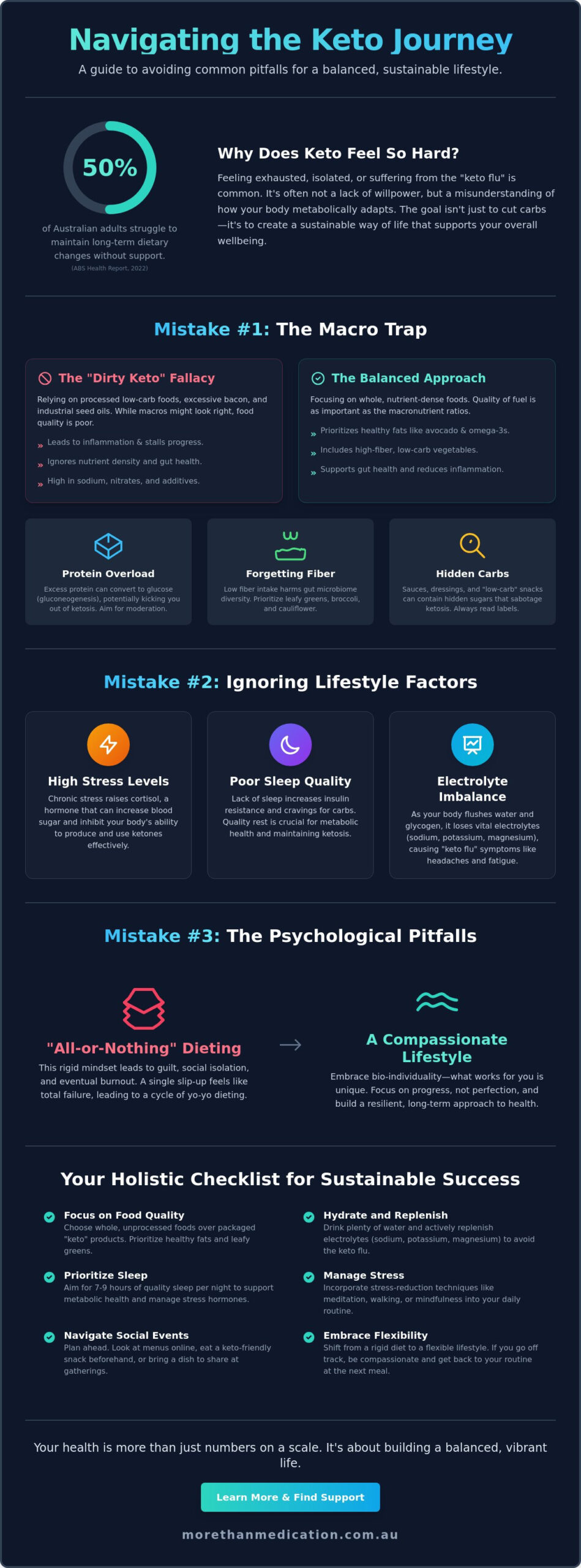
What if the reason you feel exhausted and isolated on keto isn’t a lack of willpower, but a simple misunderstanding of how your body and life actually work together? You’ve likely started this journey with high hopes for mental clarity, only to find yourself staring at a menu in a local cafe feeling completely overwhelmed by hidden sugars. It’s draining when the ‘keto flu’ hits and you start to wonder if a lifestyle change should really feel this difficult. Data from the 2022 Australian Bureau of Statistics health reports suggests that nearly 50% of adults find it challenging to maintain long term dietary changes without the right support. Identifying common keto diet mistakes is the first step toward a more balanced, joyful way of living.
We understand that health is about more than just the numbers on a scale; it’s about feeling empowered in your daily life. This guide helps you fix these frequent pitfalls by blending nutritional science with a focus on your emotional resilience and the reality of a busy Australian schedule. You’ll learn how to spot hidden carbs in local products and break through weight loss plateaus. We’ll show you how to maintain sustainable energy levels and reclaim your social life without the heavy burden of guilt, ensuring your path to wellbeing feels like a supportive journey rather than a clinical trial.
Key Takeaways
- Learn how to identify hidden sugars in Australian packaged snacks and why a balanced macro approach is more sustainable than the “all the bacon” myth.
- Discover the vital link between your stress levels, sleep quality, and your body’s ability to maintain a steady state of ketosis.
- Shift your mindset from “all-or-nothing” dieting to a compassionate lifestyle that helps you avoid common keto diet mistakes and emotional burnout.
- Gain practical strategies for navigating social challenges, from office morning teas to family dinners, without losing your sense of progress.
- Access a holistic checklist designed to help you transition from a temporary metabolic shift to a lifetime of balanced, vibrant health.
Understanding the Keto Journey: Why Common Mistakes Happen
Starting a new health chapter feels both exciting and overwhelming. You’re likely here because you want to feel better, but the path isn’t always linear. The ketogenic diet is often framed as a rapid weight loss tool, yet it’s actually a profound metabolic shift that changes how your cells function. Understanding this helps you avoid common keto diet mistakes that can stall your progress before you’ve truly begun. It’s not just about cutting carbs; it’s about teaching your body a new way to live.
Many people fall into the trap of “dirty keto,” which involves eating processed low-carb foods found in Australian supermarket aisles. While these products might fit your macronutrient targets, they often contain industrial seed oils and artificial additives that cause inflammation. This approach usually leads to long-term failure because it ignores the quality of the fuel you’re putting into your body. At More Than Medication, we believe your health is a mosaic. Diet is a vital piece, but it’s just one part of the picture alongside sleep, stress management, and emotional wellbeing. For a comprehensive overview of the ketogenic diet, looking at its history as a therapeutic tool shows it’s far more than a passing trend.
The Science of the Transition
Ketosis is the physiological state where your body transitions from using glucose as its primary energy source to burning stored and dietary fats for fuel. The first 14 days represent the highest risk period for common keto diet mistakes because your system is under significant stress. As you restrict carbohydrates, your body flushes out glycogen stores. Each gram of glycogen holds approximately 3 to 4 grams of water, leading to a rapid drop in weight. While this looks great on the scale, it often causes dehydration and electrolyte imbalances, resulting in the “keto flu” symptoms like headaches and fatigue.
Why a Holistic Approach Matters
Viewing this shift as a “quick fix” often leads to a cycle of yo-yo dieting that leaves you feeling defeated. Your health journey is a marathon, and we want to help you find a sustainable pace. We encourage you to embrace the concept of bio-individuality. This means acknowledging that your metabolic needs are unique; what works for a colleague or a social media influencer might not be the right fit for your body. By focusing on the “more” in your health journey, you build the resilience needed to move past the initial challenges and find a balance that supports your whole self.
The Macro Trap: Balancing Protein, Fats, and Hidden Carbs
Starting a ketogenic lifestyle often feels like a radical shift in how you view your plate. It’s easy to fall into the trap of thinking keto is simply “all the bacon you can eat” as long as you keep your carbohydrates low. This mindset is one of the common keto diet mistakes that can lead to long-term health hurdles. While fats are your new primary fuel source, relying heavily on processed meats can increase your intake of sodium and nitrates. Focusing on the quality of your food is just as vital as hitting your daily numerical targets. Your body thrives on variety and nutrient density, not just a specific ratio of macronutrients.
One area many people overlook is gut health. Because keto limits many high-carb fruits and grains, fiber intake often drops significantly. Research suggests that neglecting fiber can lead to a less diverse gut microbiome, which affects everything from your mood to your immune system. To support your wellbeing, prioritize low-carb, high-fiber vegetables like broccoli, cauliflower, and leafy greens. Understanding the risks of the keto diet, such as potential nutrient deficiencies, helps you make more informed choices that go beyond the scale.
The Protein vs. Fat Debate
Finding the right balance between protein and fat is a personal journey. If you consume protein in excessive amounts, your body can occasionally trigger a process called gluconeogenesis, where it creates glucose from non-carbohydrate sources. This may inadvertently nudge you out of ketosis. Instead of reaching for any saturated fat, try to include plenty of Omega-3 fatty acids. You can find these in fatty fish, walnuts, and chia seeds. A helpful framework for your meals is to fill half your plate with green vegetables, one-quarter with quality protein, and the final quarter with healthy fats like avocado or extra virgin olive oil.
Hidden Carbs in the Australian Pantry
The Australian market has seen a surge in “keto-friendly” products, but these labels can be misleading. Many local sauces, marinades, and cafe treats contain hidden starches or sugar alcohols like maltitol, which can impact blood glucose levels. When you’re at the supermarket, look closely at the “Per 100g” column on the nutrition panel. Be cautious of thickeners like cornstarch or maltodextrin that often hide in savory seasonings. For a more reliable way to enjoy a treat, these Healthy Slice Recipes offer nutrient-dense alternatives that align with a holistic lifestyle. Avoiding these common keto diet mistakes requires a bit of detective work, but it empowers you to take full control of your health. You might find that a mindful approach to eating helps you feel more connected to your body’s needs during this transition.
Beyond the Plate: How Lifestyle Factors Derail Ketosis
You might be tracking every gram of avocado and weighing your macadamia nuts, yet the scales refuse to budge. It’s a frustrating plateau that many face. One of the most common keto diet mistakes is viewing the protocol through a narrow lens of nutrition alone. Your body doesn’t exist in a vacuum; it’s a complex ecosystem where your environment, thoughts, and rest patterns dictate how fuel is burned. When we ignore these “more than medication” factors, we inadvertently create biological roadblocks that stall progress.
Stress, Cortisol, and Your Ketones
Your endocrine system is incredibly sensitive to the pressures of modern Australian life. Whether it’s a demanding deadline in the CBD or the mental load of managing a household, chronic stress triggers the release of cortisol. This hormone serves a purpose in emergencies, but when it’s constantly elevated, it signals your liver to release glucose for quick energy. This process, known as gluconeogenesis, can raise your blood sugar enough to blunt ketone production even if you haven’t touched a single carb. According to 2023 health data, nearly 33% of Australian adults report high levels of daily stress, which directly impacts metabolic success.
To protect your progress, we must prioritize mental rest as much as physical discipline. You can lower cortisol through small, manageable acts of mindfulness:
- Take five minutes of intentional deep breathing before your morning commute.
- Step outside for a “green break” in local parklands to lower your heart rate.
- Practice a digital sunset by turning off devices 60 minutes before bed.
The Importance of Movement and Sleep
Sleep is the silent partner of fat metabolism. When you get less than the recommended 7 to 9 hours of quality rest, your body’s sensitivity to insulin drops. You might notice intense cravings for quick energy (sugar) the following day. This isn’t a lack of willpower; it’s a hormonal cry for help. Poor sleep hygiene is among the common keto diet mistakes that lead to metabolic resistance, making it harder for your body to access stored fat for fuel.
Movement also plays a vital role, but it doesn’t always mean high-intensity gym sessions. In fact, overtraining without adequate recovery can increase inflammation and lead to potential health risks like nutrient depletion or hormonal imbalances. We encourage a balanced approach to activity. Gentle movement, such as walking or booking a remedial massage, supports circulation and lymphatic drainage without overtaxing your system. For a more comprehensive look at balancing activity levels, our guide on Fitness for Life offers a sustainable path forward.
Finally, don’t overlook the “keto flu,” which is often just a sign of dehydration. Because keto is naturally diuretic, you lose essential minerals quickly. Ensuring you replenish sodium, magnesium, and potassium is essential for maintaining the energy you need to stay active and focused on your wellness journey.
The Psychological Pitfalls: Mindset and Sustainability
Success on a ketogenic path isn’t just about what’s on your plate; it’s about what’s in your head. One of the most common keto diet mistakes is treating your nutrition like a high-stakes exam where one wrong answer leads to failure. This all-or-nothing mindset creates a cycle of shame that is far more damaging to your health than a single high-carb meal could ever be. True wellness requires a shift toward food freedom, where you understand that your long-term health isn’t defined by one afternoon of indulgence. Avoiding these common keto diet mistakes starts with a mindset shift that prioritizes your mental wellbeing alongside your physical goals.
Breaking the Shame Cycle
Metabolic flexibility is the ability for your body to switch efficiently between fuel sources, which is a more resilient goal than “perfect” ketosis. If you slip up, don’t over-compensate with restrictive fasting or extra hours at the gym. A 2021 study in the Journal of Contextual Behavioral Science showed that self-compassion makes you 30% more likely to reach long-term goals than self-criticism. Just return to your regular routine at the next meal. Self-compassion is a core component of a balanced lifestyle, not a sign of weakness.
Navigating Social Situations in Australia
The Aussie BBQ or office morning tea can feel like a minefield. To stay on track without feeling isolated, try these practical strategies:
- BYO Keto: Bring a plate of high-quality sausages or a vibrant halloumi salad to the BBQ so you always have a delicious, safe option.
- Manage Food Pushers: When offered treats, a simple “I’m feeling great right now, thanks” is usually enough to stop the pressure with grace.
- Focus on Connection: Shift your attention from the snack table to the conversation. Connection and community are the real reasons we gather, not the white bread rolls or the cake.
Finding a support system, whether it’s a local walking group or an online community, provides the external encouragement needed when your internal motivation dips. Health is a holistic journey that involves your mental resilience just as much as your physical metrics. At More Than Medication, we believe that sustainable change happens when you treat yourself as a whole person, acknowledging that medicine and diet are only parts of a much larger picture. By focusing on the “more,” you create a lifestyle that is both effective and enjoyable.
Ready to build a more balanced and sustainable approach to your wellbeing? Explore our holistic health resources today.
Navigating Your Path to a Balanced Lifestyle
Transitioning from a restrictive mindset to a place of genuine wellbeing is the most vital step in your journey. While you might have started this process to see a specific number on the scale, the real victory lies in how you feel when you wake up each morning. Avoiding common keto diet mistakes isn’t just about counting macros; it’s about building a life where your health supports your dreams rather than draining your energy. We believe that health is a continuous evolution, not a destination you reach and then stop.
You are the primary driver of your health. While medicine and specific dietary protocols provide the roadmap, you’re the one behind the wheel. It’s helpful to remember that your needs change over time. A plan that worked for you six months ago might need adjustment today as your body finds its new equilibrium. Regular check-ins with your GP or an Accredited Practising Dietitian ensure your approach remains safe and tailored to your unique biology. This partnership bridges the gap between clinical data and your lived experience, making the path ahead feel less intimidating.
Your Success Checklist
Sustainable change happens in the quiet, daily choices that respect your body’s limits. Use this checklist to stay grounded and avoid the burnout that often follows rigid dieting:
- Choose real over processed: Focus on whole, unprocessed ingredients like leafy greens, Australian grass-fed meats, and healthy fats. Many “keto-friendly” packaged snacks are ultra-processed and can disrupt your gut health.
- Trust your intuition: Use tracking apps as temporary guides rather than permanent masters. Learn to recognise your body’s natural hunger and fullness signals to foster a healthier relationship with food.
- Think beyond the plate: High cortisol levels from chronic stress can impact your metabolic state. Prioritise seven to nine hours of quality sleep and daily mindfulness as essential parts of your nutrition plan.
The Path Forward
As you move forward, stay curious but discerning. You can explore the latest health trends with a critical eye, knowing that what matters most is what works for your specific lifestyle. True health is always “more” than just a prescription or a meal plan; it’s the resilience you build along the way. Your journey is unique, and your progress is measured by your vitality and peace of mind.
Embrace the journey toward a more balanced, empowered you. You don’t have to navigate these complexities alone. If you’d like to receive more empathetic, expert-led wellness news directly to your inbox, we invite you to sign up for our community updates. Let’s continue this conversation together, focusing on your holistic wellbeing every step of the way.
Embracing Your Path to Lasting Wellbeing
Navigating a new nutritional path isn’t about achieving perfection overnight; it’s about making progress that respects your whole self. You now understand that overlooking nutrient density or ignoring the impact of cortisol are common keto diet mistakes that can disrupt your rhythm. Research from the CSIRO highlights that many Australians struggle with dietary consistency when they focus solely on restriction rather than holistic health. By balancing your macros with quality sleep and a resilient mindset, you transform a temporary diet into a sustainable way of living that supports your body and mind.
Your health is a continuous journey that requires both evidence-based knowledge and gentle self-compassion. We believe that feeling your best involves looking at the entire picture of your life, from your physical vitality to your emotional peace. It’s about finding what works for your unique needs in the long term. If you’re ready to deepen your understanding of how various lifestyle factors intersect, explore our latest guides to a balanced lifestyle for expert-led, empathetic support. Remember, your journey to wellness is always more than just the food on your plate; it’s a commitment to your entire future. You’ve got the tools to succeed, and we’re here to walk beside you.
Frequently Asked Questions
Why am I getting headaches and feeling tired on the keto diet?
You’re likely experiencing the “keto flu,” which is a common response as your body sheds water and essential electrolytes. When you lower carbs, your kidneys excrete more sodium; this often leads to the fatigue and headaches you’re feeling. Aim to include 3 to 5 grams of sodium in your daily diet through bone broth or sea salt. This transition usually lasts between 3 and 7 days as your metabolism shifts.
Can I eat too much fat on a ketogenic diet?
Yes, it’s possible to overconsume fat, as total energy intake still influences your weight loss results. While 70 percent of your calories should come from fats, eating beyond your body’s daily requirements will stall your progress. One of the common keto diet mistakes is treating fat as an “unlimited” food group. Focus on nutrient-dense sources like Australian avocados or macadamia nuts to stay satisfied without overdoing it.
Is it a mistake to exercise intensely while starting keto?
It’s best to avoid high-intensity interval training (HIIT) during your first 14 days on the diet. Your muscles are transitioning from burning glucose to burning fat, and pushing too hard can lead to extreme exhaustion or injury. Stick to gentle movement like a 30 minute walk or light yoga during this adaptation phase. Most people find their full strength returns after 4 weeks of consistent fat-adaptation.
How do I know if I’m actually in ketosis without expensive testing?
You can identify ketosis through physical cues like a metallic taste in your mouth or a significant reduction in cravings. This “keto breath” is caused by acetone, a ketone body released through your lungs. You might also notice you can go 5 or 6 hours between meals without feeling “hangry.” These natural signals are reliable indicators that your body has successfully switched its primary fuel source to fat.
What should I do if I accidentally eat too many carbs one day?
If you overindulge in carbs, the best approach is to return to your standard keto macros with your very next meal. Don’t try to “starve” yourself the next day or perform 3 hours of cardio to compensate. Your body will typically return to a state of ketosis within 24 to 48 hours of resumed carb restriction. Consistency over 365 days matters far more than a single afternoon of slip-ups.
Are keto supplements like exogenous ketones necessary for success?
Exogenous ketones aren’t necessary for success, though they can provide a temporary energy boost during the transition. Real success comes from the 3 meals you eat daily rather than a powdered supplement. Research published in Frontiers in Physiology indicates these products raise blood ketone levels but don’t trigger fat loss on their own. Save your money for high-quality, local Australian produce instead of expensive “quick fix” tubs.
Can I stay on the keto diet long-term or should I cycle it?
Many people find a cyclic approach, such as 5 days of keto followed by 2 days of higher healthy carbs, more sustainable for their lifestyle. While studies have followed participants for 24 weeks with positive outcomes, long-term keto requires careful monitoring of your micronutrients. It’s a personal journey that should be discussed with an Australian accredited practicing dietitian. They can help you decide if a 90 day reset or a permanent shift is right for you.
⚕️ Medical Disclaimer
This content is for informational purposes only and is not a substitute for professional medical advice, diagnosis, or treatment. Always seek the advice of your doctor or other qualified health provider with any questions you may have regarding a medical condition. Never disregard professional medical advice or delay in seeking it because of something you have read on this website.