
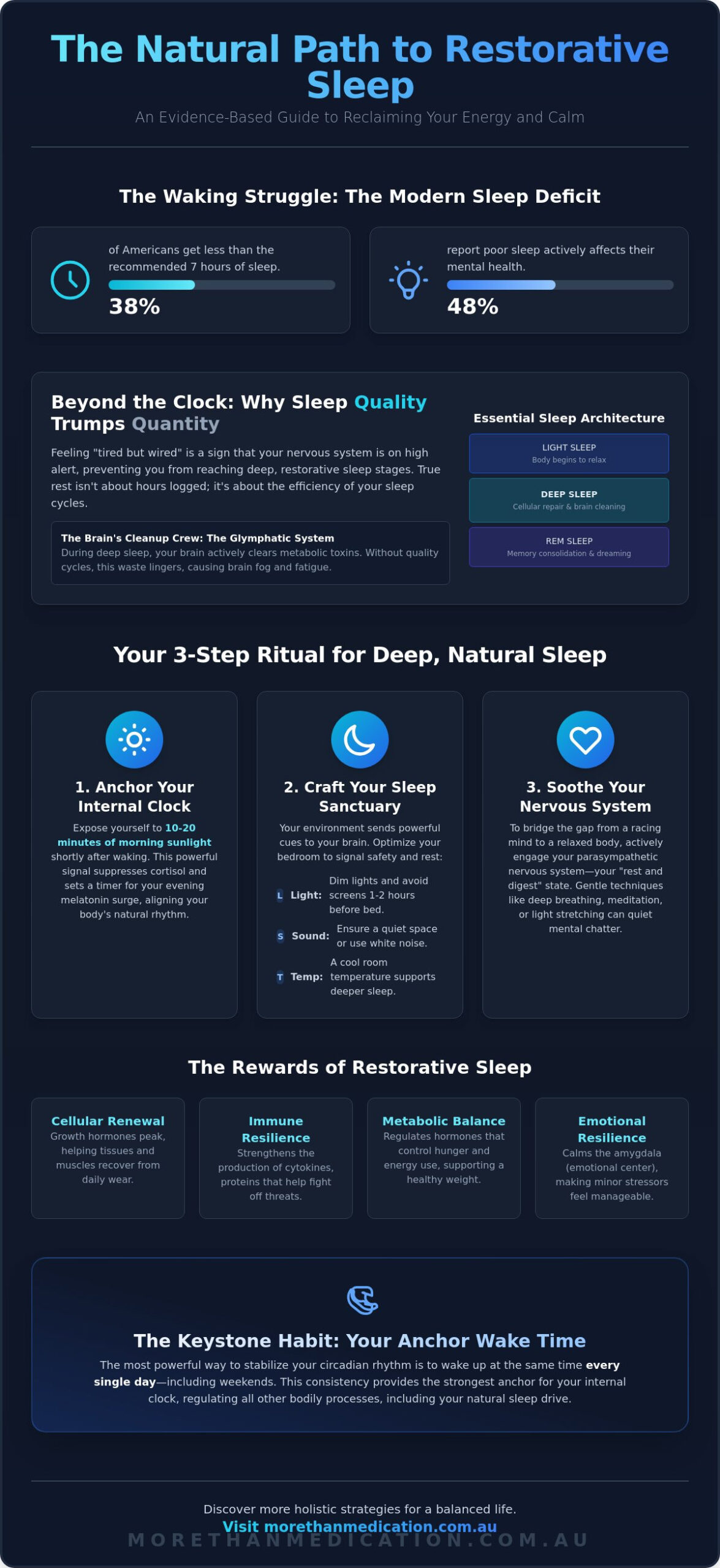
What if the secret to a restful night isn’t found in a pill bottle, but in the way you treat your nervous system before your head hits the pillow? You likely know the exhaustion of staring at the ceiling at 2 AM, your mind racing while your body feels spent. It’s a heavy burden to carry, especially when you’re searching for how to improve sleep quality naturally without relying on caffeine just to survive the morning. You aren’t alone in this struggle. A January 2026 analysis revealed that 38% of Americans get less than the recommended seven hours of rest, and 48% of people report that poor sleep is actively affecting their mental health.
We believe that health is about the whole person, and medicine is often only one piece of the puzzle. You deserve to wake up with natural vitality and a sense of calm. This guide provides evidence-based, holistic strategies to recalibrate your internal clock and soothe a worried mind. We’ll show you how to build a simple, sustainable evening ritual that lowers bedtime anxiety and invites the deep, restorative sleep your body and mind truly deserve.
Key Takeaways
- Understand why the depth of your sleep cycles matters more than just the hours on the clock and how to move past the “tired but wired” feeling.
- Master your internal clock by using morning sunlight to trigger a natural evening melatonin surge; a vital step in learning how to improve sleep quality naturally.
- Transform your bedroom into a sanctuary by optimizing light, sound, and temperature to signal your body that it’s safe and time to drift off.
- Discover gentle techniques to quiet a racing mind by activating your parasympathetic nervous system, bridging the gap between mental stress and physical relaxation.
- Create a sustainable rhythm with an “Anchor Wake Time” that supports your holistic wellbeing every day of the week.
The Foundation of Wellbeing: Why Sleep Quality Matters More Than Quantity
You’ve likely spent nights logging the recommended eight hours only to wake up feeling heavy and unrefreshed. This frustrating disconnect happens because quantity is only half the story. Real restoration depends on sleep quality, which is the efficiency of moving through all four essential sleep stages, from light rest to deep, slow-wave sleep and REM. When we focus on how to improve sleep quality naturally, we’re looking to repair the “architecture” of your rest so your body can actually complete its nightly maintenance.
Many of us live in a state of being “tired but wired.” This phenomenon occurs when your nervous system remains in a state of high alert even as your physical energy wanes. It creates a cycle where your mind races at 2 AM, preventing you from reaching the deeper stages of rest and leaving you vulnerable to anxiety the next day. To break this, we must recognize that sleep is a 24-hour cycle. Your choices at 8 AM affect your ability to drift off at 10 PM. Understanding What is Sleep Hygiene? is a great starting point for seeing how your daily environment shapes your nightly recovery.
The Physical Impact of Restorative Rest
During deep sleep, your body isn’t just passive. It’s actively engaged in cellular repair and balancing your metabolism. A vital part of this process is the glymphatic system, a specialized waste-clearance pathway that “cleans” the brain of metabolic toxins accumulated during the day. Without high-quality cycles, these toxins linger, leading to brain fog and fatigue. Sleep efficiency is the ratio of total sleep time to time spent in bed.
- Cellular Renewal: Growth hormones peak during deep sleep, helping tissues and muscles recover from daily wear.
- Immune Resilience: Quality rest strengthens your body’s ability to produce cytokines, proteins that help the immune system respond to threats.
- Metabolic Balance: Deep sleep regulates the hormones that control hunger and energy use, helping you maintain a healthy weight naturally.
The Emotional Connection: Sleep and Resilience
It’s exhausting to face each day when you’re already running on empty. This lack of rest directly impacts the amygdala, the part of your brain responsible for emotional responses. When you haven’t reached restorative levels of sleep, your amygdala becomes hyper-reactive, making minor stressors feel like major crises. Improving your rest isn’t just about energy; it’s about building emotional resilience. This holistic approach to rest is a significant part of the latest health trends in 2026, where we recognize that mental and physical health are inseparable. By learning how to improve sleep quality naturally, you’re giving your mind the space it needs to process the day and face tomorrow with a sense of balance and empowerment.
Aligning with Your Internal Clock: The Power of Natural Light and Rhythm
Your body isn’t just a collection of systems; it’s a finely tuned biological clock. This internal master clock, known as the circadian rhythm, orchestrates everything from your body temperature to your metabolic rate. When this rhythm is disrupted, you don’t just feel tired; you feel disconnected from your own physical needs. Learning how to improve sleep quality naturally begins with understanding that your body craves a predictable relationship with the rising and setting of the sun. It’s a journey of reconnecting with your natural environment to find a steady sense of calm and vitality.
Modern life often pulls us away from these natural cycles. We spend our days under artificial office lights and our evenings staring at high-intensity screens. This confusion makes it difficult for your brain to know when to be alert and when to rest. If you’ve ever felt “jet-lagged” despite staying in the same time zone, your internal clock is likely seeking a reset. By making small, intentional changes to how you interact with light, you can start to bridge the gap between feeling exhausted and finding true restoration.
The Morning Sun: Your Daily Reset
The most effective way to anchor your circadian rhythm is to step outside shortly after you wake up. Exposure to natural light for just 10 to 20 minutes tells your brain to suppress cortisol and boost serotonin. This isn’t just about waking up your mind; it actually sets a biological countdown timer. This morning light exposure ensures your brain starts producing melatonin roughly 14 hours later, making it easier to drift off when night falls. In Australia, we’re blessed with an abundance of sunshine, but we often miss its benefits by staying indoors in air-conditioned spaces. Even on overcast days, the light intensity outside is significantly higher than any indoor lamp, providing the signal your master clock needs to function correctly.
Managing the “Digital Sunset”
Just as the morning sun triggers alertness, the gradual fading of light should trigger relaxation. We call this the “Digital Sunset.” It’s a period where you intentionally reduce light exposure to allow your natural sleep hormones to rise. The “blue light” emitted by smartphones and tablets mimics the high-noon sun, which tricks your brain into staying in a state of high alert. This digital interference also triggers a dopamine response that keeps your mind racing. Following 6 Steps to Better Sleep can provide a structured way to reclaim your evenings from these disruptions.
Instead of scrolling through news feeds, try replacing your device with a physical book or gentle fitness recovery stretches. These low-stimulation activities help lower your core temperature and quiet your nervous system. If you work night shifts or travel frequently, you can manually reset your rhythm by using blackout curtains during the day and bright light therapy when you first wake up. Every small step you take helps align your body with its natural purpose. For more support on your path to wellness, you can find expert advice on living a balanced lifestyle that honors both your physical and mental health.
Crafting Your Sleep Sanctuary: Environmental and Dietary Shifts
While aligning with your internal clock sets the stage for rest, your physical environment and evening habits determine if you actually stay asleep. You might find yourself drifting off easily only to wake up at 3 AM feeling overheated or physically restless. Creating a dedicated sleep sanctuary is about more than just comfort; it’s about removing the subtle stressors that keep your body in a state of low-level alertness. When we explore how to improve sleep quality naturally, we must look at the tactile and nutritional elements that signal safety and relaxation to your brain.
A restorative environment follows a simple three-point checklist: it should be dark, quiet, and cool. In Australia, managing heat is a significant hurdle for many. Your body needs to drop its core temperature by about one degree Celsius to initiate sleep, a process known as thermogenesis. If your room is too warm, your heart rate remains slightly elevated, preventing you from reaching the deeper, more restorative stages of your cycle. Integrating Natural Sleep Aids into your routine, such as cooling rituals or specific nutrients, helps facilitate this biological transition without the need for heavy interventions.
The Bedtime Menu: What to Sip and Snack
What you consume in the hours before bed acts as a chemical signal to your nervous system. Magnesium-rich snacks, such as a small handful of pumpkin seeds or a banana, help relax muscles and support the production of GABA, a neurotransmitter that quiets nerve activity. Tart cherry juice is another evidence-based option, as it contains natural precursors to melatonin. However, it’s vital to time these correctly; aim to finish your last significant meal at least two to three hours before lying down to avoid digestive wakefulness. While a “nightcap” might seem helpful, alcohol reduces REM sleep quality by fragmenting sleep cycles, often leading to a groggy, unrefreshed feeling the next morning.
Temperature and Texture: The Physical Space
The science-backed ideal room temperature for most adults is approximately 18°C. Achieving this in a warmer climate requires intentional choices in your bedding and sleepwear, alongside reliable air conditioning. In high-heat regions, experts like Ultra Air Heating and Cooling emphasize that a well-functioning HVAC system is essential for maintaining the steady, cool environment necessary for thermogenesis. Natural fibres like cotton or linen are far superior to synthetic blends because they allow for better breathability and moisture-wicking, helping your body maintain its ideal thermal balance throughout the night. Beyond temperature, the visual state of your room matters. A decluttered space often leads to a decluttered mind, reducing the “to-do list” anxiety that can spike when you see piles of laundry or work papers. By treating your bedroom as a sacred space for rest, you’re learning how to improve sleep quality naturally through the power of a calm, predictable environment.
- Darkness: Use blackout curtains or a comfortable eye mask to block all ambient light.
- Silence: If you live in a noisy area, white noise machines can mask disruptive sounds.
- Breathability: Swap polyester sheets for high-quality cotton to prevent night sweats.
The Mind-Body Bridge: Calming the Nervous System Naturally
“I just can’t stop my mind from racing.” It’s the most common hurdle people face when trying to rest. You lie there, exhausted, but your brain is busy cataloging tomorrow’s tasks or replaying today’s conversations. This isn’t a personal failing; it’s a physiological state where your sympathetic nervous system, often called “fight or flight,” is still in the driver’s seat. To understand how to improve sleep quality naturally, you must learn to shift gears into the parasympathetic nervous system, your body’s “rest and digest” mode. This transition isn’t a switch you flip, but a bridge you cross through intentional, gentle practices.
This transition is largely about reducing “sleep effort.” The harder you try to force yourself to sleep, the more elusive it becomes. This creates a cycle of anxiety that keeps you wide awake. Mindfulness isn’t about clearing your mind perfectly; it’s about acknowledging those racing thoughts without letting them steer the ship. When you stop fighting the wakefulness, you lower the physiological arousal that keeps you alert. It’s a journey of learning to trust your body again, knowing that rest will come when the internal environment is calm.
Breathwork and Mindfulness Techniques
Breathwork is a direct line to your nervous system. The 4-7-8 technique is a powerful tool you can use right now: inhale through your nose for 4 seconds, hold for 7, and exhale forcefully through your mouth for 8. This rhythmic pattern encourages your heart rate to slow down and your muscles to relax. Box breathing, where you inhale, hold, exhale, and hold for equal counts of four, similarly stimulates the vagus nerve. For physical tension, try a “Body Scan” meditation. Mentally travel from your toes to your head, consciously noticing and releasing the stored stress in each muscle group until your entire body feels heavy and supported by the mattress.
Movement for Better Sleep
While staying active is vital for health, timing is everything. Intense exercise increases your core temperature and heart rate, which can interfere with the cooling process your body needs to initiate sleep. Try to finish high-intensity workouts at least 3 hours before your planned bedtime. Instead, embrace gentle movement in the evening. Restorative yoga or remedial massage can be incredibly effective at soothing the physical body. These practices help flush out physical tension and prepare your muscles for stillness. Simple stretches, like a gentle child’s pose, act as a physical signal to the brain that the day is officially over.
Finding the right balance between activity and stillness is a core part of your wellness journey. If you’re looking for more ways to support your mental wellbeing through lifestyle changes, explore our expert advice on mental health to help you navigate the complexities of a modern lifestyle. Learning how to improve sleep quality naturally is a gradual process of listening to what your body needs to feel safe, quiet, and truly ready for rest.
A Holistic Journey: Integrating Sleep into a Balanced Lifestyle
Achieving deep, restorative rest is a journey, not a destination. It is a process of learning to listen to your body and understanding that sleep is truly “more than medication.” While clinical treatments have their place, your daily habits and mindset form the foundation of your long-term health. When you focus on how to improve sleep quality naturally, you’re choosing to integrate rest into a broader, balanced lifestyle rather than treating it as an isolated problem to be solved with a quick fix. This shift in perspective allows you to view your evening ritual as an act of self-care rather than a chore.
One of the most powerful tools in your lifestyle toolkit is the “Anchor Wake Time.” It’s tempting to sleep in on weekends to “catch up” on lost hours, but this actually creates a form of social jetlag that confuses your internal clock. By waking up at the same time every day, even on Saturdays and Sundays, you provide a consistent anchor for your circadian rhythm. This stability makes it much easier for your body to naturally wind down when evening arrives. If you experience a “blip” or a poor night of rest due to stress or travel, meet yourself with compassion. One difficult night doesn’t erase your progress; it’s simply a signal to return to your supportive rhythms the following day.
Consistency Over Perfection
You don’t need to overhaul your entire life overnight to see results. A 1% improvement in your sleep hygiene is far more effective than a massive change that feels impossible to maintain. Start by building a “Sleep Toolkit” tailored to your unique needs, perhaps including a favorite herbal tea, a specific breathing exercise, or a comfortable eye mask. Developing a routine that feels like a reward helps you look forward to bedtime. When your evening habits feel like a gentle invitation to rest, you’re much more likely to stick with them, gradually discovering how to improve sleep quality naturally through the power of small, consistent actions.
Knowing When to Seek Further Support
While natural strategies are transformative for many, there are times when persistent issues require a closer look. If you experience red flags like loud snoring, gasping for air during the night, or chronic daytime sleepiness despite long hours in bed, it may suggest a clinical condition such as sleep apnoea. It’s vital to discuss these persistent challenges with a healthcare professional who can offer specialized guidance. These holistic strategies aren’t meant to replace medical care but to complement it. For instance, creating a calm nervous system can be a vital support for those navigating other health journeys, such as managing chronic pain or exploring migraine therapy drugs. By bridging the gap between natural aids and expert advice, you ensure that every part of your wellbeing is being nurtured.
Reclaiming Your Natural Vitality Through Rest
You now have a roadmap to transform your relationship with rest, moving beyond simple checklists to a deeper understanding of your body’s needs. From anchoring your internal clock with morning light to soothing your nervous system with intentional breathwork, you’ve learned that how to improve sleep quality naturally is a journey of small, manageable steps. These shifts don’t just provide more energy; they build the emotional resilience and physical foundation you need to thrive. By treating your sleep as a 24-hour cycle of care, you’re honoring the vital connection between your mind and body.
At More Than Medication, we believe health is about the whole person. Our expert-led content and evidence-based health insights are designed to empower you through every peak and valley of your journey. If you’re ready to continue building a balanced lifestyle, Explore more expert-led wellness guides at More Than Medication. Trust in your body’s ability to heal and recalibrate. With patience and a gentle, holistic approach, the deep and restorative sleep you deserve is well within your reach.
Frequently Asked Questions
How long does it take to see results from natural sleep improvements?
You can expect to see noticeable changes in your sleep patterns within two to four weeks of consistent practice. While some people feel a slight shift in their energy levels after just a few nights of better light management, your body needs time to recalibrate its internal clock. Lasting change happens when these small, intentional adjustments become a natural part of your daily rhythm and lifestyle.
Can magnesium supplements really help me sleep better at night?
Magnesium supports better rest by helping to relax your muscles and regulating neurotransmitters that quiet the nervous system. It acts as a gentle signal for your brain to transition into a state of calm. If you’re exploring how to improve sleep quality naturally, focusing on magnesium-rich foods like leafy greens or seeds is a great start. Always talk with a professional before starting supplements to ensure they fit your specific needs.
What is the “10-3-2-1-0” rule for better sleep quality?
The 10-3-2-1-0 rule is a structured countdown designed to protect your sleep architecture from daily disruptions. It suggests no caffeine 10 hours before bed, no food or alcohol 3 hours before, no work 2 hours before, and no screens 1 hour before. The zero represents the number of times you hit the snooze button in the morning, helping you maintain a consistent and healthy wake-up time.
Is it better to stay in bed or get up if I cannot fall asleep?
It is better to get out of bed if you haven’t fallen asleep after about 20 minutes of trying. Staying in bed while your mind is racing can cause you to associate your mattress with stress and wakefulness rather than rest. Move to a different room with dim lighting and engage in a quiet, low-stimulation activity like reading a physical book until you feel a natural wave of sleepiness return.
How does caffeine affect my sleep even if I drink it in the morning?
Caffeine has a surprisingly long half-life, meaning half of the stimulant can remain in your system six hours after your last cup. Even a morning coffee can block adenosine, the chemical that builds up in your brain to create “sleep pressure” by the evening. This is a common hurdle when learning how to improve sleep quality naturally, as the lingering caffeine can keep your brain in a state of high alert long after the sun sets.
Can natural sleep aids interfere with other medications I am taking?
Yes, natural aids like herbal teas or certain supplements can interact with prescription medications or other health treatments. Even though these options are natural, they contain active compounds that can change how your body processes other medicines. We believe that health is about the whole person, so it’s vital to have an open, honest conversation with your healthcare provider to ensure your holistic routine is safe and supportive.
What are the best essential oils for promoting a restful environment?
Lavender is the most widely recognized essential oil for encouraging relaxation and improving the depth of your sleep cycles. Other excellent choices include Bergamot, which can help lower blood pressure and heart rate, and Roman Chamomile for its gentle, soothing effect on the mind. Using these oils in a diffuser or as part of a warm evening bath helps create a sensory bridge between your busy day and a peaceful night.
How much sleep do I actually need as I get older?
Most adults aged 65 and older still need between 7 and 8 hours of sleep per night to maintain optimal health and cognitive function. This recommendation was reaffirmed by the National Sleep Foundation in early 2026 as a key standard for healthy aging. While your sleep might become lighter or you may wake up earlier than you used to, the total amount of restorative rest your body requires remains a vital pillar of your wellbeing.
⚕️ Medical Disclaimer
This content is for informational purposes only and is not a substitute for professional medical advice, diagnosis, or treatment. Always seek the advice of your doctor or other qualified health provider with any questions you may have regarding a medical condition. Never disregard professional medical advice or delay in seeking it because of something you have read on this website.