
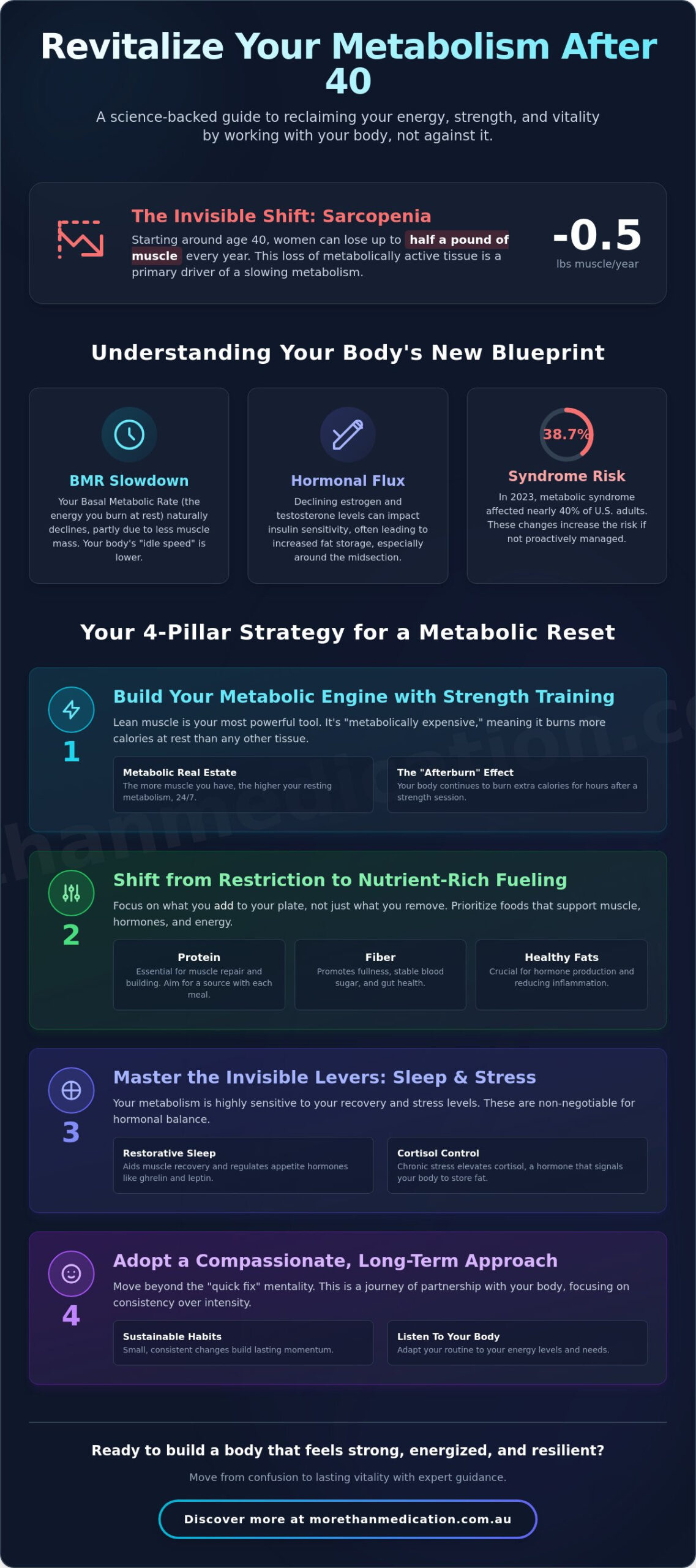
You wake up after a full night’s rest, yet by mid-afternoon, you’re reaching for a third cup of coffee just to stay focused. It feels like your body has suddenly changed the rules, leaving you frustrated by persistent energy slumps and a shifting silhouette that doesn’t reflect your hard work. It’s natural to feel a sense of betrayal by your own biology during this transition. If you’re searching for how to increase metabolism after 40, you aren’t alone. Research indicates that women often lose about half a pound of muscle every year starting at this age. This process, known as sarcopenia, can make your internal engine feel like it’s stalling.
We understand that managing these changes requires more than just another restrictive diet; it requires a partnership with your body. This guide provides a compassionate, evidence-based path to help you reclaim your energy and find a sustainable balance. We’ll explore how the latest 2025-2030 Dietary Guidelines and targeted muscle support can revitalize your health. From understanding the link between hormones and metabolism to implementing small, manageable lifestyle shifts, you’ll discover how to move from a place of confusion to one of lasting vitality and strength.
Key Takeaways
- Understand the physiological shift behind your changing energy levels and how to reclaim your body’s natural metabolic flexibility.
- Learn why prioritizing lean muscle through strength training is essential for maintaining a vibrant resting metabolism as you age.
- Discover practical, nutrient-dense fueling strategies for how to increase metabolism after 40 without resorting to restrictive dieting.
- Uncover the connection between restorative sleep, stress management, and the hormonal balance required to sustain your vitality.
- Move beyond temporary fixes toward a compassionate, long-term approach that integrates expert advice on nutrition, fitness, and mental clarity.
Understanding the Metabolic Shift: Why 40 is a Physiological Turning Point
You might look in the mirror or notice a midday energy slump and wonder where your former vitality went. It’s common to feel a sense of loss when the body you’ve known for decades starts responding differently to the same foods and routines you’ve always relied on. Acknowledging the frustration of a changing body is the first step toward self-advocacy and healing. This isn’t just in your head. It’s a physiological evolution. At the heart of this change is your Basal Metabolic Rate, which is the amount of energy your body requires to maintain basic life-sustaining functions while at rest. As we age, this foundational energy requirement naturally shifts, influenced by changes in body composition and hormonal signals.
In your 20s, your body was likely more “metabolically flexible,” meaning it could switch between burning carbohydrates and fats for fuel with ease. This ability to efficiently burn what you eat is a hallmark of health that we can work to restore through patient, consistent adjustments. As you cross the 40-year mark, this flexibility can become less efficient. Strategies that once worked, such as skipping a meal or adding an extra cardio session, often fail now because your body is prioritizing stability and protection over quick changes. Learning how to increase metabolism after 40 requires moving away from these old habits of restriction and toward a more nuanced, supportive approach that respects your body’s current needs.
The Hormonal Intersection: Estrogen, Testosterone, and Beyond
Declining levels of estrogen in women and testosterone in men do more than just affect mood. These shifts directly impact insulin response, often leading to fat storage around the midsection. Your thyroid may also experience subclinical shifts that leave you feeling sluggish. Managing these changes is a critical step in preventing metabolic syndrome, which affected 38.7% of U.S. adults in 2023, serving as a shield against chronic conditions later in life.
The Myth of the “Broken” Metabolism
It’s easy to believe your metabolism has permanently “crashed,” but your system is simply asking for different inputs. While age-related decline exists, much of the slowing we feel is lifestyle-induced, such as the gradual loss of muscle mass. Realizing that how to increase metabolism after 40 is about cellular support rather than restriction helps you focus on energy production. This shift turns a daunting physical change into a manageable journey toward lasting vitality.
The Power of Lean Muscle: Why Strength Training is Non-Negotiable
It’s a common misconception that hours of steady-state cardio are the only path to vitality. You might have spent years on the treadmill only to find the results diminishing as you reach midlife. This can feel deeply discouraging, but the reality is that your body is simply asking for a different kind of support. Starting around age 40, women typically lose about half a pound of muscle every year. This natural process, known as sarcopenia, isn’t just about a change in strength; it’s a loss of your most active metabolic tissue. When you understand how to increase metabolism after 40, you realize that protecting and building muscle is your most powerful strategy for long-term health.
Think of lean muscle as “metabolic real estate.” Unlike fat, muscle is metabolically expensive for your body to maintain. This means that the more muscle you carry, the more energy you burn while simply sitting, reading, or sleeping. This concept is a cornerstone of Fighting 40s Flab effectively. Beyond the calories burned during a workout, strength training triggers Excess Post-exercise Oxygen Consumption, often called the “afterburn effect.” Your body continues to consume energy at a higher rate for hours after you’ve finished your last set as it works to repair and strengthen your tissues. Balancing this physical work with your mental well-being is essential for a sustainable routine. If you’re looking for more ways to integrate movement into a busy schedule, our guide on fitness offers a deeper look at holistic movement.
Resistance Training for Beginners and Beyond
You don’t need to live in the gym to see results. Just two or three sessions a week can significantly shift your metabolic health. Focus on compound movements like squats or lunges. These exercises engage multiple muscle groups at once, which supports your hormonal health and builds functional strength. Whether you prefer using your own body weight or external weights, the goal is to find a level of resistance that feels challenging yet respectful of your current energy levels.
HIIT vs. LISS: Finding the Right Intensity
High-Intensity Interval Training (HIIT) can be a fantastic way to trigger metabolic adaptations in short bursts. However, it’s vital to listen to your body’s signals. For many in midlife, constant high intensity can over-stress the nervous system, leading to fatigue rather than vigor. Balancing these sessions with Low-Intensity Steady State (LISS) movement, like a gentle walk, allows for recovery and mental clarity. This balanced approach ensures you’re moving toward your goals without feeling overwhelmed. If you need personalized support, exploring expert advice on fitness can help you tailor these strategies to your unique journey.
Metabolic Fueling: Moving from Caloric Restriction to Nutrient Density
For many years, you may have been told that eating less is the only way to manage your weight. This advice can feel like a heavy burden when you’re already doing your best to stay healthy. Instead of focusing on restriction, we invite you to consider a shift toward nourishment. When exploring how to increase metabolism after 40, the quality of your fuel becomes just as important as the quantity. The Thermic Effect of Food (TEF) describes the energy your body uses to digest, absorb, and process nutrients. By choosing foods with a higher TEF, you’re essentially helping your body work more efficiently from the inside out.
Establishing “Metabolic Regularity” is another gentle way to support your system. Eating at consistent intervals helps stabilize blood sugar and signals to your body that it’s in a safe, well-supplied environment. This reduces the stress response that often leads to fat storage. For those moments between meals when you need a boost, focusing on nutrient-dense options like our healthy slice recipes can provide the sustenance you need without the energy crashes associated with processed sugars. This approach moves you away from the cycle of deprivation and toward a feeling of abundance.
The Protein Priority: Your Most Important Macro
The 2025-2030 Dietary Guidelines, released in January 2026, suggest a higher protein intake of 1.2 to 1.6 grams per kilogram of body weight daily for optimal health. Protein is vital because it has the highest thermic effect and provides the building blocks for the muscle mass we discussed in the previous section. Distributing this intake across your breakfast, lunch, and dinner ensures your body has a steady supply to maximize muscle synthesis. Whether you choose lean animal proteins or complete plant-based sources, prioritizing this macro helps you feel satisfied and energized throughout the day.
Hydration and Micronutrients: The Cellular Spark
Think of water as the lubricant for your metabolic engine. Even mild dehydration can slow down cellular processes, leaving you feeling fatigued and foggy. Beyond water, micronutrients like B vitamins, Iron, and Magnesium act as the “sparks” that turn food into usable energy. By “eating the rainbow,” you provide your mitochondria with the antioxidants they need to function at their best. This holistic approach to nutrition is a cornerstone of how to increase metabolism after 40, moving your focus from the bathroom scale toward genuine cellular vitality.
The Invisible Levers: Sleep, Stress, and the Cortisol Connection
Many people view metabolism as a simple math problem of calories in versus calories out. If you’ve ever felt like you’re doing everything right but seeing no change, you know how frustrating that perspective can be. It’s vital to recognize that your body is more than a calculator; it’s a complex system of signals. When you’re exploring how to increase metabolism after 40, these invisible levers of sleep and stress management often matter just as much as your workout routine. Your internal environment dictates whether your body feels safe enough to burn energy or if it needs to store it for protection.
Cortisol is often called the “stress hormone,” and while it’s necessary for survival, chronic elevation can blunt your metabolic progress. High cortisol levels signal your body to hold onto fat, particularly around the midsection, while simultaneously increasing insulin resistance. This creates a physiological ceiling that makes it difficult to access stored energy. The latest health trends in 2026 emphasize that mental clarity and physical energy are deeply intertwined. You can’t expect a vibrant metabolism if your nervous system is constantly stuck in a “fight or flight” response.
Sleep Hygiene as a Metabolic Strategy
Lack of sleep is a major metabolic disruptor. When you’re sleep-deprived, your body produces more ghrelin, the hormone that triggers hunger, and less leptin, the hormone that signals fullness. This biological shift makes it nearly impossible to rely on willpower alone. To support metabolic rejuvenation, focus on reaching deep REM sleep by keeping your bedroom cool and dim. If you’re struggling with the “3 AM wake-up” common in midlife, try a gentle breathing exercise to signal safety to your brain. Consistent rest allows your cells to repair and your hormones to reset, providing a stable foundation for your daily energy.
Stress Management: Lowering the Metabolic Ceiling
Chronic stress doesn’t just feel heavy; it physically slows your ability to burn fuel efficiently. Instead of pushing through another high-intensity session when you’re already exhausted, consider gentle movement like yoga or a steady walk. These activities help regulate your nervous system and lower cortisol levels. Implementing “micro-breaks” throughout your day—just two minutes of intentional breathing—can reset your stress response and prevent cortisol from spiking. If you’re feeling overwhelmed by the weight of chronic stress, exploring our expert advice on mental health can help you find a manageable path back to balance. Understanding this connection is a vital part of learning how to increase metabolism after 40 through a whole-person lens.
Beyond the Quick Fix: Building a Sustainable Metabolic Foundation
It’s natural to want immediate results after feeling stuck for so long. However, the search for how to increase metabolism after 40 is rarely solved by a “3-day fix” or a temporary fad. True metabolic resilience is built through a lifelong wellness journey that prioritizes consistency over intensity. By shifting your focus from short-term restriction to long-term nourishment, you create a body that is better equipped to handle the fluctuations of midlife and beyond. This approach isn’t just about weight; it’s about building a shield against future health challenges like metabolic syndrome, which affected 38.7% of U.S. adults as of 2023.
Self-advocacy is a vital part of this process. Don’t hesitate to seek regular check-ups to monitor your blood sugar, cholesterol, and hormonal health. Understanding your baseline allows you to make informed decisions alongside your healthcare providers. This partnership ensures that your efforts in the kitchen and the gym are supported by a clear understanding of your internal health. At More Than Medication, we believe that your health involves the whole person rather than just a specific condition. Our philosophy grounds technical advice in the reality of your daily life, recognizing that mental clarity and physical strength are inseparable. We are here to act as a supportive coach, helping you navigate these transitions with reliability and calm.
Tracking Progress Beyond the Scales
The number on the bathroom scale is a poor narrator for your health story. As you learn how to increase metabolism after 40, try using new markers of success like your energy levels, the quality of your sleep, and your functional strength. Body composition, specifically the ratio of muscle to fat, is a far more accurate measure of metabolic vitality than simple weight. Celebrate the small wins, like feeling less fatigued during a mid-afternoon meeting or noticing that you can carry groceries with greater ease. These improvements signify that your cellular health is moving in the right direction.
Your Next Steps for Holistic Wellbeing
Start small to avoid feeling overwhelmed. This week, pick one manageable change, such as increasing your protein intake at breakfast to meet the 1.2 to 1.6 grams per kilogram recommendation in the 2025-2030 Dietary Guidelines. If you suspect underlying hormonal shifts are stalling your progress, seek expert advice on nutrition or fitness to tailor a plan to your needs. Remember that your journey is unique and non-linear. Some days will feel easier than others, and that’s okay. Resilience is about showing up for yourself, one gentle step at a time. This continuous progress is what builds a sustainable foundation for the years ahead.
Embracing Your Journey Toward Lasting Vitality
Moving through the physical changes of midlife can feel like an uphill climb, but you don’t have to walk this path alone. You’ve discovered that your body isn’t broken; it’s simply asking for a more supportive partnership. By prioritizing lean muscle through resistance training and fueling your cells with nutrient-dense protein, you’re laying the groundwork for a more resilient system. These foundational shifts, combined with restorative sleep and mindful stress management, provide the sustainable answer to how to increase metabolism after 40.
Your health is a continuous story of progress rather than a final destination. Every small choice you make, whether it’s choosing a balanced meal or taking a mindful micro-break, contributes to your long-term vitality. We’re here to provide the steady guidance and evidence-based reporting you need to feel empowered in your daily life. To continue your journey with a companion that values the whole person, explore more expert-led wellness insights at More Than Medication. You have the inner strength to reclaim your energy and find a sense of balance that lasts.
Frequently Asked Questions
Does metabolism really slow down exactly when you turn 40?
Metabolism doesn’t abruptly drop at age 40; instead, it’s a gradual evolution. While clinical studies suggest the biological resting rate stays relatively steady until age 60, the muscle loss and hormonal shifts starting in your 40s make your body feel less efficient. Acknowledging this difference between your resting rate and your daily energy levels helps you focus on the right lifestyle adjustments to stay vibrant.
Can I increase my metabolism without doing high-intensity exercise?
You can definitely support your metabolic health without high-intensity workouts. While HIIT has benefits, consistent resistance training at a moderate pace is highly effective for building the lean muscle that drives your resting energy burn. Adding more steps to your day and practicing gentle movement like yoga also helps regulate your stress hormones, creating a better internal environment for efficient energy production.
Is it true that drinking green tea or coffee can “boost” my metabolism?
Green tea and coffee provide a very small, short-lived metabolic lift. Caffeine and specific antioxidants can slightly increase the amount of energy your body burns for a few hours after consumption. However, these effects are minimal compared to the impact of your total diet and muscle mass. Think of these drinks as a gentle supplement to your wellness journey rather than a primary tool for change.
How does menopause specifically affect a woman’s metabolic rate?
Menopause triggers a drop in estrogen that directly impacts how your body manages insulin and stores fat. This transition often results in weight shifting toward the midsection and a decrease in total daily energy expenditure. Understanding how to increase metabolism after 40 through targeted nutrition and strength training is essential for navigating this phase with confidence and protecting your long-term metabolic health.
What is the single most effective way to improve metabolism after 40?
Resistance training is the most powerful tool you have for maintaining a vibrant metabolism. By building lean muscle, you increase your body’s “metabolic real estate,” which burns more energy every hour of the day, even while you sleep. This shift in body composition provides a lasting foundation for health that cardio alone cannot match. It’s about empowering your body to work more efficiently at rest.
Should I consider supplements to help increase my metabolism?
Whole foods should always be your primary source of metabolic support before you look toward supplements. While certain nutrients like magnesium and iron are vital for energy production, they work best when they come from a balanced, nutrient-dense diet. If you feel you aren’t getting enough from your meals, seeking expert advice can help you determine if specific supplemental support is right for your unique journey.
How much water do I actually need to drink to support my metabolism?
Aiming for roughly 2 to 3 liters of water daily is a solid goal for most adults to keep their system functioning. Your metabolic processes require water at a cellular level; without enough, your energy production can stall. Keeping a reusable bottle nearby is a simple, manageable step that ensures your system stays hydrated and your internal engine continues to run as smoothly as possible throughout the day.
Can stress really cause me to gain weight even if I am eating well?
Chronic stress is a significant metabolic disruptor because it keeps your cortisol levels elevated. This hormone signals your body to store energy as fat and can interfere with your natural hunger signals, even if your diet is otherwise nutritious. Learning how to increase metabolism after 40 involves prioritizing mental clarity and relaxation just as much as your physical activity to keep these hormones in a healthy balance.
⚕️ Medical Disclaimer
This content is for informational purposes only and is not a substitute for professional medical advice, diagnosis, or treatment. Always seek the advice of your doctor or other qualified health provider with any questions you may have regarding a medical condition. Never disregard professional medical advice or delay in seeking it because of something you have read on this website.